


Choosing the right design software India solution can make or break your solar EPC business. With India’s solar capacity projected to exceed 500 GW by 2030, EPC companies face mounting pressure to deliver accurate, compliant, and cost-effective solar designs faster than ever. The software tools you select directly impact your project timelines, engineering accuracy, client satisfaction, and ultimately, your bottom line.
For solar EPCs operating in India, the design software landscape in 2026 offers powerful options—but also complex decisions. Should you invest in industry-standard PVsyst for bankability? Opt for cloud-based HelioScope for team collaboration? Rely on AutoCAD for detailed engineering drawings? Or combine multiple tools for a comprehensive workflow?
This comprehensive comparison evaluates the top design software India platforms used by successful solar EPC companies, examining PVsyst, HelioScope, AutoCAD, and other specialized tools. We’ll analyze features, pricing, accuracy, Indian compliance capabilities, and suitability for different project scales—helping you build the optimal software stack for your solar design needs in 2026.
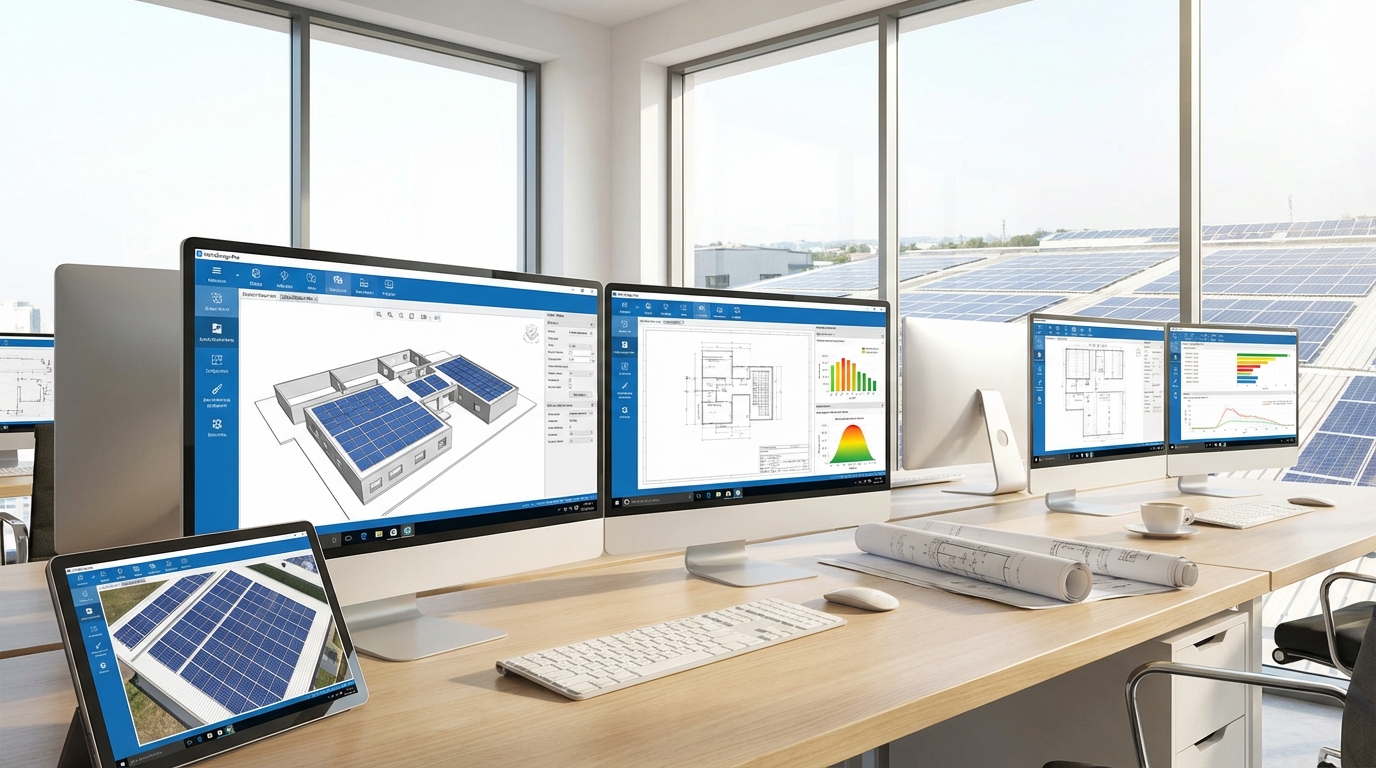
Understanding Solar Design Software India: The EPC Landscape in 2026
The Indian solar market has matured significantly, and so have the expectations for design software India solutions. Today’s solar EPCs need tools that go beyond basic energy calculations. Modern design software must handle complex shading analysis, comply with evolving Indian regulations, generate bankable reports for financing, and integrate seamlessly with other engineering workflows.
The current landscape of solar design India tools reflects this evolution. Leading EPC companies typically use a combination of specialized software rather than relying on a single platform. A typical workflow might include PVsyst for energy simulation, AutoCAD for detailed engineering drawings, and SketchUp or HelioScope for 3D visualization and client presentations.
Why does choosing the right design software India solution matter so much? Consider these critical factors:
- Accuracy impacts profitability: A 5% error in energy yield prediction can mean the difference between a profitable project and a financial loss over 25 years
- Compliance prevents delays: Software that doesn’t address Indian standards (CEA regulations, IS codes, state-specific requirements) leads to permit rejections and project delays
- Speed determines competitiveness: EPCs that can deliver accurate designs in days rather than weeks win more bids
- Scalability enables growth: Your software stack must handle both 10 kW residential projects and 100 MW utility-scale installations
For Indian solar projects, design software must account for unique challenges: extreme temperature variations across regions, monsoon impacts, high dust soiling in certain areas, and diverse mounting structures from simple rooftops to complex ground-mount systems. The software you choose should have robust Indian meteorological data and the flexibility to model these conditions accurately.
In 2026, the most successful solar EPCs in India recognize that software is an investment, not an expense. The right tools reduce engineering time, minimize errors, improve client confidence, and ultimately deliver better project outcomes. Let’s examine the leading options available to Indian solar EPC companies.
PVsyst: The Industry Standard for Solar Design India
PVsyst has earned its reputation as the gold standard for solar energy system simulation worldwide, and it remains the most widely accepted design software India tool for bankable solar projects. Developed in Switzerland and continuously updated since 1992, PVsyst offers unparalleled depth in photovoltaic system modeling and performance prediction.
For Indian solar EPCs working on commercial and utility-scale projects, PVsyst delivers comprehensive capabilities that financial institutions and investors expect. The software performs detailed hourly simulations accounting for every loss mechanism in a solar system—from module temperature effects and soiling to inverter efficiency curves and transformer losses.
The core strength of PVsyst lies in its sophisticated loss calculation methodology. The software models over 20 different loss factors, providing transparency that builds confidence with project stakeholders. When a bank or investor reviews your project feasibility report, PVsyst’s detailed loss diagrams and energy flow charts communicate professionalism and technical rigor.
Key Advantages of PVsyst
PVsyst excels in several areas critical for solar design India projects:
- Comprehensive meteorological database: PVsyst includes extensive climate data for Indian locations, with options to import site-specific data from sources like MNRE’s Solar Resource Assessment or NASA POWER
- Advanced shading analysis: The 3D shading module accurately models complex scenarios including nearby buildings, trees, terrain, and inter-row shading in ground-mount systems
- Detailed component libraries: Access to databases with thousands of PV modules, inverters, and other components, regularly updated with the latest products available in the Indian market
- Bankability and credibility: Financial institutions across India recognize PVsyst reports as the industry standard for due diligence and project financing
- Bifacial modeling: Advanced capabilities for bifacial module simulation, increasingly important as bifacial technology gains market share in India
- Grid integration analysis: Tools for modeling grid connection scenarios and compliance with Indian grid codes
The software’s reporting capabilities are particularly valuable for Indian EPCs. PVsyst generates comprehensive PDF reports with energy yield predictions, financial analysis, and detailed loss breakdowns—exactly what clients, investors, and regulatory authorities require.
Limitations for Indian EPCs
Despite its strengths, PVsyst presents challenges that Indian solar companies should consider:
- Steep learning curve: New engineers typically require 2-3 months of regular use to become proficient, representing a significant training investment
- Higher upfront cost: PVsyst licenses cost approximately $1,000-1,500 per user (around ₹80,000-1,25,000), which can be substantial for smaller EPCs or startups
- Limited 3D visualization: While functional, PVsyst’s 3D interface is not as intuitive or visually appealing as newer cloud-based alternatives for client presentations
- Desktop-only application: Requires installation on individual computers, limiting remote collaboration compared to cloud-based solutions
- Time-intensive for small projects: The software’s comprehensive approach can be overkill for simple residential installations where faster tools suffice
For Indian EPCs focused on megawatt-scale commercial and utility projects, PVsyst remains essential. The investment in licensing and training pays dividends through improved project credibility and more accurate energy predictions. However, smaller residential-focused companies might find better value in more accessible alternatives.
HelioScope: Cloud-Based Design Software India Solution
HelioScope represents the new generation of cloud-based design software India platforms, offering a fundamentally different approach to solar design. Developed by Folsom Labs (now part of Aurora Solar), HelioScope prioritizes speed, collaboration, and user-friendliness while maintaining engineering accuracy suitable for commercial solar projects.
The cloud-based architecture of HelioScope addresses several pain points that Indian solar EPCs face with traditional desktop software. Multiple team members can work on projects simultaneously, designs are accessible from any device with internet connectivity, and updates happen automatically without IT involvement.
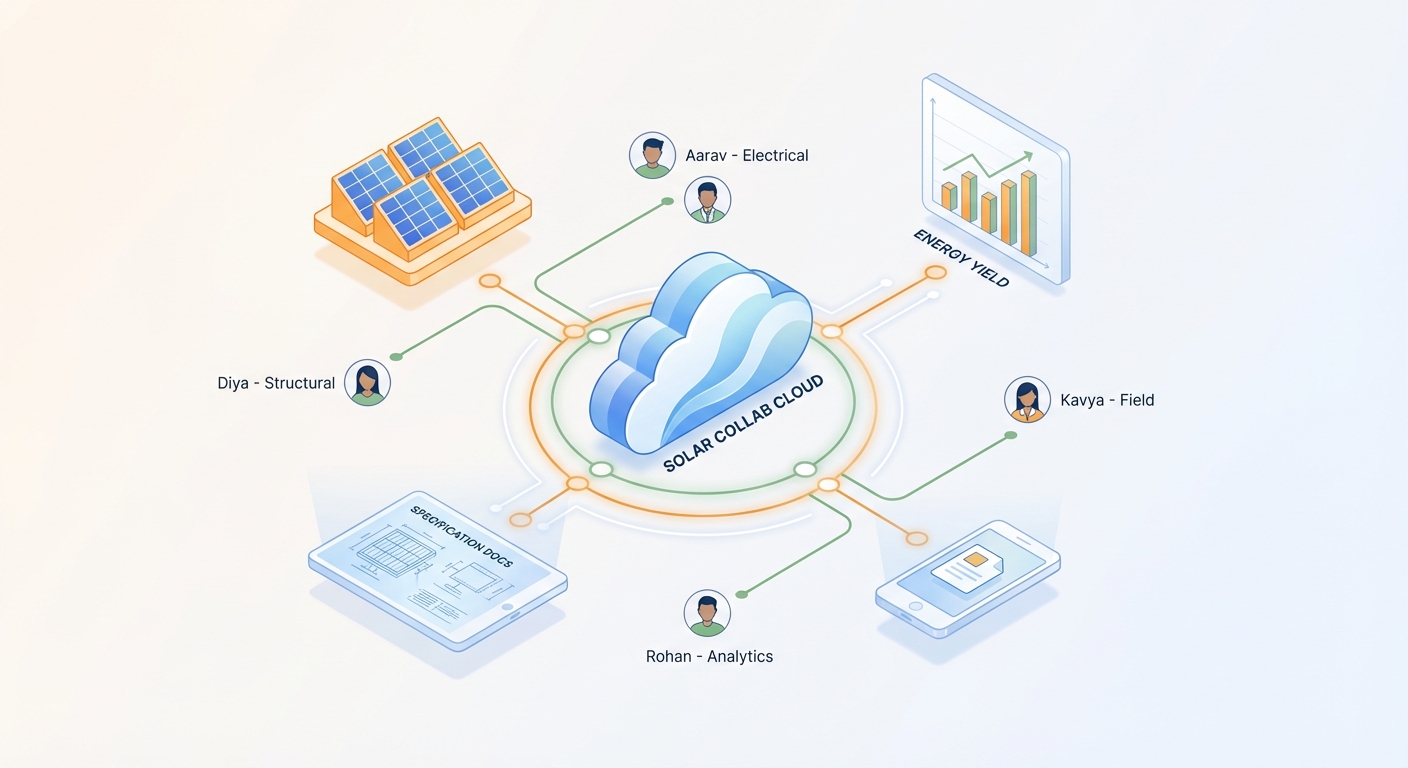
For solar EPC India companies with distributed teams or those working on multiple projects simultaneously, HelioScope’s collaborative features provide significant advantages. Engineers in different offices can review and modify designs in real-time, sales teams can access project data during client meetings, and project managers can monitor design progress without requesting file transfers.
HelioScope Strengths
HelioScope offers several compelling advantages for Indian solar design workflows:
- Intuitive interface: New users can create basic designs within hours rather than weeks, dramatically reducing training time and costs
- Fast design iteration: The streamlined workflow allows engineers to explore multiple design scenarios quickly, improving optimization and client responsiveness
- Integrated financial modeling: Built-in tools for calculating project economics, payback periods, and ROI using Indian electricity tariffs and incentive structures
- Automatic component updates: The cloud platform continuously updates module and inverter databases, ensuring access to the latest products without manual downloads
- Real-time collaboration: Multiple stakeholders can review designs simultaneously, accelerating approval processes and reducing communication delays
- API integration: Connects with CRM systems, proposal software, and other business tools for streamlined workflows
The software’s ConditionBuilder feature is particularly useful for solar design India projects, allowing engineers to model different scenarios (varying tilt angles, module types, or system configurations) and compare results side-by-side. This capability helps EPCs present clients with optimized options backed by data.
HelioScope Challenges
While HelioScope offers many advantages, Indian EPCs should be aware of certain limitations:
- Subscription costs accumulate: Monthly or annual subscriptions (typically $200-400 per user monthly, approximately ₹16,000-32,000) can exceed PVsyst’s one-time license cost over several years
- Internet dependency: Requires stable internet connectivity, which can be challenging in some Indian locations or during site visits to remote areas
- Less detailed loss modeling: While accurate for most commercial projects, HelioScope’s simplified loss calculations may not satisfy the requirements of some financial institutions or utility-scale projects
- Limited customization: The standardized platform offers less flexibility for highly specialized or unusual project configurations compared to PVsyst
- Bankability perception: Some conservative investors and lenders in India still prefer PVsyst reports, viewing them as more rigorous
HelioScope is ideal for Indian EPCs focused on commercial and industrial rooftop projects where design speed and client collaboration are priorities. Companies handling 50-100 projects annually often find the subscription cost justified by the time savings and improved team productivity.
AutoCAD for Solar Design: The CAD Foundation
While not specifically solar software, AutoCAD remains an essential component of any comprehensive design software India stack for solar EPCs. This industry-standard computer-aided design (CAD) platform is indispensable for creating the detailed engineering drawings, permit designs, and construction documents that solar projects require.
AutoCAD serves a different purpose than PVsyst or HelioScope. While those tools focus on energy simulation and system optimization, AutoCAD handles the precise technical documentation needed for permitting, structural engineering, electrical design, and construction. For Indian solar projects, this includes single-line diagrams, array layouts, cable routing plans, earthing layouts, and structural mounting details.
Most successful solar EPC India companies use AutoCAD in combination with simulation software. A typical workflow involves using PVsyst or HelioScope for initial system design and energy modeling, then transferring the optimized layout to AutoCAD for detailed engineering documentation. This combination ensures both accurate performance predictions and comprehensive construction-ready drawings.
The role of AutoCAD in solar design includes:
- Permit design documentation: Creating the detailed site plans, elevation drawings, and electrical diagrams required by Indian municipal authorities and electricity distribution companies
- Structural engineering drawings: Developing mounting structure layouts, foundation plans, and load calculations that comply with Indian Standards (IS codes)
- Electrical design details: Producing single-line diagrams, cable schedules, earthing layouts, and lightning protection systems meeting CEA regulations
- As-built documentation: Recording final installation details for client handover and maintenance reference
- Civil engineering plans: Designing access roads, drainage systems, and site preparation for ground-mount installations
AutoCAD’s pricing for Indian companies typically ranges from ₹1,50,000 to ₹2,00,000 per year per license for the standard version, with discounts available for multi-user subscriptions. While this represents a significant investment, the software’s versatility across multiple engineering disciplines often justifies the cost for established EPCs.
For solar-specific workflows, many Indian EPCs supplement AutoCAD with specialized plugins or develop custom AutoLISP routines to automate repetitive tasks like module array generation or cable sizing calculations. This customization improves efficiency and reduces the time required to produce permit design documentation.
Alternatives to AutoCAD include DraftSight (lower cost), BricsCAD (similar functionality at reduced price), and free options like LibreCAD or FreeCAD. However, AutoCAD’s industry dominance means better compatibility with clients, contractors, and regulatory authorities who expect DWG file formats.
Other Design Software India Options Worth Considering
Beyond the “big three” of PVsyst, HelioScope, and AutoCAD, several specialized tools deserve consideration for specific aspects of solar design India workflows:
SketchUp: This 3D modeling software excels at creating visually compelling site models and client presentations. Many Indian EPCs use SketchUp for initial site surveys and feasibility studies, particularly for complex rooftop installations where visualizing the final system helps clients understand the proposal. SketchUp’s free version offers substantial functionality, while the Pro version (approximately ₹25,000 annually) adds advanced features and commercial licensing.
PVCase: Specifically designed for utility-scale ground-mount solar farms, PVCase automates layout optimization, terrain modeling, and civil engineering design. For Indian EPCs working on megawatt-scale projects, PVCase can reduce design time by 50-70% compared to manual AutoCAD layouts. The software handles complex terrain, optimizes row spacing for Indian latitude angles, and generates bill of quantities for procurement. Pricing is typically project-based or subscription-based starting around $500-800 monthly.
Homer Pro: When solar projects include battery storage, diesel generators, or hybrid configurations, Homer Pro provides sophisticated microgrid modeling capabilities. This is particularly relevant for Indian off-grid and remote installations where hybrid systems are common. The software optimizes system sizing and dispatch strategies to minimize lifecycle costs.
SAM (System Advisor Model): Developed by the U.S. National Renewable Energy Laboratory (NREL), SAM is a free, open-source tool for renewable energy analysis. While it has a steeper learning curve than commercial alternatives, SAM offers powerful capabilities for detailed performance modeling and financial analysis. Indian EPCs on tight budgets can use SAM as a cost-effective alternative to commercial software, though it lacks the polish and support of paid platforms.
PV*SOL: This German software from Valentin Software offers capabilities similar to PVsyst with a somewhat more user-friendly interface. While less common in India than PVsyst, PV*SOL provides good 3D visualization and is worth considering for EPCs seeking alternatives to the established standard.
Each of these tools addresses specific needs within the solar design India ecosystem. The optimal approach often involves combining multiple specialized tools rather than seeking a single all-in-one solution. A well-equipped Indian EPC might use SketchUp for site surveys, PVsyst for energy modeling, AutoCAD for detailed engineering, and PVCase for utility-scale layout optimization.
Feature-by-Feature Comparison: Which Design Software India Tool Wins?
To help Indian solar EPCs make informed decisions, let’s compare the leading design software India platforms across the criteria that matter most for solar project success:
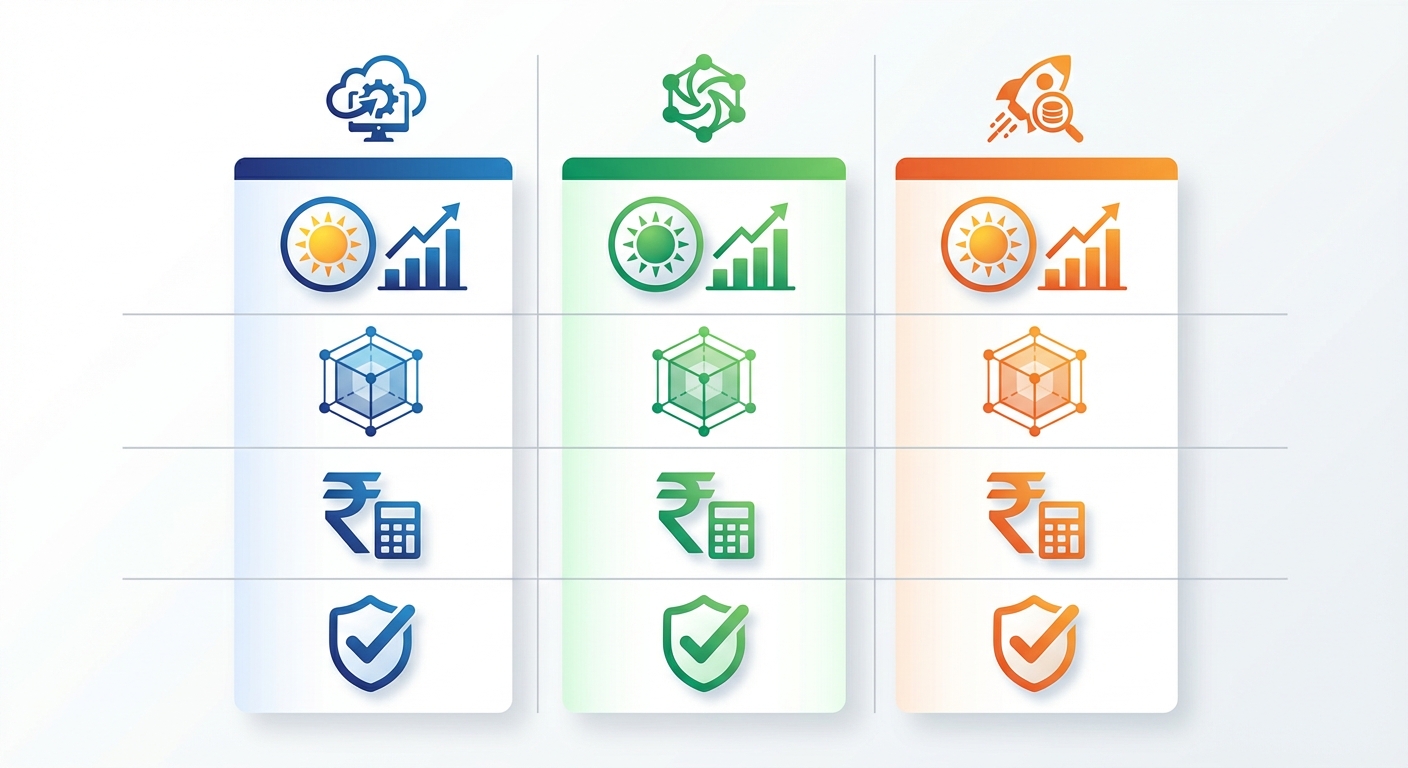
Energy Yield Simulation Accuracy: PVsyst leads in this category with its comprehensive loss modeling and detailed hourly simulations. The software’s transparency in loss calculations and extensive validation against real-world data make it the benchmark for accuracy. HelioScope offers good accuracy suitable for most commercial projects, though its simplified approach may underestimate or overestimate yields in edge cases. AutoCAD doesn’t perform energy simulations, requiring integration with other tools.
3D Modeling and Visualization: HelioScope excels here with intuitive 3D modeling that creates professional client presentations quickly. SketchUp offers the most visually impressive renderings but requires more manual work. PVsyst’s 3D capabilities are functional but dated compared to newer platforms. AutoCAD provides precise 2D drawings and basic 3D, but isn’t optimized for solar-specific visualization.
Shading Analysis: PVsyst offers the most sophisticated shading analysis, modeling complex scenarios with high accuracy. HelioScope provides good shading analysis that’s faster to set up, suitable for most commercial installations. Both tools handle near-field shading (buildings, trees) and far-field shading (horizon, terrain) effectively for Indian project conditions.
Indian Compliance and Standards: This is where design software India selection becomes critical. PVsyst allows detailed customization to meet CEA technical standards, MNRE guidelines, and state-specific requirements. HelioScope’s standardized approach covers basic compliance but may require supplementary documentation for certain Indian regulatory scenarios. AutoCAD is essential for creating the detailed drawings that Indian authorities require for permit design approval, including compliance with IS codes for structural and electrical engineering.
Ease of Use and Learning Curve: HelioScope wins decisively, with new users productive within days. SketchUp is also quite accessible. PVsyst requires weeks to months of training for proficiency, representing a significant investment in solar engineer development. AutoCAD has a moderate learning curve, though most Indian engineering graduates have some CAD exposure from their education.
Pricing and ROI: The cost equation varies by company size and project volume. For a small Indian EPC doing 20-30 projects annually, HelioScope’s subscription model (₹16,000-32,000 per user monthly) can become expensive compared to PVsyst’s one-time license (₹80,000-1,25,000). However, if HelioScope’s speed advantage allows one engineer to handle more projects, the productivity gain justifies the cost. AutoCAD’s annual subscription (₹1,50,000-2,00,000) is substantial but often necessary for professional engineering documentation.
Integration Capabilities: HelioScope leads with modern API integration, connecting to CRM systems, proposal tools, and business software. PVsyst operates more as a standalone tool, though it can export data to Excel and other formats. AutoCAD integrates well with other Autodesk products and accepts imports from various sources.
Customer Support in India: This is an often-overlooked factor. PVsyst offers email support and extensive documentation, though response times can be slow for Indian time zones. HelioScope provides responsive support during U.S. business hours, which overlaps partially with Indian working hours. AutoCAD has established support channels in India through Autodesk’s local presence. For critical projects, having accessible support can prevent costly delays.
The verdict? There’s no single winner, the best design software India solution depends on your specific needs, project types, team size, and budget. Most successful Indian EPCs use a combination of tools rather than relying on any single platform.
Choosing the Right Software Stack for Your EPC Company
Building the optimal design software India stack requires matching tools to your company’s specific project profile, budget, and growth trajectory. Here are recommended configurations for different types of Indian solar EPCs:
Small Residential EPCs (Under 100 kW projects)
For companies focused on residential rooftop solar India installations, speed and cost-effectiveness are priorities. These projects typically don’t require the detailed bankability reports that utility-scale installations demand.
Recommended stack:
- HelioScope or SketchUp for quick design and client visualization
- AutoCAD LT or DraftSight for basic permit drawings (lower cost than full AutoCAD)
- Excel or Google Sheets for financial modeling and proposals
Budget consideration: This stack can be assembled for ₹2,00,000-3,00,000 annually, keeping overhead manageable while delivering professional results. The emphasis is on tools that allow rapid turnaround for the high volume of small projects typical in the residential segment.
Alternatively, residential-focused EPCs might consider outsourcing design work to specialized firms like Heaven Designs, which can provide professional solar design services more cost-effectively than maintaining in-house software licenses and trained engineers for smaller project volumes.
Commercial & Industrial EPCs (100 kW – 5 MW)
The commercial and industrial segment represents the sweet spot for most Indian solar EPCs. These projects demand accuracy and professionalism but must be delivered quickly in a competitive market.
Recommended stack:
- PVsyst for energy modeling and bankability reports
- HelioScope for rapid design iteration and client collaboration
- AutoCAD for detailed engineering and permit design
- SketchUp for site surveys and 3D visualization
Budget consideration: This comprehensive stack requires ₹6,00,000-10,00,000 annually for a small team (2-3 engineers), but provides the full capabilities needed to compete for commercial projects. The combination of PVsyst’s credibility and HelioScope’s speed creates an efficient workflow, use HelioScope for initial designs and client iterations, then finalize with PVsyst for the bankability report.
This segment benefits most from the right software investment. The ability to deliver accurate, professional designs quickly directly impacts win rates and project profitability. Companies should view this as essential infrastructure rather than optional expense.
Utility-Scale EPCs (5 MW+)
Large-scale ground-mount projects demand the highest level of engineering rigor and detailed documentation. Financial institutions and investors expect comprehensive analysis, and engineering cost is a smaller percentage of total project value, justifying premium software tools.
Recommended stack:
- PVsyst for detailed energy modeling and loss analysis
- AutoCAD for comprehensive engineering drawings
- PVCase for layout optimization and civil engineering
- Specialized structural analysis software (STAAD.Pro, ETABS) for foundation design
- Homer Pro if hybrid systems or storage are involved
Budget consideration: Utility-scale EPCs should expect ₹15,00,000-25,00,000 annually for a complete software stack and trained engineering team. At this scale, software costs are easily justified by the project values involved, a 50 MW project represents hundreds of crores in investment, making thorough engineering analysis essential.
Many utility-scale EPCs also engage specialized design consultancies for PMC services India and detailed engineering support, supplementing their in-house capabilities with expert resources for complex aspects like structural engineering India requirements or grid integration studies.
Regardless of your company’s focus, consider that professional design partners can complement your software investment. Heaven Designs, for example, uses industry-leading design software India tools and maintains a team of 50+ specialized engineers, offering EPCs the benefits of premium software and expert analysis without the full overhead of maintaining these capabilities in-house.
Indian Compliance Requirements: What Your Design Software India Must Handle
One of the most critical, and often underestimated, aspects of choosing design software India is ensuring it can address the complex regulatory landscape for solar projects across Indian states. Non-compliance leads to permit rejections, project delays, and costly redesigns.
Central Electricity Authority (CEA) Technical Standards: The CEA’s technical standards for grid-connected solar systems specify requirements for safety, grid integration, and system design. Your software must allow you to demonstrate compliance with voltage levels, protection systems, earthing requirements, and power quality standards. PVsyst and HelioScope can model these technical parameters, but the detailed electrical drawings proving compliance typically require AutoCAD or similar CAD software.
MNRE Guidelines and Subsidy Documentation: Projects seeking subsidies under schemes like the PM-KUSUM program or rooftop solar subsidy programs must provide specific documentation formats and technical specifications. Your design software India workflow should facilitate generating the required reports, including system sizing justifications, component specifications meeting MNRE’s approved lists, and performance projections using MNRE-specified methodologies.
State-Specific Net Metering and Grid Connection Requirements: Each Indian state has unique regulations for net metering, gross metering, and grid connection procedures. Maharashtra’s regulations differ from Gujarat’s, which differ from Tamil Nadu’s. Your software must be flexible enough to model different metering arrangements, export limitations, and grid connection configurations. This is where local expertise becomes invaluable, understanding how to configure your software to match state-specific requirements.
Structural Engineering Codes (IS Codes): Indian solar installations must comply with relevant IS codes for structural design, including wind load calculations (IS 875), seismic design (IS 1893), and steel/concrete design standards. While specialized structural software handles detailed calculations, your solar design software should provide the loading information (module weights, wind uplift forces, etc.) that structural engineers need. For structural engineering India requirements, integration between solar design tools and structural analysis software is essential.
Fire Safety and Building Codes: Rooftop installations must comply with National Building Code requirements and local fire safety regulations, including access pathways, setbacks, and firefighter access. Your 3D modeling software should help visualize and document compliance with these spatial requirements.
The challenge for Indian EPCs is that no single software perfectly addresses all compliance requirements out of the box. Success requires combining the right tools with experienced engineers who understand how to configure and use them for Indian regulatory contexts. This is why many EPCs partner with specialized design firms that have developed expertise in navigating India’s complex compliance landscape.
When evaluating design software India options, ask: Can this tool help me demonstrate compliance with the specific regulations in the states where I operate? Does it provide the documentation formats that local authorities expect? Can it model the unique configurations (like export limitation devices) that some states require?
Maximizing ROI: Software Investment vs Professional Design Partners
The final consideration for Indian solar EPCs is whether to invest in comprehensive design software India capabilities in-house or partner with specialized design firms for some or all design work. This decision significantly impacts your solar design cost structure and operational efficiency.
Total Cost of Ownership for In-House Design: Building in-house design capabilities involves more than software licenses. Consider the complete investment:
- Software licenses: ₹5,00,000-15,00,000 annually depending on your stack
- Engineer salaries: ₹6,00,000-12,00,000 per engineer annually for experienced solar designers
- Training and skill development: ₹1,00,000-2,00,000 annually per engineer
- Hardware (workstations, monitors): ₹1,00,000-1,50,000 per engineer
- Overhead (office space, management time): Additional 20-30% of direct costs
For a small team of 2-3 design engineers with professional software, the total annual investment easily reaches ₹25,00,000-40,00,000. This makes sense for EPCs with consistent project flow that keeps the design team fully utilized, but represents significant overhead for companies with variable project volumes.
When to Invest in Software vs Outsource Design: The decision depends on several factors:
Invest in in-house capabilities when:
- You have consistent project volume (50+ projects annually) to keep design engineers productive
- Your projects require frequent client iterations and rapid response times
- Design expertise provides competitive differentiation in your market
- You’re pursuing utility-scale projects where in-house engineering capabilities build client confidence
Partner with design firms when:
- Project volume is variable or seasonal, making full-time design staff underutilized
- You need specialized expertise (complex structural engineering, grid integration studies) for specific projects
- You’re entering new market segments (residential to commercial, or commercial to utility-scale) and lack experience
- You want to focus resources on sales, installation, and customer service rather than design
Many successful Indian EPCs use a hybrid approach: maintaining basic in-house design capabilities for routine projects while partnering with specialized firms for complex work, peak demand periods, or specialized requirements like feasibility study India services or detailed structural engineering India analysis.
How Professional Design Partners Complement Your Software Investment: Even EPCs with strong in-house capabilities benefit from design partnerships in specific scenarios. Heaven Designs, for example, serves as an extension of EPC engineering teams, providing:
- Access to premium design software India tools without the full licensing cost
- Specialized expertise in complex project types or regulatory requirements
- Scalable capacity during peak periods without hiring additional staff
- Quality assurance and independent review of critical designs
- Comprehensive services from site survey India through detailed engineering and permit design
With over 628 MW of completed design work for 752+ solar EPC clients, Heaven Designs has developed deep expertise in using professional design software India tools to deliver accurate, cost-effective solar designs. The company’s team of 50+ engineers maintains proficiency across PVsyst, AutoCAD, and other specialized tools, providing EPCs with enterprise-grade design capabilities on a project basis.
The solar design timeline is another critical factor. Professional design firms with dedicated teams and optimized workflows often deliver faster than in-house teams juggling design work alongside other responsibilities. For time-sensitive projects or competitive bid situations, this speed advantage can be decisive. Learn more about how project timelines impact overall costs in our detailed guide on solar design timeline and cost considerations.
For EPCs planning projects that require comprehensive upfront analysis, partnering with experienced design consultancies for solar feasibility studies can provide valuable insights before committing to full design and engineering work.
Similarly, companies working on large-scale ground-mount installations across different Indian regions benefit from specialized knowledge of regional requirements, as detailed in our comprehensive regional design guide for ground-mount projects in India.
Making the Right Choice for Your Business: The optimal approach to design software India investment depends on your company’s specific situation, growth trajectory, and strategic priorities. Consider these questions:
- What is your annual project volume, and is it consistent or variable?
- What project types do you focus on, and what level of engineering rigor do they require?
- Do you have or can you attract experienced solar design engineers?
- How important is design speed vs. absolute accuracy for your competitive positioning?
- What is your budget for design capabilities as a percentage of revenue?
For many Indian solar EPCs, the answer involves strategic software investment for core capabilities combined with partnerships for specialized needs. This hybrid approach provides flexibility, manages costs effectively, and ensures access to the full range of expertise that complex solar projects demand.
Whether you choose to build comprehensive in-house design capabilities or leverage professional design partners, the key is ensuring your projects receive the accurate, compliant, and cost-effective engineering they need to succeed. In India’s competitive and rapidly evolving solar market, design quality directly impacts project profitability, client satisfaction, and long-term business success.
Ready to optimize your solar design workflow? Heaven Designs offers comprehensive solar design India services using industry-leading software tools and a team of 50+ specialized engineers. From initial site survey India and feasibility analysis through detailed engineering and permit design, we provide the expertise Indian EPCs need to deliver successful solar projects. Get a Quick Proposal Now! or reach out to our team at service@heavendesigns.in or +91 90811 00297 to discuss how professional design support can enhance your project outcomes and improve your bottom line.