


For solar EPC companies operating in India’s rapidly expanding renewable energy market, comprehensive engineering documentation is the foundation of successful project execution. Whether you’re managing a 100 kW rooftop installation or a multi-megawatt ground mount facility, the quality and completeness of your engineering documentation India package directly impacts project timelines, regulatory approvals, construction accuracy, and ultimately, your profitability.
In 2026, as India continues its ambitious push toward 500 GW of renewable energy capacity, the demand for professional, accurate, and compliant solar engineering documentation has never been higher. Yet many EPCs struggle with incomplete deliverables, revision delays, and documentation that fails to meet state-specific regulatory requirements. This comprehensive guide explains exactly what Indian EPCs should expect in their complete engineering documentation package, the processes behind quality deliverables, and how to evaluate documentation partners for successful project outcomes.

What Is Solar Engineering Documentation and Why It Matters for Indian EPCs
Solar engineering documentation encompasses the complete set of technical drawings, calculations, specifications, and compliance certificates required to design, approve, construct, and commission a solar power project. This documentation serves as the blueprint for your entire project execution, providing contractors, regulatory authorities, and stakeholders with precise instructions for installation.
For Indian EPCs, engineering documentation India packages must address unique challenges including diverse state-level regulations, varying climatic conditions across regions, and specific requirements from State Electricity Boards (SEBs) and distribution companies (DISCOMs). A comprehensive documentation package ensures that your project meets all technical, safety, and regulatory standards from day one.
The consequences of inadequate engineering documentation are severe and costly. Projects face approval delays from electricity boards, construction errors requiring expensive rework, safety issues during installation, and potential rejection of subsidy claims due to non-compliance. In contrast, high-quality engineering documentation accelerates approvals, minimizes field changes, ensures accurate material procurement, and provides legal protection through proper certifications and professional engineer stamps.
Indian EPCs increasingly recognize that specialized documentation partners deliver superior value compared to in-house teams or generic engineering firms. Solar-specific expertise ensures that documentation accounts for module degradation, soiling factors relevant to Indian conditions, proper cable sizing for high ambient temperatures, and structural designs that withstand regional wind and seismic loads. This specialization directly translates to projects that perform as promised and meet all stakeholder commitments.
Complete Engineering Documentation Package: What Indian EPCs Should Expect
A comprehensive engineering documentation India package for solar projects should include multiple interconnected components spanning electrical, structural, and civil engineering disciplines. Understanding what constitutes a complete deliverable set helps EPCs evaluate vendors and ensure nothing critical is missing before construction begins.
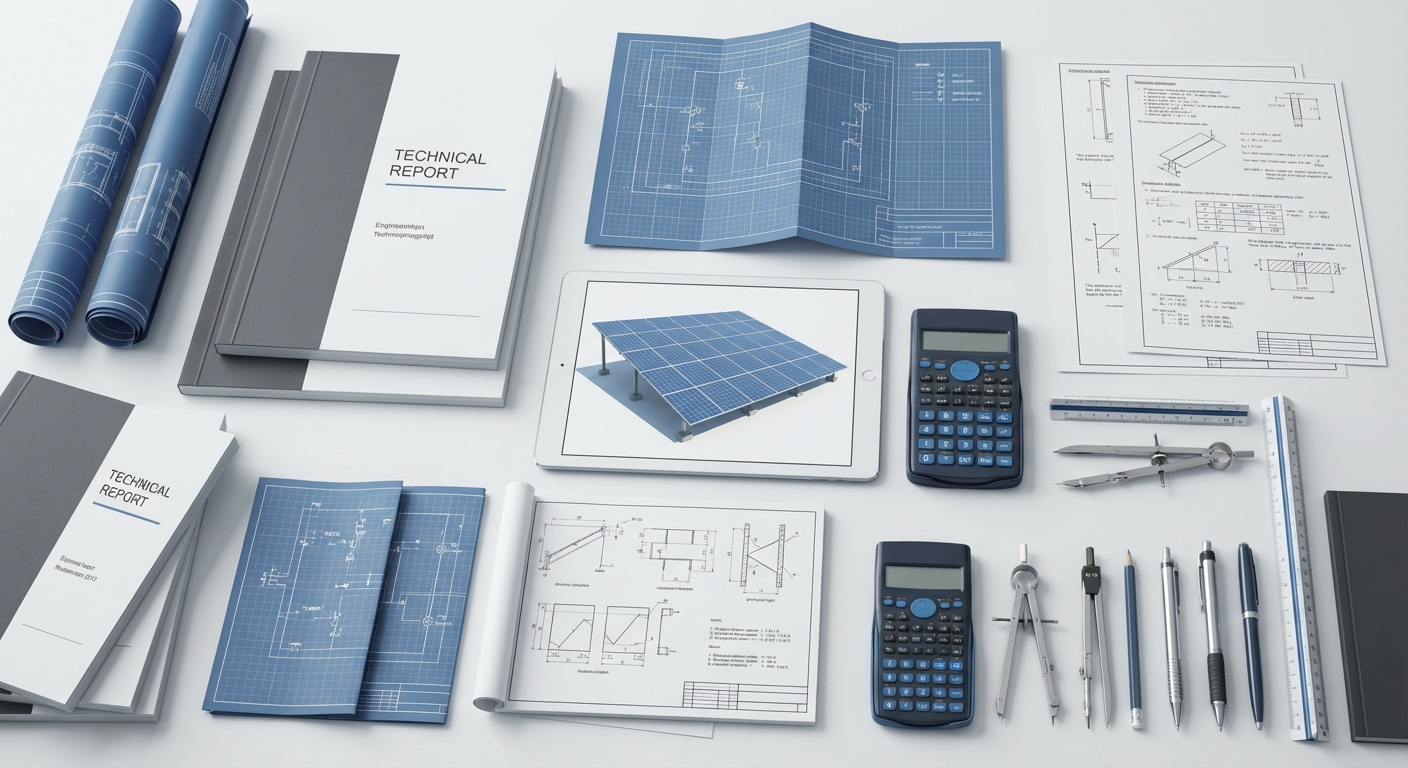
At minimum, your documentation package should include detailed electrical drawings, structural calculations with professional engineer certification, civil site plans, a complete Bill of Quantities (BOQ) with material specifications, layout plans showing exact equipment placement, and all necessary compliance certificates for regulatory submissions. However, truly comprehensive packages go beyond these basics to include supporting documentation that facilitates smooth project execution.
Electrical Engineering Documentation Components
The electrical engineering portion forms the core of your solar design India documentation. This section must include single-line diagrams (SLD) showing the complete electrical architecture from solar arrays through inverters to the grid connection point. Three-line diagrams provide additional detail for critical sections, showing individual phase connections and protection devices.
Cable sizing calculations are essential, accounting for voltage drop, current carrying capacity under Indian ambient temperature conditions, and future expansion provisions. Your documentation should include detailed cable routing plans showing trenching requirements, cable tray layouts for rooftop installations, and conduit specifications. These plans must consider practical installation constraints and maintenance access requirements.
Earthing and lightning protection drawings ensure safety compliance with Indian Standards (IS 3043 for earthing and IS/IEC 62305 for lightning protection). The documentation should specify earthing electrode configurations, conductor sizing, equipotential bonding requirements, and lightning arrestor placement. AC and DC load calculations verify that all equipment is properly sized, while protection scheme documentation details circuit breaker ratings, fuse specifications, and coordination studies.
For grid-connected systems, your electrical documentation must include interconnection drawings meeting specific DISCOM requirements, which vary significantly across Indian states. This includes metering arrangements, isolation provisions, and anti-islanding protection schemes. Quality documentation packages provide state-specific variations when EPCs operate across multiple regions.
Structural Engineering Documentation for Solar Projects
Structural engineering documentation ensures that your solar installation can withstand environmental loads throughout its 25-year operational life. This critical component of structural engineering India deliverables must include foundation design calculations certified by a professional structural engineer registered with the appropriate state authority.
Wind load analysis forms the foundation of structural design, using site-specific wind speed data and terrain categories per IS 875 (Part 3). For rooftop solar projects, documentation must include detailed roof load assessment verifying that existing structures can support additional dead loads from modules and mounting structures, plus live loads from maintenance activities and environmental factors. Many rooftop projects fail or face delays because this assessment was inadequate or missing entirely.
Module mounting structure specifications should detail material grades, connection methods, corrosion protection measures, and assembly instructions. For ground mount installations, foundation designs must account for soil bearing capacity determined through geotechnical investigations, with options for different foundation types (driven piles, concrete footings, helical anchors) based on soil conditions.
Seismic load calculations are mandatory for projects in seismic zones, following IS 1893 guidelines. Your structural documentation should clearly show how the design accounts for earthquake forces and includes appropriate detailing for ductile connections. Professional engineer certification and stamps on all structural calculations are non-negotiable requirements for regulatory approvals and insurance purposes.
Civil Engineering and Site Documentation
Civil engineering documentation translates your solar design into practical site implementation plans. Site layout plans show the exact placement of all equipment including solar arrays, inverters, transformers, switchgear, control rooms, and access roads. These plans must account for shading analysis results, maintenance access requirements, and future expansion provisions.
Grading plans specify site preparation requirements, including cut and fill volumes, slope stabilization measures, and finished grade elevations. Proper grading ensures effective drainage and prevents water accumulation that could damage equipment or create safety hazards. Drainage and water management plans are particularly critical for ground mount projects during India’s monsoon season, showing swale locations, culvert sizing, and stormwater management provisions.
For larger projects, civil documentation includes access road layouts with specifications for road width, turning radii for construction vehicles, and pavement design. Fencing and security infrastructure plans show perimeter protection, gate locations, and security lighting arrangements. Geotechnical investigation reports provide essential soil data that informs foundation design and should be included as supporting documentation.
The Engineering Documentation Process: From Design to Delivery
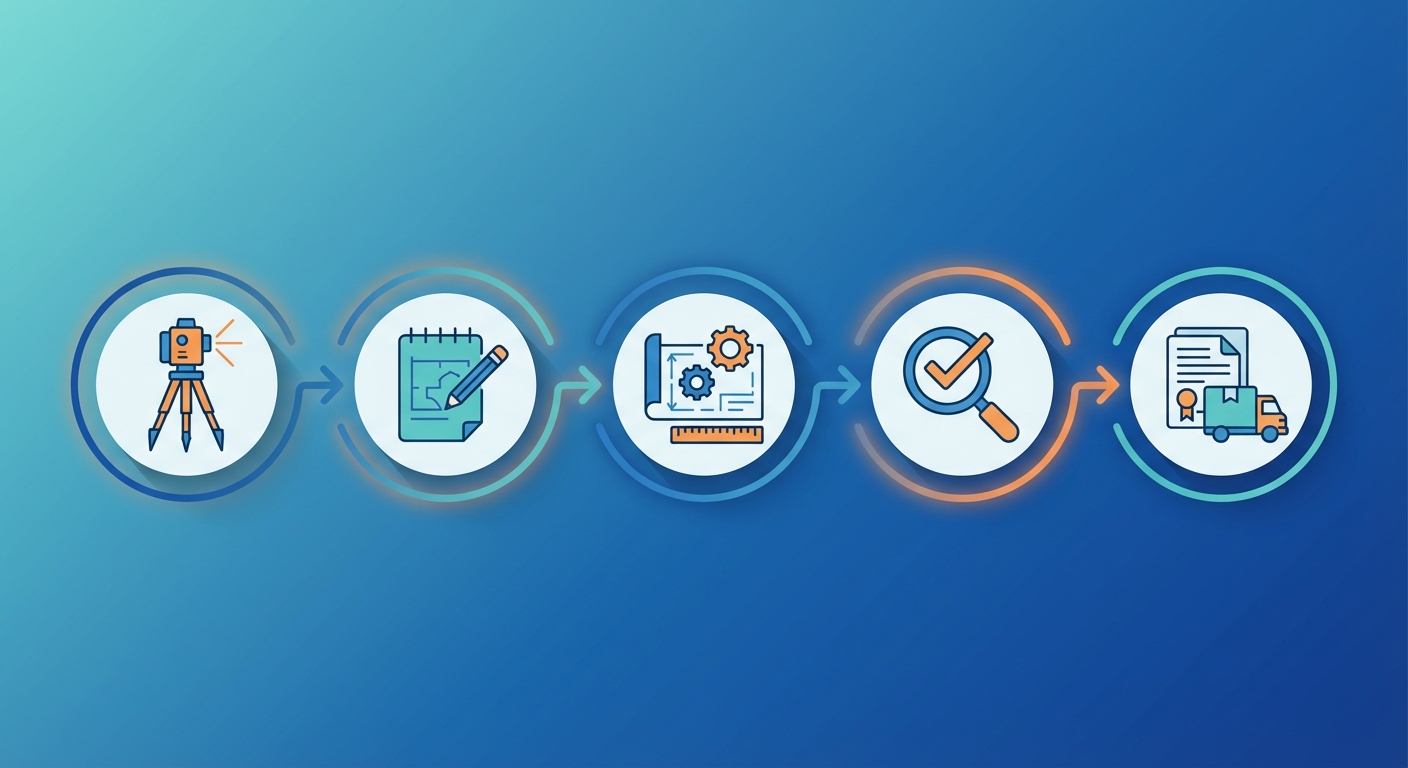
Understanding the engineering documentation process helps EPCs set realistic expectations and plan project timelines effectively. The process typically follows a structured sequence from initial data collection through final deliverable handover, with quality checkpoints at each stage.
The process begins with site survey and data collection, where accurate site measurements, soil testing, roof structural assessment, and electrical infrastructure evaluation are conducted. This phase is critical because documentation quality depends entirely on input data accuracy. Heaven Designs offers comprehensive site survey and feasibility study services across India to ensure this foundation is solid.
During the preliminary design phase, engineers develop initial layouts, conduct shading analysis, and establish the basic system architecture. This phase produces preliminary drawings and energy yield estimates that help EPCs confirm project viability and finalize commercial terms with clients. Quick turnaround on preliminary designs allows EPCs to respond rapidly to tender opportunities and customer inquiries.
The detailed engineering design phase is where comprehensive documentation is created. Electrical engineers develop complete electrical drawings and calculations, structural engineers produce certified structural designs, and civil engineers prepare site plans and specifications. This phase typically requires three to four weeks for megawatt-scale projects, depending on complexity and data availability.
Quality review and internal verification ensure that all documentation meets technical standards, regulatory requirements, and internal quality benchmarks. Experienced design firms employ multi-level review processes where senior engineers verify calculations, check drawing consistency, and confirm compliance with applicable codes. This internal quality assurance prevents errors from reaching clients and regulatory authorities.
Client review and revision cycles allow EPCs to provide feedback and request modifications based on site-specific requirements or client preferences. Professional documentation partners establish clear revision protocols, typically including one or two revision rounds within the project scope. Understanding these protocols upfront prevents misunderstandings and timeline disputes.
Final deliverable package preparation involves organizing all documents, applying professional engineer stamps and certifications, and delivering documentation in formats suitable for regulatory submissions and contractor use. Quality partners provide both digital files (AutoCAD, PDF) and printed sets as needed, with proper version control and document indexing.
Quality Standards and Compliance Requirements in Engineering Documentation India
Solar engineering documentation India projects must comply with a complex web of national standards, state regulations, and utility-specific requirements. Understanding these compliance requirements ensures that your documentation package gains rapid approvals and avoids costly rejections.
Indian Standards (IS codes) form the foundation of technical compliance. Key standards include IS 16169 for grid-connected solar photovoltaic systems, IS 875 for structural loads, IS 3043 for earthing, IS 732 for electrical wiring, and IS 1893 for seismic design. Your documentation partner should demonstrate thorough knowledge of these standards and their application to solar projects.
State Electricity Board requirements vary significantly across India, creating challenges for EPCs operating in multiple states. Some states require specific drawing formats, particular certification procedures, or additional technical studies. For example, Maharashtra’s MSEDCL has different interconnection requirements compared to Gujarat’s distribution companies. Documentation partners with multi-state experience can navigate these variations efficiently.
Central Electricity Authority (CEA) regulations apply to larger projects and grid interconnection standards. CEA’s technical standards for connectivity specify protection requirements, power quality standards, and grid code compliance. Projects seeking approval under government schemes like PM-KUSUM or rooftop solar programs must meet specific technical criteria documented in your engineering package.
Bureau of Indian Standards (BIS) compliance ensures that specified equipment meets Indian quality standards. Your documentation should reference BIS-approved equipment where mandatory and include test certificates as supporting documentation. For projects with international equipment, documentation must show equivalence to Indian standards or obtain specific approvals.
Quality assurance processes distinguish professional documentation partners from generic engineering firms. Look for partners who employ structured quality management systems, maintain design checklists, conduct peer reviews, and use standardized templates that incorporate regulatory requirements. Heaven Designs’ team of over 50 specialized engineers follows rigorous quality protocols honed through 628+ MW of completed design work, ensuring that every deliverable meets the highest standards.
Documentation Revision Protocols and Change Management
Even with excellent initial documentation, revisions are often necessary due to site condition changes, client preference modifications, or regulatory feedback. Understanding revision protocols and change management processes helps EPCs manage expectations and timelines effectively.
Standard revision cycles typically include one or two revision rounds within the base project scope. These revisions address minor adjustments, clarifications, or corrections that don’t fundamentally change the project scope. Professional documentation partners clearly define what constitutes a standard revision versus a scope change requiring additional time and cost.
To request revisions effectively, EPCs should consolidate feedback into organized revision requests rather than submitting piecemeal changes. Providing clear markup on drawings or detailed written descriptions helps engineers understand exactly what modifications are needed. Establishing a single point of contact for revision communication prevents confusion and ensures nothing is missed.
Version control and document management are essential for tracking changes and ensuring everyone works from current drawings. Professional documentation uses systematic revision numbering (R0, R1, R2) with revision clouds and descriptions on drawings showing what changed. Digital document management systems provide audit trails and prevent the common problem of contractors working from outdated drawings.
Scope changes that significantly alter the project design require formal change management processes. Examples include changing system capacity, relocating major equipment, or redesigning structural systems due to unexpected site conditions. These changes typically require additional engineering time and should be addressed through formal change orders with revised timelines and costs.
Communication protocols during revision processes should establish response timeframes, clarification procedures, and escalation paths for urgent issues. Clear communication prevents the frustration of waiting for responses and helps EPCs plan construction schedules confidently. The best documentation partners provide dedicated project managers who maintain proactive communication throughout the revision process.
Timeline Expectations for Engineering Documentation India Projects
Realistic timeline expectations are crucial for project planning and client commitments. Documentation timelines vary based on project size, complexity, data availability, and the number of engineering disciplines involved.
For residential rooftop projects (up to 10 kW), expect documentation completion in 5-7 business days after receiving complete site survey data. These smaller projects require electrical drawings, structural assessment, and basic layout plans but involve less complexity than commercial installations.
Commercial and industrial rooftop projects (10 kW to 1 MW) typically require 10-15 business days for complete documentation. These projects involve more complex electrical designs, detailed structural analysis of existing buildings, and coordination with facility operations. The timeline assumes that roof structural drawings and electrical infrastructure details are available upfront.
Ground mount projects (1 MW to 10 MW) generally need 3-4 weeks for comprehensive engineering documentation. These projects require extensive civil engineering, geotechnical analysis, detailed structural design for mounting systems, and coordination between multiple engineering disciplines. Projects in challenging terrain or with complex grid interconnection requirements may need additional time.
Several factors affect documentation delivery speed beyond project size. Complete and accurate site survey data is the most critical factor—projects with incomplete surveys face delays while additional data is collected. For insights on how project timelines impact overall costs, review our detailed analysis of solar design timeline and cost relationships.
Regulatory complexity also impacts timelines. Projects in states with unique requirements or those requiring multiple agency approvals need additional time for compliance verification. Client responsiveness during review cycles affects overall timelines—prompt feedback and decision-making keep projects on schedule, while delayed responses extend delivery dates.
Fast-track documentation options are available for urgent projects, though these typically involve premium pricing and require dedicated engineering resources. EPCs should communicate urgency upfront and ensure that all required data is immediately available to maximize fast-track effectiveness.
How to Evaluate Engineering Documentation Quality
Not all engineering documentation is created equal. EPCs must evaluate documentation quality before submitting for approvals or releasing to contractors, as poor-quality documentation leads to field problems, approval delays, and cost overruns.

Key quality indicators in electrical drawings include clear labeling of all components, consistent symbol usage following IS standards, complete cable schedules with sizing justifications, and proper single-line diagram hierarchy. Drawings should include all necessary notes and specifications, with references to applicable standards. Check that voltage drop calculations account for actual cable routing distances and Indian ambient temperature conditions.
Red flags in structural calculations include missing professional engineer stamps, calculations that don’t reference site-specific wind or seismic data, inadequate safety factors, or designs that don’t account for local soil conditions. Quality structural documentation clearly shows all load cases, provides detailed connection designs, and includes material specifications with Indian Standard references.
A completeness checklist for engineering documentation India packages should verify that you’ve received electrical single-line diagrams, detailed electrical layouts, cable schedules and routing plans, structural calculations with PE certification, foundation designs, civil site plans, Bill of Quantities with specifications, equipment datasheets, and all required compliance certificates. Missing any of these components indicates an incomplete package.
Accuracy verification methods include cross-checking calculations against independent tools, verifying that drawings match site survey data, confirming that equipment specifications align with manufacturer datasheets, and ensuring that all regulatory requirements for your specific state are addressed. Experienced EPCs often have senior technical staff review documentation before acceptance.
Professional certifications and stamps required vary by state but typically include structural engineer certification from a registered professional engineer, electrical contractor license references, and company registration details. For projects requiring government approvals or subsidies, ensure that certifying engineers hold valid registrations in the project state. Documentation without proper certifications will be rejected by regulatory authorities, causing significant delays.
Common Challenges in Solar Engineering Documentation and Solutions
Even with experienced documentation partners, EPCs encounter common challenges that can delay projects or compromise quality. Understanding these challenges and their solutions helps prevent problems before they occur.
Incomplete site data is the most frequent challenge, particularly for rooftop projects where building structural drawings are unavailable or inaccurate. Solution: Invest in comprehensive site surveys including structural assessments and electrical infrastructure mapping. For existing buildings, non-destructive testing can verify structural capacity when original drawings are missing. Professional site survey services ensure that documentation is based on accurate field conditions.
Regional variations in regulatory requirements create challenges for EPCs operating across multiple Indian states. What’s acceptable in Gujarat may not meet requirements in Maharashtra or Rajasthan. Solution: Partner with documentation providers who have multi-state experience and maintain updated knowledge of regional requirements. Ask potential partners about their experience in your specific operating states and request sample documentation showing compliance with local regulations. Our comprehensive guide to regional design variations for ground mount projects illustrates these differences.
Coordination between multiple engineering disciplines can lead to inconsistencies where electrical layouts don’t match structural plans or civil grading conflicts with electrical trenching. Solution: Choose documentation partners who employ integrated design processes with regular coordination meetings between electrical, structural, and civil teams. Single-source documentation providers eliminate the coordination challenges inherent in using separate vendors for different engineering disciplines.
Managing client expectations on revision timelines becomes challenging when clients expect instant turnarounds on complex design changes. Solution: Establish clear revision protocols in contracts, including defined turnaround times for different types of changes. Educate clients upfront about the engineering effort required for various modifications. Provide preliminary feedback quickly even when detailed revisions take longer.
Ensuring documentation matches actual site conditions is particularly challenging for projects where site conditions change between survey and construction, or where survey data was incomplete. Solution: Include site verification provisions in construction contracts, allowing for minor field adjustments within defined parameters. For critical projects, conduct pre-construction site verification to confirm that conditions match documentation assumptions. Build contingency provisions into designs for anticipated variations.
Choosing the Right Engineering Documentation Partner in India
Selecting the right engineering documentation India partner is one of the most important decisions EPCs make, as this relationship directly impacts project success, timeline predictability, and profitability. Several essential capabilities distinguish professional solar documentation specialists from generic engineering firms.
Team size and expertise requirements vary based on your project volume and complexity. For EPCs executing multiple concurrent projects, partners need sufficient engineering capacity to handle peak workloads without compromising quality or timelines. Look for firms with dedicated solar engineering teams rather than general engineering companies that treat solar as a side business. Specialized expertise in solar-specific challenges—such as module-level shading analysis, inverter sizing for Indian grid conditions, and solar-specific structural loads, delivers superior results.
Portfolio and track record evaluation should examine both the quantity and quality of completed projects. Ask potential partners about their total megawatts designed, number of clients served, and geographic coverage across India. Request case studies or sample documentation (with client permission) to evaluate quality standards. References from existing clients provide valuable insights into communication, timeline reliability, and problem-solving capabilities.
Communication and project management capabilities often differentiate good partners from great ones. Evaluate how partners handle project intake, provide status updates, manage revisions, and respond to urgent issues. Dedicated project managers who provide proactive communication prevent the frustration of chasing updates. Clear escalation paths for urgent issues ensure that critical problems receive immediate attention.
Cost considerations should balance price with value delivered. The cheapest documentation isn’t always the best value if it requires extensive revisions, causes approval delays, or leads to field problems. Evaluate pricing structures, some partners charge per kilowatt, others use fixed project pricing, and some offer retainer arrangements for high-volume EPCs. Transparent pricing with clear scope definitions prevents disputes and unexpected costs.
Heaven Designs’ approach to comprehensive solar engineering documentation combines specialized expertise, proven processes, and dedicated client support. With over 50 engineers and consultants focused exclusively on solar design, Heaven Designs delivers documentation packages that meet the highest quality standards while maintaining competitive timelines. Having completed 628+ MW of design work for 752+ clients across multiple countries, the team brings deep experience with diverse project types, regional requirements, and regulatory environments.
The Heaven Designs process emphasizes accuracy, completeness, and regulatory compliance from the start. Integrated design teams ensure coordination between electrical, structural, and civil disciplines, eliminating the inconsistencies common with multi-vendor approaches. Rigorous quality assurance processes include multi-level reviews, standardized checklists, and compliance verification before any documentation reaches clients.
For EPCs seeking a reliable documentation partner who understands the unique challenges of the Indian solar market, Heaven Designs offers the expertise, capacity, and commitment to support your project success. Whether you’re executing rooftop installations across multiple states or developing large-scale ground mount projects, comprehensive engineering documentation forms the foundation of profitable, successful project delivery.
Conclusion: Engineering Documentation India as Your Competitive Advantage
In India’s competitive solar EPC market, comprehensive and accurate engineering documentation India packages provide a significant competitive advantage. Quality documentation accelerates regulatory approvals, minimizes construction delays, ensures accurate material procurement, and delivers projects that perform as promised. These benefits translate directly to improved profitability, enhanced reputation, and satisfied clients who become repeat customers.
The complete documentation package, spanning electrical drawings, structural calculations, civil plans, BOQ, and compliance certificates, serves as the blueprint for project success. Understanding what should be included, the processes behind quality deliverables, compliance requirements, and revision protocols empowers EPCs to make informed decisions about documentation partners and set realistic project expectations.
As India continues its renewable energy expansion in 2026 and beyond, EPCs who invest in professional engineering documentation position themselves for sustainable growth. The right documentation partner becomes a strategic asset, enabling you to bid confidently on projects, execute efficiently, and scale your business without compromising quality.
Whether you’re managing your first solar project or your hundredth, comprehensive engineering documentation remains the foundation of successful execution. Don’t let inadequate documentation compromise your project timelines, regulatory approvals, or profitability. Partner with specialists who understand the unique requirements of solar engineering documentation India and deliver the quality your projects deserve.
Ready to elevate your solar projects with comprehensive, compliant engineering documentation? Heaven Designs’ team of 50+ specialized solar engineers delivers complete documentation packages that meet the highest quality standards and regulatory requirements across India. From initial feasibility studies through detailed engineering design and PMC services, we provide the expertise and support your EPC business needs to thrive. Get a Quick Proposal Now! or reach out directly at +91 90811 00297 or service@heavendesigns.in to discuss your engineering documentation requirements and discover how professional design partnership can transform your project outcomes.
This blog post was written using thestacc.com