


For solar EPC companies in India and across global markets, the difference between project success and costly failure often comes down to one critical factor: design accuracy. A single miscalculation in shading analysis, structural load assessment, or electrical design can cascade into project delays, budget overruns, and underperforming installations that fail to meet client expectations. As the solar industry continues its rapid expansion in 2026, the stakes for precision in engineering documentation have never been higher.
Whether you’re managing rooftop solar installations for residential clients or developing megawatt-scale commercial projects, the quality of your design partner’s work directly impacts your bottom line. This comprehensive guide reveals the 10 most critical red flags that signal poor design accuracy—warning signs that every solar EPC company must learn to identify before they derail your projects and damage your reputation.

Why Design Accuracy Matters for Solar EPC Success
The foundation of every successful solar installation begins long before the first panel is mounted. Design accuracy determines whether your project will deliver the promised energy generation, meet regulatory requirements, and provide the return on investment your clients expect. In the competitive solar EPC landscape of 2026, companies that overlook design precision face consequences that extend far beyond a single project.
Consider the financial impact: a design error discovered during installation can require complete system redesign, ordering new equipment, and extending project timelines by weeks or months. For a commercial solar project, these delays translate to lost revenue, penalty clauses, and strained client relationships. According to industry analysis, design-related rework costs solar EPC companies an average of 15-25% of total project budgets when errors are discovered late in the construction phase.
Beyond immediate costs, inaccurate designs compromise long-term performance. Overly optimistic energy generation projections based on flawed shading analysis or incorrect irradiation data leave clients with systems that underperform for 25+ years. This performance gap erodes trust and damages your reputation in a market where word-of-mouth referrals drive business growth.
For solar projects across India, design accuracy also determines permit approval success. State-specific regulations, local building codes, and utility interconnection requirements vary significantly from Gujarat to Maharashtra to Karnataka. A design partner unfamiliar with regional compliance standards will produce documentation that delays or prevents permit approval, stalling your entire project pipeline.
The complexity of modern solar engineering—from ground mount installations to intricate rooftop arrays—demands specialized expertise. As you evaluate design partners or review engineering documentation, understanding these 10 critical red flags will help you identify accuracy issues before they become expensive problems.
1. Incomplete or Outdated Site Survey Data
Every accurate solar design begins with comprehensive site survey data. When you receive engineering documentation built on incomplete or outdated site information, you’re looking at the first major red flag for design accuracy problems. This foundational error undermines every subsequent calculation and design decision.
Warning signs of inadequate site surveys include:
- Missing critical dimensions such as roof pitch measurements, parapet heights, or setback distances
- Reliance solely on satellite imagery without ground-truthing for actual site conditions
- Aerial data that’s more than 12-18 months old, potentially missing new construction or vegetation growth
- Absence of soil testing reports for ground mount projects
- No documentation of existing electrical infrastructure and utility connection points
- Missing photographs from multiple angles showing obstructions and site access
Professional site survey services in India should include detailed measurements, comprehensive photographic documentation, and verification of all assumptions through on-site inspection. When design partners skip this crucial step or rely on outdated data, they’re building your project on a foundation of guesswork rather than facts.
To verify site survey completeness, request the raw survey data package. It should include timestamped photographs, detailed measurement logs, obstruction mapping, and clear documentation of survey methodology. If your design partner cannot provide this level of detail, consider it a serious red flag that their design accuracy may be compromised throughout the project.
2. Inaccurate Shading Analysis and Energy Loss Calculations
Shading analysis represents one of the most technically complex aspects of solar design—and one of the most common sources of design accuracy failures. Oversimplified shading models that fail to account for seasonal variations, nearby structures, or vegetation growth can inflate energy generation projections by 10-30%, setting unrealistic client expectations that your installation will never meet.
Red flags in shading analysis include designs that show zero or minimal shading losses for sites with obvious obstructions. In urban Indian environments, surrounding buildings, water tanks, and rooftop equipment create complex shading patterns that vary throughout the day and across seasons. A design that doesn’t model these variations using industry-standard software is fundamentally flawed.
Critical shading analysis errors to watch for:
- No differentiation between near-field shading (from rooftop equipment, parapets) and far-field shading (from adjacent buildings, trees)
- Failure to model seasonal sun path variations specific to the project latitude
- Missing consideration of future construction or vegetation growth in the project area
- Shading reports that don’t specify the software tool used or methodology applied
- Energy loss calculations that seem unrealistically low compared to site conditions
Proper shading analysis requires sophisticated solar design software that models sun position throughout the year, calculates shade impact on individual modules or strings, and accounts for electrical losses from partial shading. When reviewing designs, ask for detailed shading reports that show monthly and annual shading percentages, not just a single annual average figure.
For rooftop solar projects in India’s dense urban environments, accurate shading analysis is non-negotiable. The difference between a properly modeled design and an oversimplified one can mean the difference between a profitable installation and one that fails to meet performance guarantees.
3. Flawed Structural Load Calculations
Structural engineering failures represent the most dangerous category of design accuracy errors. Incorrect wind load calculations, inadequate seismic analysis, or flawed roof load capacity assessments can result in catastrophic system failures, property damage, and serious safety hazards. For solar EPC companies, structural design errors also create significant liability exposure.
In India, structural requirements vary dramatically by region. Coastal areas face higher wind loads and corrosion considerations. Seismically active zones require enhanced structural design. Rooftop installations must account for building age, construction type, and existing structural capacity. A design partner without expertise in structural engineering India standards will produce documentation that fails to meet local building codes.
Red flags in structural design include:
- Generic structural calculations not customized for the specific project location and building type
- Missing wind load analysis based on local wind zone classifications per IS 875 standards
- Absence of seismic design considerations in earthquake-prone regions
- No professional engineer stamp or certification on structural drawings
- Roof load calculations that don’t account for dead load, live load, and environmental loads combined
- Missing foundation design for ground mount installations based on actual soil testing
Proper structural engineering for solar projects requires certified professionals familiar with Indian building codes, regional climate conditions, and solar-specific structural challenges. When evaluating design documentation, verify that structural calculations include detailed load analysis, factor of safety margins, and compliance with IS codes relevant to your project location.
The cost of structural engineering expertise is minimal compared to the potential consequences of failure. A collapsed solar array doesn’t just destroy equipment, it can injure people, damage property, and end your business. Never accept structural designs that lack proper engineering certification or seem to use generic templates rather than site-specific calculations.
4. Unrealistic Energy Generation Projections
Energy yield calculations form the financial foundation of every solar project. When design accuracy suffers in this critical area, the resulting overly optimistic projections create a cascade of problems: disappointed clients, failed performance guarantees, and financial models that don’t reflect reality. In 2026’s competitive solar market, accurate energy generation forecasting separates professional design partners from those who overpromise and underdeliver.
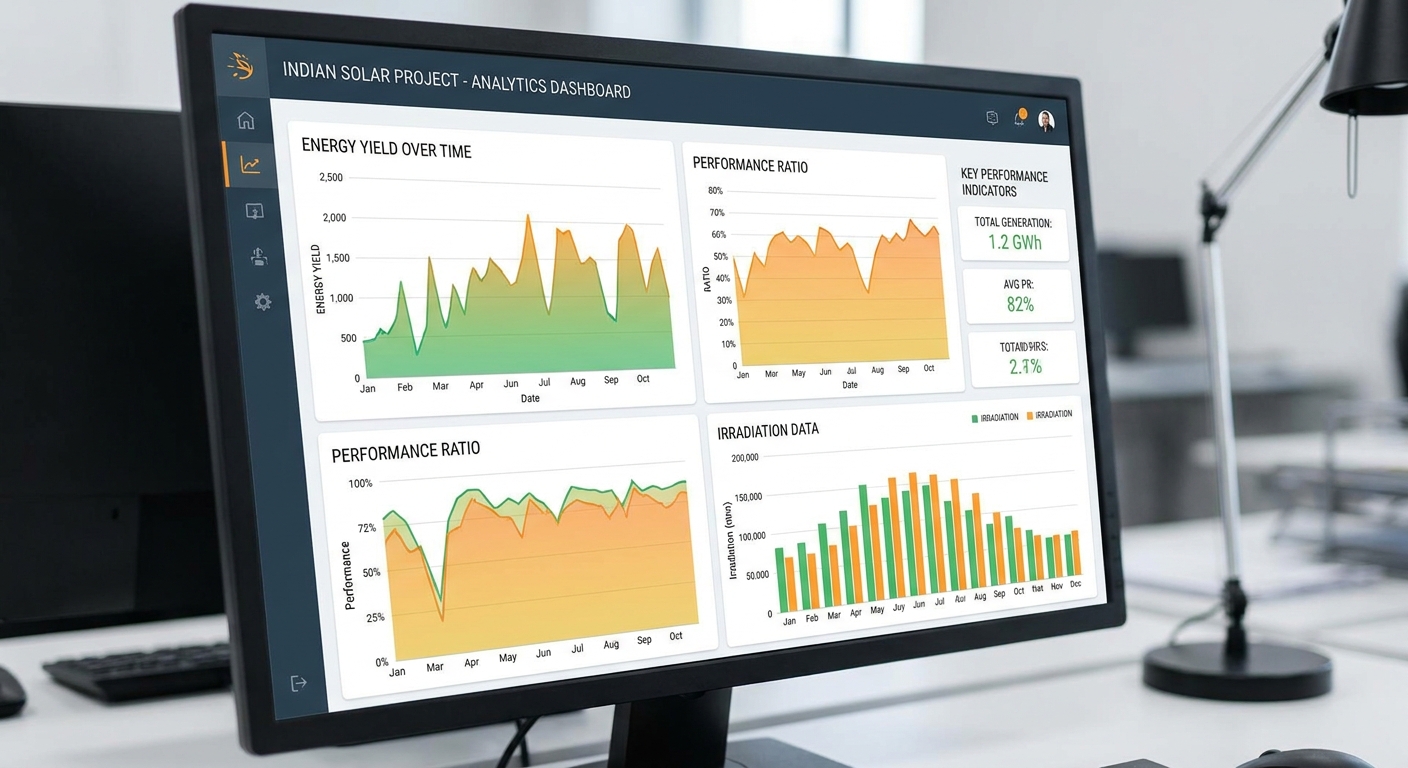
Red flags in energy projections often appear as performance ratio (PR) assumptions that exceed industry norms. While well-designed systems in optimal conditions might achieve PR values of 80-85%, designs that assume 90%+ performance ratios without justification are setting unrealistic expectations. Similarly, energy calculations that don’t account for soiling losses, particularly relevant in India’s dusty environments, will overestimate actual generation.
Critical elements missing from unrealistic energy projections:
- No degradation factor accounting for panel performance decline over the system’s 25-year lifespan
- Failure to include soiling losses appropriate for the local environment (higher in industrial or agricultural areas)
- Incorrect irradiation data that doesn’t match validated sources like NASA SSE or NREL databases
- Missing temperature coefficient calculations showing reduced performance in high-temperature conditions
- Inverter efficiency curves not matched to actual operating conditions
- No consideration of system availability and downtime for maintenance
To validate energy generation projections, compare the design’s assumptions against industry benchmarks and request detailed calculation methodology. Professional solar engineers should provide month-by-month energy generation estimates, not just annual totals, allowing you to verify that seasonal variations are properly modeled.
Ask your design partner to explain their performance ratio assumptions and how they account for real-world losses. If they cannot provide detailed justification for their numbers, or if their projections seem significantly higher than comparable projects in similar locations, you’re looking at a major design accuracy red flag that will likely result in underperforming installations.
5. Inadequate Electrical Design Documentation
Electrical design forms the nervous system of every solar installation. Incomplete or inaccurate electrical documentation creates safety hazards, code violations, and systems that fail to perform as intended. For solar EPC companies, electrical design errors discovered during installation or inspection can halt projects and require expensive redesign work.
Professional electrical design for solar projects requires detailed single-line diagrams, comprehensive three-line schematics, and precise calculations for string sizing, inverter selection, and cable specifications. When these elements are missing or appear generic, you’re facing serious design accuracy concerns that will impact project execution.
Warning signs of inadequate electrical design:
- Single-line diagrams that lack detail on protection devices, disconnects, and monitoring equipment
- String configurations that don’t optimize for inverter input voltage ranges and MPPT windows
- Cable sizing calculations that ignore voltage drop limits or don’t account for ambient temperature derating
- Missing or inadequate earthing and lightning protection system design
- No arc fault or rapid shutdown provisions where required by code
- Inverter selections that don’t match array configuration or site conditions
- Absence of AC and DC load calculations and distribution panel schedules
Electrical design must comply with the Indian Electricity Rules, National Electrical Code standards, and any state-specific requirements. For grid-connected systems, utility interconnection standards add another layer of complexity. A design partner unfamiliar with these requirements will produce documentation that fails inspection and delays commissioning.
When reviewing electrical designs, verify that all calculations are shown, not just final specifications. Professional solar engineers should provide detailed voltage drop calculations, short circuit current analysis, and protection device coordination studies. If the electrical design appears to be a template with your project details filled in, rather than a custom design based on site-specific requirements, consider it a red flag requiring further investigation.
6. Poor Module Layout and Array Configuration
Module layout optimization directly impacts both installation costs and long-term energy generation. Poor array configuration represents a subtle but significant design accuracy failure that many solar EPC companies overlook until installation begins. Inefficient layouts waste valuable roof or land space, increase balance-of-system costs, and reduce overall project economics.
Red flags in module layout include designs that fail to maximize usable space while maintaining proper setbacks and access requirements. For rooftop solar installations in India, designs must balance module density with maintenance access, fire safety setbacks, and structural load distribution. Ground mount projects require optimization for land use efficiency while accounting for inter-row spacing to minimize shading.
Common module layout errors that signal design accuracy problems:
- Inefficient use of available area leaving significant usable space unutilized
- Module orientation and tilt angles not optimized for the site latitude and energy generation goals
- Inadequate spacing for maintenance access between rows or around rooftop equipment
- No consideration for future system expansion or additional capacity
- String layouts that create electrical mismatches or complicate wiring runs
- Failure to account for cleaning access and equipment replacement pathways
Professional module layout design requires balancing multiple competing factors: maximizing capacity, optimizing energy yield, minimizing installation complexity, and ensuring long-term maintainability. Software tools can generate automated layouts, but experienced solar engineers must review and refine these designs based on practical installation considerations.
When evaluating module layouts, look for designs that show clear consideration of installation logistics. Are cable runs minimized? Can installers safely access all areas? Is there room for inverters, combiner boxes, and other balance-of-system equipment? A layout that looks good on paper but proves difficult to install signals a design partner who lacks practical construction experience.
7. Missing or Incomplete Permit Design Documentation
Permit approval delays represent one of the most frustrating consequences of poor design accuracy. Incomplete or non-compliant permit design documentation can stall projects for weeks or months while you scramble to obtain missing certifications, revise drawings, or provide additional engineering analysis. For solar EPC companies managing multiple projects, permit delays create cascading schedule problems across your entire portfolio.
Permit requirements vary significantly across Indian states and local jurisdictions. What’s acceptable in Gujarat may not meet requirements in Karnataka or Maharashtra. A design partner without experience in your specific jurisdiction will produce generic documentation that fails to address local authority expectations.
Red flags in permit design documentation:
- Missing jurisdiction-specific cover sheets, title blocks, or required declaration formats
- Absence of professional engineer stamps and certifications required by local authorities
- Incomplete fire safety documentation including setbacks, access pathways, and rapid shutdown provisions
- No structural certification letters from licensed structural engineers
- Missing electrical compliance certificates or load calculation approvals
- Drawings that don’t follow local CAD standards or submission format requirements
- Absence of required environmental clearances or NOCs for certain project types
Professional permit design services should include pre-submission review against local requirements and coordination with permitting authorities to address questions before formal submission. When design partners claim their documentation is “permit-ready” without asking about specific jurisdiction requirements, that’s a warning sign they may not understand the complexity of Indian solar permitting.
To avoid permit delays, verify that your design partner has recent experience with successful permit approvals in your project’s specific location. Request examples of approved permit sets from similar jurisdictions. The investment in proper permit design documentation pays for itself many times over by avoiding the costs and delays of resubmission and revision cycles.
8. Failure to Account for Local Regulations and Standards
Regulatory compliance extends far beyond basic permit requirements. Solar projects in India must navigate a complex landscape of building codes, electrical standards, grid interconnection rules, and state-specific solar policies. Design accuracy suffers dramatically when engineering teams lack familiarity with these location-specific requirements, resulting in systems that fail inspections or cannot be commissioned.
The regulatory environment for solar installations varies not just between states but often between utility service territories within the same state. Net metering policies, interconnection standards, and technical requirements differ across DISCOM jurisdictions. A design partner without current knowledge of these regulations will produce documentation that doesn’t meet approval requirements.
Warning signs of regulatory compliance gaps:
- Generic designs that don’t reference specific Indian Standards (IS codes) applicable to the project
- Missing compliance with state electricity board or DISCOM interconnection requirements
- No consideration of local building code amendments or municipal regulations
- Inverter or equipment specifications that don’t meet Indian grid code requirements
- Absence of required safety features mandated by recent regulatory updates
- No documentation of compliance with state solar policy provisions or subsidy requirements
For solar EPC companies operating across multiple Indian states, partnering with design teams who maintain current knowledge of regional regulations is essential. The regulatory landscape continues to evolve in 2026, with new safety standards, grid code updates, and policy changes emerging regularly. Design partners who don’t actively track these changes will produce outdated documentation.
When evaluating design accuracy, ask specific questions about regulatory compliance: Which version of IS 875 was used for structural calculations? How does the design meet the latest CEA grid connectivity regulations? What state-specific requirements were incorporated? If your design partner cannot provide detailed answers, their documentation likely contains compliance gaps that will surface during permitting or inspection.
9. Inconsistent or Outdated Design Software Usage
The tools used to create solar designs directly impact design accuracy. In 2026, industry-standard software platforms provide sophisticated modeling capabilities for shading analysis, energy simulation, and electrical design. When design partners use outdated software versions, non-standard tools, or inconsistent design platforms, the resulting documentation often contains errors and inconsistencies that compromise project quality.
Professional solar design requires specialized software for different aspects of the project: PVsyst or Helioscope for energy modeling, AutoCAD or similar CAD platforms for engineering drawings, and structural analysis tools for load calculations. Red flags appear when design partners cannot clearly identify which software tools they used or when different sections of the design appear to come from incompatible platforms.
Software-related design accuracy warning signs:
- Use of outdated software versions with known calculation bugs or limitations
- Reliance on generic spreadsheet tools rather than industry-standard solar design software
- Inconsistent data between different design documents suggesting manual transfer errors
- No software validation reports or quality control checks on calculation outputs
- Missing simulation files or source data that would allow verification of results
- Design partners who cannot provide software version information or methodology documentation
The investment in professional design software India teams use represents a significant commitment to accuracy and quality. When evaluating design partners, ask about their software toolkit and how they ensure consistency across different design elements. Professional firms should be able to provide detailed methodology documentation explaining their design workflow and quality control processes.
Be particularly cautious of designs that appear to use generic templates with project-specific details filled in. While templates can provide starting points, every solar project requires custom engineering based on unique site conditions, client requirements, and regulatory context. Software tools should enable this customization, not constrain it.
10. Lack of Design Review and Quality Assurance Process
Even experienced solar engineers make mistakes. The difference between professional design firms and those with chronic design accuracy problems often comes down to quality assurance processes. When design documentation lacks evidence of peer review, multi-level checking, or systematic quality control, errors that should have been caught before delivery make their way into your project.
Professional engineering firms implement structured review processes where senior engineers verify calculations, check compliance with standards, and validate design assumptions before releasing documentation. The absence of this quality layer represents perhaps the most fundamental red flag in evaluating design partners.
Missing quality assurance indicators:
- No evidence of peer review or checker approval on engineering drawings
- Design documentation delivered without internal quality control sign-offs
- Absence of design validation checklists or compliance verification procedures
- No version control system tracking design revisions and approvals
- Single engineer responsible for all aspects of design without oversight
- Missing design basis documentation explaining key assumptions and decisions
- No formal process for incorporating client feedback or addressing RFIs
When interviewing potential design partners, ask detailed questions about their quality assurance process. How many levels of review does a typical design undergo? Who checks structural calculations? How do they verify compliance with local codes? What happens when errors are discovered? Professional firms should have clear, documented answers to these questions.
The cost of implementing robust quality assurance processes is minimal compared to the expense of fixing design errors during construction or, worse, after installation. For solar EPC companies, partnering with design firms that prioritize quality control protects your projects, your reputation, and your bottom line. If a design partner cannot articulate their QA process or seems to view review as unnecessary overhead, that’s your signal to look elsewhere.
How to Evaluate Your Design Partner’s Accuracy Standards
Understanding red flags is only valuable if you know how to assess potential design partners before committing to a relationship. Evaluating design accuracy standards requires looking beyond marketing claims to examine actual processes, team qualifications, and demonstrated results. For solar EPC companies in India selecting a design partner in 2026, this due diligence process can prevent costly mistakes and establish a foundation for long-term success.

Start by examining the design team’s qualifications and experience. How many projects have they completed in your target market? Do they have engineers with relevant certifications and licenses? For work in India, verify that the team includes professionals familiar with Indian Standards, local building codes, and state-specific regulations. A design partner with extensive international experience but no India-specific expertise will struggle with regulatory compliance and regional design requirements.
Key questions to ask potential design partners:
- Can you provide examples of completed projects similar to ours in size, type, and location?
- What is your team’s experience with our specific jurisdiction’s permitting requirements?
- Which software tools do you use for different aspects of solar design?
- What quality assurance processes do you implement before delivering designs?
- How do you handle design revisions if errors are discovered?
- What certifications and professional licenses do your engineers hold?
- Can you provide references from other solar EPC companies you’ve worked with?
- What is your typical design timeline and how do you manage project schedules?
Request to review sample design packages from completed projects. Examine the level of detail, documentation quality, and evidence of quality control processes. Professional design documentation should be comprehensive, well-organized, and clearly show multiple levels of review and approval. If sample packages appear sparse or lack proper engineering sign-offs, that’s a red flag about the firm’s standards.
Discuss the design partner’s approach to collaboration and communication. How do they handle questions during the design process? What’s their policy on revisions and refinements? Clear communication channels and responsive support indicate a partner who values accuracy and client satisfaction. Firms that are difficult to reach or defensive about questions may not be the right fit for your projects.
For solar EPC companies managing significant project volumes, consider the design partner’s capacity and scalability. Can they handle multiple concurrent projects while maintaining quality standards? Do they have sufficient team depth to meet your timeline requirements? A design partner who overpromises on capacity and then delivers rushed, error-prone work creates more problems than they solve.
Finally, evaluate the design partner’s commitment to staying current with industry developments. Do they invest in ongoing training for their team? Are they familiar with the latest solar technologies, design software updates, and regulatory changes? In the rapidly evolving solar industry of 2026, design partners who don’t prioritize continuous learning will quickly fall behind best practices.
The Cost of Poor Design Accuracy vs. Investment in Quality
The financial case for prioritizing design accuracy becomes clear when you calculate the true cost of design errors. While budget-conscious solar EPC companies may be tempted by low-cost design services, the savings evaporate quickly when errors force rework, delay projects, or result in underperforming installations. Understanding this cost equation helps justify investment in quality design partnerships.
Consider a typical scenario: a 500 kW commercial rooftop project with design errors discovered during installation. The structural calculations were inadequate, requiring reinforcement work that wasn’t budgeted. The electrical design had string sizing errors, necessitating additional inverters. The shading analysis was oversimplified, meaning the promised energy generation won’t be achieved. The cumulative impact includes:
- Two weeks of project delay while redesign and additional materials are procured
- 15-20% cost overrun for unplanned structural work and equipment changes
- Penalty payments to the client for missing commissioning deadlines
- 10-15% lower energy generation than projected, affecting performance guarantees
- Damaged reputation with the client, reducing likelihood of future projects or referrals
- Team time diverted from other projects to manage the crisis
The total cost of these design accuracy failures can easily exceed 25-30% of the original project value. Compare this to the investment in quality design services, which typically represents 2-4% of total project costs. The return on investment in accurate, professional design work is substantial and measurable.
Beyond individual project impacts, chronic design accuracy problems damage your company’s market position. In India’s competitive solar EPC landscape, reputation spreads quickly. Clients who experience underperforming installations or project delays share their experiences with peers. The long-term revenue impact of lost opportunities and damaged credibility far exceeds any short-term savings from budget design services.
Conversely, partnering with design firms that prioritize accuracy creates competitive advantages. Projects that proceed smoothly from design through installation build client confidence. Systems that meet or exceed performance projections generate referrals and repeat business. The ability to deliver on promises consistently allows you to command premium pricing and win larger, more profitable projects.
For solar EPC companies evaluating design partners in 2026, the question isn’t whether you can afford quality design services, it’s whether you can afford the consequences of poor design accuracy. The investment in experienced, quality-focused design partners pays dividends through every phase of your projects and throughout your client relationships.
Ensuring Design Accuracy for Your Solar Projects
The 10 red flags outlined in this guide provide a framework for evaluating design accuracy in solar engineering documentation. From incomplete site surveys to missing quality assurance processes, each warning sign represents a potential source of costly errors that can derail your solar EPC projects. By learning to identify these issues early, you protect your projects, your clients, and your business reputation.
As India’s solar market continues its rapid growth in 2026, the demand for accurate, professional design services has never been greater. Solar EPC companies that prioritize design quality, through careful partner selection, thorough documentation review, and commitment to engineering excellence, position themselves for sustainable success in this competitive industry.
Remember that design accuracy isn’t just about avoiding errors; it’s about optimizing every aspect of your solar installations for maximum performance, cost-effectiveness, and client satisfaction. The right design partner brings expertise in structural engineering, electrical design, regulatory compliance, and energy modeling that elevates your projects from adequate to exceptional.
Whether you’re developing rooftop solar installations, megawatt-scale commercial projects, or ground mount arrays across India, the foundation of success remains the same: precise, comprehensive, professionally executed solar design that accounts for every detail and anticipates every challenge.
If you’re ready to ensure design accuracy for your solar EPC projects, Heaven Designs offers comprehensive engineering design services backed by a team of over 50 specialized solar engineers. With 628+ MW of completed design work for 752+ clients across multiple countries, we understand the critical importance of precision in every drawing, calculation, and specification. Our quality-focused approach ensures your projects proceed smoothly from design through installation, delivering the performance and reliability your clients expect. Get a Quick Proposal Now! or reach out to our team at service@heavendesigns.in or +91 90811 00297 to discuss how we can support your solar design accuracy requirements.
This blog post was written using thestacc.com