


Choosing the right design partner can make or break your solar EPC business in India’s rapidly growing renewable energy market. As solar installations surge across major cities like Surat, Mumbai, Delhi, Bangalore, and Chennai, EPC companies face a critical decision: should they work with local city-based design vendors or partner with national solar engineering firms? This comprehensive guide examines the key factors that should influence your choice of design vendors India, helping you optimize costs, timelines, and project quality in 2026.
The solar design landscape in India has evolved dramatically over the past few years. With over 628 MW of solar projects requiring detailed engineering documentation and more than 752 EPC companies seeking specialized design services, the vendor selection decision has become increasingly complex. Your choice impacts everything from project costs and turnaround times to regulatory compliance and long-term scalability. Let’s explore both options in depth to help you make an informed decision.
Understanding the Design Vendor Landscape in India’s Solar Industry
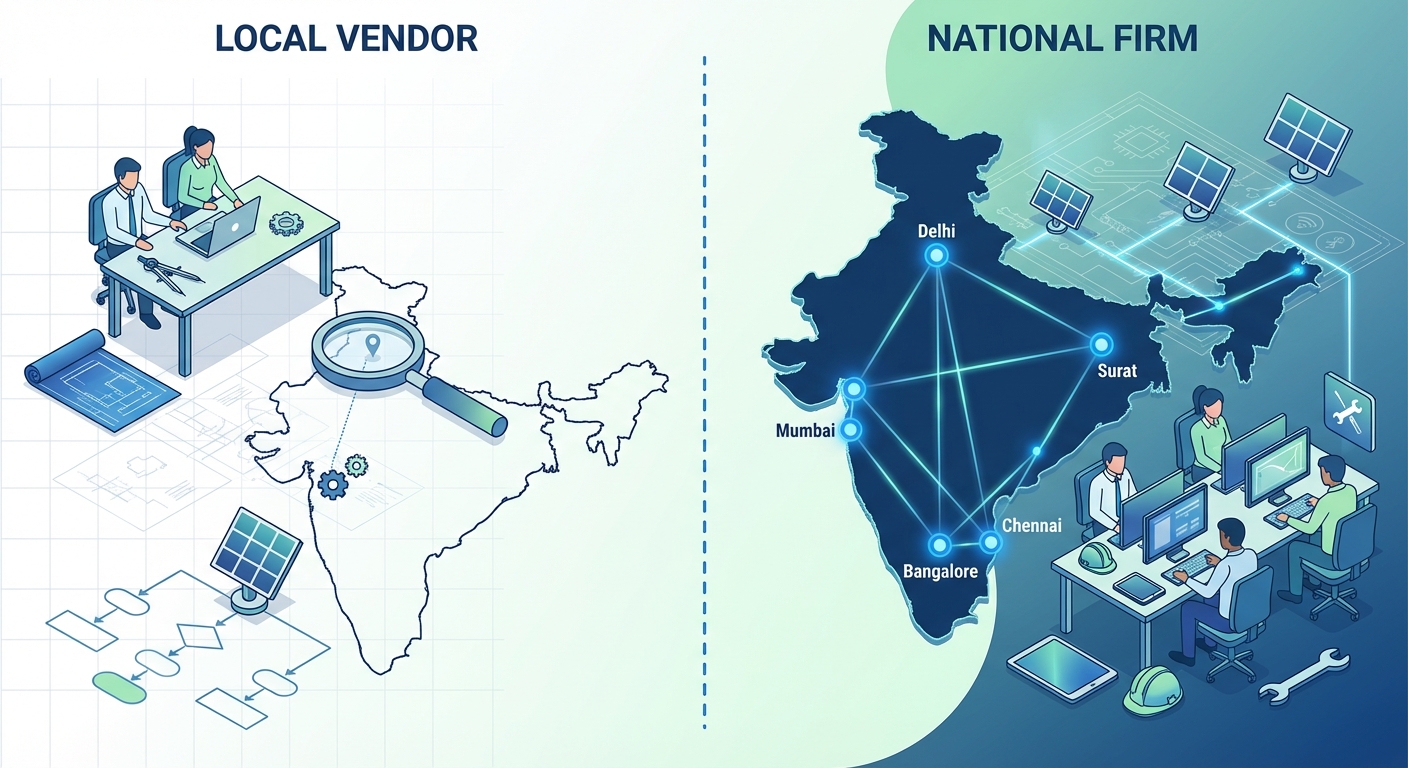
The Indian solar design industry has matured significantly by 2026, creating two distinct categories of service providers. Local design vendors typically operate within a single city or state, offering personalized services with deep knowledge of regional regulations and compliance requirements. These firms usually employ teams of 5 to 20 engineers and focus on serving EPCs within their immediate geographic area.
On the other hand, national solar engineering firms operate across multiple states with larger teams, often exceeding 50 professionals. These organizations invest heavily in advanced design software, standardized processes, and comprehensive quality control systems. They serve clients across India and sometimes internationally, bringing cross-regional expertise to every project.
The distribution of design vendors India varies significantly across major solar markets. Surat and Ahmedabad in Gujarat have emerged as hubs for both local and national vendors due to the state’s solar-friendly policies. Mumbai and Pune attract vendors specializing in complex commercial rooftop projects. Delhi NCR hosts numerous firms focused on ground mount and utility-scale designs. Bangalore has become a technology center with vendors leveraging advanced design software, while Chennai serves the southern market with expertise in coastal and high-wind zone projects.
Understanding this landscape is the first step in making the right vendor selection for your EPC business. The choice between local and national design vendors India directly affects your project economics, delivery timelines, and ability to scale operations across different regions.
Local City-Based Design Vendors: Pros and Cons
Local design vendors have been the traditional choice for many solar EPC companies, particularly those operating within a specific city or state. These vendors offer distinct advantages rooted in their proximity and regional specialization, but they also come with limitations that EPCs must carefully consider.
Advantages of Local Design Vendors India
The primary strength of local vendors lies in their regional compliance expertise. A Surat-based design vendor understands the specific requirements of the Surat Municipal Corporation, knows which officials to coordinate with, and has established relationships with local authorities. This knowledge significantly streamlines the permit design process and reduces approval timelines.
Face-to-face communication represents another major advantage. When your design vendor is located in the same city, you can schedule in-person meetings, conduct joint site visits, and resolve issues through direct interaction. This proximity proves invaluable for projects requiring frequent design iterations or those with unique site constraints that benefit from collaborative problem-solving.
Local vendors also bring deep understanding of regional weather patterns and structural requirements. A Chennai-based vendor knows the cyclone-resistant design standards required for coastal installations. A Delhi vendor understands the dust storm considerations and temperature variations that affect solar installations in North India. This localized knowledge often translates to more appropriate and cost-effective design solutions.
For smaller projects, local design vendors India typically offer competitive pricing. With lower overhead costs and the ability to serve clients efficiently within their geographic area, these vendors can provide attractive rates for residential rooftop projects and small commercial installations under 100 kW.
Limitations of Local Vendors
Despite these advantages, local vendors face significant constraints. Resource limitations represent the most critical challenge. A local firm with 10 engineers can handle only a limited number of concurrent projects. If your EPC business lands three MW-scale projects simultaneously, a local vendor may struggle to deliver all designs within your required timeline.
Technology gaps also pose challenges. Advanced design software India tools like PVsyst, Helioscope, AutoCAD with solar-specific plugins, and structural analysis software require substantial investment. Many local vendors rely on basic tools, which can limit design accuracy and optimization capabilities, particularly for complex commercial or ground mount installations.
Quality inconsistency becomes apparent when local vendors lack standardized processes. Without formal quality control systems, design accuracy may vary depending on which engineer handles your project. This inconsistency creates risks for EPCs building their reputation on reliable, high-quality installations.
Perhaps most limiting is the challenge of multi-city project coordination. If your Surat-based EPC company wins projects in Mumbai, Bangalore, and Delhi, your local Surat vendor may lack the regulatory knowledge and on-ground presence needed to handle designs across these diverse markets. This limitation directly constrains your ability to scale operations nationally.
National Solar Engineering Firms: Comprehensive Analysis

National solar engineering firms represent a different value proposition for EPC companies. These organizations have built their business models around serving clients across multiple states, investing in scalable infrastructure, and delivering consistent quality regardless of project location.
Strengths of National Design Vendors India
The most significant advantage of national firms is their scalability. With teams of 50 or more engineers, these vendors can handle multiple concurrent projects without compromising delivery timelines. If your EPC business experiences rapid growth or seasonal project clustering, a national vendor can absorb the workload fluctuations that would overwhelm a local provider.
Investment in premium design software and tools sets national vendors apart. These firms typically maintain licenses for comprehensive software suites including PVsyst for energy modeling, AutoCAD and SolidWorks for detailed engineering drawings, structural analysis tools for foundation design, and project management platforms for seamless coordination. This technology stack enables more accurate designs, better optimization, and faster turnaround times.
Standardized quality control processes ensure consistency across all projects. National design vendors India implement formal review procedures, maintain design templates that incorporate best practices, and employ dedicated quality assurance teams. This systematization means your 5 MW project in Bangalore receives the same rigorous attention as your 10 MW project in Rajasthan.
Cross-regional expertise represents another critical strength. A national firm that has completed projects across Maharashtra, Gujarat, Karnataka, Rajasthan, and Uttar Pradesh brings accumulated knowledge of diverse regulatory environments, climatic conditions, and structural requirements. This experience translates to designs that account for regional nuances without requiring your EPC team to educate the vendor about local conditions.
Comprehensive service portfolios distinguish national vendors from their local counterparts. Beyond basic permit design, these firms offer feasibility studies, detailed engineering design, structural engineering, PMC services India, and ongoing technical support. This one-stop-shop approach simplifies vendor management and ensures design consistency across all project phases.
Potential Drawbacks of National Firms
National design vendors India typically command higher service fees, particularly for smaller projects. Their pricing reflects the overhead costs of maintaining large teams, premium software licenses, and multi-city operations. For a 50 kW residential rooftop project, the cost difference between a local and national vendor might represent 15-25% of the total design budget.
Communication chains can be longer in national organizations. Instead of speaking directly with the engineer working on your design, you might coordinate through account managers or project coordinators. While this structure ensures professional project management, it can slow down communication for urgent clarifications or last-minute modifications.
Some national vendors maintain minimum project size requirements, focusing their resources on MW-scale commercial, industrial, and ground mount projects where their capabilities provide maximum value. This focus may make them less accessible or cost-effective for EPCs primarily handling residential installations.
Flexibility for urgent local modifications can be more limited. If a site condition changes during installation and requires immediate design adjustment, a local vendor might send an engineer to site within hours. A national vendor may need to coordinate across teams and schedules, potentially extending response times.
Key Comparison Factors for Solar EPC Companies
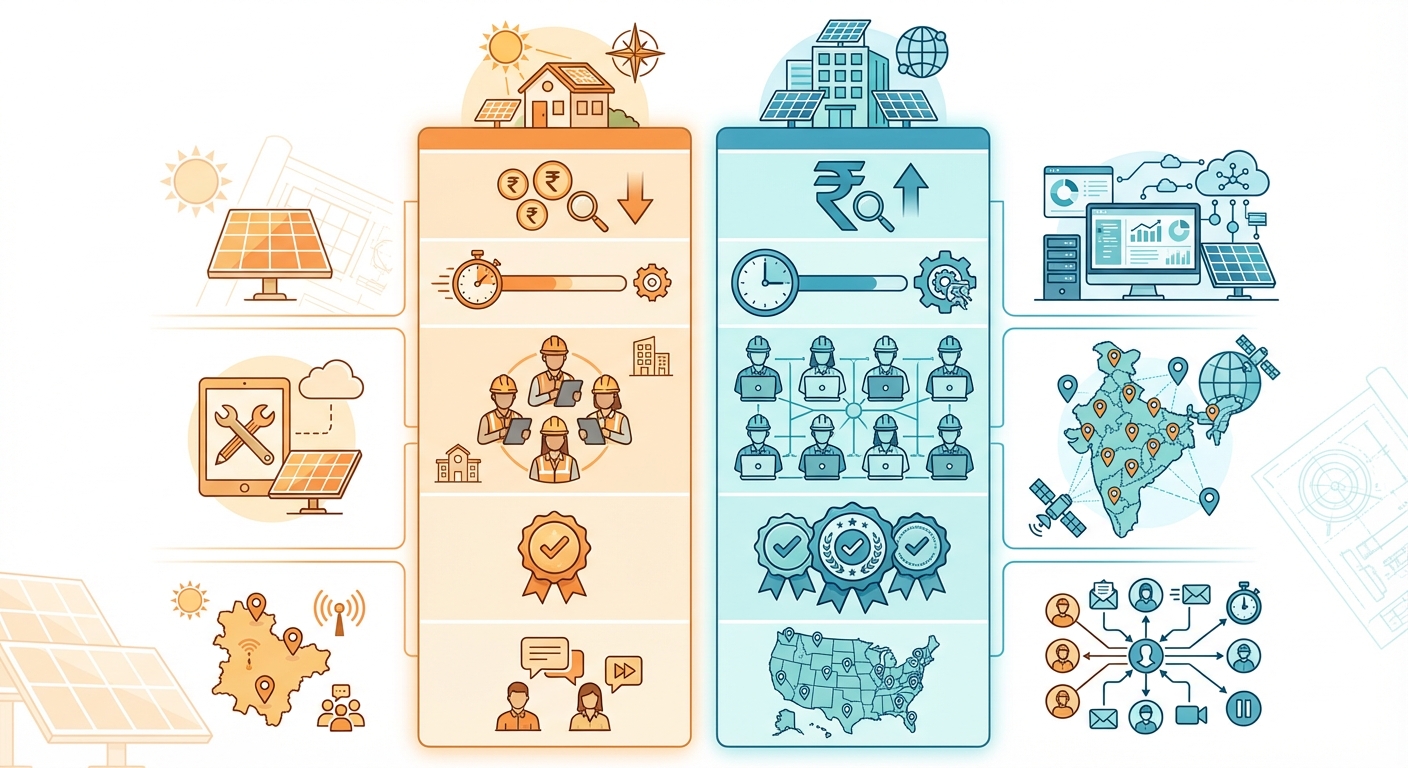
Making an informed decision between local and national design vendors India requires evaluating several critical factors. Let’s examine each dimension in detail to help you assess which option aligns with your EPC business needs.
Cost Differences by Project Size
The solar design cost varies significantly based on project scale and complexity. For residential rooftop projects under 10 kW, local vendors typically charge ₹3,000 to ₹8,000 for basic permit design, while national firms may charge ₹8,000 to ₹15,000 for the same scope. This price difference reflects the standardized processes and comprehensive documentation that national vendors provide.
For commercial rooftop installations between 100 kW and 1 MW, the cost gap narrows. Local vendors charge approximately ₹40,000 to ₹80,000, while national firms charge ₹60,000 to ₹1,20,000. However, national vendors often include additional deliverables like detailed structural analysis, energy yield optimization, and comprehensive as-built documentation that justify the premium.
At MW-scale ground mount projects, national design vendors India often provide better value. Their experience with similar projects, access to advanced simulation tools, and ability to optimize designs for maximum energy generation can result in overall project cost savings that far exceed the design fee difference. A well-optimized design might increase energy generation by 2-3%, translating to significant revenue gains over the project’s 25-year lifespan.
Turnaround Time Comparison
The design timeline directly impacts your project schedule and cash flow. Local vendors often promise faster turnaround for simple residential projects, delivering permit designs in 3-5 business days compared to 5-7 days for national firms. This speed advantage stems from shorter internal approval chains and the ability to quickly conduct site visits when needed.
However, for complex MW-scale projects requiring detailed engineering design, structural calculations, and comprehensive documentation, national vendors frequently deliver faster. Their larger teams can assign multiple engineers to different aspects of the design simultaneously, completing in 3-4 weeks what might take a local vendor 5-6 weeks.
Multi-project timelines favor national vendors significantly. If you need designs for five projects across different cities, a national firm can execute them concurrently, while coordinating with multiple local vendors creates management overhead and potential delays. Learn more about how project duration impacts your budget.
Technical Expertise and Engineering Depth
The technical capabilities of design vendors India vary considerably. National firms typically employ specialized engineers for different aspects of solar design: electrical engineers for system design and energy modeling, civil engineers for foundation and structural work, and mechanical engineers for mounting system design. This specialization ensures each component receives expert attention.
Local vendors often employ generalist solar engineers who handle all design aspects. While this approach works well for straightforward projects, it may fall short for complex installations requiring advanced structural engineering, such as rooftop projects on older buildings or ground mount installations in challenging soil conditions.
Access to advanced design software significantly impacts technical capabilities. National vendors use sophisticated tools for energy yield prediction, shading analysis, and structural load calculations. These tools enable more accurate designs and better optimization, particularly for large commercial and industrial projects where even small efficiency gains translate to substantial financial benefits.
Communication Efficiency and Project Coordination
Communication patterns differ markedly between local and national vendors. Local design vendors India offer direct access to engineers, enabling quick clarifications and collaborative problem-solving. This direct communication proves valuable during the design development phase when multiple iterations may be needed to address site constraints or client requirements.
National vendors implement structured communication protocols with dedicated account managers, project coordinators, and scheduled review meetings. While this structure may seem less flexible initially, it provides clear accountability, documented decision trails, and professional project management that reduces misunderstandings and ensures nothing falls through the cracks.
For EPCs managing multiple concurrent projects, the structured approach of national vendors often proves more efficient. Instead of coordinating with different engineers at various local vendors, you work with a single point of contact who manages all your projects, understands your preferences, and ensures consistent quality across your portfolio.
Regional Compliance Knowledge
Understanding local regulations, building codes, and utility interconnection requirements is critical for successful project execution. Local vendors excel in their home markets, possessing deep knowledge of municipal requirements, established relationships with local authorities, and familiarity with regional approval processes.
National design vendors India compensate for their lack of local presence through systematic documentation of regional requirements, networks of local consultants, and accumulated experience across multiple jurisdictions. A national firm that has completed 50 projects in Mumbai understands that city’s requirements as thoroughly as a Mumbai-based local vendor.
The advantage shifts to national vendors when your projects span multiple states. Their cross-regional experience enables them to navigate the varying requirements of different state electricity boards, municipal corporations, and regulatory authorities without requiring your team to provide extensive guidance for each new location.
Decision Framework: Choosing the Right Design Vendors India
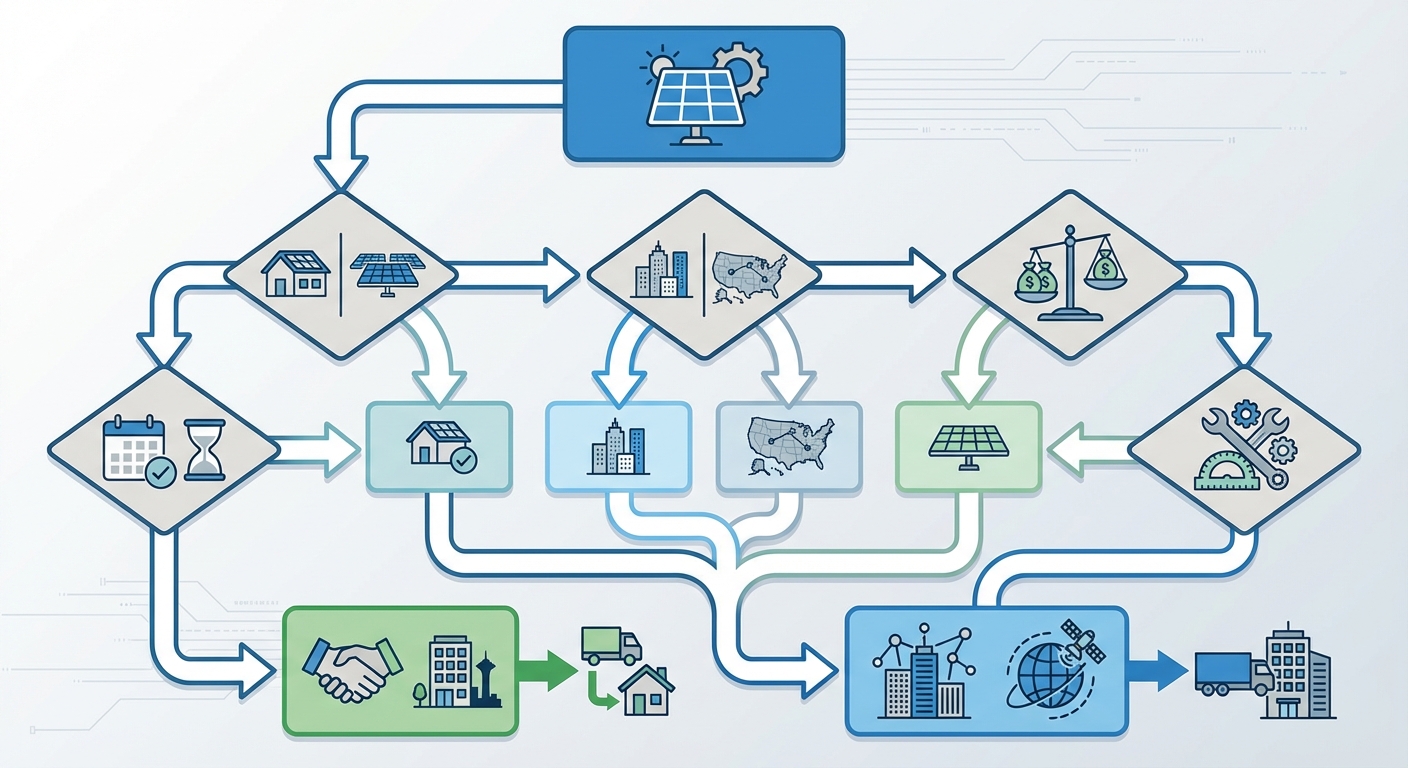
Selecting the optimal design partner requires evaluating your specific business context, project portfolio, and growth objectives. This decision framework helps you systematically assess which type of vendor aligns with your needs.
When to Choose Local Design Vendors
Local design vendors represent the optimal choice in several specific scenarios. If your EPC business focuses on residential rooftop solar India installations within a single city or state, a local vendor provides the best combination of cost-effectiveness, quick turnaround, and personalized service. The ability to conduct joint site visits and resolve issues through face-to-face meetings adds significant value for these smaller projects.
EPCs with established operations in a specific market benefit from long-term relationships with local vendors. If you’ve completed 100+ projects in Surat and have a trusted local design partner who understands your preferences and quality standards, the relationship value may outweigh the potential benefits of switching to a national vendor.
Projects requiring frequent site visits during the design phase favor local vendors. Complex rooftop installations on industrial facilities with multiple roof levels, obstructions, and structural constraints benefit from a vendor who can easily visit the site multiple times to refine the design.
Budget-constrained projects with straightforward design requirements work well with local vendors. If you’re competing on price for a simple residential installation and need to minimize design costs, a local vendor’s lower fees help maintain your competitive position without sacrificing quality for basic projects.
Quick permit design needs for familiar jurisdictions also favor local vendors. When you need a simple permit drawing for a standard residential installation in a jurisdiction where you’ve completed many projects, a local vendor can deliver quickly at a competitive price.
When to Choose National Design Vendors India
National solar engineering firms become the clear choice for MW-scale commercial, industrial, and ground mount projects. These installations require comprehensive detailed engineering design, advanced structural calculations, sophisticated energy modeling, and extensive documentation. The technical depth and specialized expertise of national vendors justify their higher fees through better optimization and reduced project risks.
EPCs operating across multiple states or planning geographic expansion should partner with national design vendors India. The ability to maintain consistent design quality, leverage cross-regional expertise, and work with a single vendor across all markets simplifies operations and supports scalable growth. Instead of managing relationships with local vendors in five different cities, you coordinate with one national partner who handles all locations.
Projects with complex structural engineering India requirements demand the specialized capabilities of national firms. Rooftop installations on older buildings requiring detailed structural assessments, ground mount projects in challenging soil conditions, or installations in high-wind or seismic zones benefit from the dedicated structural engineering teams that national vendors maintain.
EPCs seeking comprehensive PMC services India beyond basic design should choose national vendors. If you need a design partner who can also provide project management consultancy, ongoing technical support during construction, and commissioning assistance, national firms offer the integrated service portfolio that local vendors typically cannot match.
Projects requiring advanced design software and detailed simulations favor national vendors. When energy yield optimization, sophisticated shading analysis, or detailed financial modeling are critical to project success, the premium tools and specialized expertise of national firms deliver measurable value.
EPCs scaling operations nationally need partners who can grow with them. If your business plan involves expanding from regional operations to national presence, establishing a relationship with a national design vendor early provides the foundation for that growth.
Real-World Scenarios: Design Vendor Selection in Action
Examining specific scenarios helps illustrate how the decision framework applies in practice. These examples reflect common situations that solar EPC companies face when choosing design vendors India.
Scenario 1: Mumbai-Based EPC with 5 MW Ground Mount Project in Maharashtra
A Mumbai-based EPC company secures a 5 MW ground mount project in rural Maharashtra. The project requires comprehensive detailed engineering design, structural calculations for various soil conditions, and coordination with the state electricity board for interconnection approvals.
Optimal Choice: National design vendor. The project’s scale and technical complexity require specialized expertise in ground mount design, advanced structural engineering capabilities, and experience with MSEDCL interconnection requirements. A national vendor’s comprehensive service portfolio, including feasibility study, detailed design, and PMC services, provides better value despite higher upfront costs. The design optimization potential for a 5 MW project justifies the premium fees through improved energy generation and reduced balance-of-system costs.
Scenario 2: Surat EPC Expanding to Delhi and Bangalore Markets
A successful Surat-based EPC company that has completed 200+ residential and small commercial projects in Gujarat decides to expand operations to Delhi and Bangalore. They have strong relationships with local Surat design vendors but need design support in the new markets.
Optimal Choice: National design vendor. While the EPC could establish relationships with local vendors in each new city, partnering with a national firm provides consistent quality across all three markets, simplifies vendor management, and leverages cross-regional expertise. The national vendor can apply lessons learned from Gujarat projects to the new markets while ensuring compliance with local regulations in Delhi and Bangalore. This approach supports the EPC’s growth strategy more effectively than managing three separate vendor relationships.
Scenario 3: Residential Installer Handling 50+ Rooftop Projects Monthly
A residential solar installation company in Bangalore completes 50-60 rooftop projects monthly, ranging from 3 kW to 10 kW. Projects are straightforward residential installations requiring basic permit design and structural certification for standard roof types.
Optimal Choice: Local design vendor with high-volume capacity. The project volume and straightforward nature favor a local vendor who can provide quick turnaround at competitive prices. The EPC should seek a local vendor with sufficient capacity to handle the volume or establish relationships with 2-3 local vendors to ensure consistent supply. The cost savings from local vendor pricing, multiplied across 600+ annual projects, significantly impacts the EPC’s profitability. Face-to-face coordination for any unusual projects adds value.
Scenario 4: Developer Planning 20 MW Solar Park Across Multiple States
A solar project developer plans to develop a 20 MW solar park portfolio across Rajasthan, Karnataka, and Madhya Pradesh. The projects require comprehensive feasibility studies, detailed engineering design, structural engineering, and ongoing PMC services throughout construction.
Optimal Choice: National design vendor with proven MW-scale experience. This scenario demands the full capabilities of a national firm: multi-state regulatory expertise, comprehensive service portfolio from feasibility through commissioning, large engineering team to handle concurrent projects, and established track record with utility-scale installations. The developer needs a single design partner who can maintain consistency across all projects while navigating the different requirements of three state electricity boards. The relationship should extend beyond design to include PMC services, ensuring design intent is maintained during construction.
Regional Considerations Across Major Indian Cities
The solar design vendor landscape varies across India’s major markets, with each region presenting unique characteristics that influence vendor selection decisions.
Surat and Gujarat: Gujarat’s mature solar market has fostered a robust ecosystem of both local and national design vendors India. Surat-based vendors benefit from the state’s solar-friendly policies and streamlined approval processes. The city hosts several national firms, including specialized design companies with 50+ engineers serving clients across India. EPCs operating in Gujarat have excellent access to both vendor types, making selection primarily dependent on project scale and geographic scope rather than vendor availability.
Mumbai and Maharashtra: Mumbai’s complex regulatory environment and diverse project types have created demand for sophisticated design capabilities. The city’s mix of high-rise commercial buildings, industrial facilities, and residential complexes requires vendors with strong structural engineering expertise. National vendors dominate the MW-scale commercial market, while local vendors serve the residential and small commercial segments. Maharashtra’s varying regulations across different municipal corporations favor vendors with broad state-wide experience.
Delhi NCR: The National Capital Region’s focus on ground mount and utility-scale projects has attracted national design vendors with specialized capabilities in large-scale installations. The region’s regulatory complexity, involving multiple state utilities and municipal authorities, creates challenges for local vendors serving EPCs with projects across different NCR jurisdictions. National vendors’ experience navigating BSES, TATA Power, and other distribution companies provides significant value.
Bangalore and Karnataka: Bangalore has emerged as a technology hub for solar design, with vendors leveraging advanced design software and digital tools. The city attracts engineering talent and hosts both innovative local vendors and major national firms. Karnataka’s progressive solar policies and strong commercial/industrial market create demand for sophisticated design capabilities. EPCs in Bangalore have access to vendors across the capability spectrum, from tech-forward local firms to established national players.
Chennai and Tamil Nadu: Chennai’s coastal location creates unique design requirements, particularly for wind load calculations and corrosion-resistant specifications. Local vendors in Chennai have developed specialized expertise in coastal installations, providing value for projects in high-wind zones. However, national vendors with experience across coastal regions bring comparative knowledge from similar projects in other states. Tamil Nadu’s strong industrial solar market supports both local and national vendor ecosystems.
Cost Analysis: Local vs National Design Vendors India
Understanding the complete cost picture requires looking beyond initial design fees to consider the total value delivered and long-term economic impact of vendor selection.
For residential rooftop projects (3-10 kW), local vendors typically charge ₹3,000-₹8,000 for permit design, while national firms charge ₹8,000-₹15,000. Over 100 projects annually, this difference represents ₹5,00,000-₹7,00,000 in additional costs. For EPCs focused on residential installations, this cost difference significantly impacts profitability, making local vendors the economically rational choice unless other factors (like multi-city operations) favor national vendors.
Small commercial projects (50-100 kW) see local vendor fees of ₹25,000-₹50,000 versus national vendor fees of ₹40,000-₹75,000. The cost difference narrows as project complexity increases, and national vendors often include additional deliverables like detailed structural analysis and energy optimization that local vendors charge separately.
Large commercial and industrial projects (500 kW – 5 MW) represent the sweet spot for national design vendors India. While their fees of ₹2,00,000-₹8,00,000 exceed local vendor charges of ₹1,50,000-₹6,00,000, the value delivered through design optimization often exceeds the cost difference. A 2% improvement in energy generation for a 1 MW project translates to approximately ₹2,00,000 in additional annual revenue, paying back the design fee premium within the first year.
Hidden costs deserve consideration in vendor selection. Local vendors may charge separately for site visits, structural engineering consultations, design revisions, and as-built documentation. National vendors typically include these services in their comprehensive packages. When comparing proposals, EPCs should evaluate the total cost for complete project delivery, not just the base design fee.
The ROI of quality design extends far beyond initial project costs. Accurate designs reduce installation errors, minimize change orders, prevent structural failures, and optimize energy generation. A poorly designed system that underperforms by 5% costs the project owner significantly more over 25 years than the savings from choosing the cheapest design vendor. EPCs building long-term reputations should prioritize design quality and vendor reliability over marginal cost savings.
Making Your Final Decision: Practical Recommendations
Selecting the right design vendors India requires a systematic evaluation process that considers your specific business context, project portfolio, and strategic objectives. Use this practical framework to guide your decision.
Evaluation Checklist for Design Vendors India:
- Technical Capabilities: Review sample designs, verify software tools used, assess engineering team qualifications, and evaluate specialization in your project types
- Experience and Track Record: Request client references, review completed project portfolio, verify MW of design work completed, and assess experience in your target markets
- Quality Processes: Understand quality control procedures, review design review processes, assess documentation standards, and verify compliance with relevant codes and standards
- Capacity and Scalability: Evaluate team size, assess ability to handle your project volume, understand turnaround time commitments, and verify capacity for growth
- Communication and Coordination: Assess responsiveness, understand project management approach, evaluate communication tools and processes, and verify availability for urgent support
- Cost and Value: Compare pricing across project types, understand what’s included in base fees, identify potential additional costs, and evaluate overall value proposition
- Geographic Coverage: Verify experience in your target markets, assess regional compliance knowledge, understand approach to multi-state projects, and evaluate local presence or partnerships
Questions to Ask Potential Design Vendors India:
- How many MW of solar projects have you designed in the past year?
- What design software and tools do you use for energy modeling, structural analysis, and detailed engineering?
- How many engineers will be assigned to my projects, and what are their qualifications?
- What is your typical turnaround time for residential rooftop projects, commercial installations, and MW-scale ground mount designs?
- Can you provide references from EPC clients with similar project portfolios?
- What quality control processes do you implement to ensure design accuracy?
- How do you handle design revisions, and what is your policy on revision charges?
- What additional services do you offer beyond basic design, such as feasibility studies, PMC services, or commissioning support?
- How do you stay current with changing regulations and codes across different states?
- What is your approach to design optimization for maximum energy generation and cost efficiency?
Red Flags to Watch For:
- Vendors who cannot provide verifiable client references or completed project examples
- Extremely low pricing that seems too good to be true (often indicates shortcuts or hidden costs)
- Lack of professional design software or reliance on basic tools for complex projects
- Inability to clearly explain quality control processes or design review procedures
- Poor communication or slow responsiveness during the evaluation phase
- Vague answers about team qualifications, capacity, or experience in your target markets
- No formal contract or scope of work documentation
- Unwillingness to provide sample designs or detailed deliverables list
Hybrid Approach: Combining Local and National Vendors:
Some EPCs successfully employ a hybrid strategy, partnering with national design vendors India for MW-scale and multi-state projects while maintaining relationships with local vendors for high-volume residential work in their home market. This approach optimizes costs while ensuring access to specialized capabilities when needed. The key is establishing clear criteria for which projects go to which vendor type, ensuring both vendors understand their role in your business.
Building Long-Term Design Partnerships:
The most successful EPC companies view design vendors as strategic partners rather than transactional service providers. Investing in long-term relationships with reliable design vendors India creates mutual understanding, streamlines processes, and improves quality over time. Your design partner learns your preferences, understands your quality standards, and can provide increasingly efficient service as the relationship matures. Whether you choose local or national vendors, prioritize building partnerships that support your long-term business objectives.
Partner with Proven Design Expertise for Your Solar Projects
Choosing between local and national design vendors India ultimately depends on your specific project portfolio, geographic scope, and business growth strategy. For residential-focused EPCs operating in a single market, local vendors offer cost-effective solutions with personalized service. For EPCs handling MW-scale projects or operating across multiple states, national solar engineering firms provide the technical depth, scalability, and cross-regional expertise that drive project success.
As you evaluate design vendors India for your solar EPC business, consider not just immediate project needs but your long-term strategic objectives. The right design partner supports your growth, enhances your reputation through quality work, and provides the technical foundation for successful project delivery across all market segments.
Heaven Designs Private Limited brings the comprehensive capabilities of a national solar engineering firm with over 50 skilled engineers and consultants, having completed 628+ MW of design work for 752+ solar EPC clients across multiple countries. Whether you’re planning MW-scale ground mount installations, complex commercial rooftops, or expanding your operations across Indian markets, our team delivers accurate, cost-effective designs optimized for maximum energy generation. From feasibility studies and detailed engineering design to structural engineering and PMC services, we provide the complete design partnership that growing EPC companies need.
Ready to optimize your solar project designs with a proven national design partner? Get a Quick Proposal Now! or reach out to our team at service@heavendesigns.in or +91 90811 00297 to discuss how we can support your specific project requirements and business objectives. Let’s build a design partnership that drives your EPC success in India’s growing solar market.
This blog post was written using thestacc.com