


India’s rooftop solar capacity has experienced exponential growth, with installations crossing 11 GW by early 2026 as the nation accelerates toward its ambitious renewable energy targets. However, this rapid expansion has brought into sharp focus a critical challenge faced by solar EPC companies and residential installers: navigating the complex web of state-specific design requirements, building codes, and regulatory compliance standards across India’s diverse geographical and climatic zones.
For solar EPCs and installation companies, understanding rooftop solar India design requirements isn’t just about technical competence—it’s about ensuring structural safety, regulatory compliance, and long-term project viability across vastly different regional contexts. From the high wind zones of coastal Tamil Nadu to the seismic considerations in Delhi NCR, from Gujarat’s progressive solar policies to the unique challenges of northeastern states, each region presents distinct engineering requirements that demand specialized expertise.
This comprehensive guide provides solar professionals with a detailed roadmap to navigate state-by-state compliance requirements, structural engineering standards, and permit processes essential for delivering safe, compliant, and cost-effective rooftop solar installations across India in 2026.
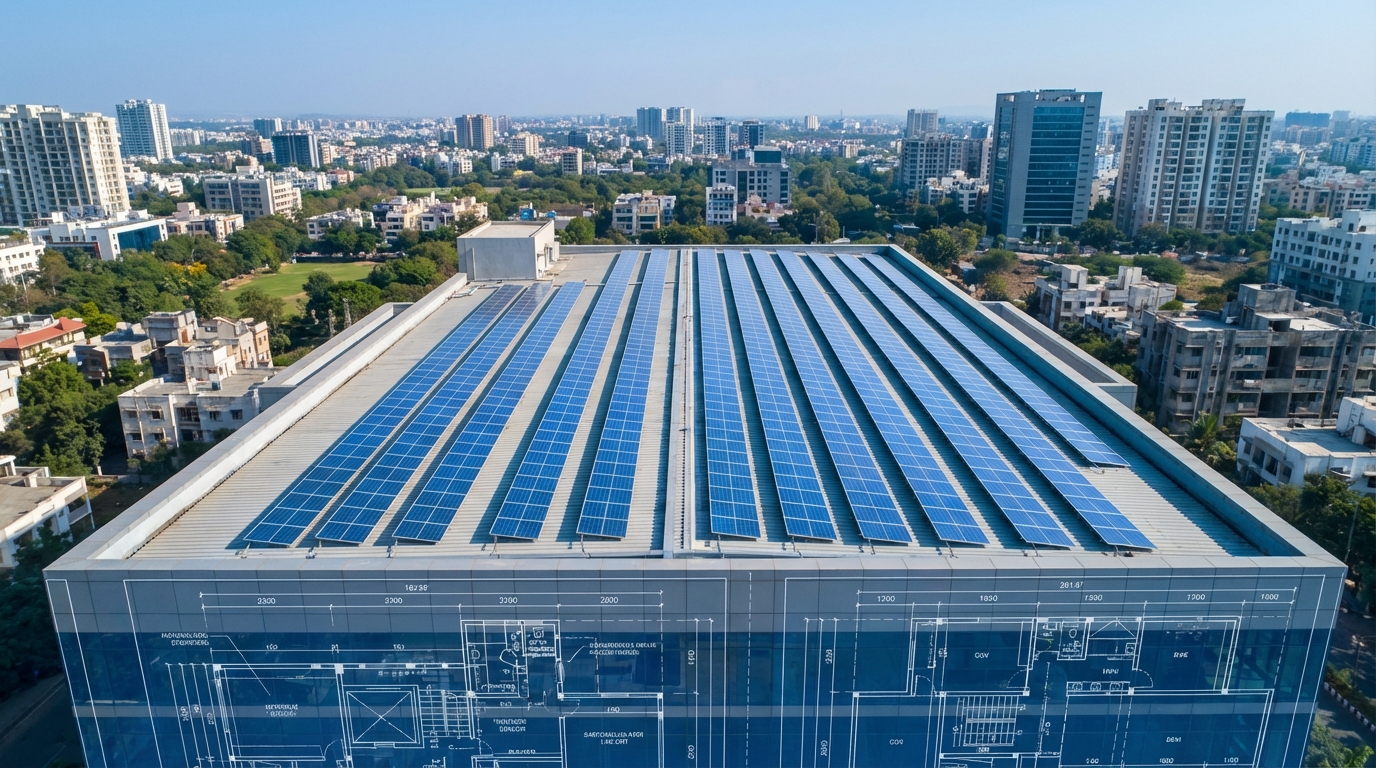
Understanding Rooftop Solar Design Requirements in India
The rooftop solar sector in India operates within a multi-layered regulatory framework that combines central government guidelines with state-specific regulations and local municipal requirements. This complexity stems from India’s federal structure, where electricity is a concurrent subject, allowing both central and state governments to legislate on solar energy matters.
For solar EPC companies and installers, this means that a design approach that works perfectly in one state may require significant modifications in another. The regulatory landscape encompasses several critical dimensions:
- Building codes and structural standards: Varying interpretations and implementations of the National Building Code across states
- Electrical safety regulations: State electricity board requirements for grid connectivity and net metering
- Climate-specific design considerations: Wind loads, seismic factors, temperature extremes, and corrosion protection
- Permit and approval processes: Documentation requirements that differ significantly across municipalities
- Technical specifications: State nodal agency guidelines on system sizing, equipment standards, and installation practices
The importance of getting solar design India right from the outset cannot be overstated. Non-compliant installations face risks ranging from permit rejection and project delays to structural failures, insurance claim denials, and legal liabilities. Professional engineering design services have become essential for EPCs looking to scale operations across multiple states while maintaining quality and compliance standards.
Professional design partners like Heaven Designs bring specialized expertise in navigating these regional variations, having completed over 628 MW of design work across diverse Indian states. Their team of 50+ engineers stays current with evolving state regulations, ensuring that every project meets local compliance requirements while optimizing for cost-effectiveness and energy generation.
National Building Code and Central Government Guidelines
While state-level variations exist, several national standards form the foundation for rooftop solar design across India. Understanding these central guidelines is essential before diving into state-specific requirements.
National Building Code (NBC) 2016 provides the baseline framework for structural safety in rooftop solar installations. Part 3 of NBC 2016 specifically addresses development control rules and general building requirements, while Part 6 covers structural design. Though not legally binding unless adopted by states, NBC serves as the reference standard for most building authorities.
The Ministry of New and Renewable Energy (MNRE) has issued comprehensive technical guidelines for grid-connected rooftop solar systems that cover:
- Minimum technical specifications for solar PV modules, inverters, and balance of system components
- Installation guidelines and safety requirements
- Performance monitoring and maintenance standards
- Net metering and gross metering policy frameworks
Critical Indian Standards (IS codes) that govern rooftop solar design include:
- IS 875 (Part 3): Code of practice for design loads (other than earthquake) for buildings and structures – Wind loads
- IS 1893 (Part 1): Criteria for earthquake resistant design of structures
- IS 2062: Steel for general structural purposes – Specification
- IS 800: General construction in steel – Code of practice
- IS 456: Plain and reinforced concrete – Code of practice
The Central Electricity Authority (CEA) has established technical standards for connectivity of distributed generation resources, which include safety requirements, grid interface specifications, and metering standards that apply across all states.
These national standards provide the technical foundation, but their implementation and interpretation vary significantly at the state level, making local expertise crucial for successful project execution.
Wind Zone Classifications Across Indian States
Wind load calculations represent one of the most critical aspects of structural engineering India for rooftop solar installations. India’s vast geographical diversity results in dramatically different wind conditions across regions, directly impacting mounting structure design and safety factors.
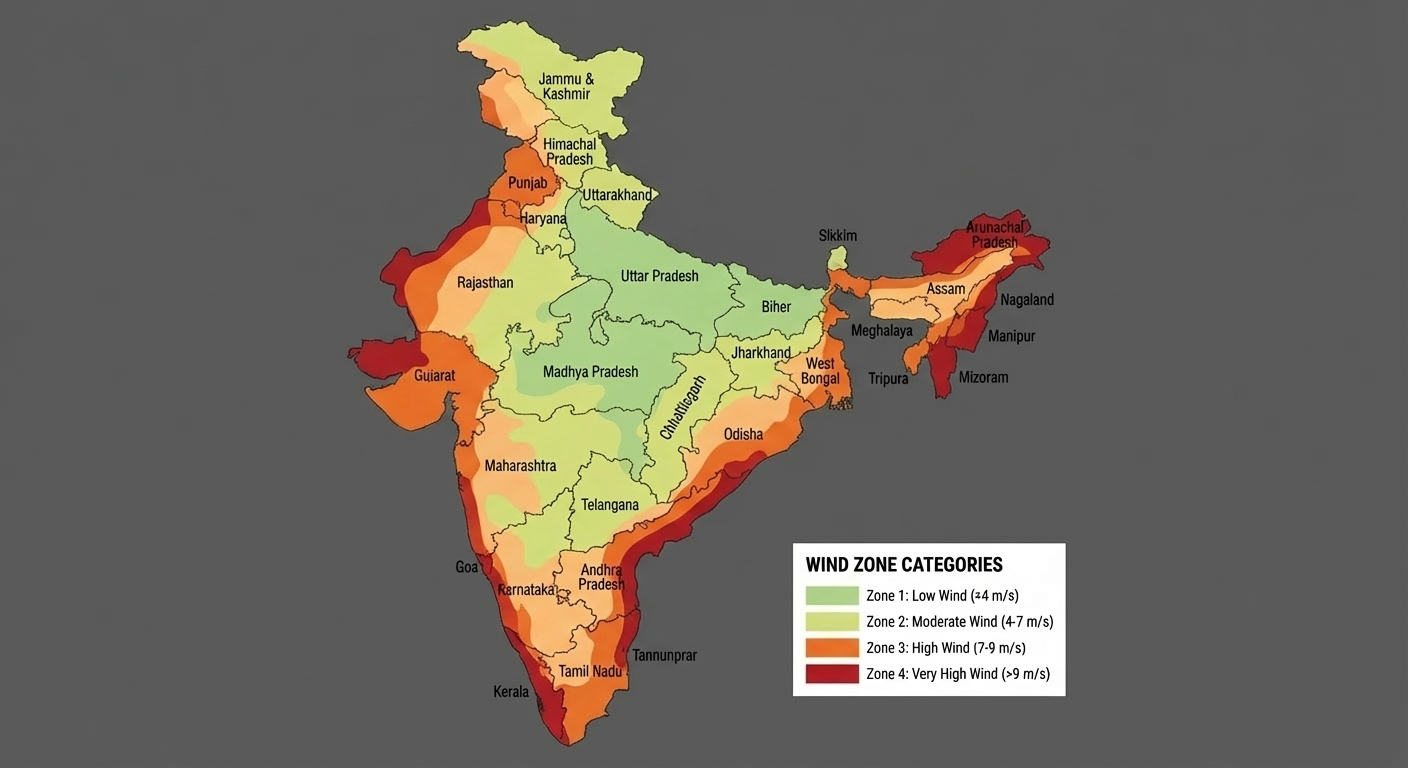
According to IS 875 (Part 3), India is divided into six wind zones based on basic wind speed, ranging from Zone I (lowest wind speeds) to Zone VI (highest wind speeds, typically cyclonic coastal areas). Understanding your project’s wind zone is fundamental to proper structural design.
Coastal states like Gujarat, Maharashtra, Tamil Nadu, Andhra Pradesh, Odisha, and West Bengal fall into higher wind zones (typically Zone III to Zone VI), requiring:
- Enhanced structural reinforcement with heavier gauge materials
- Additional anchoring points and deeper foundation penetrations
- Aerodynamic mounting structure designs to reduce wind uplift
- Corrosion-resistant materials due to salt-laden coastal air
- Higher safety factors in load calculations
Interior states like Madhya Pradesh, Chhattisgarh, and parts of Rajasthan generally fall into lower wind zones (Zone I to Zone III), allowing for:
- More economical mounting structure designs
- Standard anchoring specifications
- Reduced material requirements while maintaining safety
However, wind zone classification is just the starting point. Local topography, building height, terrain category, and surrounding structures all influence actual wind loads. Professional site survey India services are essential to accurately assess site-specific wind conditions and ensure appropriate design parameters.
For solar EPCs working across multiple states, maintaining design templates for different wind zones while customizing for specific site conditions represents a significant engineering challenge. This is where specialized design partners provide value—they maintain comprehensive databases of regional requirements and can quickly adapt designs to meet local wind load specifications.
State-by-State Rooftop Solar Design Requirements
India’s federal structure means that each state has developed its own solar policies, technical standards, and approval processes. While all states reference national codes, their implementation, additional requirements, and permit processes vary significantly. The following sections provide detailed insights into major states’ specific requirements for rooftop solar design and compliance.
Gujarat: Design Standards and Compliance
Gujarat stands as India’s solar leader, with the most mature regulatory framework for rooftop solar installations. The Gujarat Energy Development Agency (GEDA) has established comprehensive guidelines that serve as a model for other states.
Key Gujarat Requirements:
- Net metering regulations: Well-defined processes through distribution companies (DGVCL, MGVCL, PGVCL, UGVCL) with standardized application formats
- Structural certification: Mandatory structural stability certificate from a chartered engineer for systems above 10 kW
- Wind zone considerations: Coastal areas (Surat, Bharuch, Valsad) fall in Zone IV-V requiring enhanced structural design, while interior regions (Ahmedabad, Vadodara) are in Zone II-III
- Electrical safety: Compliance with CEA safety regulations and Gujarat Electricity Regulatory Commission (GERC) technical standards
- Shadow-free area certification: Required documentation proving adequate shadow-free rooftop area for proposed capacity
Gujarat’s streamlined approval process typically takes 30-45 days for residential systems and 60-90 days for commercial installations, provided all documentation is complete. The state’s proactive approach has made it attractive for solar EPCs, but the mature regulatory environment also means stricter enforcement of compliance standards.
Heaven Designs, based in Surat, Gujarat, brings deep local expertise in navigating GEDA requirements and has established relationships with local authorities that facilitate smoother approval processes for clients working in the state.
Maharashtra: Engineering Requirements
Maharashtra, home to India’s financial capital Mumbai and major industrial centers, has robust but complex rooftop solar regulations managed primarily through Maharashtra State Electricity Distribution Company Limited (MSEDCL) and the Maharashtra Energy Development Agency (MEDA).
Key Maharashtra Requirements:
- Multiple DISCOMs: Different distribution companies (MSEDCL, BEST, Adani Electricity, Tata Power) have varying technical requirements and approval processes
- Seismic considerations: Most of Maharashtra falls in Seismic Zone III, requiring earthquake-resistant design as per IS 1893
- Mumbai-specific codes: Municipal Corporation of Greater Mumbai (MCGM) has additional building code requirements for high-rise structures
- Structural audit requirements: Buildings older than 30 years require structural audit before solar installation approval
- Fire safety compliance: Mandatory fire safety clearance for commercial buildings and residential complexes
- Coastal wind loads: Mumbai and Konkan coastal areas require Zone V wind load calculations
The approval timeline in Maharashtra varies significantly by location—Mumbai projects typically take 90-120 days due to multiple clearances, while Pune and other cities average 60-75 days. Professional permit design services are particularly valuable in Maharashtra due to documentation complexity.
Rajasthan: Desert Climate Design Considerations
Rajasthan’s desert climate presents unique engineering challenges despite being one of India’s most solar-friendly states. The Rajasthan Renewable Energy Corporation Limited (RRECL) oversees rooftop solar policies.
Key Rajasthan Requirements:
- Extreme temperature design: Systems must be designed for operating temperatures ranging from -5°C to 50°C
- Dust accumulation factors: Design must account for significant dust deposition affecting panel efficiency
- Wind load variations: Western Rajasthan experiences higher wind speeds requiring Zone III-IV design, while eastern regions are Zone II
- Water scarcity considerations: Cleaning and maintenance plans must address limited water availability
- Simplified approval process: Rajasthan has streamlined net metering with deemed approval if DISCOM doesn’t respond within 30 days
- Structural requirements: Standard IS code compliance with additional considerations for thermal expansion in extreme heat
Rajasthan’s relatively straightforward regulatory environment makes it attractive for solar EPCs, but the harsh climate demands robust engineering design to ensure long-term system performance and durability.
Tamil Nadu: Coastal and Urban Requirements
Tamil Nadu has been a rooftop solar pioneer with progressive policies managed through Tamil Nadu Generation and Distribution Corporation (TANGEDCO) and supported by the Tamil Nadu Energy Development Agency.
Key Tamil Nadu Requirements:
- High wind zone design: Coastal areas including Chennai, Kanyakumari, and Tuticorin fall in Zone V-VI, requiring maximum structural reinforcement
- Cyclone-resistant design: Systems must withstand cyclonic wind speeds up to 200 km/h in coastal regions
- Corrosion protection: Mandatory use of hot-dip galvanized or marine-grade stainless steel in coastal installations
- Net metering cap: System capacity limited to sanctioned load or 1 MW, whichever is lower
- Technical specifications: Detailed requirements for module efficiency, inverter specifications, and balance of system components
- Third-party inspection: Mandatory inspection by TANGEDCO-empaneled agencies for systems above 100 kW
Tamil Nadu’s coastal installations represent some of the most engineering-intensive rooftop solar projects in India. The combination of high wind loads, corrosive environment, and strict technical standards requires experienced solar engineer involvement from the design phase through commissioning.
Karnataka: Tech Hub Solar Standards
Karnataka, particularly Bangalore, has emerged as a major rooftop solar market driven by commercial and industrial demand. The state’s regulations are managed through multiple DISCOMs including BESCOM, MESCOM, HESCOM, GESCOM, and CESC, with policy guidance from Karnataka Renewable Energy Development Limited (KREDL).
Key Karnataka Requirements:
- DISCOM-specific requirements: Each distribution company has slightly different technical specifications and approval processes
- Bangalore building codes: Bruhat Bengaluru Mahanagara Palike (BBMP) has specific requirements for commercial buildings
- Seismic design: Karnataka falls in Seismic Zone II-III requiring appropriate structural design
- Commercial installation standards: Enhanced documentation requirements for industrial and commercial rooftop systems
- Net metering regulations: Well-defined gross and net metering options with banking facility
- Safety and earthing: Strict compliance with CEA earthing and lightning protection standards
Karnataka’s tech-savvy environment has led to relatively efficient digital approval processes, with most applications processed within 45-60 days. However, the state’s focus on commercial installations means higher scrutiny of engineering documentation and compliance.
Delhi NCR: Urban Rooftop Challenges
The National Capital Region presents unique challenges due to high-rise buildings, dense urban environment, and multiple regulatory authorities. Solar installations are governed by BSES Rajdhani, BSES Yamuna, Tata Power DDL, and NDMC depending on the area.
Key Delhi NCR Requirements:
- High-rise specifications: Additional structural requirements for buildings above 15 meters height
- Fire safety clearance: Mandatory for all commercial buildings and residential complexes
- Access and maintenance: Design must ensure safe access for maintenance without compromising building safety
- Seismic Zone IV: Delhi falls in high seismic zone requiring enhanced earthquake-resistant design
- Municipal approvals: Multiple clearances from municipal corporations (MCD, NDMC) depending on location
- Aesthetic considerations: Some areas have restrictions on visible installations from street level
- Net metering limits: System capacity capped at sanctioned load with specific technical requirements
Delhi NCR projects typically have the longest approval timelines (90-150 days) due to multiple clearances required. Professional PMC services India can significantly streamline this process by managing parallel approvals and ensuring complete documentation.
Other Key States: Quick Reference
Uttar Pradesh: Managed by various DISCOMs under UPNEDA guidance. Relatively straightforward approval process but varying implementation across districts. Seismic Zone III-IV considerations for northern regions.
Madhya Pradesh: Progressive policies under MP Urja Vikas Nigam. Lower wind zone (Zone I-II) allows economical designs. Growing market with improving regulatory clarity.
West Bengal: Coastal areas require Zone IV-V wind design. Kolkata has specific municipal requirements. WBREDA provides policy framework with DISCOM-level implementation.
Andhra Pradesh & Telangana: Both states have well-defined net metering policies. Coastal AP requires high wind zone design. Hyderabad has streamlined approval processes for commercial installations.
Punjab & Haryana: Agricultural and industrial focus with supportive policies. Seismic Zone IV design requirements. Relatively straightforward approval processes.
Kerala: High rainfall and humidity require enhanced corrosion protection. Coastal areas need Zone IV-V wind design. KSEB has detailed technical specifications.
Northeastern States: Highest seismic zone (Zone V) requirements. Limited solar radiation in some areas requires careful feasibility study India. Developing regulatory frameworks with central government support.
Structural Load Calculations and Safety Factors
Accurate structural load calculations form the foundation of safe and compliant rooftop solar design. Underestimating loads can lead to catastrophic structural failures, while over-engineering increases costs unnecessarily. Professional structural engineering India expertise is essential to strike the right balance.
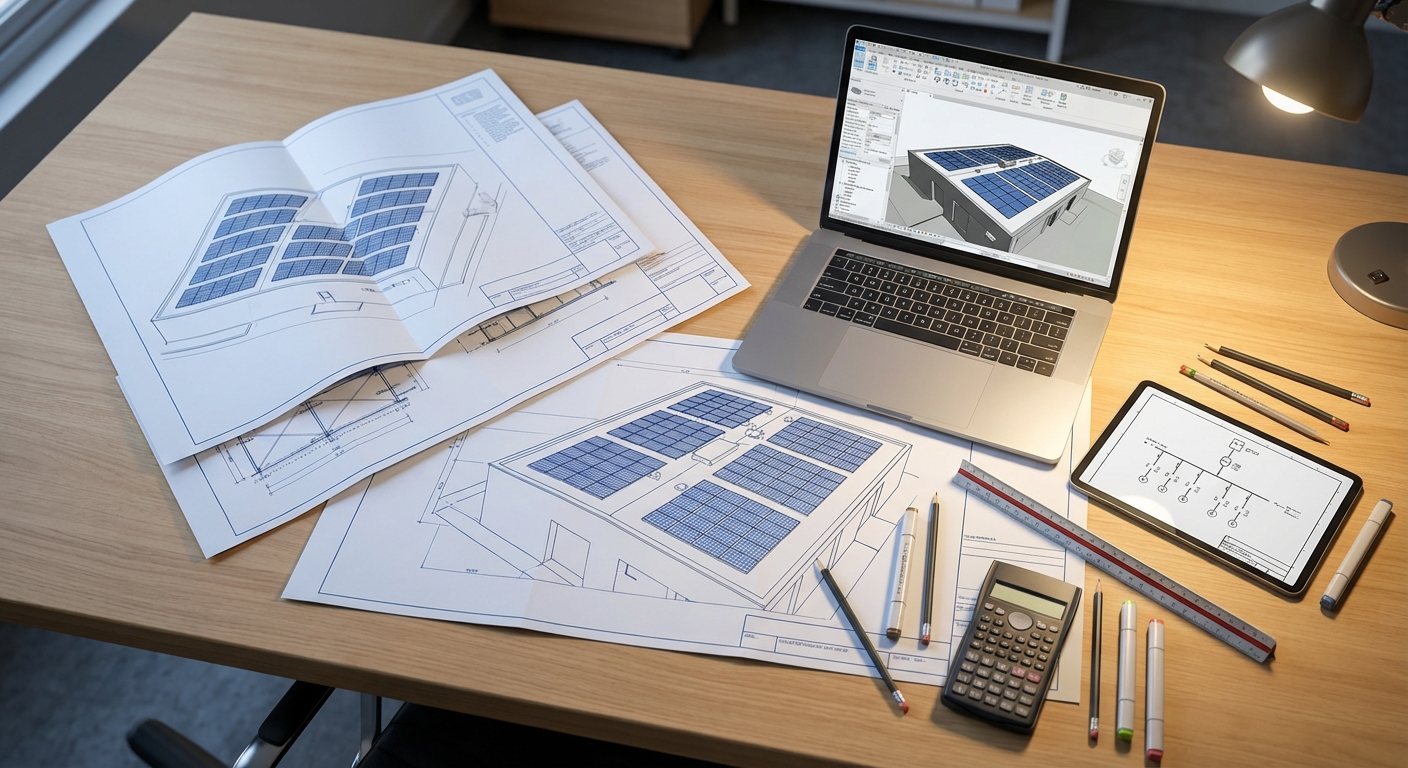
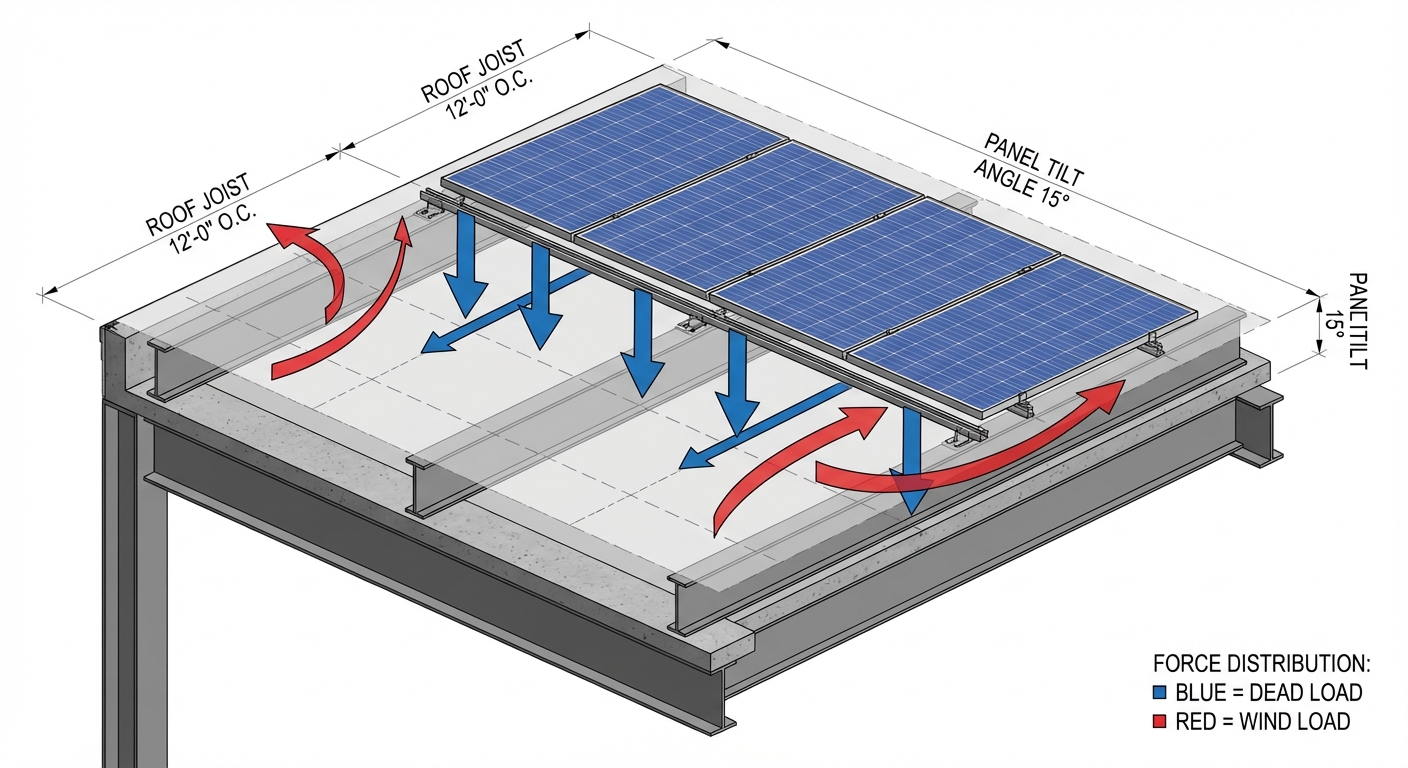
Dead Load Calculations: The permanent weight of the solar installation including modules, mounting structures, cables, and inverters. Typical dead loads range from 12-18 kg/m² for residential systems to 20-25 kg/m² for commercial installations with heavier mounting structures.
Live Load Considerations: Temporary loads including maintenance personnel, cleaning equipment, and accumulated debris. IS 875 (Part 2) specifies minimum live loads for roofs, typically 0.75 kN/m² for accessible roofs with solar installations.
Wind Load Analysis: The most critical and complex load calculation, wind loads include:
- Wind pressure: Calculated based on basic wind speed for the zone, terrain category, building height, and structure dimensions
- Uplift forces: Wind creates significant uplift on tilted solar panels, often exceeding downward loads
- Drag forces: Horizontal wind pressure on the array
- Dynamic effects: Gust factors and turbulence considerations
Wind load calculations must follow IS 875 (Part 3) methodology, considering local wind speed data, terrain roughness, building height, and panel tilt angle. For a typical installation in Zone III with 39 m/s basic wind speed, uplift forces can reach 1.5-2.0 kN/m² of panel area.
Seismic Load Calculations: Required for buildings in seismic zones, calculated as per IS 1893. The seismic load depends on:
- Seismic zone factor (ranging from 0.10 for Zone II to 0.36 for Zone V)
- Importance factor of the structure
- Response reduction factor
- Soil type and foundation conditions
Snow Load: Relevant for installations in Himalayan regions and high-altitude areas, calculated as per IS 875 (Part 4).
Safety Factors: Indian standards require minimum safety factors of:
- 1.5 for dead loads and live loads (limit state design)
- 1.5 for wind loads
- Combination factors when multiple loads act simultaneously
Roof Load Bearing Capacity Assessment: Before finalizing design, the existing roof structure must be evaluated:
- RCC roofs: Typically can support 150-200 kg/m² additional load, but requires structural assessment for older buildings
- Metal roofs: Load capacity depends on sheet gauge, purlin spacing, and structural frame—often requires reinforcement
- Asbestos/fiber cement roofs: Limited load capacity, usually requires independent support structure without loading the roof sheets
Professional structural engineers use specialized design software India tools like STAAD.Pro, ETABS, or SAP2000 to perform detailed structural analysis and generate load calculation reports required for permit approval. These calculations must be certified by a chartered structural engineer in most states.
Essential Engineering Documentation for Permit Approval
Comprehensive and accurate documentation is critical for obtaining timely permit approvals and ensuring project compliance. Missing or inadequate documentation is the primary cause of approval delays for solar EPCs across India.
Structural Stability Certificate: A chartered structural engineer must certify that:
- The existing building structure can safely support the additional solar installation loads
- Structural calculations comply with relevant IS codes
- Mounting structure design is adequate for site-specific loads
- Anchoring and foundation design meets safety requirements
Single Line Diagram (SLD): Electrical schematic showing:
- Solar array configuration and module connections
- Inverter specifications and placement
- AC and DC cable routing with specifications
- Protection devices (MCBs, isolators, surge protection)
- Metering arrangement and grid connection point
- Earthing and lightning protection system
Layout and Mounting Structure Drawings: Detailed drawings including:
- Roof plan showing panel layout and spacing
- Mounting structure design with material specifications
- Anchoring details and foundation design
- Cross-sectional views showing installation details
- Walkway and maintenance access provisions
Shadow Analysis Report: Computer-generated analysis showing:
- Shadow-free area availability throughout the year
- Impact of nearby obstructions (buildings, trees, water tanks)
- Optimal panel placement to minimize shading losses
- Monthly and annual shading loss percentages
Energy Generation Report: Projected performance analysis including:
- Monthly and annual energy generation estimates
- Performance ratio calculations
- Loss analysis (shading, soiling, temperature, inverter, cable)
- Financial projections and payback period
Site Survey Report: Comprehensive site assessment documenting:
- Roof dimensions, orientation, and tilt
- Roof condition and structural assessment
- Shading analysis and obstruction mapping
- Electrical infrastructure evaluation
- Access and logistics considerations
- Photographic documentation
Equipment Specifications and Certifications:
- Solar module datasheets with IEC/BIS certifications
- Inverter specifications with relevant certifications
- Mounting structure material test certificates
- Cable and electrical component specifications
Compliance Declarations:
- CEA safety regulation compliance certificate
- MNRE technical specification compliance
- State-specific technical requirement compliance
- Manufacturer warranties and guarantees
For solar EPCs managing multiple projects across states, maintaining standardized documentation templates while customizing for state-specific requirements represents a significant administrative burden. Professional design partners like Heaven Designs maintain comprehensive documentation libraries and automated workflows that ensure complete, accurate submissions that minimize approval delays.
Common Compliance Challenges and Solutions for EPCs
Solar EPC companies face numerous compliance challenges when scaling operations across India’s diverse regulatory landscape. Understanding these challenges and implementing effective solutions is crucial for operational efficiency and project success.
Challenge 1: Navigating Multiple State Regulations
EPCs working across states must maintain current knowledge of varying technical standards, approval processes, and documentation requirements. Regulations change frequently, and staying updated requires dedicated resources.
Solution: Partner with specialized design partner firms that maintain dedicated regulatory compliance teams tracking changes across states. Heaven Designs’ team of 50+ engineers includes specialists focused on specific regions, ensuring current knowledge of local requirements.
Challenge 2: Dealing with Outdated Building Structures
Many potential rooftop solar sites involve older buildings with inadequate structural documentation, unknown load-bearing capacity, or deteriorated structural elements.
Solution: Conduct thorough structural audits using non-destructive testing methods. Engage chartered structural engineers for detailed assessments. Consider alternative mounting solutions like ballasted systems that minimize roof penetrations and distribute loads more evenly.
Challenge 3: Managing Documentation and Approval Timelines
Incomplete or incorrect documentation leads to approval delays, project timeline extensions, and increased costs. Different states require different document formats and technical details.
Solution: Implement standardized documentation workflows with state-specific checklists. Use professional permit design services that specialize in preparing compliant documentation packages. Maintain regular communication with approval authorities to address queries promptly.
Challenge 4: Ensuring Quality While Controlling Costs
Competitive market pressures push EPCs to minimize solar design cost and engineering cost, but inadequate engineering can lead to structural failures, performance issues, and liability claims.
Solution: Focus on value engineering rather than cost-cutting. Professional design services optimize material usage and system configuration to reduce costs without compromising safety or performance. Heaven Designs’ approach focuses on maximizing ROI through intelligent design rather than simply minimizing upfront costs.
Challenge 5: Technical Expertise Gaps
Many EPCs lack in-house expertise in specialized areas like structural engineering, electrical design, or state-specific compliance requirements.
Solution: Leverage external expertise through partnerships with specialized engineering firms. This provides access to expert knowledge without the overhead of maintaining large in-house technical teams. Outsourcing design work to firms like Heaven Designs allows EPCs to focus on their core competencies of sales, project management, and installation.
Challenge 6: Design Timeline Pressures
Competitive bidding processes and customer expectations create pressure for quick design timeline delivery, but rushed designs increase error risk.
Solution: Establish clear design workflows with realistic timelines. Use experienced design partners who can deliver quality work efficiently through established processes and adequate resource allocation. Heaven Designs’ team structure allows parallel processing of multiple projects without compromising quality.
Best Practices for Compliant Rooftop Solar Design
Implementing systematic best practices ensures consistent compliance, quality, and efficiency across all rooftop solar projects regardless of location or scale.
1. Conduct Thorough Site Surveys and Feasibility Studies
Never skip the site survey phase. Comprehensive site survey India services should include:
- Detailed roof measurements and structural assessment
- Shading analysis using specialized tools
- Electrical infrastructure evaluation
- Access and logistics planning
- Photographic and video documentation
- Preliminary structural load assessment
A thorough feasibility study identifies potential issues early, allowing design adjustments before significant resources are committed. This upfront investment prevents costly redesigns and project delays later.
2. Use Professional Design Software and Tools
Invest in industry-standard design software India tools including:
- PVsyst or Helioscope: For energy modeling and system design
- AutoCAD or SketchUp: For layout drawings and mounting structure design
- STAAD.Pro or ETABS: For structural analysis and load calculations
- PVCase or Aurora Solar: For comprehensive design and proposal generation
- Google Earth Pro: For preliminary site assessment and shading analysis
Professional software ensures accurate calculations, generates required documentation automatically, and maintains consistency across projects.
3. Engage Qualified Structural Engineers
Don’t compromise on structural engineering expertise. Ensure that:
- Structural calculations are performed by chartered structural engineers
- Engineers have specific experience with solar installations
- Structural certificates are properly signed and sealed
- Engineers are available for authority queries during approval process
The relatively small cost of professional structural engineering is insignificant compared to the risks of structural failure or liability claims.
4. Maintain Updated Knowledge of State Regulations
Establish processes to stay current with regulatory changes:
- Subscribe to state nodal agency notifications and circulars
- Maintain relationships with DISCOM technical teams
- Participate in industry associations and forums
- Conduct regular training for design and engineering teams
- Document state-specific requirements in accessible knowledge bases
Regulatory compliance is not a one-time achievement but an ongoing process requiring continuous attention.
5. Implement Documentation and Quality Assurance Processes
Develop standardized workflows that ensure:
- Complete documentation packages for each project
- Multi-level review before submission to authorities
- Version control and document management systems
- Checklists for state-specific requirements
- Quality assurance reviews by senior engineers
- Post-approval documentation archival for future reference
Systematic quality processes reduce errors, minimize approval delays, and build credibility with regulatory authorities.
6. Work with Experienced Design Partners
For many EPCs, partnering with specialized design firms provides the most efficient path to consistent compliance and quality. Benefits include:
- Access to specialized expertise without full-time hiring costs
- Scalability to handle varying project volumes
- Current knowledge of multiple state regulations
- Established relationships with equipment suppliers and authorities
- Professional liability insurance coverage
- Focus on core business while outsourcing specialized technical work
How Heaven Designs Ensures State-Level Compliance
Heaven Designs Private Limited has established itself as a trusted solar design partner for EPCs across India by combining technical excellence with deep understanding of regional compliance requirements. With over 628 MW of completed design work for 752+ clients across 3+ countries, the company brings proven expertise to every project.
Comprehensive Regional Expertise
Based in Surat, Gujarat, Heaven Designs has developed particular strength in understanding western and central Indian state requirements while expanding expertise across all major solar markets. The team’s experience spans diverse climate zones, wind classifications, and regulatory environments, enabling them to quickly adapt designs to any state’s specific requirements.
Team of 50+ Specialized Engineers
Heaven Designs’ large engineering team includes specialists in:
- Structural engineering and load calculations
- Electrical design and grid connectivity
- Civil engineering and foundation design
- Energy modeling and performance analysis
- Regulatory compliance and permit documentation
- Project management and consultancy
This depth of expertise ensures that every aspect of rooftop solar design receives appropriate professional attention, from initial feasibility through final commissioning support.
Complete Service Portfolio
Heaven Designs offers end-to-end design services that address every compliance requirement:
- Solar 3D Pre-Design: Preliminary design and feasibility assessment to evaluate project viability
- MW Scale Detailed Engineering Design: Comprehensive drawings, calculations, and documentation for projects of any scale
- Solar Civil and Structural Engineering: Professional structural analysis, load calculations, and certification
- Site Survey & Land Feasibility: Thorough on-site assessment and documentation across India
- Solar Permit Design: State-specific permit documentation ensuring regulatory compliance
- MW Scale Project Management Consultancy: PMC services for large-scale projects requiring ongoing technical oversight
Cost-Effective Solutions That Maximize ROI
Heaven Designs’ approach focuses on value engineering—optimizing designs to reduce material costs and maximize energy generation without compromising safety or compliance. Their experience across hundreds of projects enables identification of cost-saving opportunities that less experienced designers might miss.
Proven Track Record Across Diverse Projects
With 752+ completed projects spanning residential, commercial, industrial, and utility-scale installations, Heaven Designs has demonstrated capability across the full spectrum of rooftop solar applications. This breadth of experience means they’ve encountered and solved virtually every compliance challenge that can arise in Indian rooftop solar projects.
Streamlined Processes and Quick Turnaround
Heaven Designs has developed efficient workflows and standardized processes that enable quick project turnaround without sacrificing quality. Their team structure allows parallel processing of multiple projects, ensuring that your project receives timely attention even during peak periods.
Partner with Heaven Designs for Your Next Project
Whether you’re a solar EPC company looking to expand into new states, a residential installer seeking professional engineering support, or a commercial developer requiring comprehensive design services, Heaven Designs provides the expertise and reliability you need for successful project execution.
For solar professionals seeking to ensure compliance, optimize costs, and deliver quality installations across India’s diverse regulatory landscape, partnering with an experienced design firm is not just convenient—it’s essential for sustainable business growth.
Ready to ensure your rooftop solar projects meet all state-level compliance requirements? Contact Heaven Designs today to discuss how their comprehensive design and engineering services can support your business growth. Get a Quick Proposal Now! or reach out directly at +91 90811 00297 or service@heavendesigns.in to speak with their expert team about your specific project requirements.
With India’s rooftop solar market poised for continued exponential growth, ensuring compliance with state-specific design and engineering requirements is not optional—it’s fundamental to project success, safety, and long-term performance. By understanding regional variations, implementing best practices, and leveraging specialized expertise, solar EPCs and installers can confidently navigate India’s complex regulatory landscape and deliver installations that meet the highest standards of quality and compliance.