


Solar EPC companies across India face a pivotal strategic decision in 2026: should they invest in building an in-house solar design team, or partner with specialized design service providers through outsourcing India models? This choice significantly impacts project costs, delivery timelines, quality standards, and ultimately, business profitability. With India’s solar capacity projected to exceed 500 GW by 2030 and the EPC market becoming increasingly competitive, making the right decision about your design capabilities has never been more critical.
The solar design landscape in India has evolved dramatically. What once required only basic engineering knowledge now demands specialized expertise in structural engineering, permit compliance, advanced design software, and region-specific regulatory requirements. EPCs must deliver accurate, cost-effective designs that maximize energy generation while meeting stringent quality standards. The question isn’t whether professional design matters, but rather how to access that expertise most efficiently for your business model.
This comprehensive comparison analyzes the complete cost structures, quality control mechanisms, turnaround capabilities, and scalability factors for both in-house teams and outsourcing India partnerships. Whether you’re a startup EPC handling your first few projects or an established company managing 100+ MW annually, this guide provides the decision framework you need to optimize your design operations in 2026.

Understanding In-House Solar Design Teams
An in-house solar design team represents a dedicated group of professionals employed directly by your EPC company to handle all design and engineering requirements internally. This approach means building complete design capabilities within your organization, from preliminary feasibility studies to final permit-ready documentation.
A functional in-house solar design team typically requires multiple specialized roles. You need solar design engineers who understand PV system configuration, shading analysis, and energy modeling. Structural engineers must evaluate roof load capacities, foundation requirements, and wind load calculations specific to Indian conditions. CAD specialists create detailed technical drawings, while permit design experts navigate the complex regulatory landscape across different Indian states and municipalities.
The infrastructure requirements extend beyond personnel. Your team needs professional-grade design software licenses including PVsyst for energy simulation, AutoCAD or similar CAD platforms for technical drawings, and potentially specialized tools like Helioscope, SketchUp, or structural analysis software. Each license represents a recurring annual cost, often ranging from ₹50,000 to ₹3,00,000 per seat depending on the software.
Beyond the technical setup, in-house teams require continuous training and development. Solar technology evolves rapidly, with new module technologies, mounting systems, and regulatory requirements emerging regularly. Your engineers need ongoing education to maintain expertise, attend industry conferences, and stay current with Indian standards and international best practices. This investment in human capital development is essential but often underestimated when calculating true in-house costs.
Cost Structure: In-House Team Investment
The financial commitment for building an in-house solar design team in India extends far beyond basic salaries. In 2026, a qualified solar engineer with 3-5 years of experience commands an annual salary between ₹6,00,000 to ₹12,00,000 in major Indian cities. A specialized structural engineer with solar project experience may require ₹8,00,000 to ₹15,00,000 annually. For a minimal functional team of four engineers (two design engineers, one structural engineer, one CAD specialist), you’re looking at ₹30,00,000 to ₹50,00,000 in annual salary costs alone.
Software licensing represents another substantial expense. A comprehensive software stack including PVsyst, AutoCAD, structural analysis tools, and project management platforms can cost ₹5,00,000 to ₹12,00,000 annually for a small team. These costs scale linearly as your team grows, with each additional engineer requiring their own software licenses.
Infrastructure costs include office space, high-performance computers capable of running complex 3D modeling and simulation software, large-format plotters for printing technical drawings, and reliable internet connectivity. For a four-person team, budget ₹3,00,000 to ₹6,00,000 annually for workspace and equipment, depending on your location in India.
The hidden costs often catch EPCs by surprise. Recruitment expenses for finding qualified solar engineers can reach ₹1,00,000 to ₹2,00,000 per hire when factoring in job postings, recruiter fees, and interview time. Employee benefits including provident fund, health insurance, and paid leave add 20-30% to base salary costs. Perhaps most significantly, employee turnover in India’s competitive solar market means you may need to replace and retrain team members every 2-3 years, restarting the recruitment and training cycle.
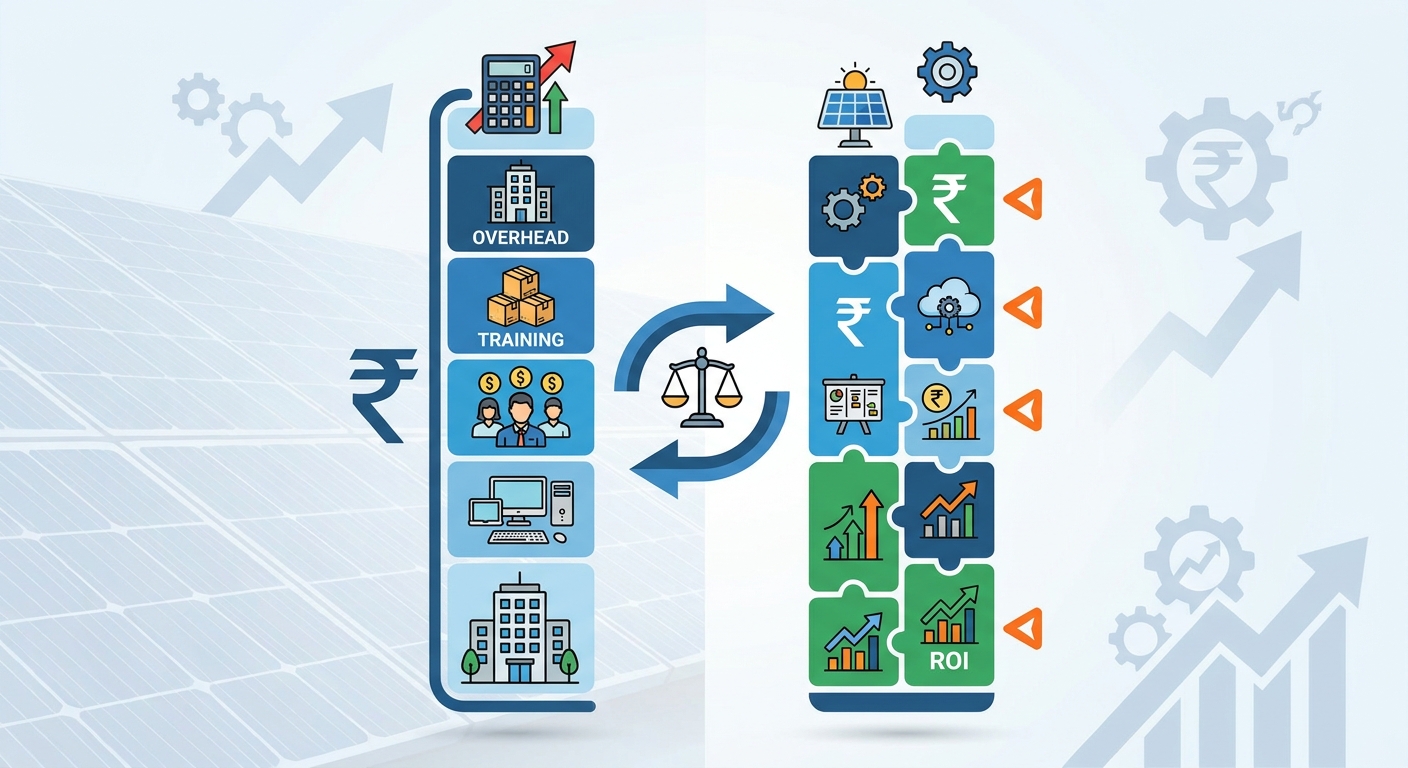
When you calculate the total cost of ownership, a minimal four-person in-house design team requires an investment of ₹45,00,000 to ₹75,00,000 annually, not including management overhead or the opportunity cost of capital tied up in this fixed expense structure.
Understanding Outsourcing India for Solar Design
The outsourcing India model for solar design involves partnering with specialized design service companies that provide complete engineering and design capabilities on a project-by-project or retainer basis. Rather than employing designers directly, EPCs engage with expert design partners who deliver finished design packages, technical drawings, and engineering documentation as a service.
Specialized design partners like Heaven Designs maintain large teams of dedicated solar engineers, structural specialists, and permit experts who work exclusively on solar projects. With over 50 engineers focused solely on solar design, these partners develop deep expertise and efficient workflows that individual EPCs would struggle to replicate internally. They invest in the latest design software, maintain relationships with authorities having jurisdiction across India, and stay current with evolving standards and technologies.
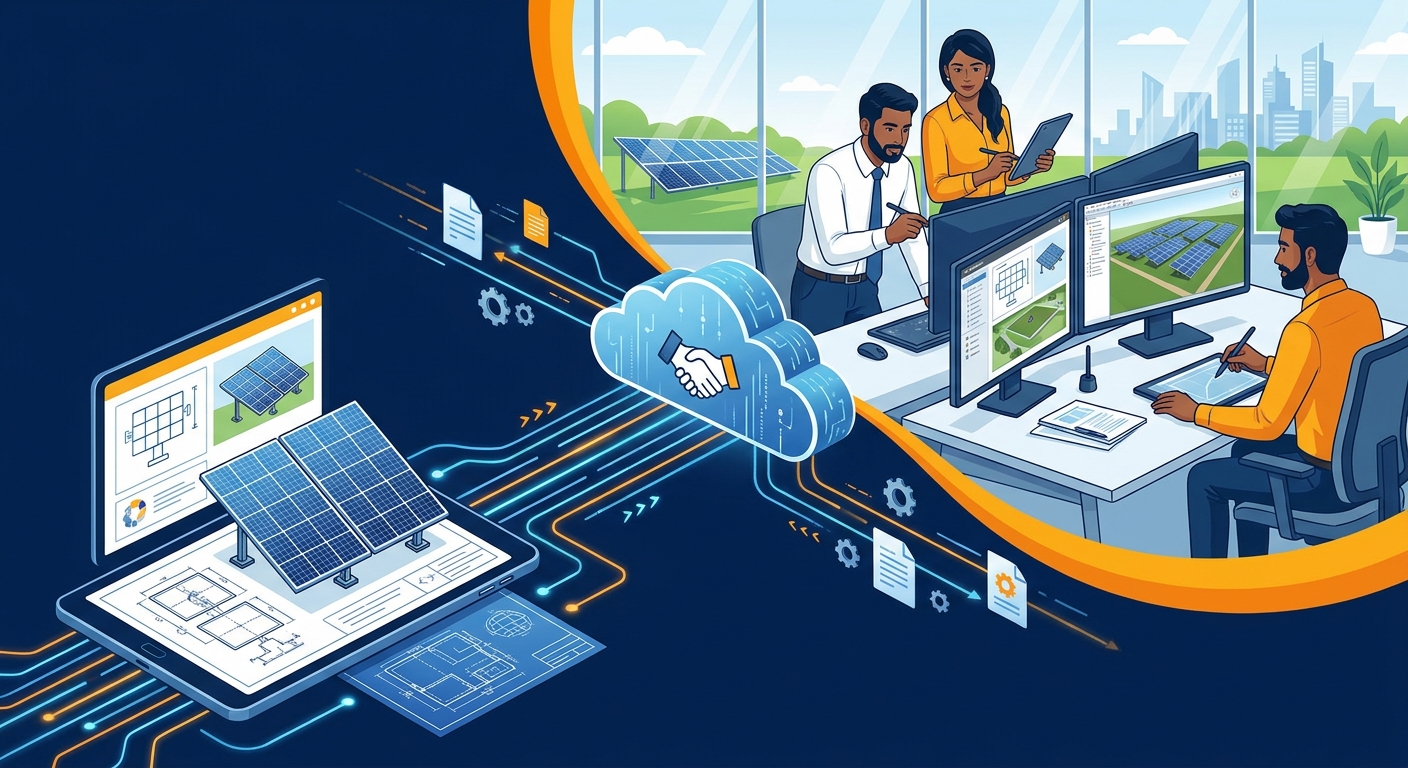
The services typically outsourced include preliminary 3D pre-design and feasibility studies, detailed engineering design for megawatt-scale projects, permit design documentation, structural engineering India calculations and certifications, site survey coordination, and project management consultancy. Design partners handle the complete design lifecycle, delivering permit-ready documentation that EPCs can submit directly to authorities or provide to clients.
The outsourcing model works through clearly defined project scopes and deliverables. EPCs provide site information, client requirements, and project specifications. The design partner conducts necessary analysis, creates all technical documentation, and delivers complete design packages within agreed timelines. Communication happens through dedicated project managers, with regular updates and review cycles ensuring the final design meets all requirements.
This approach transforms design from a fixed overhead cost into a variable project expense that scales directly with your business volume. You pay for design services only when you have projects, avoiding the burden of maintaining full-time staff during slow periods.
Cost Structure: Outsourcing to Design Partners
The solar design cost structure for outsourcing operates fundamentally differently than in-house teams. Design partners typically charge on a per-project or per-MW basis, with pricing varying based on project complexity, timeline requirements, and scope of services.
For residential rooftop solar projects, design packages including site survey, 3D design, structural engineering, and permit documentation typically range from ₹5,000 to ₹15,000 per project depending on system size and complexity. Commercial and industrial projects are often priced per MW, with detailed engineering design costs ranging from ₹50,000 to ₹2,00,000 per MW based on project specifics and deliverable requirements.
Ground-mount utility-scale projects involve more complex engineering and may cost ₹1,00,000 to ₹3,00,000 per MW for comprehensive detailed engineering design including civil works, structural design, electrical design, and project management consultancy services. These rates reflect the specialized expertise and extensive documentation required for large-scale solar installations.
Many design partners offer retainer arrangements for EPCs with consistent project pipelines. A monthly retainer might provide a certain number of design projects or MW capacity at preferential rates, giving EPCs predictable costs while maintaining flexibility. However, even retainer models remain variable costs that can be adjusted based on business needs, unlike the fixed commitment of in-house salaries.
The critical advantage is zero overhead. EPCs pay only for delivered design services without bearing costs for software licenses, office infrastructure, employee benefits, training, or recruitment. There are no costs during gaps between projects, and no financial risk from employee turnover or capacity underutilization.
Cost Comparison: Real Numbers for Solar EPCs
The break-even analysis between in-house teams and outsourcing India depends heavily on your annual project volume. Let’s examine realistic scenarios for different EPC business models in 2026.
Small EPC Scenario (10-20 MW annually): A small EPC completing 15 MW of solar projects annually would pay approximately ₹15,00,000 to ₹30,00,000 for outsourced design services at ₹1,00,000 to ₹2,00,000 per MW. Compare this to ₹45,00,000 to ₹75,00,000 for maintaining even a minimal in-house team. The outsourcing approach saves ₹30,00,000 to ₹45,00,000 annually while providing access to specialized expertise the small team couldn’t match.
Medium EPC Scenario (50-75 MW annually): An established EPC with 60 MW annual capacity might spend ₹60,00,000 to ₹1,20,00,000 on outsourced design. A larger in-house team of 8-10 engineers capable of handling this volume would cost ₹90,00,000 to ₹1,50,00,000 annually including all overhead. At this volume, costs become comparable, but outsourcing still offers flexibility advantages and access to specialized expertise for complex projects.
Large EPC Scenario (100+ MW annually): High-volume EPCs executing 150+ MW annually face different economics. Outsourcing costs might reach ₹1,50,00,000 to ₹3,00,00,000, while a substantial in-house team could potentially handle this volume for ₹1,20,00,000 to ₹2,00,00,000 in direct costs. However, this calculation assumes consistent project flow and doesn’t account for the management complexity, quality control challenges, and specialization limitations of large in-house teams.
The ROI timeline for in-house investment extends 3-5 years minimum. You must maintain consistent high project volumes throughout this period to justify the investment. Market fluctuations, seasonal variations, or business development challenges that reduce project flow immediately impact the economics, turning your design team into an underutilized fixed cost burden.
Total cost of ownership analysis over five years reveals additional considerations. In-house teams require ongoing investment in training, software upgrades, equipment replacement, and salary increases to retain talent. Outsourcing partners absorb these costs, maintaining their competitive pricing while continuously improving capabilities. The cumulative difference over five years can reach ₹50,00,000 to ₹1,00,00,000 for medium-sized EPCs.
Quality Control & Technical Expertise Comparison
Quality assurance for in-house teams depends entirely on your internal processes, management capabilities, and the expertise level of your hires. You have direct control over quality standards, can implement custom review procedures, and maintain consistent design approaches across all projects. However, quality is limited by your team’s collective expertise. If your structural engineer lacks experience with a specific foundation type or your design engineer hasn’t worked with a particular mounting system, quality may suffer.
Specialized design partners focusing exclusively on solar engineering develop deep expertise across diverse project types. A company like Heaven Designs, having completed 628+ MW across 752+ projects, encounters virtually every design challenge, site condition, and technical requirement. This breadth of experience translates to higher quality outputs, fewer errors, and more optimized designs that maximize energy generation while minimizing costs.
Access to advanced design software India capabilities differs significantly. In-house teams typically license only the essential tools their budget allows. Design partners invest in comprehensive software suites including specialized tools for shading analysis, structural optimization, energy modeling, and permit documentation that would be cost-prohibitive for individual EPCs. This software advantage directly improves design quality and accuracy.
Compliance with Indian standards and regulations requires staying current with evolving requirements across different states and municipalities. In-house engineers may struggle to track regulatory changes across multiple jurisdictions. Specialized partners maintain dedicated compliance expertise, relationships with approval authorities, and updated knowledge of permit requirements from Kerala to Rajasthan, ensuring designs meet all applicable standards.
Error rates and revision requirements provide objective quality metrics. Experienced design partners typically achieve first-submission approval rates above 85% for permit applications, while in-house teams, especially newer ones, may face 40-60% rejection rates requiring costly revisions and project delays. Each revision cycle adds time and expense to your project delivery.
The quality equation ultimately depends on specialization. A design partner’s entire business depends on delivering high-quality solar designs efficiently. They invest continuously in expertise, tools, and processes to maintain competitive advantage. In-house teams, unless you’re operating at very large scale, cannot match this level of specialization and focused expertise.
Turnaround Time & Project Delivery Speed
The design timeline for project completion significantly impacts your EPC business operations, client satisfaction, and cash flow. Both in-house and outsourcing approaches offer distinct advantages and challenges regarding delivery speed.
In-house teams provide immediate availability and direct communication. When a new project arrives, you can brief your team instantly without external coordination. For simple, routine projects similar to previous work, this immediacy can accelerate initial design phases. However, your team’s capacity is fixed. If multiple projects arrive simultaneously or a complex project requires extensive engineering, your in-house team becomes a bottleneck, delaying all projects in the queue.
Outsourcing partners typically quote specific turnaround times based on project scope. A residential rooftop solar India design might be completed in 3-5 business days, while a 5 MW commercial project could require 2-3 weeks for complete detailed engineering. These timelines are generally reliable because specialized partners maintain sufficient capacity and workflow management systems to handle multiple client projects simultaneously.
Rush project handling reveals important differences. Your in-house team can potentially prioritize urgent projects, but only by delaying other work. Design partners with large teams can often accommodate rush requests by allocating additional resources without impacting your other projects. Heaven Designs’ team of 50+ engineers provides the flexibility to handle urgent requirements that would overwhelm a small in-house team.
Parallel project execution capacity matters significantly for growing EPCs. If you win three projects in the same week, can your design team handle all three simultaneously? A four-person in-house team might struggle, forcing you to stagger project starts and extend overall delivery timelines. Outsourcing partners can execute multiple projects in parallel, maintaining consistent turnaround times regardless of how many projects you submit simultaneously.
Communication and coordination factors influence effective turnaround time. In-house teams offer face-to-face interaction and immediate clarification of questions. However, professional outsourcing partners provide dedicated project managers, structured communication protocols, and digital collaboration tools that often prove more efficient than informal in-house coordination. Clear project briefs and defined review cycles eliminate communication delays.
The reality is that specialized design partners, when properly engaged with clear requirements, typically match or exceed in-house turnaround times while providing greater capacity flexibility. The key is establishing efficient communication workflows and providing complete project information upfront to minimize revision cycles.
Scalability & Flexibility: Handling Pipeline Fluctuations
The solar EPC business is inherently variable. Project pipelines fluctuate based on seasonal factors, policy changes, client budget cycles, and market conditions. Your design capability must adapt to these fluctuations without creating financial strain or capacity constraints.
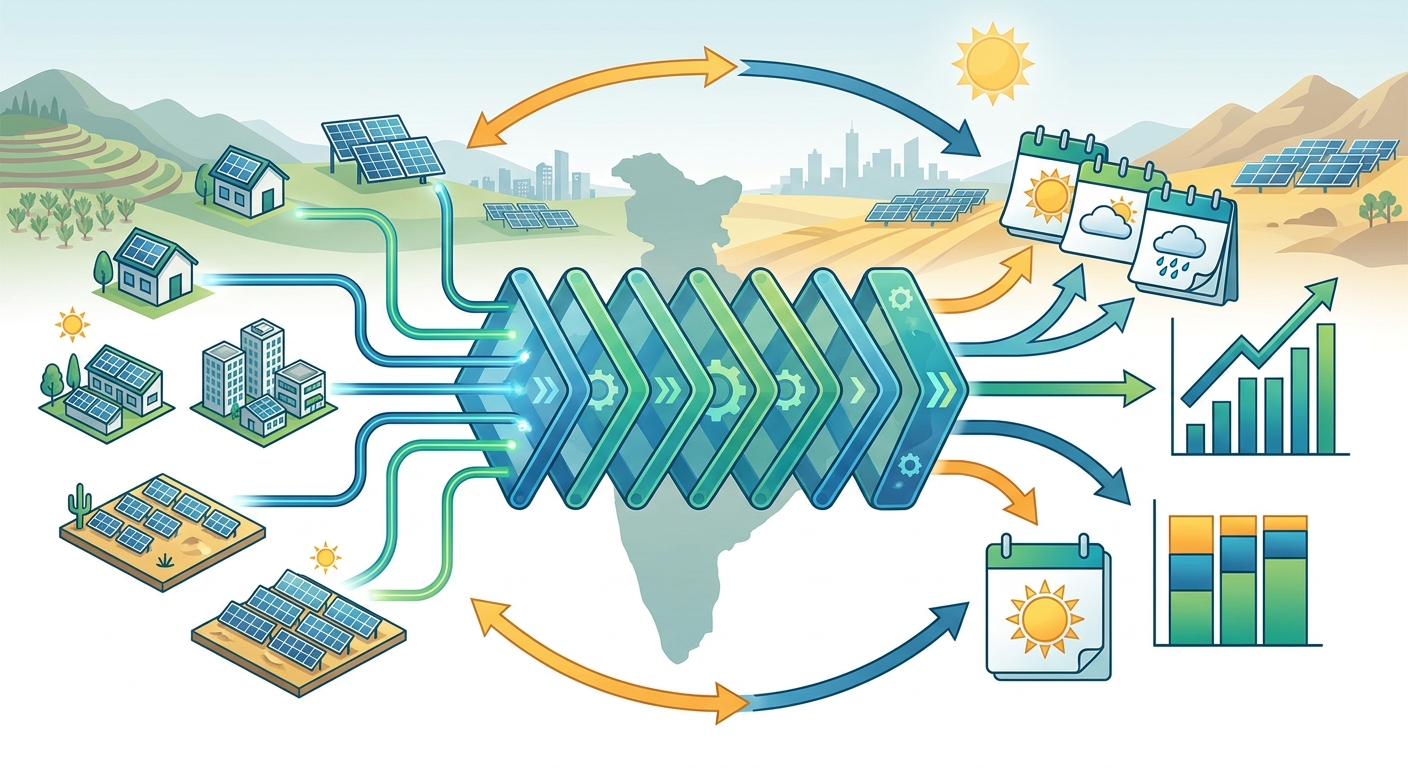
In-house teams represent fixed capacity and fixed costs. If you employ four engineers, you pay four salaries every month regardless of whether you have one project or ten. During slow periods, your design team sits underutilized, representing a significant financial burden. Conversely, when business booms and you suddenly win five large projects, your fixed team capacity becomes a bottleneck. You cannot quickly hire and train additional engineers to handle temporary volume increases.
Scaling in-house teams up or down is slow and expensive. Hiring a new engineer requires 2-3 months for recruitment, onboarding, and training before they become productive. Reducing team size during slow periods means layoffs, which damage morale, create legal complexities, and lose institutional knowledge. Most EPCs maintain in-house capacity for average demand, accepting underutilization during slow periods and capacity constraints during peak periods.
The outsourcing India model transforms design capacity into a variable cost that scales perfectly with project volume. Submit one project, pay for one design. Submit ten projects, pay for ten designs. During slow months, your design costs drop to zero. During busy periods, your design partner’s large team handles increased volume without delays. This perfect scalability eliminates the fixed cost burden and capacity constraints that plague in-house teams.
Seasonal demand management illustrates this advantage clearly. Many EPCs experience higher project volumes during certain months due to client budget cycles or favorable weather for installations. With outsourcing, you simply submit more projects during peak months without worrying about capacity. Your design partner absorbs the volume fluctuation across their diverse client base, maintaining consistent turnaround times.
Handling sudden large projects becomes straightforward with outsourcing. If you win a 20 MW ground-mount project requiring extensive engineering, your design partner can allocate a dedicated team to deliver within required timelines. An in-house team sized for typical residential or small commercial projects would be completely overwhelmed, forcing you to either decline the opportunity or accept extended timelines that jeopardize the contract.
Resource allocation efficiency differs fundamentally. In-house teams must balance design work with internal meetings, administrative tasks, and company activities, reducing productive design time. Specialized design partners focus exclusively on delivering designs efficiently, with dedicated support staff handling administrative functions. This focused efficiency means you get more productive design output per rupee spent.
Risk Analysis: In-House vs Outsourcing India
Every business decision involves risks that must be understood and managed. The choice between in-house design teams and outsourcing partnerships presents distinct risk profiles that impact your EPC operations differently.
Employee turnover represents the primary risk for in-house teams. India’s solar industry is growing rapidly, creating strong demand for qualified engineers. Your best designers may receive attractive offers from competitors, leaving gaps in your capabilities. Replacing a senior design engineer takes 3-6 months and costs ₹2,00,000 to ₹4,00,000 in recruitment and training expenses. During this transition, project quality and delivery timelines suffer. High turnover can devastate small in-house teams, forcing you to restart capability building repeatedly.
Dependency risks concern EPCs considering outsourcing. Relying on an external partner for critical design functions creates vulnerability if that partner experiences problems, raises prices, or fails to deliver. However, this risk is manageable through careful partner selection and relationship management. Choosing established design partners with proven track records, substantial teams, and long client relationships minimizes dependency risk. Additionally, switching between design partners is far easier than rebuilding an in-house team, providing flexibility if issues arise.
Quality consistency risks manifest differently in each approach. In-house teams may produce inconsistent quality as individual engineers have good and bad days, experience levels vary, and turnover disrupts institutional knowledge. Outsourcing partners with mature quality assurance processes, standardized workflows, and large teams typically deliver more consistent quality across all projects. Their business depends on maintaining quality standards, creating strong incentives for consistency.
Intellectual property and confidentiality considerations require attention with outsourcing. You’re sharing client information and project details with an external partner. Professional design partners address this through comprehensive non-disclosure agreements, secure data handling protocols, and established confidentiality practices. Heaven Designs and similar professional firms have worked with hundreds of EPCs, understanding the importance of protecting client information and maintaining confidentiality.
Business continuity planning differs significantly. If a key in-house engineer falls ill or leaves suddenly, your design capability is immediately impacted. Design partners with large teams provide inherent redundancy. If one engineer is unavailable, others seamlessly continue your projects without disruption. This redundancy provides superior business continuity compared to small in-house teams.
Mitigation strategies for in-house risks include competitive compensation to reduce turnover, cross-training to build redundancy, and comprehensive documentation to preserve institutional knowledge. For outsourcing risks, mitigation involves selecting reputable partners, maintaining relationships with multiple design firms for backup capacity, and establishing clear contracts with service level agreements and quality guarantees.
Decision Framework: Which Approach Is Right for Your EPC?
Choosing between in-house design teams and outsourcing India partnerships requires evaluating your specific business situation against several key factors. This decision framework helps you assess which approach aligns with your EPC company’s needs and strategic direction.
Annual Project Volume: This is the most critical factor. If your EPC completes less than 50 MW annually, outsourcing almost always provides better economics and capabilities. Between 50-100 MW, the decision depends on other factors. Above 100 MW with consistent volume, in-house teams become economically viable, though outsourcing may still offer advantages for specialized projects or peak capacity needs.
Project Volume Consistency: Evaluate your project pipeline stability. If your volume fluctuates significantly month-to-month or season-to-season, outsourcing’s variable cost structure provides crucial flexibility. Consistent, predictable volume makes in-house fixed costs more manageable. Consider your business development capabilities and market position when assessing volume consistency.
Project Complexity and Diversity: EPCs handling diverse project types from residential rooftops to utility-scale ground mounts benefit from outsourcing partners’ broad expertise. If you specialize in a narrow project type, in-house expertise can be developed more easily. Complex projects requiring specialized structural engineering, geotechnical analysis, or advanced energy modeling favor outsourcing to experts.
Business Maturity and Growth Stage: Startup and early-stage EPCs should almost always outsource design. Your capital is better invested in business development, client relationships, and installation capabilities. Established EPCs with proven business models and stable cash flow can consider in-house investment. Rapidly growing EPCs benefit from outsourcing’s scalability during expansion phases.
Geographic Spread: EPCs operating across multiple Indian states face varying regulatory requirements, structural standards, and permit processes. Design partners with national experience navigate these variations efficiently. EPCs focused on a single region can develop localized in-house expertise more easily.
Core Competency Strategy: Consider where your EPC creates the most value. If your competitive advantage lies in client relationships, installation quality, or project financing, outsource design to focus resources on your strengths. If design innovation is your differentiator, in-house capabilities may be strategic.
Capital Availability: In-house teams require significant upfront and ongoing capital investment. EPCs with limited capital or those prioritizing capital efficiency should outsource. Well-capitalized companies can consider in-house investment if other factors support it.
Hybrid Approach: Many successful EPCs adopt a hybrid model, maintaining small in-house teams for routine projects and client interaction while outsourcing complex projects, specialized engineering, and peak capacity needs. This approach combines in-house responsiveness with outsourcing flexibility and expertise. A two-person in-house team handling preliminary design and client coordination, supported by outsourcing partnerships for detailed engineering and permits, often provides optimal balance.
Real-World Scenarios: When to Choose Each Approach
Examining realistic scenarios helps clarify how different EPC business models should approach the in-house versus outsourcing decision in 2026.
Scenario 1: Startup EPC with Irregular Project Flow
A new solar EPC India company has completed five residential projects in their first year and hopes to grow to 20-30 projects in year two. Project flow is unpredictable, with some months bringing multiple opportunities and others bringing none. Revenue is inconsistent, and capital is limited.
Recommendation: Outsource all design work. The fixed cost of even one full-time designer would consume disproportionate capital during this growth phase. Outsourcing provides professional-quality designs that help win clients and build reputation, while keeping costs variable and manageable. Focus internal resources on sales, client relationships, and installation quality. As volume stabilizes above 50 projects annually, revisit the decision.
Scenario 2: Established EPC with Consistent 75 MW Annual Pipeline
A mature EPC company has delivered 60-80 MW annually for the past three years, primarily commercial and industrial rooftop projects. They have strong client relationships, consistent revenue, and available capital. Projects are relatively similar in scope and complexity.
Recommendation: Consider a hybrid approach. Build a small in-house team of 3-4 engineers to handle routine design work, client interactions, and preliminary assessments. Partner with a specialized design firm for detailed structural engineering, complex projects, and capacity overflow during peak periods. This provides cost efficiency for routine work while maintaining access to specialized expertise and scalability. The in-house team develops institutional knowledge while outsourcing manages risk and provides flexibility.
Scenario 3: Regional EPC Expanding to New Markets
An EPC established in Karnataka is expanding operations to Rajasthan and Uttar Pradesh. They have a small in-house design team familiar with Karnataka regulations but lack experience with requirements in new markets. They’re pursuing larger ground-mount projects in addition to their traditional rooftop focus.
Recommendation: Leverage outsourcing for expansion markets and new project types. Use your in-house team for familiar Karnataka rooftop projects while partnering with design experts for Rajasthan and UP projects where regulatory knowledge is critical. Outsource ground-mount detailed engineering requiring specialized expertise your team hasn’t developed. This approach minimizes expansion risk while allowing your in-house team to gradually learn new markets through collaboration with outsourcing partners.
Scenario 4: EPC Specializing in Complex Commercial Projects
An EPC focuses exclusively on large commercial and industrial projects (500 kW to 5 MW) requiring sophisticated structural engineering, detailed energy analysis, and complex permit applications. They complete 15-20 projects annually with high margins and demanding clients expecting exceptional technical quality.
Recommendation: Outsource to specialized design partners with proven expertise in complex commercial projects. The level of structural engineering, energy modeling, and technical sophistication required exceeds what a small in-house team can deliver cost-effectively. Partner with firms offering comprehensive PMC services India and detailed engineering capabilities. The superior quality and specialized expertise justify outsourcing costs and become a competitive advantage in winning sophisticated clients. Maintain one in-house engineer for client coordination and preliminary assessments.
These scenarios illustrate that the right choice depends on your specific business context. Most EPCs, especially those below 100 MW annual capacity, benefit significantly from outsourcing or hybrid approaches that provide flexibility, expertise, and cost efficiency.
Making the Transition: Implementation Considerations
Once you’ve decided on your approach, successful implementation requires careful planning and execution. Whether building an in-house team or establishing outsourcing partnerships, following structured processes ensures smooth transitions and optimal results.
Building an In-House Team from Scratch:
Start by defining precise role requirements and responsibilities. Determine whether you need generalist solar designers or specialists in structural engineering, electrical design, and permit preparation. Create detailed job descriptions reflecting actual project requirements, not generic engineering roles.
Recruitment should prioritize relevant solar experience over general engineering credentials. A candidate with two years of solar design experience provides more immediate value than a five-year veteran from unrelated industries. Consider hiring from other EPCs, design consultancies, or solar developers where candidates have hands-on project experience.
Invest heavily in onboarding and training. Even experienced hires need 2-3 months to learn your processes, client requirements, and quality standards. Provide access to training resources, industry certifications, and mentorship from senior team members or external consultants. Budget ₹50,000 to ₹1,00,000 per engineer for initial training and software familiarization.
Establish clear quality assurance processes from day one. Implement design review procedures, checklists, and approval workflows before your team completes their first project. Poor quality in early projects damages client relationships and creates costly rework.
Selecting and Onboarding an Outsourcing Partner:
Begin by evaluating potential design partners based on relevant experience, team size, technology capabilities, and client references. Request sample deliverables from previous projects similar to yours. Assess their understanding of Indian regulations, permit processes, and regional variations across states where you operate.
Verify their technical capabilities by reviewing their engineering team qualifications, software tools, and quality assurance processes. A partner like Heaven Designs with 50+ engineers and 628+ MW of completed projects demonstrates the capacity and experience to handle your requirements reliably.
Start with a pilot project before committing to a long-term relationship. Select a representative project that reflects your typical requirements and evaluate the partner’s communication, quality, turnaround time, and responsiveness. This trial period reveals how the partnership will function in practice.
Establish clear communication protocols and project submission procedures. Define what information you’ll provide, expected deliverables, review cycles, and revision processes. Assign a dedicated point of contact on both sides to streamline coordination. Many issues with outsourcing stem from unclear communication, not technical capabilities.
Negotiate pricing structures that align with your business model. Discuss per-project pricing, per-MW rates, or retainer arrangements based on your expected volume. Ensure contracts include service level agreements specifying turnaround times, revision policies, and quality guarantees.
Transition Planning and Timeline:
Whether building in-house or establishing outsourcing relationships, plan for a 3-6 month transition period. Don’t abruptly change your design approach mid-project or during peak business periods. Schedule the transition during a relatively slow period when you can focus on establishing new processes without jeopardizing active projects.
Maintain backup capabilities during transitions. If moving from outsourcing to in-house, keep your design partner engaged until your team is fully productive. If transitioning to outsourcing, ensure your in-house engineers can handle urgent situations while the partnership ramps up.
Measuring Success and ROI:
Define clear metrics to evaluate your decision’s success. Track design costs per project and per MW, comparing actual expenses to projections. Monitor project turnaround times from design initiation to permit approval. Measure quality through permit approval rates, client feedback, and revision requirements.
Assess business impact beyond direct design costs. Has your chosen approach enabled you to pursue larger projects, enter new markets, or improve client satisfaction? These strategic benefits often outweigh pure cost considerations.
Review your decision annually as your business evolves. The right approach for a 20 MW EPC may not suit a 75 MW company. Remain flexible and willing to adjust your strategy as circumstances change.
Conclusion: Making the Right Choice for Your Solar EPC in 2026
The decision between in-house design teams and outsourcing India partnerships fundamentally shapes your EPC company’s cost structure, operational flexibility, and competitive capabilities in 2026’s dynamic solar market. As we’ve analyzed throughout this comprehensive comparison, there is no universal right answer, but rather a strategic choice that must align with your specific business context, project volume, growth trajectory, and competitive positioning.
For most solar EPCs operating below 75 MW annually, outsourcing to specialized design partners provides compelling advantages: variable costs that scale with project volume, access to deep specialized expertise across diverse project types, superior scalability to handle pipeline fluctuations, and freedom to focus capital and management attention on core competencies like client relationships and installation quality. The economics strongly favor outsourcing for smaller and mid-sized EPCs, while the expertise and flexibility benefits extend even to larger operations.
In-house teams become economically viable only at substantial scale with consistent project flow, typically above 100 MW annually. Even then, the management complexity, specialization limitations, and fixed cost burden require careful consideration. Many successful large EPCs adopt hybrid models, maintaining core in-house capabilities while leveraging outsourcing partnerships for specialized engineering, peak capacity, and new market entry.
The solar industry in India continues its remarkable growth trajectory toward 500+ GW by 2030. EPCs that optimize their design operations through smart sourcing decisions position themselves to capture this opportunity efficiently and profitably. Whether you choose in-house teams, outsourcing partnerships, or a hybrid approach, the key is making an informed decision based on realistic assessment of your business needs, honest evaluation of costs and capabilities, and clear understanding of the strategic implications.
If you’re a solar EPC company evaluating your design capabilities and considering outsourcing India partnerships, Heaven Designs offers the specialized expertise, proven track record, and scalable capacity to support your growth. With 50+ dedicated solar engineers, 628+ MW of completed projects across 752+ clients, and comprehensive services from preliminary design through detailed engineering and permit documentation, we provide the design partnership that lets you focus on what you do best while we handle the technical complexities.
Ready to explore how professional design outsourcing can optimize your EPC operations and improve project profitability? Get a Quick Proposal Now! to discuss your specific requirements and discover how our design services can support your business goals in 2026 and beyond. Contact our team at service@heavendesigns.in or call +91 90811 00297 to start a conversation about transforming your solar design capabilities through strategic outsourcing India partnerships.
The choice you make today about your design operations will impact your competitiveness, profitability, and growth potential for years to come. Make it an informed choice based on comprehensive analysis, realistic assessment of your business context, and clear understanding of both approaches’ true costs and capabilities. Your solar EPC’s success in India’s booming solar market depends on getting this critical decision right.
This blog post was written using thestacc.com