


The Indian solar industry is experiencing unprecedented growth, with the country targeting 500 GW of renewable energy capacity by 2030. As solar EPC companies race to capture this massive opportunity, the complexity of delivering accurate, compliant, and profitable solar projects has never been greater. This is where professional solar consultancy India services become essential—providing the specialized expertise, detailed engineering, and project management support that transforms ambitious solar projects into successful installations.
Whether you’re an established EPC company expanding into new markets or a solar developer managing megawatt-scale commercial projects, understanding what solar consultancy services entail and how to leverage them effectively can be the difference between project success and costly setbacks. This comprehensive guide walks you through everything you need to know about solar consultancy in India, from initial feasibility studies to final project delivery.
What Is Solar Consultancy in India?
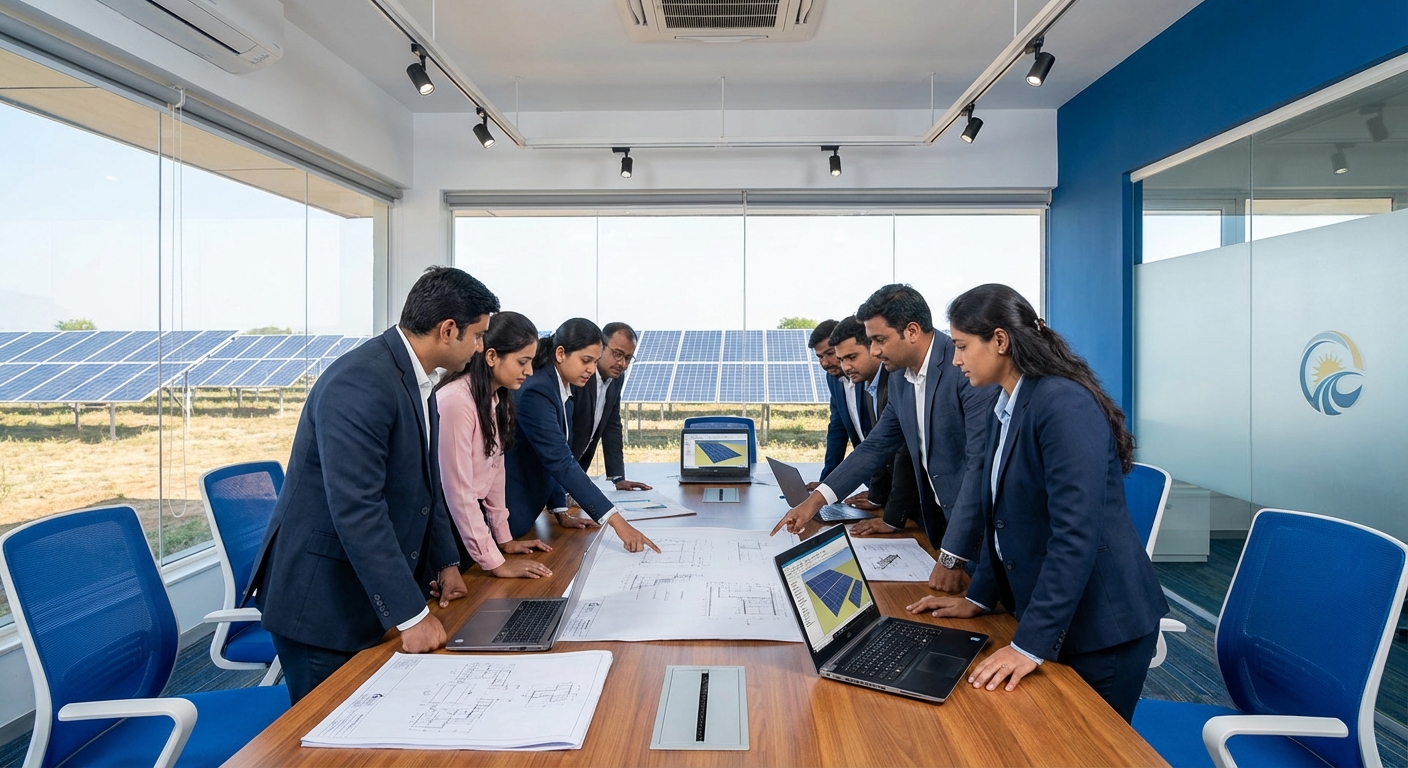
Solar consultancy refers to specialized professional services that provide technical expertise, engineering design, project management, and strategic guidance for solar energy projects. In the Indian context, solar consultancy firms serve as technical partners to EPC companies, developers, and installation businesses, delivering the detailed engineering work and expert analysis needed to execute solar projects successfully.
Unlike full-service EPC companies that handle everything from design through installation, solar consultancy firms focus specifically on the technical and advisory aspects of solar projects. This specialization allows them to develop deep expertise in solar engineering, maintain large teams of specialized engineers, and invest in advanced design software and methodologies that might not be cost-effective for individual EPC companies to maintain in-house.
The role of solar consultancy India services in the solar value chain is critical. These firms bridge the gap between project conception and execution, providing:
- Technical feasibility assessment that determines project viability before significant capital is committed
- Detailed engineering design that ensures accurate material procurement and efficient installation
- Regulatory compliance support that navigates India’s complex permitting landscape across different states
- Project management consultancy that keeps megawatt-scale projects on track and within budget
- Quality assurance that protects project ROI through proper design and oversight
EPCs partner with specialized solar consultancy firms for several compelling reasons. First, maintaining a large in-house engineering team is expensive and may not be fully utilized during slower periods. Second, consultancy firms bring experience from hundreds of projects across diverse conditions, providing insights that prevent costly mistakes. Third, specialized firms invest in the latest design software and stay current with evolving regulations across Indian states. Finally, outsourcing design work allows EPCs to focus on their core competencies of procurement, construction, and client relationships while ensuring technical excellence.
Complete Scope of Solar Consultancy India Services
Professional solar consultancy encompasses a comprehensive range of services that support solar projects from initial concept through commissioning and beyond. Understanding this full scope helps EPCs and developers identify which services they need and how to structure effective partnerships with consultancy firms.
Initial Assessment and Feasibility Studies
Every successful solar project begins with thorough assessment and feasibility analysis. This critical first phase determines whether a proposed project makes technical and financial sense before significant resources are committed.
Site survey and land feasibility analysis forms the foundation of this phase. Professional consultancy firms conduct comprehensive site visits across India, documenting existing conditions, identifying constraints, and gathering the data needed for accurate design. This includes topographical surveys, shading analysis, structural assessments of existing buildings for rooftop projects, and soil testing for ground-mount installations.
Solar resource assessment quantifies the energy generation potential at the specific location. Using satellite data, historical weather patterns, and on-site measurements, consultants calculate expected solar irradiation and estimate annual energy production. This analysis accounts for regional variations across India, from the high-irradiation zones of Rajasthan to the more moderate conditions in northeastern states.
Grid connectivity studies examine the feasibility of connecting the proposed solar installation to the electrical grid. This includes analyzing available grid capacity, voltage levels, distance to connection points, and coordination requirements with local distribution companies. In India, grid connectivity can vary significantly by state and region, making local expertise invaluable.
Financial viability analysis brings all technical findings together into business terms. Consultants prepare detailed financial models showing project costs, expected revenue, payback periods, and return on investment. These models help developers and EPCs make informed go/no-go decisions and secure project financing.
Typical deliverables from the feasibility phase include comprehensive site assessment reports, solar resource analysis with energy generation estimates, grid connectivity feasibility studies, preliminary system designs, and detailed financial models. For more details on this critical phase, see our guide on solar feasibility studies in India.
Solar Design and Engineering Services
Once feasibility is confirmed, the project moves into detailed design and engineering—the core of solar consultancy India services. This phase transforms conceptual plans into construction-ready documentation.
3D pre-design and preliminary layouts create visual representations of the proposed solar installation. Using advanced design software, engineers develop three-dimensional models showing panel placement, mounting structures, electrical routing, and integration with existing site features. These preliminary designs allow stakeholders to visualize the project and identify potential issues before detailed engineering begins.
Detailed engineering design for MW-scale projects produces the comprehensive documentation needed for procurement and construction. This includes precise panel layouts optimized for the specific site conditions, electrical single-line diagrams showing all system components and connections, cable routing and sizing calculations, inverter placement and specifications, and complete bill of materials with technical specifications for all equipment.
Module layout optimization is where engineering expertise directly impacts project economics. Professional consultants use sophisticated solar design software India tools to model thousands of layout variations, identifying configurations that maximize energy generation while minimizing costs. This includes optimizing panel tilt angles, row spacing to minimize shading losses, string configurations for electrical efficiency, and equipment placement for installation efficiency.
The design phase also addresses system performance under various conditions, including monsoon weather patterns common across India, high-temperature operation during summer months, dust accumulation in arid regions, and long-term degradation factors. This comprehensive approach ensures designs deliver promised performance throughout the project lifecycle.
Structural and Civil Engineering for Solar Projects
Solar installations must withstand decades of environmental exposure, making structural and civil engineering critical components of professional consultancy services. This specialized expertise ensures installations remain safe and functional through monsoons, high winds, and seismic events.
Foundation design varies dramatically based on soil conditions, which differ significantly across India. In Gujarat’s clay-rich soils, foundation requirements differ from those in Rajasthan’s sandy terrain or the rocky conditions found in parts of Karnataka. Professional consultants conduct soil testing and design foundations appropriate for local conditions, preventing costly failures and ensuring long-term stability.
Wind load and structural calculations determine the forces solar installations must withstand. India’s diverse climate zones present different challenges, from cyclone-prone coastal areas to high-wind regions in the north. Engineers calculate wind loads according to Indian standards (IS 875), design mounting structures to withstand these forces, and specify appropriate materials and connection methods.
Mounting structure specifications detail the racking systems that support solar panels. This includes selecting appropriate materials (typically galvanized steel or aluminum), designing connection details, specifying corrosion protection appropriate for local conditions, and ensuring compatibility with chosen panel types. For ground-mount projects across different Indian regions, our regional design guide provides detailed insights.
Compliance with Indian standards is non-negotiable. Professional solar consultancy India firms ensure all structural designs meet Bureau of Indian Standards (BIS) requirements, state-specific building codes, seismic zone requirements, and local authority regulations. This compliance expertise prevents project delays and ensures installations receive necessary approvals.
The Solar Consultancy Process: From Initial Contact to Project Delivery
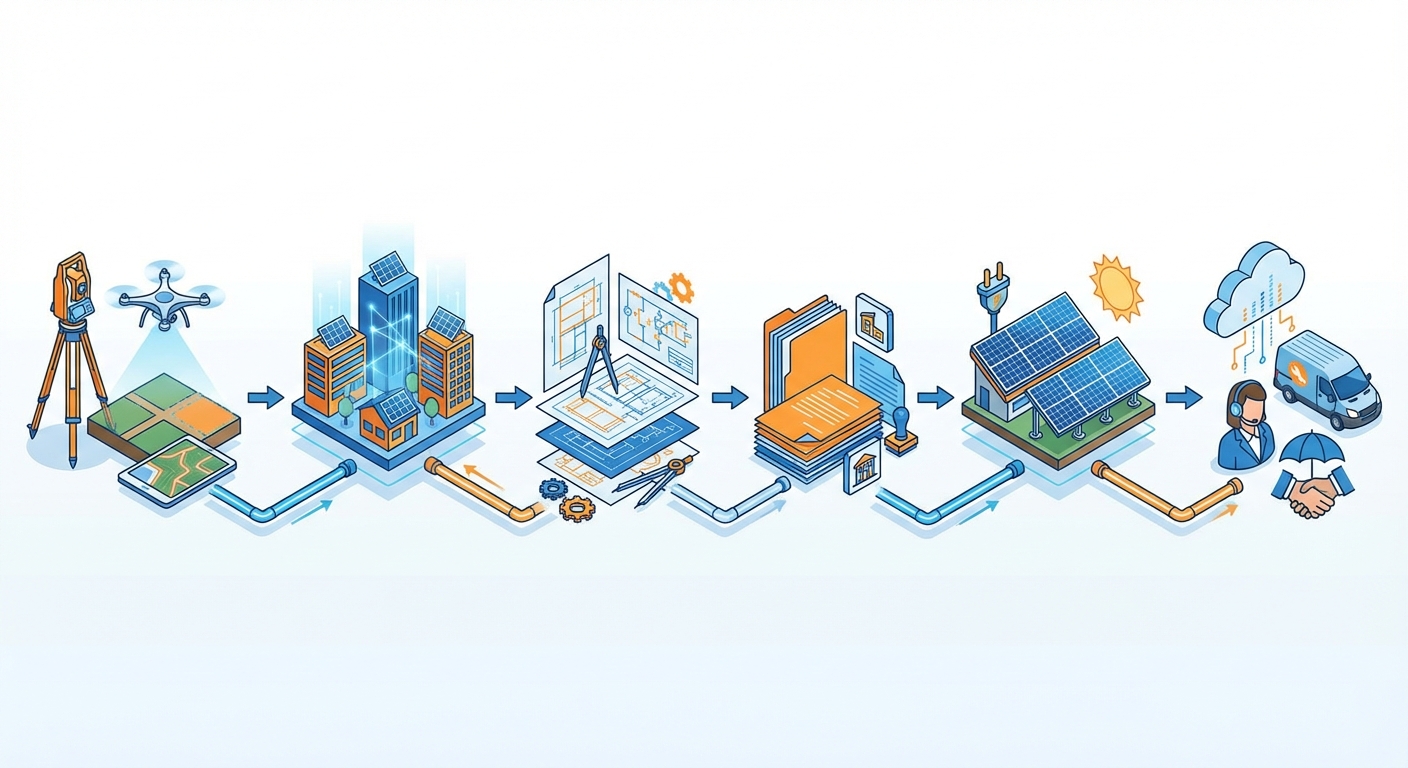
Understanding the typical workflow of solar consultancy projects helps EPCs and developers set realistic expectations, prepare necessary information, and collaborate effectively with consultancy partners. While specific processes vary by firm and project complexity, most professional engagements follow a structured six-step approach.
Step 1: Initial consultation and requirement gathering. The process begins with detailed discussions to understand project goals, constraints, and requirements. Consultants gather information about site location and characteristics, desired system capacity, budget parameters, timeline expectations, specific technical requirements, and regulatory constraints. This initial phase establishes clear communication channels and aligns expectations between the EPC and consultancy firm.
Step 2: Site assessment and data collection. With requirements defined, the consultancy team conducts comprehensive site assessment. For projects across India, this may involve travel to remote locations for on-site surveys. Teams collect topographical data, structural information for rooftop projects, electrical infrastructure details, photographs and measurements, and environmental factors. The quality of data collected during this phase directly impacts design accuracy.
Step 3: Preliminary design and feasibility. Using collected data, engineers develop preliminary designs and feasibility analysis. This phase produces initial system layouts, energy generation estimates, preliminary equipment specifications, cost estimates, and feasibility recommendations. Clients review these preliminary outputs and provide feedback before detailed engineering begins, ensuring alignment and preventing wasted effort on designs that don’t meet project needs.
Step 4: Detailed engineering and documentation. Once the preliminary design is approved, the project moves into detailed engineering. This is the most intensive phase, where engineers produce construction-ready documentation including complete electrical and structural drawings, detailed bill of materials, equipment specifications and datasheets, foundation and mounting structure designs, and permit-ready documentation packages. Professional firms like Heaven Designs leverage teams of 50+ specialized engineers to handle multiple projects simultaneously while maintaining quality and meeting deadlines.
Step 5: Review, revisions, and final delivery. Completed designs undergo internal quality review before client delivery. EPCs review the documentation, often sharing it with their installation teams or clients for feedback. Professional consultancy firms accommodate reasonable revisions to ensure designs meet all requirements. Final deliverables are provided in agreed formats, typically including CAD files, PDF documentation, calculation sheets, and equipment specifications.
Step 6: Post-delivery support and PMC services. The consultancy relationship often extends beyond design delivery. Many firms provide ongoing support during construction, answering questions about design intent, clarifying details for installation teams, reviewing as-built conditions, and providing project management consultancy for megawatt-scale installations. This continued engagement ensures designs are implemented correctly and project goals are achieved.
Typical Timelines for Solar Consultancy Projects in India
Project timelines are a critical consideration for EPCs managing client expectations and coordinating procurement and installation activities. Understanding typical durations for different consultancy services helps with realistic project planning.
Feasibility study timelines typically range from one to three weeks, depending on project complexity and site accessibility. A straightforward rooftop feasibility study for a commercial building in an urban area might be completed in one week, while a large ground-mount project in a remote location requiring extensive site surveys could take three weeks or more. The timeline depends on travel requirements for site visits, complexity of grid connectivity analysis, extent of financial modeling required, and number of design alternatives to be evaluated.
Preliminary design phase duration generally spans one to two weeks for most projects. This phase is relatively quick because it builds on feasibility study findings and produces conceptual rather than construction-ready documentation. However, projects requiring multiple design iterations or extensive stakeholder coordination may extend this timeline.
Detailed engineering design timelines vary significantly based on project size and complexity. For residential rooftop projects under 10 kW, detailed design might be completed in three to five days. Commercial rooftop projects from 100 kW to 1 MW typically require one to two weeks. Megawatt-scale ground-mount projects from 1 MW to 10 MW generally need two to four weeks, while large utility-scale projects above 10 MW may require four to eight weeks or more.
Permit design and approval timelines depend heavily on local authority requirements, which vary across Indian states. The design work itself typically takes one to two weeks, but approval processes can extend from two weeks to several months depending on the jurisdiction. States with streamlined solar approval processes move faster, while others with more bureaucratic requirements take longer. Experienced solar consultancy India firms familiar with requirements across different states can help navigate these processes more efficiently.
Several factors impact project timelines beyond base complexity. Availability and quality of site data significantly affects speed—projects with comprehensive existing surveys move faster than those requiring extensive new data collection. Client responsiveness during review cycles impacts overall duration, as delays in feedback extend timelines. Scope changes or design revisions add time, making clear initial requirements important. Seasonal factors like monsoon weather can delay site visits in affected regions. For detailed analysis of how timeline decisions impact project costs, review our article on solar design timeline and cost relationships.
To accelerate the consultancy process, EPCs should provide comprehensive site information upfront, establish clear communication channels and decision-making authority, define requirements and constraints clearly at project start, schedule regular check-ins rather than waiting for final delivery, and prepare for quick turnaround on review cycles. Professional consultancy firms with large engineering teams can also accommodate expedited timelines when necessary, though this may impact project costs.
Key Deliverables from Solar Consultancy Services

Understanding what to expect from solar consultancy engagements helps EPCs evaluate proposals, compare service providers, and ensure they receive comprehensive documentation needed for successful project execution. Professional solar consultancy India firms provide detailed deliverables across multiple categories.
Feasibility reports and site assessment documents provide the foundation for project decision-making. These typically include comprehensive site survey reports with photographs and measurements, solar resource assessment with irradiation data and energy estimates, grid connectivity feasibility analysis, preliminary system design concepts, financial analysis with ROI calculations, and risk assessment identifying potential project challenges. These documents help secure project financing and provide baseline information for detailed engineering.
Detailed engineering drawings and specifications form the core deliverables for most consultancy engagements. Complete packages include site layout plans showing panel arrays and equipment placement, electrical single-line diagrams depicting all system components and connections, panel layout drawings with precise module positioning, cable routing plans with sizing calculations, inverter and transformer specifications and locations, earthing and lightning protection designs, and civil and structural drawings for foundations and mounting systems. These drawings are typically provided in both CAD format for contractor use and PDF format for review and permitting.
Bill of materials (BOM) and equipment specifications enable accurate procurement. Professional consultants provide detailed BOMs listing all required materials with quantities, technical specifications for major equipment like panels and inverters, cable schedules with types and lengths, structural materials specifications, and balance-of-system components. Accurate BOMs prevent procurement errors and enable competitive bidding from suppliers.
Permit-ready documentation packages streamline the approval process. These packages are tailored to specific jurisdictional requirements and typically include stamped engineering drawings, structural calculations certified by licensed engineers, electrical load calculations and safety documentation, compliance certificates for relevant Indian standards, and environmental impact assessments where required. Experienced consultancy firms understand requirements across different Indian states and prepare documentation that moves smoothly through approval processes.
Structural calculations and foundation designs ensure installation safety and longevity. Deliverables include detailed wind load calculations per IS 875, seismic analysis for applicable zones, foundation design calculations, mounting structure specifications with connection details, and material specifications with corrosion protection requirements. These calculations must be certified by qualified structural engineers and often require professional engineer stamps for permitting.
Energy generation estimates and financial models help EPCs communicate value to their clients. Professional consultants provide detailed energy production estimates using industry-standard software like PVsyst or Helioscope, performance ratio calculations accounting for losses, degradation analysis over project lifetime, financial models showing costs and returns, and sensitivity analysis for key variables. These models support sales processes and help clients understand project economics.
How Professional Solar Consultancy Maximizes Project ROI
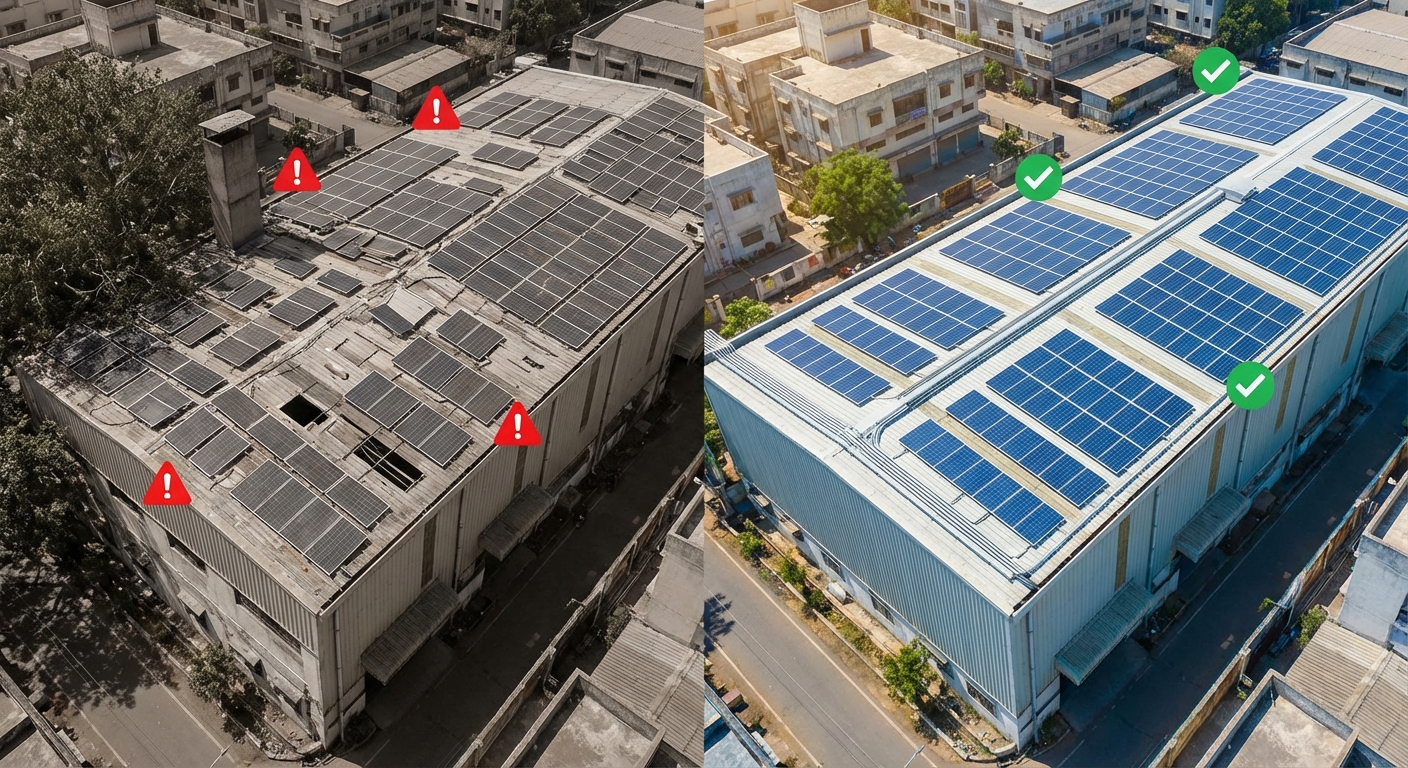
Investing in professional solar consultancy India services delivers measurable returns that far exceed the consultancy costs. Understanding these value drivers helps EPCs justify consultancy investments to their clients and make informed decisions about design partnerships.
Optimized designs that maximize energy generation directly impact project revenue. Professional engineers use sophisticated modeling tools to optimize every aspect of system design—panel tilt angles calibrated for specific latitudes, row spacing that balances land use with shading losses, string configurations that minimize electrical losses, and inverter sizing that maximizes energy harvest. These optimizations typically increase energy generation by 3-8% compared to basic designs, translating directly to higher revenue over the project’s 25-year lifetime.
Cost reduction through accurate engineering prevents expensive mistakes and reduces material waste. Precise cable sizing eliminates over-specification that wastes money or under-specification that creates safety issues. Accurate structural designs use appropriate materials without over-engineering. Optimized layouts minimize balance-of-system costs like trenching and conduit. Detailed BOMs enable competitive procurement and prevent costly change orders during construction. For a typical 1 MW commercial project, professional engineering can reduce total project costs by 5-10% through these optimizations.
Risk mitigation and compliance assurance protect project investments. Professional consultants ensure designs meet all applicable Indian standards and local regulations, preventing costly rework or project delays. Proper structural engineering prevents failures during extreme weather events. Accurate electrical design ensures safety and prevents equipment damage. Comprehensive documentation protects against liability issues. These risk reductions are difficult to quantify but can save hundreds of thousands of rupees on larger projects.
Faster project execution with proper documentation accelerates time-to-revenue. Construction teams work more efficiently with clear, detailed drawings. Permit approvals move faster with properly prepared documentation. Procurement proceeds smoothly with accurate BOMs. Installation questions are minimized with comprehensive specifications. For EPCs managing multiple projects, this efficiency allows higher throughput and better resource utilization.
Reduced rework and change orders during construction directly impact profitability. Industry studies show that projects with professional engineering design experience 60-70% fewer change orders than those with basic designs. Each change order consumes project management time, delays schedules, and often increases costs. Professional consultancy firms like Heaven Designs, with experience across 752+ projects totaling 628+ MW, bring insights that prevent common mistakes and reduce costly surprises during construction.
Long-term performance optimization ensures projects deliver promised returns throughout their lifetime. Proper design prevents premature failures, optimizes maintenance access, accounts for environmental factors like dust and temperature, and ensures system monitoring capabilities. These factors determine whether a solar installation delivers its expected 25-year return or underperforms, disappointing clients and damaging EPC reputations.
Solar Consultancy Costs and Investment Considerations
Understanding the cost structure of solar consultancy services helps EPCs budget accurately and evaluate the value proposition of professional design partnerships. While specific pricing varies by firm and project scope, several factors consistently influence consultancy costs.
Factors affecting solar consultancy pricing include project size and complexity, with larger megawatt-scale projects commanding higher fees but lower per-watt costs. Service scope significantly impacts pricing—a basic permit design costs less than comprehensive engineering with PMC services. Timeline requirements affect costs, as expedited projects may require premium pricing. Site accessibility and location influence costs when extensive travel is required for surveys. Level of customization matters, with standard designs costing less than highly customized solutions. Finally, deliverable requirements impact pricing, as more comprehensive documentation packages require more engineering time.
Cost structure for different service types varies considerably. Feasibility studies typically range from ₹25,000 to ₹2,00,000 depending on project size and complexity. Preliminary design services generally cost ₹0.50 to ₹2.00 per watt of system capacity. Detailed engineering design for MW-scale projects typically ranges from ₹1.50 to ₹4.00 per watt, with economies of scale for larger projects. Permit design services vary widely based on jurisdiction but generally range from ₹30,000 to ₹3,00,000. Structural engineering for ground-mount projects typically costs ₹0.75 to ₹2.00 per watt. PMC services for megawatt-scale projects are often priced as a percentage of total project cost, typically 2-5%.
The ROI of investing in professional consultancy is compelling. Consider a 1 MW commercial solar project with a total installed cost of ₹4.5 crore. Professional engineering design might cost ₹3-4 lakh, representing less than 1% of total project cost. However, the benefits include 5-8% higher energy generation worth ₹15-25 lakh over project lifetime, 5-10% reduction in construction costs saving ₹20-45 lakh, faster permitting and construction saving weeks of timeline, reduced risk of costly failures or rework, and enhanced client satisfaction and reputation. The return on consultancy investment often exceeds 10:1 when all factors are considered.
Hidden costs of skipping professional design are substantial and often underestimated. Suboptimal designs reduce energy generation, directly impacting revenue. Poor engineering leads to change orders during construction, typically adding 10-20% to project costs. Permit rejections or delays extend timelines and increase carrying costs. Structural failures require expensive repairs and create liability exposure. Dissatisfied clients damage reputation and reduce repeat business. Equipment failures from improper design void warranties. For EPCs building long-term businesses, these hidden costs far exceed any savings from avoiding professional consultancy.
How consultancy costs compare to overall project budget provides important perspective. For a typical solar installation in India, consultancy and engineering design represents 0.5-2% of total project cost, while equipment (panels, inverters, mounting) represents 60-70%, installation labor represents 15-20%, and balance-of-system components represent 10-15%. Given that professional design influences the cost and performance of all other categories, the consultancy investment delivers disproportionate value relative to its small share of total budget.
Choosing the Right Solar Consultancy Partner in India
Selecting the right solar consultancy India partner significantly impacts project success. EPCs should evaluate potential consultancy firms across multiple dimensions to ensure good fit and reliable delivery.
Key criteria for evaluating consultancy firms include technical expertise and team capabilities, track record with similar project types and sizes, geographic experience across relevant Indian states, design software and technology capabilities, communication and project management approach, quality assurance processes, turnaround time and capacity to meet deadlines, pricing structure and value proposition, and post-delivery support and PMC capabilities.
Questions to ask potential consultancy partners help reveal their capabilities and approach. Ask about their experience: How many projects have you completed in the past year? What is your experience with projects similar to ours in size and type? Which Indian states have you worked in? Inquire about their team: How many engineers do you employ? What qualifications and certifications do your engineers hold? Who will be assigned to our project? Understand their process: What is your typical project timeline? How do you handle revisions and changes? What quality assurance processes do you follow? Clarify deliverables: What exactly will we receive? In what formats? What level of post-delivery support do you provide? Discuss technology: What design software do you use? How do you optimize designs for maximum generation? Finally, request references: Can you provide references from similar projects? May we see examples of your work?
Importance of team size and expertise cannot be overstated. Firms with larger engineering teams can handle multiple projects simultaneously, accommodate tight deadlines, provide specialized expertise for different project types, and maintain consistent quality through peer review. A consultancy firm with 50+ engineers, like Heaven Designs, can dedicate appropriate resources to each project while maintaining quick turnaround times. Smaller firms may offer personalized service but may struggle with capacity during busy periods or lack specialized expertise for complex projects.
Track record and portfolio assessment provides insight into firm capabilities. Review the total megawatts designed, number of projects completed, types of projects (residential, commercial, utility-scale), geographic diversity of projects, and client retention rates. Firms with experience across 600+ projects and hundreds of megawatts bring insights that prevent common mistakes and accelerate delivery. Ask to see sample deliverables from similar projects to assess documentation quality and completeness.
Technology and software capabilities directly impact design quality. Professional firms invest in industry-leading tools like PVsyst, Helioscope, AutoCAD, and specialized structural analysis software. They maintain current subscriptions and train engineers on the latest features. Advanced firms may also develop proprietary tools for specific optimization tasks. Ask about the specific software used for different aspects of design and how the firm stays current with evolving technology.
Communication and project management approach affects collaboration effectiveness. Evaluate how the firm handles initial consultations, frequency and format of project updates, responsiveness to questions and concerns, process for handling revisions, and escalation procedures for issues. Firms with clear communication protocols and dedicated project managers typically deliver smoother experiences than those with ad-hoc approaches. For EPCs managing multiple projects, consistent communication processes across all consultancy engagements simplify coordination.
Regional Considerations for Solar Consultancy Across India
India’s vast geographic and regulatory diversity creates significant regional variations that professional solar consultancy India firms must navigate. Understanding these regional considerations helps EPCs select consultancy partners with appropriate experience and ensures designs account for local factors.
State-specific regulations and compliance requirements vary considerably across India. Each state has its own electricity regulatory commission with unique net metering policies, interconnection standards, and approval processes. Some states like Gujarat and Rajasthan have streamlined solar approval processes, while others have more complex requirements. Professional consultancy firms maintain current knowledge of requirements across multiple states, ensuring designs meet local regulations and documentation satisfies approval authorities.
Regional climate and environmental factors significantly impact design requirements. Coastal states like Kerala and Tamil Nadu face high humidity and salt-laden air requiring enhanced corrosion protection. Northern states experience wider temperature variations and occasional snow loads. Western states like Rajasthan face extreme heat and dust accumulation. Eastern and northeastern states receive higher rainfall and must account for monsoon conditions. Professional consultants adjust designs for these regional factors, selecting appropriate materials, corrosion protection, and structural specifications.
Grid connectivity variations across states affect project feasibility and design. Some states have robust grid infrastructure with readily available connection points, while others have constrained capacity requiring expensive grid upgrades. Voltage levels, interconnection standards, and metering requirements vary by state and local distribution company. Consultancy firms with experience across multiple Indian states understand these variations and can navigate local utility requirements effectively.
Local permitting processes and timelines differ dramatically across jurisdictions. Urban areas typically have more structured approval processes but may require more documentation. Rural areas may have simpler requirements but less predictable timelines. Some states have single-window clearance systems for solar projects, while others require approvals from multiple agencies. Building department requirements, fire safety approvals, and environmental clearances vary by location. Experienced consultancy firms familiar with local processes can prepare appropriate documentation and provide realistic timeline estimates.
Soil conditions and structural requirements by region impact foundation design and costs. The alluvial soils of the Indo-Gangetic plain require different foundation approaches than the black cotton soils of Maharashtra or the laterite soils of coastal regions. Rocky terrain in parts of Karnataka and Rajasthan presents different challenges than sandy soils in Gujarat. Professional structural engineers conduct appropriate soil testing and design foundations suited to local conditions, preventing failures and optimizing costs.
Common Challenges in Solar Consultancy Projects and Solutions
Even with professional consultancy partners, solar projects face predictable challenges. Understanding these common issues and how experienced firms address them helps EPCs set realistic expectations and collaborate effectively.
Incomplete or inaccurate site data is perhaps the most common challenge. EPCs sometimes provide limited information, expecting consultants to work with minimal inputs. However, design accuracy depends directly on data quality. Professional consultancy firms address this by providing clear checklists of required information, conducting their own site surveys when necessary, using satellite imagery and remote sensing to supplement limited data, building contingencies into designs when data is uncertain, and clearly documenting assumptions made due to data limitations. EPCs can minimize this challenge by investing in comprehensive site surveys before engaging consultancy services.
Changing regulatory requirements present ongoing challenges in India’s evolving solar sector. Net metering policies, interconnection standards, and safety requirements change periodically at both central and state levels. Professional solar consultancy India firms address this by maintaining current knowledge of regulations across multiple states, participating in industry associations to stay informed of upcoming changes, building flexibility into designs to accommodate potential requirement changes, and maintaining relationships with approval authorities to understand interpretation of regulations. When regulations change mid-project, experienced firms can quickly assess impacts and recommend appropriate design modifications.
Budget constraints and cost optimization require balancing performance with affordability. Clients often want maximum performance at minimum cost, an inherent tension. Professional consultants address this through value engineering that identifies cost savings without compromising performance, providing multiple design alternatives with cost-benefit analysis, clearly explaining the ROI impact of different design choices, identifying which cost reductions are prudent and which are risky, and helping clients understand where investment in quality pays long-term dividends. Transparent communication about trade-offs helps clients make informed decisions aligned with their priorities.
Timeline pressures and fast-track projects create stress on the design process. EPCs facing aggressive client deadlines may request expedited delivery. Professional firms with adequate capacity can accommodate accelerated timelines through dedicated team assignment, parallel work streams for different design aspects, extended work hours when necessary, and streamlined review processes. However, responsible consultants also communicate when requested timelines are unrealistic and explain the risks of rushing critical design work. Firms with large engineering teams like Heaven Designs can better accommodate urgent projects without compromising quality.
Communication gaps between EPCs and consultants can lead to misaligned expectations and rework. This occurs when requirements are not clearly documented, feedback is delayed or unclear, technical terminology is misunderstood, or assumptions are not validated. Professional consultancy firms minimize communication issues through structured kickoff meetings that document requirements, regular status updates throughout the project, clear documentation of design decisions and assumptions, accessible project managers who respond promptly to questions, and formal review processes with documented feedback. EPCs can support effective communication by designating a single point of contact, providing timely feedback during review cycles, and asking questions when anything is unclear.
How experienced consultancy firms address these challenges distinguishes professional service providers from basic design shops. Firms with hundreds of completed projects have encountered virtually every challenge and developed systematic approaches to prevent or resolve issues. They maintain documented processes, invest in project management systems, train engineers in both technical and communication skills, and continuously improve based on lessons learned. When selecting a consultancy partner, EPCs should inquire about how firms handle common challenges and request examples of how they’ve resolved issues on past projects.
Frequently Asked Questions About Solar Consultancy India
What’s the difference between solar consultancy and EPC services? Solar consultancy firms focus specifically on technical design, engineering, and advisory services, while EPC (Engineering, Procurement, and Construction) companies handle the complete project lifecycle including equipment procurement and physical installation. Consultancy firms serve as technical partners to EPCs, providing the specialized engineering expertise that EPCs may not maintain in-house. Many EPCs outsource design work to consultancy firms while focusing on their core competencies of procurement, construction, and client relationships.
How long does a typical solar design project take? Timelines vary based on project size and complexity. A residential rooftop design might be completed in 3-5 days, a commercial project of 100 kW to 1 MW typically requires 1-2 weeks, and megawatt-scale ground-mount projects generally need 2-4 weeks for detailed engineering. Feasibility studies typically take 1-3 weeks. Expedited timelines are possible with professional firms that have adequate engineering capacity, though this may impact costs. Clear requirements and prompt client feedback during review cycles help keep projects on schedule.
What information do I need to provide to start a consultancy project? At minimum, you should provide site location and address, desired system capacity or available area, site photographs and any existing surveys, electrical infrastructure information including available capacity, timeline requirements and project deadlines, budget parameters, and any specific technical requirements or constraints. More comprehensive information accelerates the design process and improves accuracy. Professional consultancy firms provide detailed checklists of helpful information and can conduct site surveys to gather missing data.
Can consultancy firms handle projects across all Indian states? Professional solar consultancy India firms with national experience can handle projects across multiple states, though capabilities vary by firm. Firms like Heaven Designs with experience across 3+ countries and hundreds of projects have worked in diverse Indian states and understand regional variations in regulations, climate, soil conditions, and permitting processes. When evaluating consultancy partners, ask specifically about their experience in your target states and request references from similar locations.
What happens if design revisions are needed? Professional consultancy firms typically include a reasonable number of revisions in their project scope, usually one or two rounds of changes based on client feedback. The revision process involves reviewing client feedback, assessing the scope of requested changes, implementing revisions to drawings and documentation, conducting internal quality review, and delivering updated documentation. Significant scope changes beyond normal revisions may require additional fees and timeline extensions. Clear communication of requirements upfront minimizes the need for extensive revisions.
How do consultancy firms ensure compliance with local regulations? Experienced firms maintain current knowledge of regulations across multiple Indian states through ongoing monitoring of regulatory changes, participation in industry associations, relationships with approval authorities, and documentation of state-specific requirements. They ensure compliance by designing to applicable Indian standards (BIS), preparing documentation that meets local permitting requirements, having designs reviewed by licensed professional engineers, and providing stamped drawings where required. Firms with experience in specific states understand local interpretation of regulations and can navigate approval processes efficiently.
Partner with Expert Solar Consultancy India Services
As India’s solar sector continues its rapid expansion toward ambitious renewable energy targets, the role of professional solar consultancy India services becomes increasingly critical. EPCs and developers who partner with experienced consultancy firms gain significant competitive advantages through optimized designs that maximize energy generation and ROI, accurate engineering that reduces costs and prevents failures, comprehensive documentation that accelerates permitting and construction, specialized expertise across diverse project types and regions, and scalable capacity to handle multiple projects simultaneously.
The investment in professional consultancy services, typically less than 2% of total project cost, delivers returns that far exceed the fees through higher performance, lower costs, reduced risks, and faster execution. For EPCs building sustainable businesses in India’s competitive solar market, professional design partnerships are not optional extras but essential components of project success.
Heaven Designs brings proven expertise to solar consultancy projects across India and internationally. With a dedicated team of 50+ specialized engineers, experience across 752+ projects totaling 628+ MW, comprehensive service offerings from feasibility studies through PMC, and deep understanding of regional variations across Indian states, Heaven Designs delivers the technical excellence and reliable service that EPCs need to succeed. Whether you’re planning a residential rooftop installation, a commercial megawatt-scale project, or a utility-scale ground-mount development, professional consultancy ensures your project is built on a foundation of accurate engineering and optimized design.
Ready to discuss your next solar project? Get a Quick Proposal Now! or contact the Heaven Designs team at +91 90811 00297 or service@heavendesigns.in to learn how professional solar consultancy India services can maximize your project success and ROI.
This blog post was written using thestacc.com