


As India accelerates toward its ambitious renewable energy targets in 2026, megawatt-scale solar projects have become the backbone of the nation’s clean energy transition. For solar EPC companies undertaking commercial and industrial installations, the foundation of every successful project lies in comprehensive, accurate engineering design. MW design India services have evolved into a specialized discipline that combines technical precision, regulatory knowledge, and cost optimization to deliver solar installations that maximize energy generation while ensuring structural integrity and compliance.
Whether you’re planning a 5 MW rooftop installation for a manufacturing facility or a 50 MW ground mount project, understanding the complete design process, timeline expectations, and quality standards is essential for project success. This comprehensive guide walks you through everything EPC companies need to know about commissioning megawatt-scale solar design services in India, from initial site assessment to final deliverable handover.
What is MW Design India and Why It Matters for Solar EPC Companies
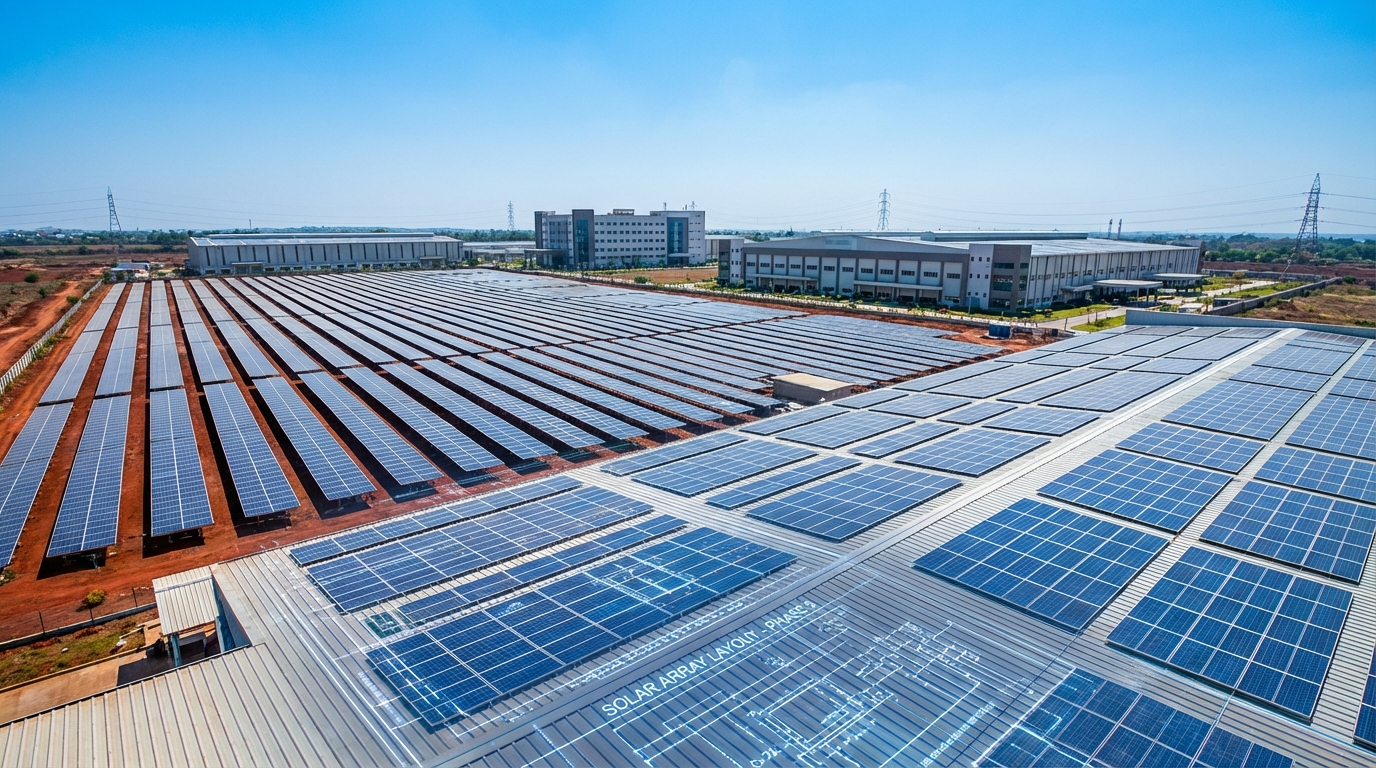
MW design India refers to the specialized engineering design services required for megawatt-scale solar photovoltaic projects across commercial, industrial, and utility segments in the Indian market. Unlike residential solar design, MW scale projects demand comprehensive detailed engineering that addresses complex structural loads, grid integration requirements, land constraints, and regulatory compliance across multiple disciplines.
The Indian solar market has matured significantly, with commercial and industrial segments driving substantial growth. In 2026, businesses across manufacturing, IT parks, warehouses, and agricultural facilities are investing in captive solar installations ranging from 1 MW to over 100 MW. Each of these projects requires meticulous engineering design that accounts for India’s diverse climatic zones, varying soil conditions, state-specific regulations, and evolving grid codes.
For solar EPC companies, partnering with a specialized design partner has become critical for several reasons. First, accurate design directly impacts project economics. A well-optimized layout can increase energy generation by 5-8% compared to generic designs, translating to significant revenue gains over the project’s 25-year lifespan. Second, comprehensive engineering documentation reduces construction phase errors, which can cost 3-5 times more to fix than preventing through proper design. Third, regulatory compliance and permit approvals depend entirely on the quality and completeness of design documentation.
The complexity of MW design India projects has increased with stricter building codes, enhanced safety standards, and more sophisticated grid integration requirements. Modern MW scale designs must incorporate advanced modeling for wind loads, seismic considerations, shadow analysis, thermal effects, and electrical protection systems. This level of detail requires specialized expertise that most EPC companies find more cost-effective to outsource to dedicated design firms.
Heaven Designs has completed over 628 MW of design work for 752+ solar EPC clients, demonstrating the growing demand for specialized design services. The company’s experience across diverse project types—from rooftop installations on industrial structures to large ground mount arrays—provides valuable insights into the nuances of solar design India requirements.
The Complete MW Design India Process: From Assessment to Deliverables
The journey from project concept to construction-ready design documents follows a structured process that ensures technical accuracy, regulatory compliance, and cost optimization. Understanding this process helps EPC companies plan timelines, allocate resources, and set appropriate expectations with their end clients.
The MW design India process typically unfolds across three major phases: initial assessment and data collection, detailed engineering design, and permit documentation with regulatory compliance. Each phase builds upon the previous one, with review checkpoints to ensure alignment with project objectives and client requirements.
Phase 1: Initial Assessment and Site Survey India
Every successful MW scale solar project begins with comprehensive site assessment. The site survey India process for megawatt-scale installations goes far beyond simple measurements. It involves detailed investigation of site conditions, constraints, and opportunities that will shape the entire design approach.
The site survey team collects critical data including accurate site dimensions using GPS and drone surveys, existing infrastructure documentation, electrical service details, structural capacity assessments for rooftop projects, and access routes for equipment delivery. For ground mount projects, topographical surveys identify elevation changes, drainage patterns, and vegetation that might affect layout optimization.
A comprehensive feasibility study India component evaluates technical and economic viability. This includes solar irradiation analysis using historical weather data, shadow analysis from nearby structures or terrain features, grid connectivity assessment with the local distribution company, and preliminary financial modeling. Heaven Designs conducts detailed feasibility studies that help EPC companies make informed decisions before committing to full design development.
Geotechnical investigation forms a crucial part of the assessment phase. Soil testing determines bearing capacity, which directly affects foundation design and costs. For large ground mount installations, understanding soil composition, water table levels, and seismic zone classification is essential for structural engineering India calculations. Poor soil conditions discovered late in the process can derail project economics, making early investigation invaluable.
The assessment phase also includes electrical infrastructure evaluation. The design team examines existing electrical systems, available transformer capacity, grid connection points, and voltage levels. This information shapes decisions about inverter sizing, cable routing, and protection systems. For projects requiring new grid connections, coordination with the local DISCOM begins during this phase to understand timelines and requirements.
Phase 2: Detailed Engineering Design and Documentation
With assessment data in hand, the design team moves into detailed engineering. This phase represents the core of MW design India services, where specialized solar engineer expertise transforms site data and project requirements into comprehensive construction-ready documentation.
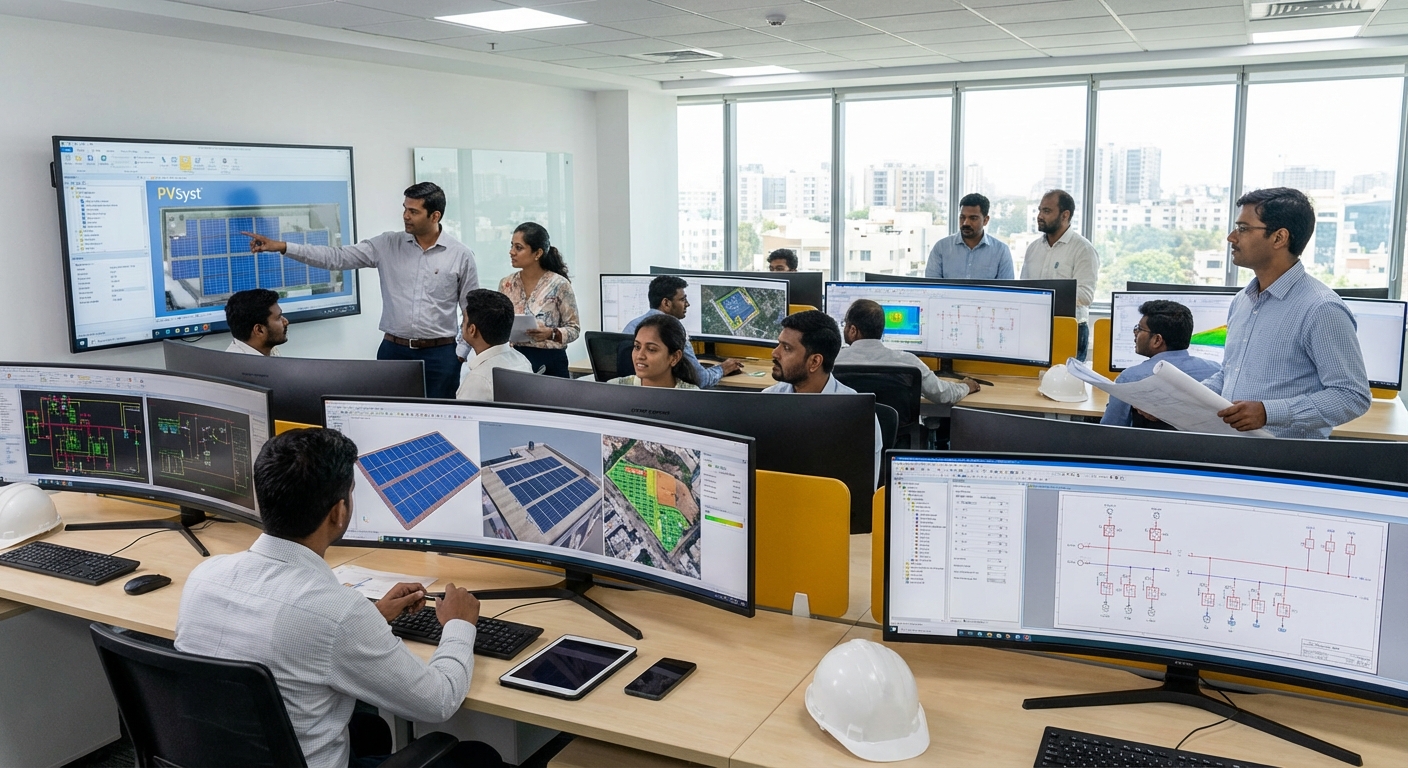
The process begins with Solar 3D Pre-Design, where engineers create preliminary layouts using advanced design software India tools. This stage optimizes panel placement to maximize energy generation while respecting site constraints like setbacks, access pathways, and maintenance clearances. Multiple layout scenarios are evaluated, comparing energy yield, structural requirements, and costs to identify the optimal configuration.
Electrical design forms a major component of detailed engineering. The team develops single-line diagrams showing the complete electrical architecture from solar panels through combiner boxes, inverters, transformers, and grid connection points. Cable sizing calculations account for voltage drop, temperature derating, and future expansion possibilities. Protection system design includes proper grounding, surge protection, and safety disconnects that comply with Indian electrical codes.
Structural engineering for MW scale projects requires specialized expertise. For rooftop installations, engineers analyze existing building structures to verify they can support additional loads from solar panels, mounting systems, and wind uplift forces. Structural calculations follow IS codes and account for India’s diverse wind zones and seismic regions. The design specifies mounting structure types, foundation requirements, and connection details that ensure 25-year structural integrity.
For ground mount installations, civil engineering design includes foundation design based on geotechnical data, site grading and drainage plans, access road layouts, and perimeter fencing specifications. The design must address monsoon water management, preventing erosion and ensuring long-term site stability.
The detailed design phase produces comprehensive drawing sets including site layout plans, electrical single-line and schematic diagrams, panel schedules and equipment specifications, structural drawings and foundation details, cable routing and trenching plans, and earthing and lightning protection layouts. Each drawing undergoes multiple review cycles to ensure accuracy and coordination between disciplines.
Phase 3: Permit Design and Regulatory Compliance
The final design phase focuses on permit design and regulatory documentation. India’s solar permitting landscape varies significantly by state, with different requirements for technical approvals, electrical inspections, and grid connection permissions. Navigating this complexity requires deep knowledge of local regulations and established relationships with approval authorities.
Permit documentation packages typically include detailed technical drawings stamped by licensed engineers, equipment specifications and certifications, structural safety certificates, electrical safety and protection system details, and environmental compliance documentation. For projects above certain capacity thresholds, additional approvals from state electricity boards or central agencies may be required.
DISCOM approval documentation represents a critical component. The design must demonstrate compliance with grid codes, including power quality requirements, protection system specifications, and metering arrangements. The application package includes detailed electrical drawings, equipment technical specifications, and grid impact studies for larger installations.
Building permits for rooftop installations require structural safety certificates confirming the existing structure can support the solar installation. This involves detailed load calculations, structural analysis reports, and sometimes third-party structural audits. The permit design must clearly demonstrate compliance with local building codes and fire safety regulations.
Quality standards adherence is documented throughout the permit package. Designs reference relevant Indian Standards (IS codes), IEC standards for equipment, and any state-specific technical requirements. This documentation provides assurance to approval authorities and protects the EPC company from future liability issues.
Team Structure and Expertise Required for MW Design India Projects
Delivering comprehensive MW design India services requires a multidisciplinary team with specialized expertise across electrical, civil, structural, and project management domains. Understanding the team structure helps EPC companies evaluate potential design partners and set appropriate expectations for collaboration.
The core design team for a typical MW scale project includes several key roles. A lead solar engineer coordinates the overall design effort, ensuring integration across disciplines and alignment with project objectives. This role requires deep understanding of solar PV systems, Indian regulations, and practical construction considerations. The lead engineer serves as the primary interface with the EPC company, managing communication and addressing technical queries.
Electrical engineering specialists handle all aspects of electrical design, from DC array configuration through AC distribution and grid connection. These engineers must be proficient in electrical design software, familiar with Indian electrical codes, and experienced with protection system design. For MW scale projects, the electrical team typically includes 2-3 engineers working on different aspects of the electrical system.
Structural engineering India expertise is critical for both rooftop and ground mount projects. Structural engineers analyze loads, design foundations and mounting systems, and prepare structural calculations and drawings. They must be licensed professional engineers familiar with relevant IS codes and experienced with solar-specific structural challenges like wind uplift and dynamic loads. Complex projects may require separate structural engineers for civil foundations and mounting structure design.
Civil engineering support handles site grading, drainage design, access roads, and earthwork specifications for ground mount projects. Civil engineers coordinate with structural engineers on foundation design and ensure the overall site design addresses water management and long-term stability.
For larger projects, PMC services India teams provide project management consultancy throughout the design phase and into construction. PMC professionals coordinate between design disciplines, manage schedules and deliverables, conduct quality reviews, and facilitate communication with stakeholders. This project management layer ensures designs stay on schedule and meet quality standards.
Quality assurance specialists review designs at key milestones, checking calculations, verifying code compliance, and ensuring drawing coordination. This independent review layer catches errors before they reach construction, significantly reducing costly field changes.
Heaven Designs structures its team of over 50 engineers and consultants to provide this comprehensive expertise. The company’s scale allows dedicated specialists in each discipline while maintaining efficient project coordination. This team structure enables Heaven Designs to handle multiple MW scale projects simultaneously while maintaining consistent quality standards.
Design Timeline and Project Milestones for MW Scale Projects
Understanding realistic design timeline expectations is crucial for EPC companies planning project schedules and managing client commitments. The duration for MW design India services varies based on project size, complexity, site conditions, and the completeness of initial data provided.
For a typical 1-10 MW project with straightforward site conditions, the complete design process from kickoff to final deliverables generally requires 4-6 weeks. This timeline assumes prompt data provision, reasonable site access for surveys, and normal review cycles. The process breaks down into approximately 1 week for site survey and data collection, 2-3 weeks for detailed engineering design, and 1-2 weeks for permit documentation and final reviews.
Larger projects in the 10-50 MW range typically require 6-10 weeks for complete design development. The increased timeline reflects greater design complexity, more extensive documentation requirements, and additional review cycles. Very large installations above 50 MW may require 10-14 weeks, particularly if they involve multiple sites or complex grid integration requirements.
Several factors can extend the design timeline beyond these typical ranges. Incomplete or delayed site data is the most common cause of schedule delays. If geotechnical reports, structural assessments, or electrical infrastructure details are not available when needed, the design process must pause while this information is gathered. EPC companies can significantly accelerate timelines by ensuring all required data is collected before design kickoff.
Site complexity also affects duration. Projects with challenging terrain, multiple roof levels, significant shading issues, or constrained layouts require more design iterations to optimize. Similarly, projects requiring custom engineering solutions rather than standard approaches need additional time for analysis and validation.
Regulatory requirements in certain states can extend timelines if special studies or approvals are needed. Some jurisdictions require environmental impact assessments, grid impact studies, or third-party technical reviews that add weeks to the process. Understanding these requirements early helps set realistic schedule expectations.
Client review and approval cycles significantly impact overall duration. Projects with multiple stakeholders or lengthy internal approval processes can see timelines extend by 2-4 weeks simply due to review delays. Establishing clear review protocols and decision-making authority at project kickoff helps minimize these delays.
Heaven Designs has developed efficient processes that optimize design timelines without compromising quality. The company’s experience across 752+ projects has identified opportunities for parallel processing, where different design disciplines work simultaneously rather than sequentially. This approach can reduce overall timelines by 20-30% compared to traditional sequential design processes.
Critical path activities that cannot be compressed include site survey and data collection, which requires physical site access and time for testing, geotechnical investigation and soil testing results, which typically take 5-7 days for laboratory analysis, structural analysis and calculations, which require careful verification, and permit authority review times, which are outside the design team’s control.
EPC companies should build buffer time into project schedules for design revisions and approvals. A typical project includes 2-3 formal review cycles where the client provides feedback and the design team incorporates changes. Allowing 3-5 days per review cycle prevents schedule pressure and ensures thorough evaluation.
Understanding Solar Design Cost and Engineering Cost Factors
The investment in professional MW design India services represents a small fraction of total project costs but delivers significant value through optimized layouts, reduced construction errors, and faster approvals. Understanding solar design cost components and factors helps EPC companies budget appropriately and evaluate design partner proposals.
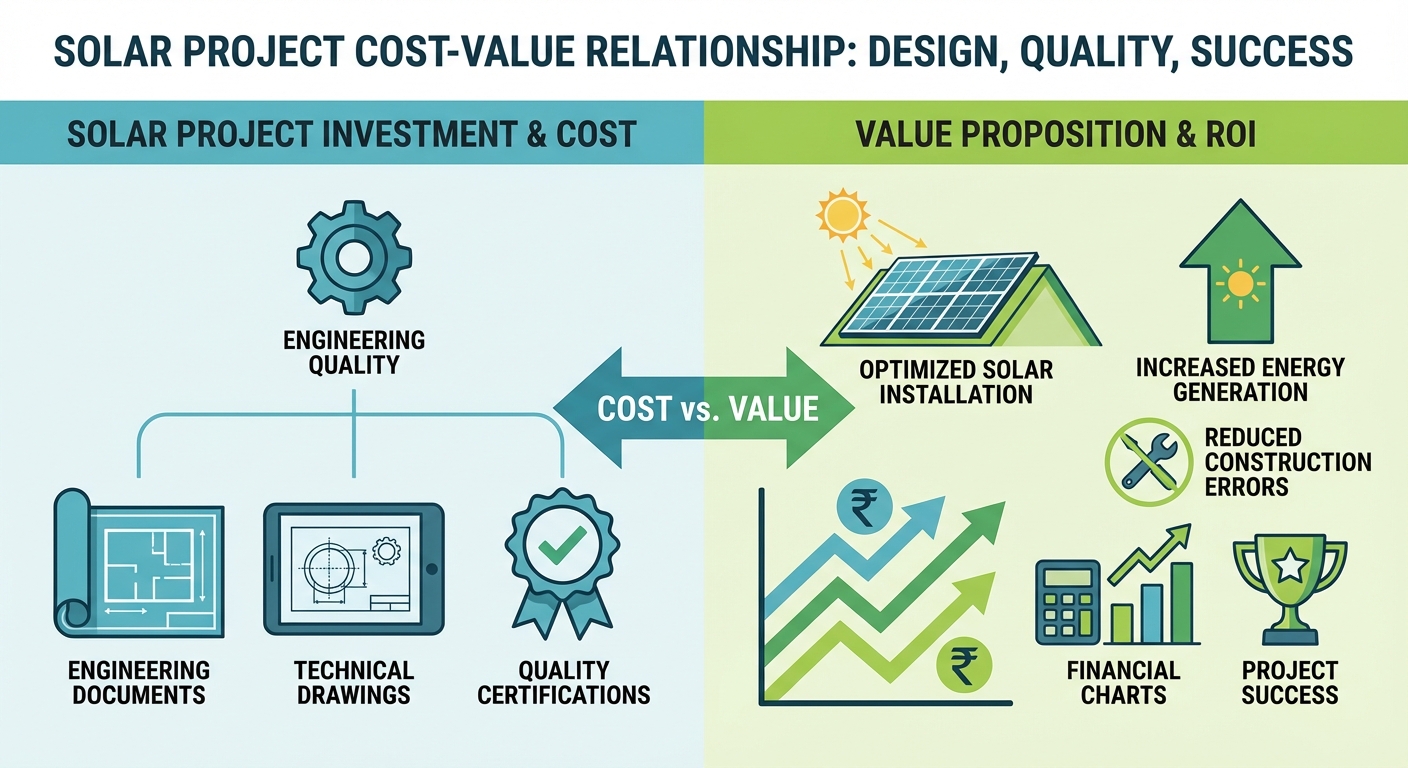
Engineering cost for MW scale solar projects typically ranges from 0.5% to 2% of total project capital expenditure, depending on project size, complexity, and scope of services. Larger projects benefit from economies of scale, with per-MW design costs decreasing as project size increases. A 1 MW project might see design costs at the higher end of this range, while a 50 MW project would be toward the lower end on a per-MW basis.
Several factors influence solar design cost in the Indian market. Project complexity is the primary driver—straightforward ground mount installations on flat terrain with good soil conditions require less engineering effort than multi-level rooftop installations on existing structures with capacity constraints. Site accessibility affects survey costs, with remote locations requiring more time and resources for data collection.
The scope of services significantly impacts pricing. Basic design packages covering only essential drawings and calculations cost less than comprehensive packages including detailed PMC services India, construction support, and as-built documentation. EPC companies should clearly define required deliverables to receive accurate cost estimates.
Structural complexity drives structural engineering India costs. Projects requiring custom mounting solutions, challenging foundation conditions, or extensive structural analysis for existing buildings involve more engineering hours. Similarly, complex electrical designs with multiple voltage levels, sophisticated protection schemes, or challenging grid integration requirements increase electrical engineering costs.
Permit and regulatory requirements vary by location and affect documentation costs. States with more stringent approval processes require more detailed submissions and potentially multiple revision cycles, increasing overall engineering cost. Projects requiring environmental clearances or special studies incur additional costs for these specialized services.
Timeline requirements can affect pricing. Expedited design schedules requiring additional resources or overtime work typically carry premium pricing. Conversely, flexible timelines that allow efficient resource allocation may offer cost advantages.
The value delivered by professional design services far exceeds the cost. Optimized layouts can increase energy generation by 5-8%, which over a 25-year project life represents hundreds of thousands to millions of rupees in additional revenue. Accurate designs reduce construction phase changes, which typically cost 3-5 times more to implement than getting the design right initially. Comprehensive permit documentation accelerates approvals, reducing project financing costs and enabling earlier revenue generation.
Quality design also reduces long-term operational issues. Proper structural design prevents premature failures, appropriate electrical protection systems avoid equipment damage, and thoughtful layout design facilitates maintenance access. These factors contribute to lower lifecycle costs and better project returns.
When evaluating solar design cost proposals, EPC companies should look beyond the bottom line price. Consider the completeness of deliverables, the experience and qualifications of the design team, the track record of successful projects, quality assurance processes, and post-design support availability. The cheapest design option often proves most expensive when construction issues arise or permits are delayed due to incomplete documentation.
Heaven Designs’ approach focuses on delivering cost-effective design services that optimize project economics. With 628+ MW of completed design work, the company has refined processes that maximize efficiency without compromising quality. This experience translates to competitive pricing while maintaining the comprehensive deliverables EPC companies need for successful project execution.
Quality Standards and Deliverables: What EPC Companies Should Expect
The value of MW design India services is ultimately measured by the quality and completeness of deliverables. Understanding what to expect helps EPC companies evaluate design partners and ensure they receive documentation adequate for construction and regulatory approvals.
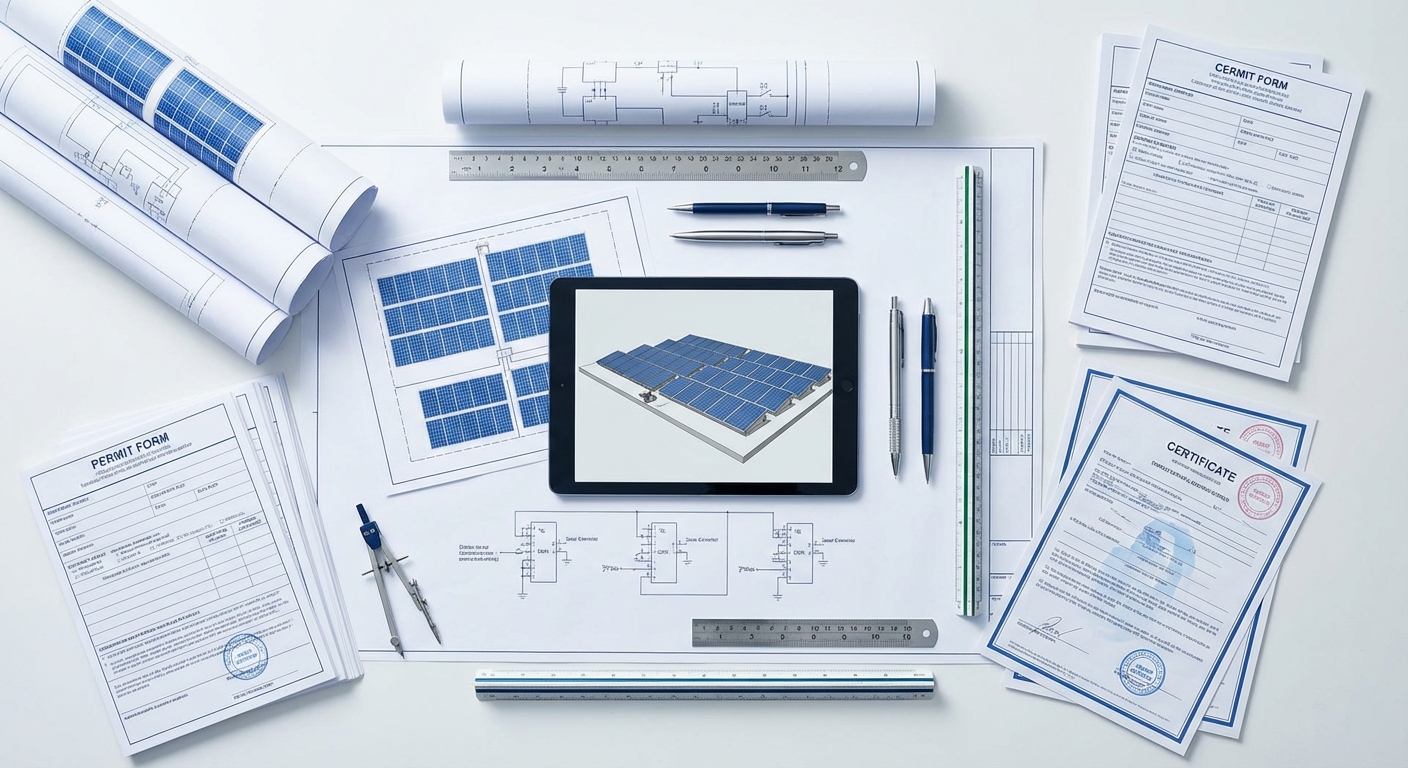
A comprehensive design package for a MW scale solar project includes multiple categories of deliverables across different engineering disciplines. The electrical design deliverables form the core of the package, including detailed single-line diagrams showing the complete electrical system from DC arrays through inverters to grid connection, three-line diagrams and schematic drawings for complex sections, cable schedules with sizing calculations and routing details, equipment specifications for all major components, protection system design and relay settings, earthing and lightning protection layouts, and panel schedules and equipment lists.
Structural and civil engineering deliverables include site layout plans showing panel placement and all site features, foundation design drawings with reinforcement details, mounting structure specifications and connection details, structural calculation reports demonstrating code compliance, site grading and drainage plans for ground mount projects, and geotechnical investigation reports with soil testing results.
Permit and regulatory documentation includes all drawings and reports required for local approvals, DISCOM application packages with required technical details, structural safety certificates from licensed engineers, electrical safety compliance documentation, and equipment certifications and test reports.
Additional deliverables that add value include energy generation estimates and financial modeling, 3D renderings and visualizations for client presentations, construction specifications and installation guidelines, bill of materials and equipment procurement lists, and as-built drawing templates for post-construction documentation.
Drawing standards and formats should follow industry best practices. Professional CAD drawings with proper layering, dimensioning, and notation make construction and future modifications easier. Drawings should include clear title blocks with project information, revision tracking, and professional engineer stamps where required. PDF deliverables should be high-resolution and suitable for printing at various scales.
Quality control processes ensure deliverable accuracy and completeness. Reputable design firms implement multiple review checkpoints including internal peer reviews where engineers check each other’s work, discipline coordination reviews ensuring electrical, structural, and civil designs align properly, code compliance reviews verifying adherence to all applicable standards, and client review cycles allowing feedback and refinement.
Revision management is an important aspect of quality deliverables. Design documents should clearly indicate revision numbers and dates, with revision clouds or notes highlighting what changed. This tracking prevents confusion during construction when multiple document versions might be in circulation.
Post-design support represents an often-overlooked but valuable component of quality service. Construction phase questions inevitably arise as contractors encounter field conditions or need clarification on design intent. Responsive design support during construction prevents costly delays and ensures the installation matches design specifications. Heaven Designs provides ongoing support to EPC clients throughout construction, addressing technical queries and reviewing proposed field modifications.
Documentation format and delivery methods should align with client needs. Most projects require both digital CAD files for contractor use and PDF drawing sets for printing and distribution. Cloud-based document sharing platforms facilitate easy access and version control. Some clients also request native design software files for future modifications.
The completeness of deliverables directly impacts construction efficiency. Missing details or ambiguous specifications lead to contractor questions, delays, and potential errors. Comprehensive documentation that anticipates construction needs and provides clear guidance enables smooth project execution.
Choosing the Right Design Partner for Your MW Scale Solar EPC India Projects
Selecting the right design partner is one of the most important decisions solar EPC companies make. The design partner’s expertise, processes, and reliability directly impact project success, timelines, and profitability. Several key criteria help evaluate potential design partners for solar EPC India projects.
Experience and track record provide the foundation for evaluation. Look for design firms with substantial MW scale project experience in the Indian market. The number and variety of completed projects indicate breadth of expertise. Heaven Designs’ portfolio of 628+ MW across 752+ projects demonstrates extensive experience with diverse project types, sizes, and locations. This experience translates to familiarity with regional variations in regulations, climate considerations, and construction practices across India.
Technical capabilities and expertise across all required disciplines are essential. Verify that the design partner has qualified engineers in electrical, structural, and civil disciplines. Check for professional engineering licenses and relevant certifications. Ask about the team size and structure to ensure adequate resources for your project timeline. A design partner with 50+ engineers like Heaven Designs can handle multiple projects simultaneously without resource constraints that might delay your work.
Technology and design software India capabilities indicate a firm’s commitment to quality and efficiency. Modern solar design requires sophisticated software for layout optimization, energy modeling, electrical analysis, and structural calculations. Ask what tools the design partner uses and how they ensure accuracy. Advanced capabilities in 3D modeling, shadow analysis, and energy simulation deliver better optimized designs.
Understanding of Indian regulations and permit processes is critical. Solar regulations vary significantly across Indian states, with different technical requirements, approval processes, and documentation standards. A design partner with experience across multiple states brings valuable knowledge of these variations. Ask about their familiarity with your specific project location and their relationships with local approval authorities.
Quality assurance processes separate professional design firms from basic drafting services. Inquire about internal review procedures, checking processes, and how they ensure accuracy. Multi-level reviews and independent quality checks significantly reduce the risk of errors reaching construction. Understanding their revision and correction policies also matters—reputable firms stand behind their work and address any issues promptly.
Communication and project management capabilities affect the working relationship. Evaluate responsiveness during initial discussions. Ask about their project management approach, reporting frequency, and how they handle client feedback. Clear communication protocols and proactive updates prevent misunderstandings and keep projects on track. For international EPC companies, English language proficiency and experience working with global clients are important considerations.
Flexibility and customization ability indicate whether the design partner can adapt to your specific needs. Some firms offer only standardized packages, while others customize services to match client requirements. Discuss your specific deliverable needs and timeline constraints to gauge their flexibility. The ability to scale services up or down based on project requirements provides valuable partnership flexibility.
Post-design support and construction phase assistance add significant value. Projects inevitably generate questions during construction. A design partner who provides responsive support during this phase helps prevent delays and ensures proper installation. Ask about their support policies and availability during construction.
Cost structure and value proposition should align with your business model. While price matters, the lowest cost option often proves most expensive when issues arise. Evaluate the completeness of deliverables, quality of work, and support provided relative to cost. A slightly higher investment in quality design typically delivers better overall project economics through optimized layouts, fewer construction issues, and faster approvals.
References and client testimonials provide valuable insights. Ask for references from similar projects and contact them to learn about their experience. Questions about responsiveness, quality, timeline adherence, and how the design partner handled challenges reveal important information about working relationships.
Heaven Designs has built its reputation as a trusted design partner for solar EPC companies through consistent delivery of quality work, responsive communication, and comprehensive expertise. The company’s focus on cost-effective solutions that maximize energy generation while optimizing project costs aligns with EPC company objectives. With experience across rooftop solar India and ground mount projects, Heaven Designs brings versatile expertise to diverse project requirements.
Frequently Asked Questions About MW Design India Services
How long does MW scale solar design take in India?
Design timelines vary based on project size and complexity. A typical 1-10 MW project requires 4-6 weeks from kickoff to final deliverables, including site survey, detailed engineering, and permit documentation. Larger projects in the 10-50 MW range need 6-10 weeks, while installations above 50 MW may require 10-14 weeks. Timelines can be shortened with complete upfront data and efficient review cycles, or extended by site complexity, incomplete information, or regulatory requirements.
What documents are needed to start the design process?
To begin MW design India services efficiently, provide site location details and property boundaries, existing electrical infrastructure information including service capacity and voltage, structural drawings for rooftop projects or topographical surveys for ground mount installations, any previous studies or reports about the site, project capacity targets and timeline requirements, and regulatory or permit requirements you’re aware of. The design team can guide you on additional data needed as the project progresses.
Can designs be modified during construction?
Yes, designs can be modified if field conditions differ from initial assumptions or if project requirements change. However, modifications during construction are significantly more expensive than getting the design right initially. Good design partners provide construction phase support to address questions and review proposed changes. Minor clarifications and adjustments are normal, but major redesigns indicate inadequate initial design work. Comprehensive upfront design minimizes the need for construction phase changes.
How do you ensure designs comply with local regulations?
Compliance is ensured through several mechanisms. Experienced design teams stay current with Indian Standards (IS codes), state-specific regulations, and DISCOM requirements. Designs reference applicable codes and standards in documentation. Professional engineer stamps on drawings certify compliance with structural and electrical codes. The permit documentation package is specifically prepared to meet local approval authority requirements. Design firms with extensive India experience understand regional regulatory variations and build compliance into their standard processes.
What is the difference between pre-design and detailed design?
Pre-design, also called preliminary design or Solar 3D Pre-Design, is an early phase that establishes project feasibility and basic parameters. It includes site assessment, preliminary layouts, energy generation estimates, and high-level cost projections. Pre-design helps make go/no-go decisions before investing in full engineering. Detailed design is the comprehensive engineering phase that produces construction-ready documentation including complete electrical, structural, and civil drawings, equipment specifications, permit packages, and all documentation needed for construction and approvals. Detailed design follows pre-design once project feasibility is confirmed.
Take the Next Step in Your MW Design India Project
Professional MW design India services form the foundation of successful solar EPC projects. From initial site assessment through final permit approvals, comprehensive engineering design optimizes energy generation, ensures regulatory compliance, reduces construction risks, and maximizes project returns. As India’s solar market continues expanding in 2026, partnering with experienced design specialists has become essential for EPC companies seeking competitive advantage.
Heaven Designs brings over 628 MW of design experience and a team of 50+ specialized engineers to every project. Whether you’re planning a commercial rooftop installation, an industrial ground mount array, or a utility-scale solar farm, the company’s comprehensive solar design India services deliver the technical precision and documentation quality your project demands.
Ready to discuss your next MW scale solar project? The Heaven Designs team is available to answer your questions, review your project requirements, and provide a detailed proposal tailored to your specific needs. Contact the team at service@heavendesigns.in or call +91 90811 00297 to start the conversation. For a quick project assessment and proposal, get a quick proposal now and take the first step toward optimizing your solar EPC India project with professional MW design services.
This blog post was written using thestacc.com