


For solar EPC companies operating in India and global markets, understanding engineering costs is essential to maintaining profitability while delivering high-quality solar installations. In 2026, professional solar design services represent a critical investment that directly impacts project success, regulatory compliance, and long-term ROI. Yet many EPCs struggle to accurately budget for engineering expenses or understand what they’re actually paying for when they engage design partners.
This comprehensive guide breaks down every component of solar engineering costs—from initial 3D pre-design through detailed engineering, structural analysis, permit design, and PMC services. Whether you’re planning a residential rooftop project or a multi-megawatt ground mount installation, you’ll learn how to budget effectively, avoid hidden costs, and maximize the value of your engineering investment.
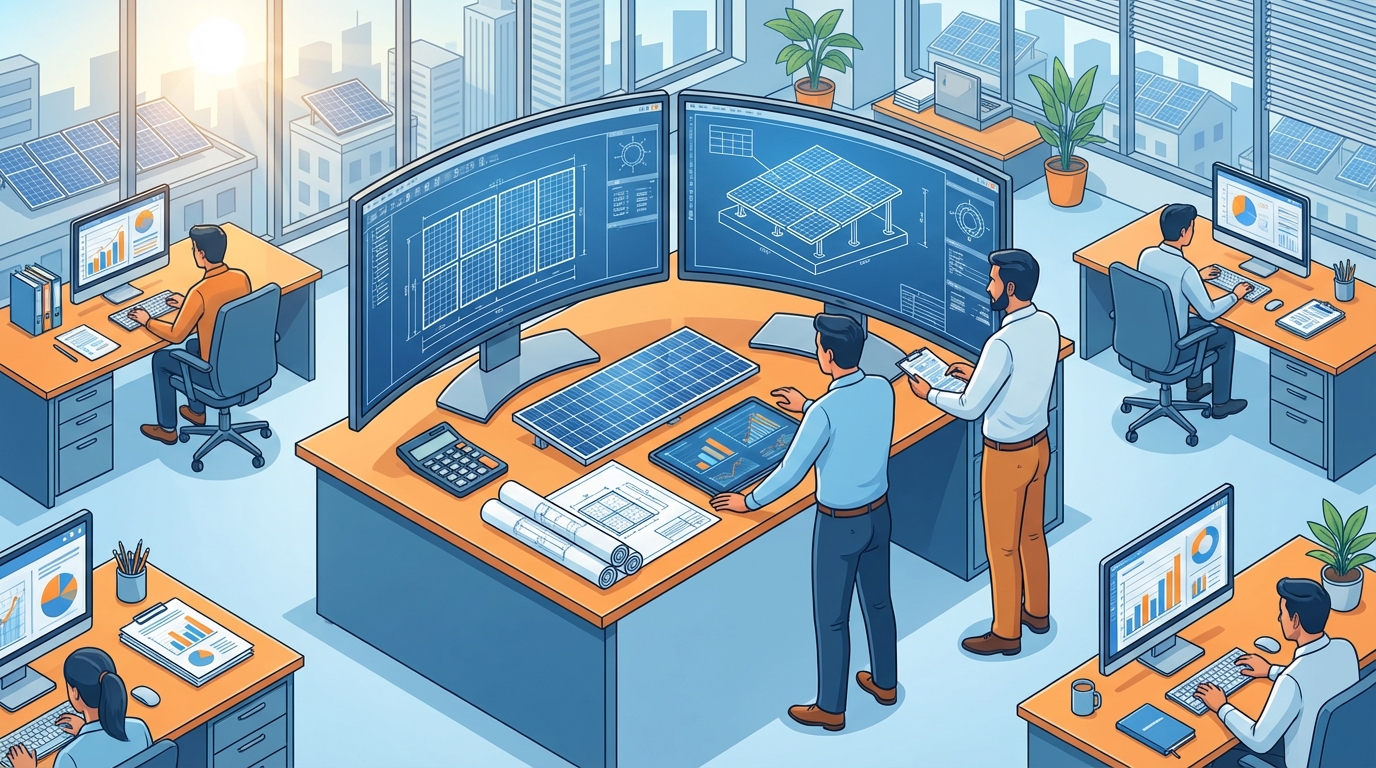
Understanding Solar Engineering Costs in 2026
Engineering costs typically represent 2-5% of total solar project costs for most commercial and utility-scale installations in India. While this might seem like a small percentage, the quality and accuracy of engineering work directly influences the remaining 95-98% of project expenses. Poor engineering decisions made during the design phase can cascade into construction delays, permit rejections, structural failures, and significant cost overruns.
In 2026, the solar engineering landscape in India has evolved considerably. Advanced design software, stricter regulatory requirements, and increased competition among EPCs have all contributed to changing cost structures. Professional engineering design is no longer optional—it’s a competitive necessity that separates successful EPCs from those struggling with project delays and quality issues.
The investment in professional solar design services delivers measurable returns through faster permit approvals, optimized energy yield, reduced construction errors, and lower long-term maintenance costs. EPCs who view engineering costs as an expense rather than an investment often find themselves paying far more in the long run through rework, delays, and lost client confidence.
Understanding the components of engineering costs helps EPCs make informed decisions about when to invest in comprehensive design services versus when simpler approaches might suffice. The key is matching the engineering scope to project complexity, regulatory requirements, and client expectations while maintaining cost-effectiveness.
1. Core Components of Solar Engineering Costs
Solar engineering costs encompass multiple specialized services, each contributing to the overall project success. Breaking down these components helps EPCs understand exactly what they’re paying for and where budget adjustments might be possible without compromising quality.
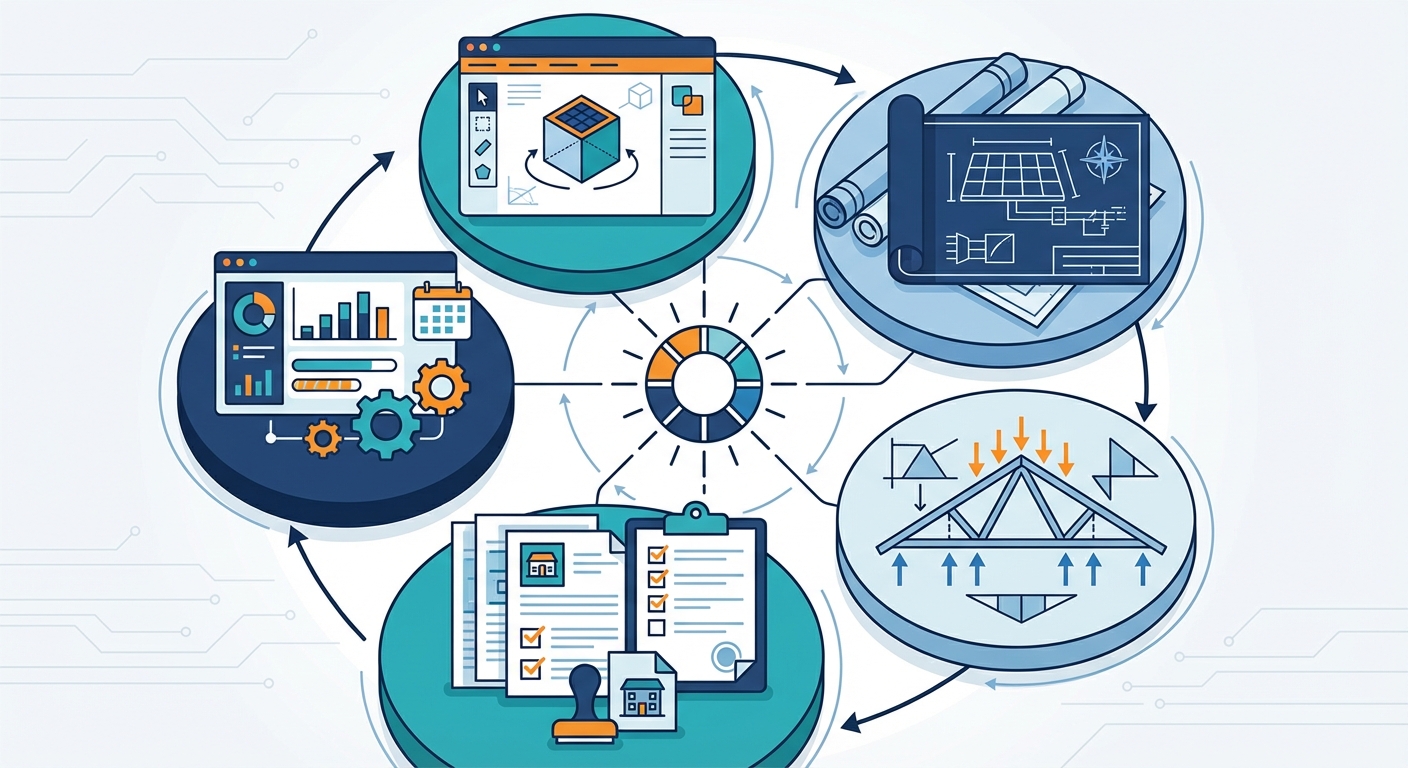
3D Pre-Design and Feasibility Study Costs
The preliminary design phase establishes project viability and provides the foundation for all subsequent engineering work. 3D pre-design services typically cost between ₹0.15 to ₹0.40 per watt for commercial projects in India, depending on site complexity and the level of detail required.
This phase includes comprehensive feasibility studies that assess site suitability, preliminary energy yield calculations, shadow analysis, and initial layout concepts. For a 1 MW project, expect to invest ₹15,000 to ₹40,000 in this critical early stage.
Site survey costs are typically separate from design fees and range from ₹8,000 to ₹25,000 depending on location accessibility, site size, and terrain complexity. Remote sites in rural areas or challenging terrain in states like Himachal Pradesh or Uttarakhand command premium pricing due to travel time and survey difficulty.
The feasibility study deliverables should include drone imagery or satellite analysis, preliminary shading reports, soil assessment recommendations, grid connectivity evaluation, and initial financial projections. These documents form the basis for client proposals and internal project planning.
Detailed Engineering Design Expenses
Detailed engineering represents the largest component of engineering costs for most solar projects. This comprehensive phase produces all technical drawings, specifications, and documentation required for procurement, construction, and commissioning. Costs typically range from ₹0.50 to ₹1.20 per watt for MW-scale projects.
The detailed engineering package includes single-line diagrams, layout plans, electrical schematics, cable schedules, equipment specifications, bill of materials, earthing and lightning protection designs, and SCADA system architecture. For a 5 MW ground mount project, detailed engineering costs might range from ₹2.5 lakh to ₹6 lakh.
Timeline significantly impacts detailed engineering costs. Standard delivery timelines of 3-4 weeks carry baseline pricing, while expedited 1-2 week delivery can increase costs by 25-40%. EPCs should plan engineering timelines carefully to avoid rush premiums while meeting project deadlines.
The complexity of detailed engineering varies dramatically between rooftop and ground mount installations. Rooftop projects require additional structural integration analysis, multiple roof penetration details, and coordination with existing building systems. Ground mount projects need extensive civil work documentation, foundation designs for various soil conditions, and drainage system planning.
Structural and Civil Engineering Costs
Structural engineering is a specialized component that ensures solar installations can withstand wind loads, seismic forces, and environmental stresses throughout their 25-year lifespan. Structural engineering costs typically add ₹0.20 to ₹0.60 per watt to overall engineering expenses.
This phase includes wind load calculations per IS 875 standards, seismic analysis per IS 1893 requirements, foundation design for specific soil conditions, module mounting structure specifications, and structural drawings for fabrication. The analysis must account for regional variations—coastal areas face higher wind loads, while seismically active zones require enhanced structural provisions.
For ground mount projects, civil engineering encompasses site grading plans, drainage design, access road specifications, and fencing layouts. These elements add ₹0.15 to ₹0.35 per watt depending on site conditions and the extent of civil work required.
Regional variations in structural engineering costs reflect different environmental challenges across India. Projects in Gujarat and Rajasthan face extreme heat and dust storms, while installations in Kerala and coastal Karnataka must withstand high humidity and cyclonic winds. Each region requires tailored structural solutions that impact engineering costs.
2. Key Factors That Influence Engineering Costs
Understanding the variables that drive engineering costs helps EPCs budget accurately and identify opportunities for cost optimization without sacrificing quality. Several key factors determine the final engineering investment required for any solar project.
Project size and capacity create economies of scale in engineering costs. While a 100 kW rooftop project might cost ₹1.50 to ₹2.00 per watt for complete engineering, a 10 MW ground mount installation might achieve ₹0.70 to ₹1.00 per watt through standardization and efficiency. However, very large projects above 50 MW may see costs increase again due to grid integration complexity and enhanced regulatory requirements.
Site complexity dramatically impacts engineering costs. A flat, accessible site with good soil conditions and straightforward grid connectivity requires minimal engineering effort. Conversely, sloped terrain, poor soil bearing capacity, remote locations, or complex grid interconnection requirements can double or triple engineering costs compared to baseline estimates.
Timeline requirements represent another significant cost driver. Standard engineering timelines allow for efficient resource allocation and thorough quality review. Rush projects requiring completion in half the normal timeframe often carry 30-50% cost premiums due to overtime work, expedited reviews, and the need to prioritize one project over others.
Design software and technology requirements influence costs, particularly for projects requiring advanced simulation capabilities. Basic 2D CAD work costs less than comprehensive 3D modeling with shade analysis, energy yield optimization, and thermal modeling. EPCs should match software sophistication to project requirements rather than defaulting to the most advanced (and expensive) tools for every project.
Regulatory compliance and permit complexity vary significantly across Indian states and municipalities. Some jurisdictions have streamlined solar permitting processes with clear requirements, while others involve multiple agencies, extensive documentation, and lengthy approval processes. Projects in areas with complex permitting can see engineering costs increase by 20-40% due to additional documentation and revision requirements.
Geographic location affects engineering costs through both labor rates and site accessibility. Projects in major solar markets like Gujarat, Rajasthan, and Maharashtra benefit from competitive engineering service pricing and experienced local firms. Remote locations or emerging solar markets may face higher costs due to limited local expertise and travel requirements for site visits.
3. Pricing Models for Solar Design Services
Solar engineering firms employ various pricing structures, each with advantages and disadvantages depending on project characteristics and client preferences. Understanding these models helps EPCs negotiate effectively and select the approach that best aligns with their project needs.
Per-watt pricing is the most common model for solar engineering services in India. This straightforward approach charges a fixed rate per watt of installed capacity, typically ranging from ₹0.80 to ₹2.50 per watt for complete engineering packages including pre-design, detailed engineering, and structural analysis. Per-watt pricing provides predictable costs and scales naturally with project size.
The per-watt model works well for standard projects with typical complexity levels. However, it may not accurately reflect costs for highly complex sites or projects with unusual requirements. EPCs should clarify exactly what services are included in per-watt pricing and what might trigger additional charges.
Fixed-fee project pricing establishes a total cost for defined engineering deliverables regardless of project size. This model suits projects where capacity might change during design optimization or where scope is clearly defined but capacity is flexible. Fixed fees typically range from ₹50,000 for small rooftop projects to ₹10 lakh or more for large utility-scale installations.
Hourly rate pricing is less common for complete engineering packages but may apply to specialized consulting services, design reviews, or ongoing technical support. Rates for experienced solar engineers in India range from ₹1,500 to ₹5,000 per hour depending on expertise level and service type. This model provides flexibility but can create budget uncertainty.
Retainer models work well for EPCs with ongoing design needs across multiple projects. Monthly or quarterly retainers provide dedicated engineering capacity at predictable costs, often with 15-25% savings compared to per-project pricing. This approach suits high-volume EPCs who can maintain consistent project flow to justify the retainer commitment.
Volume discounts become available when EPCs commit to multiple projects or significant total capacity with a single engineering partner. Discounts of 10-30% are common for commitments exceeding 10 MW annually or 5+ projects per quarter. These partnerships also deliver benefits beyond cost savings, including priority scheduling, dedicated engineering resources, and streamlined communication.
4. Hidden Engineering Costs EPCs Must Avoid
Beyond the obvious engineering fees, several hidden costs can significantly impact project budgets and timelines. Recognizing and preventing these hidden expenses is crucial for maintaining profitability and project success.
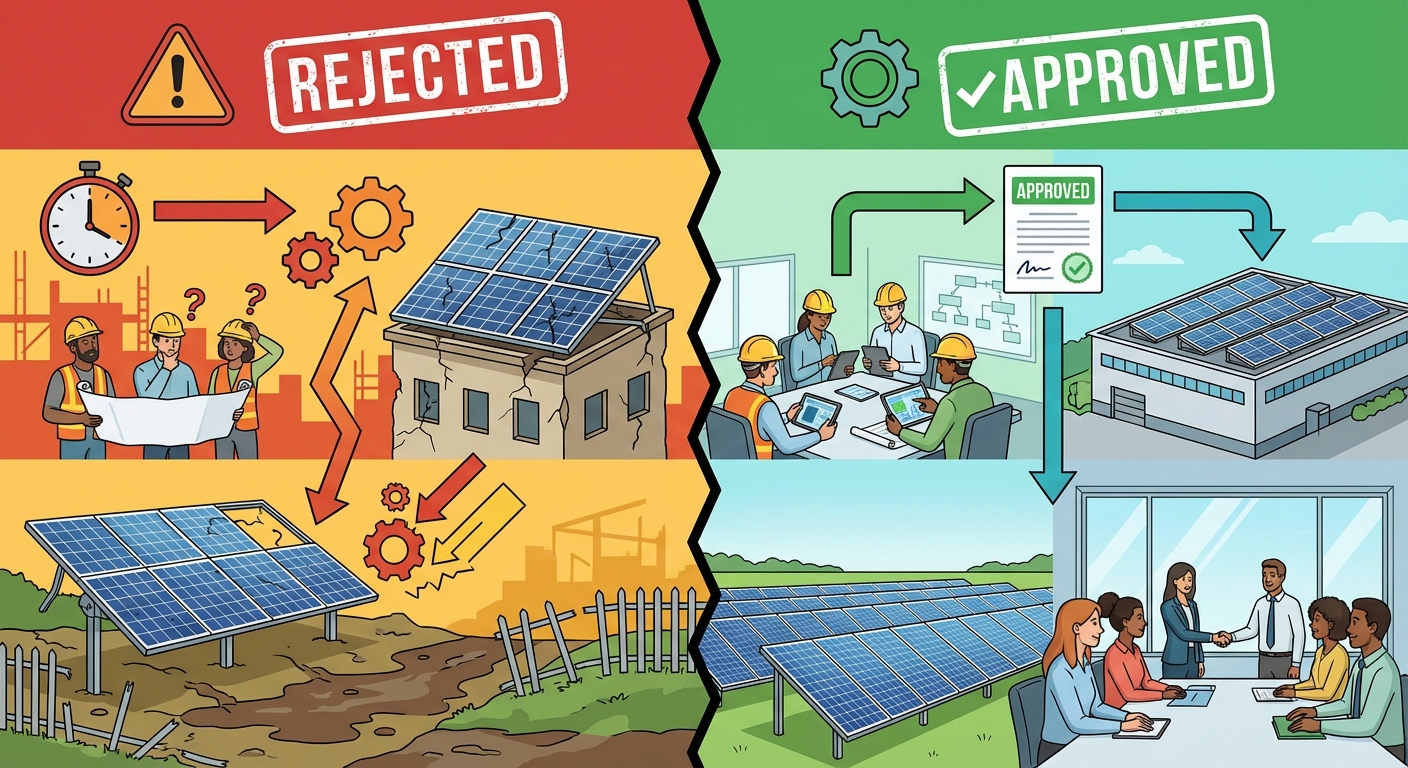
Revision costs from incomplete initial designs represent one of the most common hidden expenses. When preliminary engineering lacks sufficient detail or accuracy, subsequent design phases require extensive revisions. Each major revision cycle can add 15-25% to baseline engineering costs and delay project timelines by 1-3 weeks.
EPCs can avoid revision costs by investing adequately in the feasibility and pre-design phase. Comprehensive site surveys, accurate as-built documentation, and thorough client requirement gathering prevent costly surprises during detailed engineering. The ₹15,000 saved by skipping proper site assessment often becomes ₹75,000 in revision costs later.
Permit rejection and redesign expenses occur when engineering documentation fails to meet regulatory requirements. A rejected permit application typically requires 2-4 weeks of redesign work costing ₹30,000 to ₹1.5 lakh depending on the extent of changes required. Multiple rejection cycles can delay projects by months and erode client confidence.
Working with experienced engineering partners who understand local permit requirements prevents rejection costs. Firms with established relationships with local authorities and proven track records in specific jurisdictions deliver higher first-time approval rates, saving both time and money.
Delays caused by inadequate site surveys create cascading cost impacts throughout the project lifecycle. When site conditions differ from engineering assumptions, construction must pause for redesign, materials may need reordering, and labor sits idle. These delays can cost ₹50,000 to ₹5 lakh per week depending on project size and contractor rates.
Structural failures from substandard engineering represent the most serious hidden cost, both financially and reputationally. When structural analysis cuts corners or fails to account for local environmental conditions, installations may fail during high wind events or experience premature degradation. Remediation costs can exceed the original engineering investment by 10-20 times, not to mention liability exposure and damage to the EPC’s reputation.
The lesson is clear: investing in quality engineering upfront costs far less than addressing problems after construction begins. EPCs should evaluate engineering partners based on expertise and track record, not just on who offers the lowest price. The cheapest engineering often becomes the most expensive when hidden costs emerge.
5. Budgeting for Engineering Costs: Best Practices
Effective budget planning for solar engineering costs requires understanding both typical cost ranges and the strategic value of engineering investment. EPCs who master engineering budget allocation consistently deliver more profitable projects with fewer surprises.
As a general guideline, allocate 2.5-4% of total project costs to engineering and design services for commercial and utility-scale projects. For a ₹5 crore (50 lakh) 1 MW ground mount project, this translates to ₹1.25 lakh to ₹2 lakh for comprehensive engineering. Residential and small commercial projects may require higher percentages (4-6%) due to reduced economies of scale.
When to invest more in upfront engineering depends on project risk factors. Complex sites, challenging regulatory environments, demanding clients, or projects with tight timelines all justify enhanced engineering investment. Spending an additional 1-2% on engineering to reduce construction risk often saves 5-10% on overall project costs through fewer change orders and delays.
The cost-benefit analysis of in-house versus outsourced design reveals important considerations. Maintaining in-house engineering capacity requires salaries, software licenses, training, and overhead that only make economic sense above certain project volumes. Most EPCs find that outsourcing design to specialized firms like Heaven Designs delivers better value below 20-30 MW of annual project volume.
Building contingency into engineering budgets protects against scope changes and unforeseen complexities. A 15-20% engineering contingency is prudent for projects with site uncertainties, evolving client requirements, or complex regulatory environments. This contingency prevents the need to cut corners when unexpected engineering needs arise.
ROI calculation for professional design services should account for multiple value streams beyond just engineering deliverables. Quality engineering reduces construction costs through accurate material takeoffs and constructability optimization. It accelerates permit approvals, reducing financing costs and allowing earlier revenue generation. It minimizes warranty claims and maintenance costs throughout the system’s operational life. When these factors are quantified, professional engineering typically delivers 3-5x ROI compared to minimal design approaches.
Understanding how project timeline impacts engineering costs helps EPCs plan more effectively and avoid unnecessary rush charges while still meeting critical project milestones.
6. Regional Engineering Cost Variations Across India
Engineering costs for solar projects vary significantly across India’s diverse regions, reflecting differences in labor rates, regulatory complexity, environmental challenges, and market maturity. Understanding these regional variations helps EPCs budget accurately for projects in different states.
Gujarat and Rajasthan, as mature solar markets with extensive installed capacity, offer the most competitive engineering costs. The concentration of experienced engineering firms and standardized regulatory processes keeps costs at the lower end of typical ranges. Complete engineering packages for MW-scale projects in these states typically cost ₹0.80 to ₹1.20 per watt.
Maharashtra and Karnataka represent mid-range markets with moderate engineering costs of ₹0.90 to ₹1.40 per watt. These states have well-developed solar sectors but may involve more complex permitting in urban areas or additional environmental clearances in certain districts.
Tamil Nadu and Andhra Pradesh offer competitive engineering costs similar to Gujarat and Rajasthan, benefiting from strong technical education infrastructure and growing solar markets. However, coastal projects in these states may incur additional structural engineering costs due to cyclone and high-wind design requirements.
Emerging solar markets in northern and northeastern states often face higher engineering costs of ₹1.20 to ₹1.80 per watt due to limited local expertise, less standardized regulatory processes, and additional site challenges. Projects in Himachal Pradesh, Uttarakhand, or northeastern states may require specialized engineering for hilly terrain, seismic considerations, and extreme weather conditions.
Urban versus rural project locations create cost variations within states. Urban rooftop projects benefit from easier site access and proximity to engineering firms but may face more complex permitting and building code compliance. Rural ground mount projects have simpler regulatory requirements but may incur higher site survey costs due to travel time and accessibility challenges.
State-specific permit and compliance costs significantly impact overall engineering expenses. Some states have single-window clearance systems that streamline approvals, while others require separate applications to multiple agencies. Understanding these requirements helps EPCs budget accurately and select engineering partners with relevant local experience.
7. Maximizing ROI on Solar Engineering Costs
The true value of professional engineering extends far beyond the immediate deliverables of drawings and specifications. Strategic engineering investment delivers measurable returns throughout the project lifecycle and beyond, making it one of the highest-ROI expenditures in solar project development.
Quality engineering reduces construction costs through multiple mechanisms. Accurate material takeoffs prevent over-ordering or emergency procurement at premium prices. Constructability reviews identify potential installation challenges before crews arrive on site. Optimized layouts minimize cable runs and balance-of-system costs. These factors typically reduce construction costs by 3-8% compared to projects with minimal engineering, savings that far exceed the engineering investment.
Energy yield optimization through better design directly impacts project revenue over the 25-year system life. Professional engineering that optimizes tilt angles, minimizes shading losses, reduces electrical losses, and maximizes space utilization can improve energy generation by 2-5% compared to basic designs. For a 1 MW project generating ₹60 lakh in annual revenue, a 3% yield improvement adds ₹1.8 lakh per year or ₹45 lakh over the system lifetime, a dramatic return on a ₹1-2 lakh engineering investment.
Faster permit approvals with professional design reduce soft costs and accelerate project timelines. Each month of permit delay costs money in extended financing, delayed revenue generation, and opportunity costs. Engineering firms with proven track records in specific jurisdictions often achieve permit approval in 2-4 weeks versus 8-12 weeks for applications with deficiencies. This time savings can be worth ₹2-5 lakh on a 1 MW project.
Long-term maintenance cost reduction stems from proper engineering of drainage systems, cable management, structural durability, and system accessibility. Well-engineered projects experience fewer warranty claims, require less corrective maintenance, and maintain higher performance over time. The maintenance cost savings over 25 years can exceed 10-15 times the original engineering investment.
Case examples demonstrate these returns concretely. An EPC company that invested ₹1.8 lakh in comprehensive engineering for a 1.5 MW ground mount project realized ₹4.2 lakh in construction cost savings through optimized layouts and accurate material planning. The same project achieved first-time permit approval, saving an estimated 6 weeks and ₹3 lakh in delay costs. Over the system’s lifetime, the enhanced energy yield and reduced maintenance costs will deliver an additional ₹60+ lakh in value, all from a ₹1.8 lakh engineering investment.
Choosing the Right Engineering Partner for Cost-Effective Design
Selecting an engineering partner involves balancing cost considerations with quality, expertise, and service reliability. The right partner delivers value far beyond competitive pricing, while the wrong choice can cost multiples of any initial savings.

Evaluating design firms based on cost and value requires looking beyond the per-watt rate to understand total value delivered. Consider the firm’s track record of first-time permit approvals, client references, portfolio of completed projects, technical expertise in relevant project types, and responsiveness to client needs. A firm charging ₹1.20 per watt with a 95% first-time approval rate delivers better value than one charging ₹0.90 per watt with a 60% approval rate.
Questions to ask potential engineering partners include: How many projects have you completed in our target region? What is your typical timeline for detailed engineering? What design software and tools do you use? How do you handle revisions and scope changes? Can you provide references from similar projects? What is your process for quality review before deliverable submission? These questions reveal capabilities and working style beyond what pricing proposals show.
Red flags in engineering cost proposals include pricing significantly below market rates (suggesting corners will be cut), vague scope definitions that leave room for surprise charges, lack of clarity on revision policies, absence of quality assurance processes, or inability to provide relevant project references. EPCs should be wary of firms that compete primarily on price rather than demonstrating technical expertise and value.
The Heaven Designs approach to transparent pricing reflects our commitment to client success and long-term partnerships. With over 628 MW of completed design work for 752+ solar EPC clients across India and international markets, we’ve refined our pricing to deliver maximum value while maintaining the highest quality standards. Our team of 50+ skilled engineers and consultants brings deep expertise in every aspect of solar design, from preliminary feasibility studies through detailed engineering, structural analysis, and PMC services.
We offer clear per-watt pricing that includes comprehensive deliverables with no hidden charges. Our clients benefit from our extensive experience with permit requirements across Indian states, our investment in advanced design software and tools, and our commitment to first-time approval rates exceeding 90%. We view engineering not as a commodity service but as a strategic partnership that contributes directly to our clients’ project success and profitability.
Getting started with professional solar design services begins with understanding your specific project requirements and constraints. Whether you’re planning a residential rooftop installation or a multi-megawatt ground mount project, the right engineering partner can help you navigate the complexities of solar design while optimizing costs and maximizing ROI.
For EPC companies seeking cost-effective, high-quality solar engineering services that deliver measurable value, Heaven Designs offers the expertise, capacity, and commitment to excellence that sets successful projects apart. Our transparent pricing, proven track record, and focus on client success make us the preferred design partner for EPCs across India and global markets. Get a Quick Proposal Now! to discuss your project requirements and discover how professional engineering can enhance your project outcomes while optimizing costs.
Don’t let engineering costs become a barrier to project success, view them as the strategic investment they truly are. With the right partner and approach, solar engineering costs deliver returns that compound throughout the project lifecycle and beyond. Contact our team at service@heavendesigns.in or call +91 90811 00297 to start a conversation about your solar engineering needs and learn how we can help you achieve cost-effective, high-quality design solutions that maximize your project ROI.
This blog post was written using thestacc.com