


Selecting the right design software can make or break your solar EPC business in India. With MW-scale projects demanding precision, regulatory compliance, and cost optimization, the tools your engineering team uses directly impact project profitability, client satisfaction, and competitive positioning. For solar EPCs operating across India in 2026, the software landscape offers powerful options, but choosing between PVsyst, HelioScope, AutoCAD, and other platforms requires understanding their strengths, limitations, and suitability for Indian market conditions.
This comprehensive comparison evaluates the leading design software platforms used by successful solar EPCs in India. Whether you’re designing rooftop solar installations for commercial clients, engineering utility-scale ground mount projects, or managing a portfolio of residential solar systems, understanding which design software delivers accuracy, efficiency, and ROI will help you make informed technology investments. Heaven Designs leverages multiple industry-leading platforms to deliver accurate, cost-effective solar project designs optimized for Indian climate conditions and regulatory requirements.
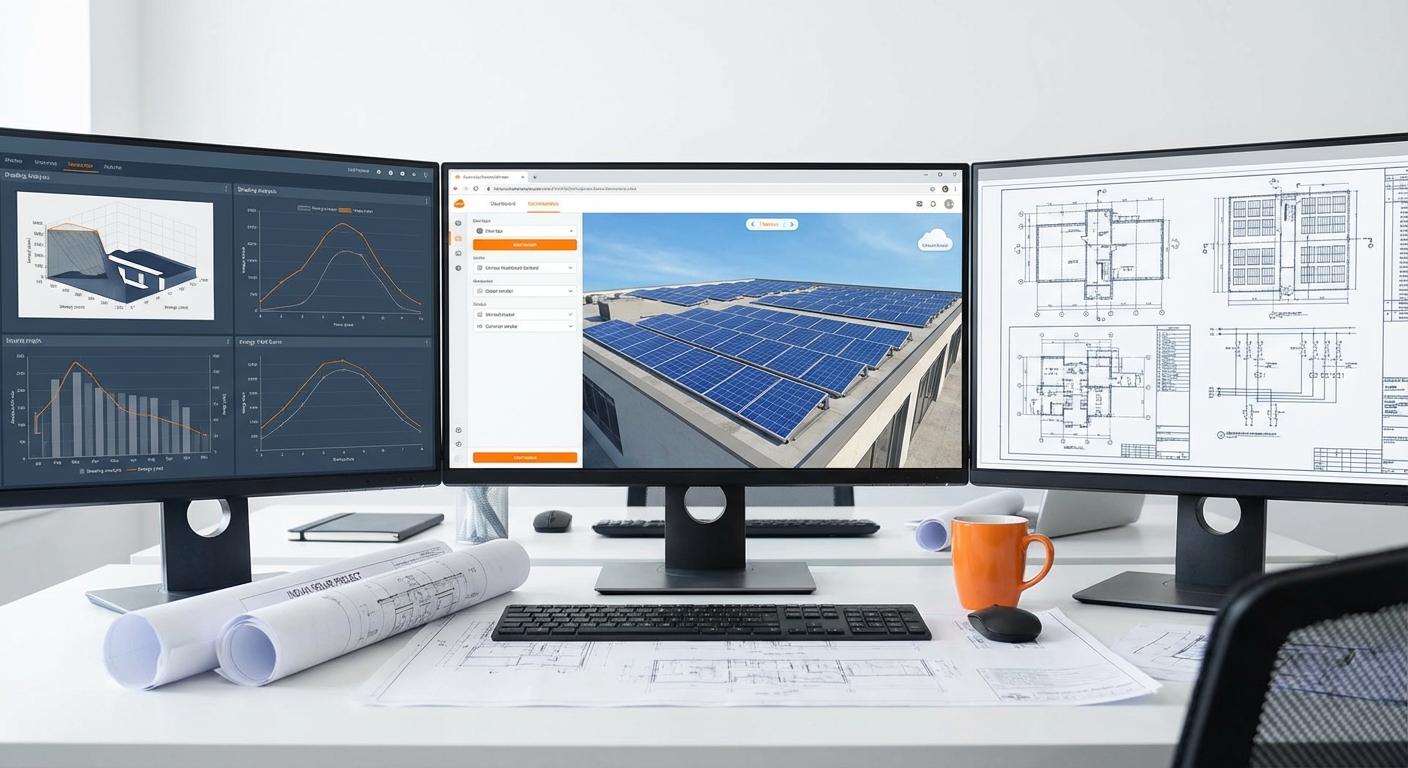
Why Design Software Selection Matters for MW-Scale Projects
The design software your team uses influences every aspect of project delivery. Accurate energy yield predictions determine whether your client achieves their expected ROI, while precise shading analysis prevents costly performance shortfalls. Poor software choices lead to over-designed systems that waste client budgets or under-designed systems that fail to meet energy commitments.
For Indian EPCs, design software must handle specific challenges unique to the region. Monsoon weather patterns, high ambient temperatures, dust accumulation, and diverse terrain conditions require sophisticated modeling capabilities. Software that works well in European or American markets may not accurately predict performance in Rajasthan’s desert heat or Kerala’s coastal humidity. The right design software accounts for these regional variations while generating documentation that satisfies Indian regulatory requirements and financial institution standards.
Beyond technical accuracy, design software impacts your operational efficiency. Teams that master intuitive platforms complete projects faster, reducing engineering costs and improving margins. Software with strong collaboration features enables distributed teams to work seamlessly, while platforms with steep learning curves create bottlenecks and increase training expenses. The total cost of ownership extends far beyond initial licensing fees to include training time, ongoing support, and integration with your existing engineering workflows.
Professional solar design services like those offered by Heaven Designs combine expertise across multiple software platforms to deliver optimal results. With over 628 MW of completed design work for 752+ solar EPC clients, the right software stack becomes a competitive advantage that enables faster turnaround, higher accuracy, and better client outcomes.
PVsyst: The Industry Standard for Performance Simulation
PVsyst has earned its reputation as the gold standard for solar energy system simulation and performance modeling. Developed in Switzerland and continuously refined over three decades, this design software excels at detailed energy yield calculations, comprehensive loss analysis, and sophisticated shading simulations. For Indian EPCs working on MW-scale projects, PVsyst provides the technical depth that banks, investors, and discerning clients expect in feasibility studies and detailed engineering documentation.
The software’s strength lies in its physics-based modeling approach. Rather than using simplified calculations, PVsyst simulates system performance hour-by-hour throughout the year, accounting for temperature effects, spectral variations, soiling losses, and electrical losses throughout the system. This granular approach produces highly accurate energy yield predictions that stand up to third-party technical due diligence reviews. For solar feasibility studies in India, PVsyst’s detailed loss waterfall diagrams help identify optimization opportunities and justify design decisions to stakeholders.
Key Strengths of PVsyst
PVsyst’s shading analysis capabilities are unmatched in the industry. The software handles complex near-shading scenarios from surrounding buildings, trees, and terrain features, calculating precise shading losses for each hour of the year. This proves invaluable for rooftop solar projects in urban India where surrounding structures create challenging shading patterns. The 3D shading scene builder allows engineers to model complex environments and visualize shading impacts throughout different seasons.
The software includes extensive meteorological databases covering hundreds of Indian locations, with hourly weather data that captures regional climate variations. PVsyst’s database includes solar radiation, temperature, wind speed, and other parameters essential for accurate performance modeling. For locations without direct weather station data, the software provides interpolation tools and allows import of custom weather files, ensuring accurate modeling even for remote project sites.
Financial modeling capabilities within PVsyst enable comprehensive project economics analysis. The software calculates levelized cost of energy (LCOE), payback periods, and internal rate of return (IRR) based on detailed performance predictions and user-defined financial parameters. This integration of technical and financial analysis streamlines the proposal development process for EPCs pitching projects to commercial and industrial clients.
PVsyst Limitations
Despite its technical excellence, PVsyst presents challenges that EPCs must consider. The learning curve is steep, requiring weeks or months of training before engineers achieve proficiency. The interface, while functional, feels dated compared to modern cloud-based platforms, and the workflow can seem cumbersome for engineers accustomed to more intuitive design software.
PVsyst’s 3D visualization capabilities are limited compared to dedicated CAD platforms. While adequate for shading analysis, the software doesn’t produce the polished 3D renderings that help clients visualize their projects. EPCs typically need to export PVsyst designs to other platforms for client presentations and marketing materials. The software also lacks integrated structural engineering capabilities, requiring separate tools for structural calculations and civil engineering design.
Licensing costs represent a significant investment, particularly for smaller EPCs. PVsyst uses a perpetual license model with annual maintenance fees, and the software is licensed per user rather than per organization. For teams that need multiple engineers working simultaneously on different projects, licensing costs accumulate quickly. However, for EPCs serious about technical excellence, PVsyst remains an essential investment that pays dividends through improved accuracy and client confidence.
HelioScope: Cloud-Based Design for Fast Turnaround
HelioScope has revolutionized solar design software by bringing the entire workflow to the cloud. Developed by solar engineers frustrated with traditional desktop software limitations, HelioScope prioritizes speed, collaboration, and ease of use without sacrificing technical accuracy. For Indian EPCs managing multiple projects simultaneously and working with distributed teams, HelioScope’s cloud-based architecture offers compelling advantages over traditional design software platforms.
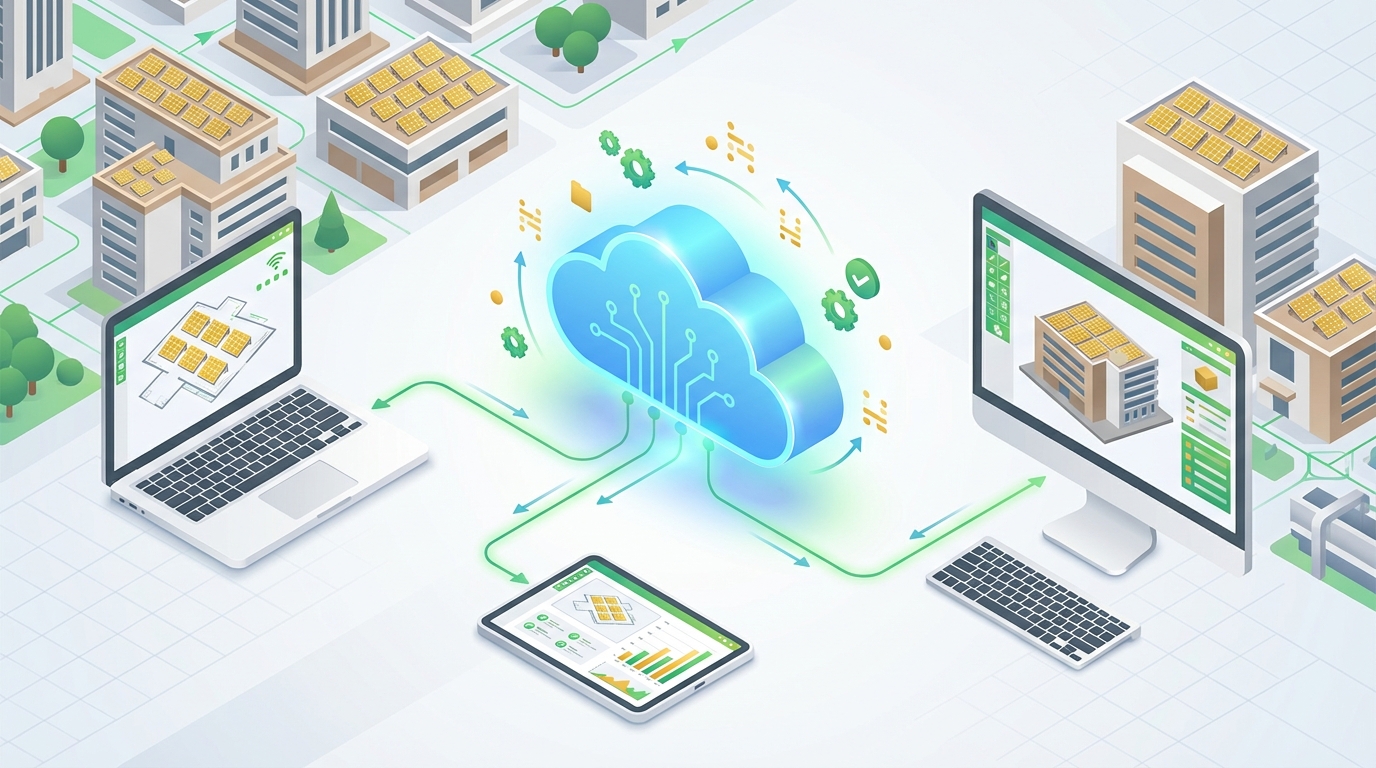
The platform’s browser-based interface means engineers can access projects from anywhere with internet connectivity. This proves particularly valuable for EPCs with teams spread across multiple Indian cities or working with international clients. Design changes sync instantly across all users, eliminating version control issues that plague desktop software workflows. The collaborative features allow multiple team members to review and comment on designs simultaneously, accelerating the review and approval process.
HelioScope’s automated layout optimization tools dramatically reduce design time. The software can automatically generate optimized panel layouts based on roof geometry, setback requirements, and shading constraints. What might take hours in traditional design software can be accomplished in minutes with HelioScope’s intelligent algorithms. For EPCs handling high volumes of commercial rooftop projects, this efficiency translates directly to improved margins and faster project turnaround.
HelioScope Advantages
The learning curve for HelioScope is remarkably gentle compared to PVsyst or AutoCAD. New engineers can become productive within days rather than weeks, reducing training costs and enabling faster team scaling. The intuitive interface guides users through the design process with clear workflows and helpful prompts, minimizing errors and ensuring consistency across projects.
HelioScope’s integration capabilities streamline the entire project lifecycle. The platform connects with leading CRM systems, proposal software, and project management tools, creating a seamless workflow from initial lead to final design. For EPCs using modern sales and operations platforms, these integrations eliminate manual data entry and reduce errors that occur when transferring information between systems.
The software’s energy modeling, while not as granular as PVsyst, provides sufficient accuracy for most commercial and residential projects. HelioScope uses industry-standard algorithms and includes weather data for locations worldwide, including comprehensive coverage of Indian cities and regions. The platform generates professional reports that satisfy most client and financial institution requirements, though some banks and investors still prefer PVsyst’s more detailed analysis for large utility-scale projects.
HelioScope Drawbacks
HelioScope’s subscription pricing model means ongoing costs that accumulate over time. While monthly or annual subscriptions provide predictable expenses and include automatic updates, the total cost of ownership over five or ten years can exceed perpetual license alternatives. EPCs must evaluate whether the efficiency gains and collaboration benefits justify the recurring expense based on their project volumes and team size.
Internet dependency creates potential workflow disruptions. While cloud-based access offers flexibility, it also means engineers cannot work during internet outages or in locations with poor connectivity. For EPCs conducting site surveys in remote areas or working from locations with unreliable internet infrastructure, this limitation can impact productivity. The platform does offer limited offline capabilities, but full functionality requires consistent internet access.
Customization options are more limited compared to desktop design software platforms. While HelioScope’s standardized workflows ensure consistency and reduce errors, they also constrain engineers working on highly complex or unusual projects. Utility-scale ground mount projects with complex terrain, unusual mounting systems, or specialized requirements may exceed HelioScope’s capabilities, requiring supplemental tools for complete engineering documentation.
AutoCAD: The Foundation for Detailed Engineering Design
AutoCAD remains the universal language of engineering documentation across industries, and solar EPC operations are no exception. While not specifically designed for solar applications, AutoCAD’s comprehensive CAD capabilities make it essential for producing the detailed engineering drawings, structural plans, and permit documentation that solar projects require. For Indian EPCs, AutoCAD serves as the foundation for creating the precise technical drawings that satisfy regulatory authorities, structural engineers, and construction teams.
The software excels at producing the detailed 2D drawings and 3D models required for permit applications, structural engineering coordination, and construction documentation. Solar projects require electrical single-line diagrams, panel layout plans, mounting structure details, conduit routing plans, and numerous other technical drawings that AutoCAD produces with precision and professional polish. These drawings must meet Indian Standards (IS) codes and local authority requirements, and AutoCAD’s flexibility allows engineers to customize drawings to satisfy any regulatory framework.
AutoCAD’s integration with structural analysis software and civil engineering platforms makes it indispensable for comprehensive solar project engineering. Structural engineers use AutoCAD drawings as the basis for load calculations, foundation design, and structural member sizing. Civil engineers reference AutoCAD site plans for grading, drainage, and access road design. This interoperability across engineering disciplines makes AutoCAD the common platform that ties together all aspects of solar project design and engineering.
For EPCs offering comprehensive design services, AutoCAD proficiency is non-negotiable. Heaven Designs leverages AutoCAD extensively for producing the detailed engineering documentation that clients expect from professional design partners. The software’s precision and flexibility enable creation of custom drawings tailored to each project’s unique requirements, site conditions, and regulatory context.
Other Notable Solar Design Software Options
Beyond the three primary platforms, several specialized design software tools serve specific niches within the solar industry. Understanding these alternatives helps EPCs build comprehensive software stacks optimized for their project mix and service offerings.
PVCase has gained significant traction for utility-scale ground mount projects. The software specializes in terrain-following layouts, tracker optimization, and civil engineering integration for large solar farms. For EPCs working on MW-scale ground mount installations, PVCase’s automated grading analysis and tracker layout optimization can significantly reduce engineering time while improving project economics. The platform integrates well with AutoCAD and other engineering tools, fitting naturally into existing workflows.
SketchUp fills the 3D visualization gap left by other design software platforms. While not specifically designed for solar applications, SketchUp’s intuitive 3D modeling capabilities make it popular for creating client presentations, marketing materials, and preliminary design visualizations. The software’s extensive library of 3D models and textures enables creation of photorealistic renderings that help clients visualize their solar installations. Many EPCs use SketchUp for initial client meetings and proposals, then transition to more technical platforms for detailed engineering.
HOMER (Hybrid Optimization of Multiple Energy Resources) serves the microgrid and hybrid system market. For projects combining solar with battery storage, diesel generators, or other energy sources, HOMER’s optimization algorithms identify the most cost-effective system configurations. While less relevant for standard grid-tied solar installations, HOMER becomes essential for off-grid projects, remote installations, and complex hybrid energy systems increasingly common in industrial and telecom applications.
SAM (System Advisor Model), developed by the U.S. National Renewable Energy Laboratory, provides free, open-source performance modeling and financial analysis. While the learning curve is steep and the interface less polished than commercial alternatives, SAM offers sophisticated modeling capabilities at no cost. Research institutions, academic projects, and budget-conscious EPCs use SAM for preliminary analysis and feasibility studies, though most commercial EPCs prefer the support and polish of commercial design software for client-facing work.
Feature-by-Feature Comparison: What Matters Most
Understanding how different design software platforms compare across critical features helps EPCs make informed technology investments. Each platform excels in specific areas while showing limitations in others, and the right choice depends on your project mix, team capabilities, and client requirements.
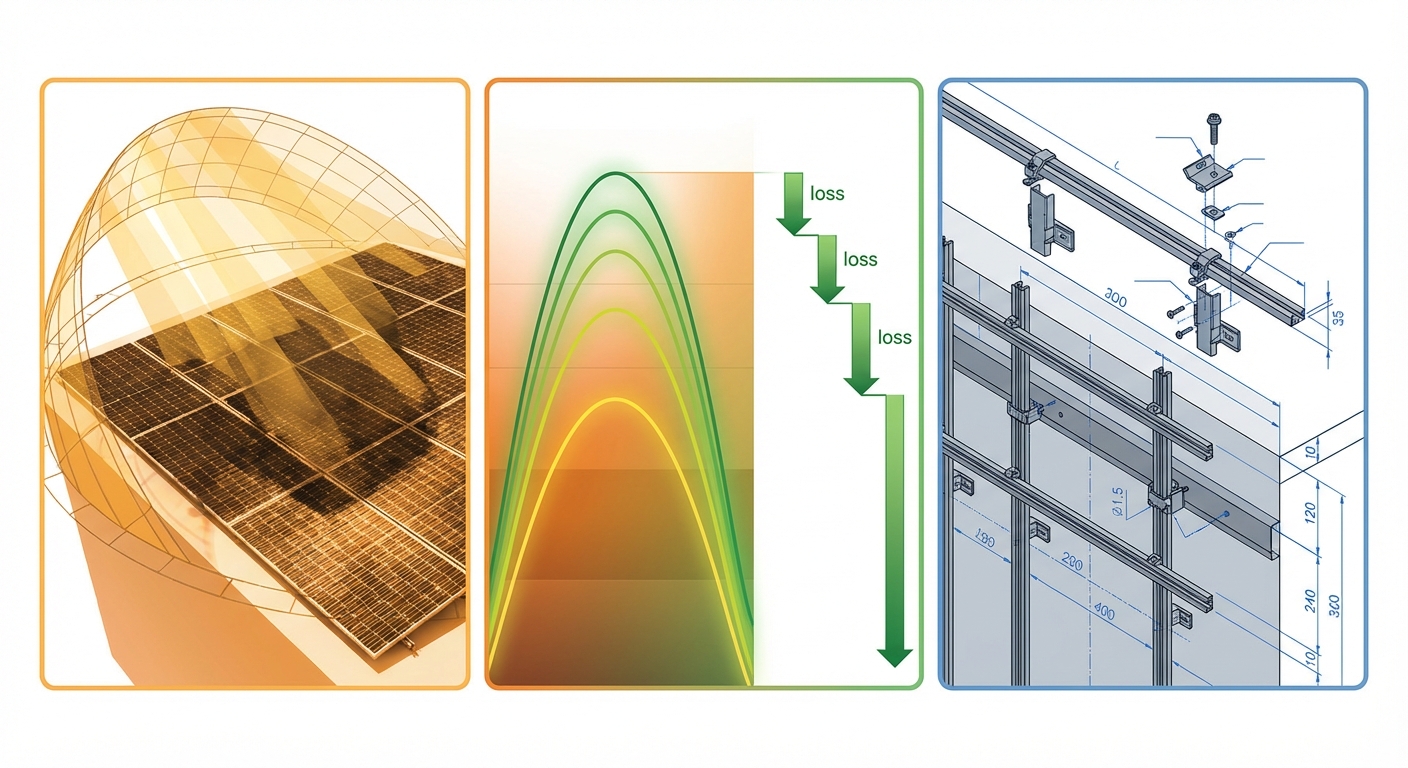
Energy yield accuracy represents the most critical performance metric for any design software. PVsyst leads this category with its detailed hour-by-hour simulation and comprehensive loss modeling. The software’s physics-based approach produces predictions that typically match actual system performance within 3-5% when properly configured. HelioScope delivers good accuracy for most commercial projects, typically within 5-7% of actual performance, which satisfies most client and lender requirements. AutoCAD provides no energy modeling capabilities, requiring integration with other tools for performance predictions.
Shading analysis capabilities vary significantly across platforms. PVsyst’s 3D shading scene builder and detailed near-shading calculations set the industry standard, accurately modeling complex urban environments and calculating precise shading losses. HelioScope offers good shading analysis using satellite imagery and 3D modeling, sufficient for most rooftop projects but less detailed than PVsyst for complex scenarios. AutoCAD can model 3D shading geometry but requires manual calculations or external tools to quantify shading impacts on energy production.
3D modeling and visualization capabilities determine how effectively you can communicate designs to clients and stakeholders. AutoCAD leads this category with comprehensive 3D modeling tools that produce professional renderings and detailed visualizations. HelioScope provides good 3D visualization integrated with satellite imagery, creating compelling client presentations directly within the platform. PVsyst’s 3D capabilities are limited to functional shading analysis rather than polished client presentations.
Structural and civil engineering integration proves essential for comprehensive project documentation. AutoCAD excels here, serving as the universal platform for coordinating across engineering disciplines. The software exports to structural analysis programs, integrates with civil engineering tools, and produces the detailed drawings that construction teams require. Neither PVsyst nor HelioScope offers integrated structural engineering capabilities, requiring separate tools and workflows for complete project documentation.
Permit documentation generation varies by jurisdiction and project type. AutoCAD produces the detailed engineering drawings that most Indian regulatory authorities require for permit applications. HelioScope generates good permit packages for residential and small commercial projects, though larger projects often require supplemental AutoCAD drawings. PVsyst’s reports satisfy technical due diligence requirements but don’t replace the detailed drawings needed for construction permits.
Learning curve and training requirements impact how quickly teams become productive and how easily you can scale operations. HelioScope wins this category decisively, with new users becoming productive within days. AutoCAD requires weeks to months of training for proficiency, though many engineers already have CAD experience from academic programs. PVsyst demands the steepest learning curve, typically requiring several months before engineers can independently produce accurate, professional analyses.
Team collaboration features increasingly matter for distributed teams and multi-office operations. HelioScope’s cloud-based architecture provides seamless collaboration with real-time syncing, commenting, and version control. PVsyst and AutoCAD rely on traditional file-based workflows, requiring manual coordination and version management that can create confusion and errors on complex projects with multiple contributors.
Pricing Analysis: Total Cost of Ownership
Understanding the true cost of design software requires looking beyond initial licensing fees to consider training, support, updates, and the opportunity costs of different efficiency levels. The right software investment pays for itself through improved accuracy, faster turnaround, and reduced engineering costs, while poor choices create ongoing expenses that erode project margins.
Initial licensing costs vary significantly across platforms. PVsyst requires a substantial upfront investment for perpetual licenses, typically ranging from $1,500 to $2,500 per user depending on the specific version and features. Annual maintenance fees add 15-20% of the license cost for updates and support. AutoCAD follows a similar model with perpetual licenses or annual subscriptions, with costs varying based on whether you need the full AutoCAD suite or can use more affordable alternatives like AutoCAD LT.
HelioScope uses subscription pricing with monthly or annual plans. While individual monthly costs appear modest, the cumulative expense over multiple years can exceed perpetual license alternatives. However, subscriptions include automatic updates, cloud infrastructure, and ongoing feature additions without additional charges. For EPCs with fluctuating workloads, the ability to scale subscriptions up or down provides financial flexibility that perpetual licenses cannot match.
Training and onboarding costs represent hidden expenses that significantly impact total cost of ownership. PVsyst’s steep learning curve means new engineers require extensive training, either through formal courses, online tutorials, or mentorship from experienced team members. This training period represents weeks or months of reduced productivity. HelioScope’s intuitive interface minimizes training costs, allowing new team members to contribute productively within days. AutoCAD training requirements depend on engineers’ prior CAD experience, with solar-specific applications requiring additional learning beyond basic CAD skills.
ROI considerations depend heavily on project volumes and types. High-volume EPCs handling dozens of residential or small commercial projects monthly benefit enormously from HelioScope’s speed and efficiency. The time savings on each project quickly justify subscription costs. EPCs focused on large utility-scale projects need PVsyst’s technical depth to satisfy investor and lender requirements, making the investment essential despite higher costs. AutoCAD remains necessary regardless of project type for producing professional engineering documentation and permit drawings.
Hidden costs include IT infrastructure for desktop software, file storage and backup systems, version control challenges, and the productivity losses from software limitations. Cloud-based platforms like HelioScope eliminate most IT infrastructure costs but create dependencies on internet connectivity and subscription renewals. Desktop software requires robust backup systems and version control processes to prevent data loss and coordination issues on multi-engineer projects.
Indian Climate Compatibility and Regional Considerations
India’s diverse climate zones present unique challenges for solar design software. From the Himalayan foothills to coastal regions, from desert heat to monsoon humidity, accurate performance modeling requires software that properly accounts for regional weather patterns, temperature effects, and environmental factors specific to Indian conditions.
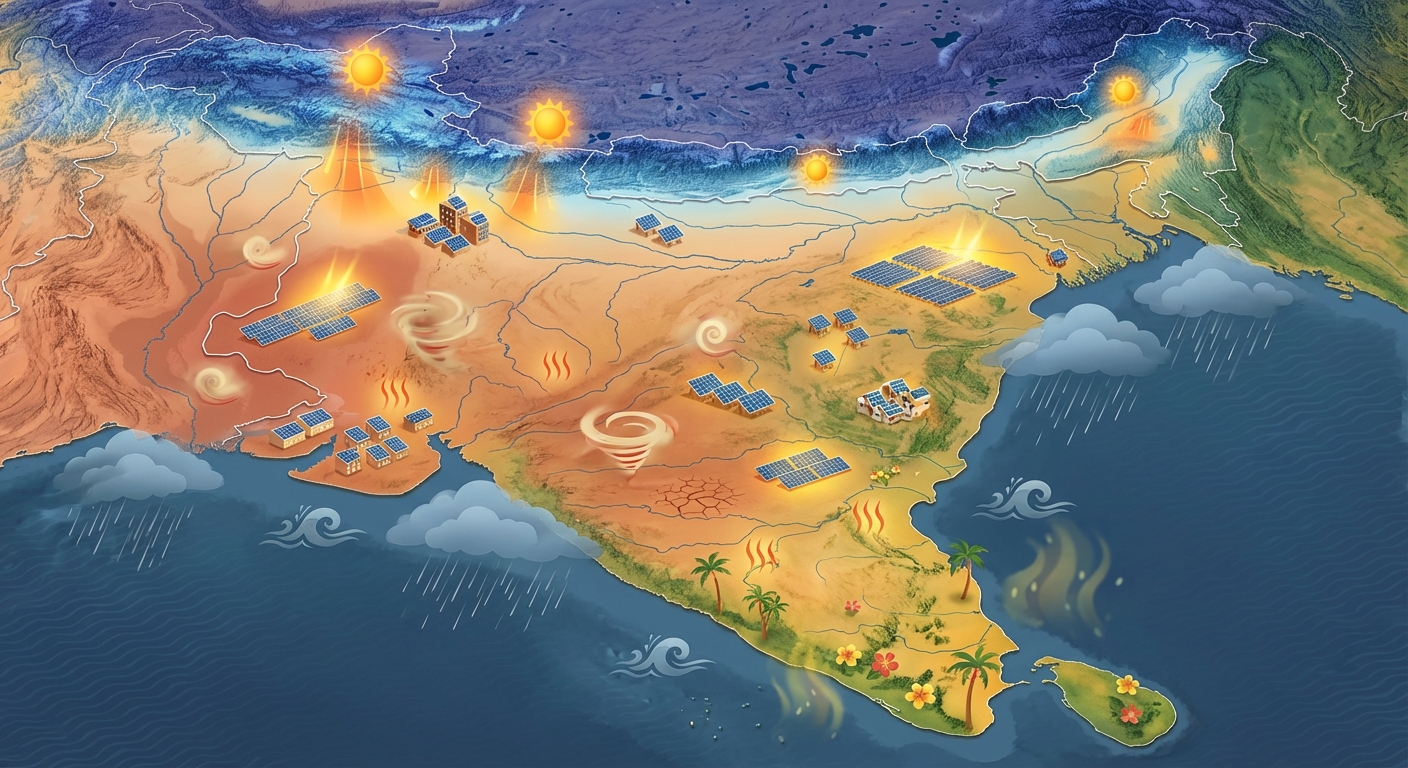
Weather database accuracy forms the foundation of reliable energy yield predictions. PVsyst includes extensive Indian weather data from meteorological stations across the country, with hourly data capturing seasonal variations, monsoon patterns, and regional climate characteristics. HelioScope similarly provides good Indian weather coverage using satellite-derived data and ground station measurements. For locations without direct weather station data, both platforms offer interpolation tools and custom weather file import capabilities.
Monsoon and dust factor modeling significantly impacts system performance in Indian conditions. Heavy monsoon rains provide natural panel cleaning but also reduce solar radiation during rainy months. Dust accumulation during dry seasons can reduce panel output by 15-30% in some regions, particularly in Rajasthan, Gujarat, and other arid zones. Advanced design software must account for these soiling losses and seasonal cleaning patterns to produce accurate annual energy predictions. Heaven Designs incorporates region-specific soiling assumptions based on extensive project experience across Indian climate zones.
Temperature coefficient handling proves critical for accurate performance modeling in India’s high-temperature environments. Summer temperatures exceeding 45°C in northern and central India significantly reduce panel efficiency compared to standard test conditions. Design software must properly model these temperature effects using accurate ambient temperature data and appropriate thermal models for different mounting configurations. Rooftop installations with limited air circulation experience higher operating temperatures than ground mount systems with better ventilation.
Regional variations across India require localized design approaches. Coastal regions like Kerala and Tamil Nadu experience high humidity and salt-laden air requiring corrosion-resistant materials and appropriate electrical protection. Northern regions face extreme temperature swings from winter cold to summer heat. Desert regions in Rajasthan and Gujarat deal with dust storms and high soiling rates. Mountainous regions present unique shading challenges and snow load considerations. Effective design software must accommodate these regional differences through appropriate weather data, loss assumptions, and design parameters.
For ground mount projects across India, understanding regional climate impacts on design decisions proves essential. Software that accurately models these regional variations enables optimized designs that maximize energy production while minimizing costs, delivering better outcomes for clients and stronger competitive positioning for EPCs.
Choosing the Right Design Software Stack for Your EPC
Most successful solar EPCs don’t rely on a single design software platform but instead build comprehensive software stacks that leverage the strengths of multiple tools. The right combination depends on your project mix, team size, service offerings, and client requirements. Understanding which tools work best together and when to deploy each platform optimizes both technical outcomes and operational efficiency.
Software combinations that work best together typically include complementary platforms that cover different aspects of the design workflow. A common professional stack combines PVsyst for detailed energy modeling and technical due diligence, AutoCAD for engineering drawings and permit documentation, and SketchUp for client presentations and 3D visualization. This combination provides technical depth, professional documentation, and compelling client communications without redundant capabilities.
Another effective combination pairs HelioScope for fast preliminary designs and commercial project layouts with AutoCAD for final engineering documentation. This approach leverages HelioScope’s speed and collaboration features for the design phase while using AutoCAD’s precision for construction drawings and permit applications. EPCs using this stack can quickly iterate on designs with clients using HelioScope’s intuitive interface, then produce professional engineering documentation in AutoCAD once the design is finalized.
Recommendations by Project Type and Scale
Small residential EPCs handling projects under 100 kW can often succeed with HelioScope as their primary design software. The platform’s speed, ease of use, and integrated proposal generation streamline the residential sales process. For permit drawings, many residential EPCs supplement HelioScope with AutoCAD LT or similar affordable CAD tools. This minimal software stack keeps costs low while providing sufficient capabilities for residential project requirements.
Commercial and industrial EPCs working on projects from 100 kW to 5 MW need more robust capabilities. A combination of HelioScope or PVsyst for energy modeling, AutoCAD for engineering documentation, and potentially PVCase for ground mount projects provides comprehensive coverage. The choice between HelioScope and PVsyst depends on client sophistication and lender requirements. Projects requiring detailed technical due diligence or bank financing typically need PVsyst’s depth, while straightforward commercial installations may succeed with HelioScope’s faster workflow.
Utility-scale developers working on projects exceeding 5 MW require the most comprehensive software stacks. PVsyst becomes essential for energy modeling and investor presentations. AutoCAD handles detailed engineering drawings and construction documentation. PVCase optimizes ground mount layouts and terrain grading. Structural analysis software integrates with AutoCAD for foundation and mounting structure design. This professional-grade stack represents significant investment but proves necessary for the technical rigor that utility-scale projects demand.
The Heaven Designs Approach to Solar Design Software
Heaven Designs leverages a comprehensive multi-software workflow optimized for accuracy, efficiency, and client satisfaction. With over 50 skilled engineers and consultants delivering designs for 752+ solar EPC clients across multiple countries, the company has refined its software stack and processes to deliver consistent, high-quality results across diverse project types and scales.
The Heaven Designs approach combines industry-leading design software platforms with deep engineering expertise and quality assurance processes. For energy modeling and performance analysis, the team uses PVsyst to deliver the technical depth that banks, investors, and sophisticated clients expect. This ensures accurate energy yield predictions that stand up to third-party technical reviews and provide clients with confidence in their investment decisions.
For engineering documentation, Heaven Designs employs AutoCAD and other professional CAD platforms to produce detailed drawings that satisfy Indian regulatory requirements and construction team needs. The company’s structural engineering services integrate seamlessly with CAD workflows, delivering comprehensive documentation packages that include electrical designs, structural calculations, civil engineering plans, and all necessary permit drawings.
The multi-software approach enables Heaven Designs to optimize each project based on its specific requirements. Residential and small commercial projects receive streamlined designs using efficient workflows, while utility-scale projects receive the comprehensive analysis and documentation that large investments demand. This flexibility allows the company to serve EPCs across the full spectrum of project types while maintaining consistent quality standards.
Quality assurance processes ensure that software capabilities translate into reliable results. Experienced engineers review all designs, checking for common errors, verifying assumptions, and ensuring that software outputs align with real-world project requirements. This human expertise layer prevents the mistakes that can occur when engineers rely too heavily on software automation without proper verification and engineering judgment.
For EPCs lacking the resources to invest in multiple design software platforms and train teams across different tools, partnering with specialized design services like Heaven Designs provides access to professional-grade capabilities without the overhead. The company’s expertise across multiple software platforms, combined with deep understanding of Indian market conditions and regulatory requirements, delivers better outcomes than most EPCs can achieve with internal resources alone.
Frequently Asked Questions About Solar Design Software
Which design software is most accurate for Indian conditions? PVsyst generally provides the highest accuracy for Indian climate conditions due to its detailed physics-based modeling, comprehensive Indian weather databases, and sophisticated loss calculations. However, accuracy depends heavily on proper configuration, appropriate assumptions, and engineer expertise. HelioScope delivers good accuracy for most commercial projects when properly configured with Indian-specific parameters. The software matters less than the engineer’s understanding of Indian climate factors, soiling patterns, and regional variations.
Can I use free design software for commercial projects? Free tools like SAM provide sophisticated capabilities but come with limitations. Most commercial clients, banks, and investors expect analysis from industry-standard platforms like PVsyst or HelioScope. Free software may suffice for internal feasibility studies or preliminary analysis, but professional client-facing work typically requires commercial design software that provides technical support, regular updates, and the credibility that financial institutions expect. The cost of commercial software represents a small fraction of project values and pays for itself through improved accuracy and client confidence.
How long does it take to learn each platform? Learning timelines vary significantly. HelioScope users typically become productive within 3-7 days of training and practice. AutoCAD requires 2-4 weeks for basic proficiency and several months to master solar-specific applications. PVsyst demands the longest learning curve, typically 2-3 months before engineers can independently produce accurate, professional analyses. These timelines assume engineers have relevant technical backgrounds and receive proper training through courses, tutorials, or mentorship.
Do I need multiple design software tools? Most professional solar EPCs use multiple platforms to cover different aspects of the design workflow. Energy modeling software like PVsyst or HelioScope handles performance analysis, while CAD software like AutoCAD produces engineering drawings and permit documentation. Trying to accomplish everything with a single platform typically means compromising on either technical depth, documentation quality, or workflow efficiency. The investment in complementary tools pays for itself through better results and faster project delivery.
What design software do banks and investors prefer? For projects requiring financing or technical due diligence, PVsyst remains the industry standard that banks and investors expect. The software’s detailed reports, comprehensive loss analysis, and industry credibility provide the confidence that financial institutions require when evaluating solar investments. Some lenders accept HelioScope analysis for smaller commercial projects, but utility-scale projects and large investments typically require PVsyst documentation. Understanding your target market’s expectations helps guide software investment decisions.
Conclusion: Making the Right Design Software Investment
Selecting the right design software for your solar EPC operation requires balancing technical capabilities, costs, learning curves, and workflow efficiency. PVsyst delivers unmatched technical depth and industry credibility for sophisticated projects and clients requiring detailed analysis. HelioScope provides speed, collaboration, and ease of use that streamlines high-volume commercial operations. AutoCAD remains essential for professional engineering documentation and permit drawings regardless of which energy modeling platform you choose.
For most Indian EPCs, the optimal approach combines multiple design software platforms that leverage each tool’s strengths. This professional software stack enables accurate energy modeling, efficient design workflows, comprehensive engineering documentation, and compelling client presentations. The investment in proper tools pays dividends through improved accuracy, faster project delivery, and stronger competitive positioning in India’s growing solar market.
However, software alone doesn’t guarantee success. The expertise to properly configure design software, apply appropriate assumptions for Indian conditions, and interpret results correctly matters more than which platforms you use. Many EPCs find that partnering with specialized design services delivers better outcomes than attempting to build comprehensive internal capabilities across multiple software platforms.
Heaven Designs combines industry-leading design software with deep engineering expertise and proven processes refined across 628+ MW of completed projects. The company’s multi-software approach delivers the accuracy, documentation quality, and regulatory compliance that solar EPCs need to win projects and satisfy clients. Whether you’re designing rooftop solar installations, engineering utility-scale ground mount projects, or managing a portfolio of commercial solar systems, professional design services provide access to sophisticated capabilities without the overhead of software investments and team training.
Ready to leverage professional solar design expertise for your next project? Heaven Designs delivers accurate, cost-effective solar engineering optimized for Indian climate conditions and regulatory requirements. Our team of 50+ engineers uses industry-leading design software platforms to produce comprehensive documentation that satisfies clients, regulators, and financial institutions. Get a Quick Proposal Now! or contact our team at +91 90811 00297 or service@heavendesigns.in to discuss how professional design services can improve your project outcomes and competitive positioning in India’s solar market.
This blog post was written using thestacc.com