


When solar capacity planning goes wrong, the consequences ripple through every phase of a project. EPCs across India face mounting pressure to deliver MW-scale solar installations that maximize energy generation while staying within budget constraints. The preliminary design phase is where critical decisions about system sizing, land utilization, and technical specifications set the trajectory for project success or failure.
For solar EPC companies working on commercial, industrial, and ground mount projects, accurate solar capacity calculations aren’t just technical exercises—they’re the foundation of client satisfaction and profitability. A miscalculation of just 10% can mean the difference between meeting energy commitments and facing costly redesigns or underperforming assets.
This comprehensive FAQ addresses the 18 most common questions EPCs ask about solar capacity planning in 2026. Drawing from Heaven Designs’ experience with over 628 MW of design work across 752+ solar projects, we’ll explore the technical factors, site constraints, cost considerations, and regulatory requirements that shape capacity decisions for MW-scale installations in India and beyond.
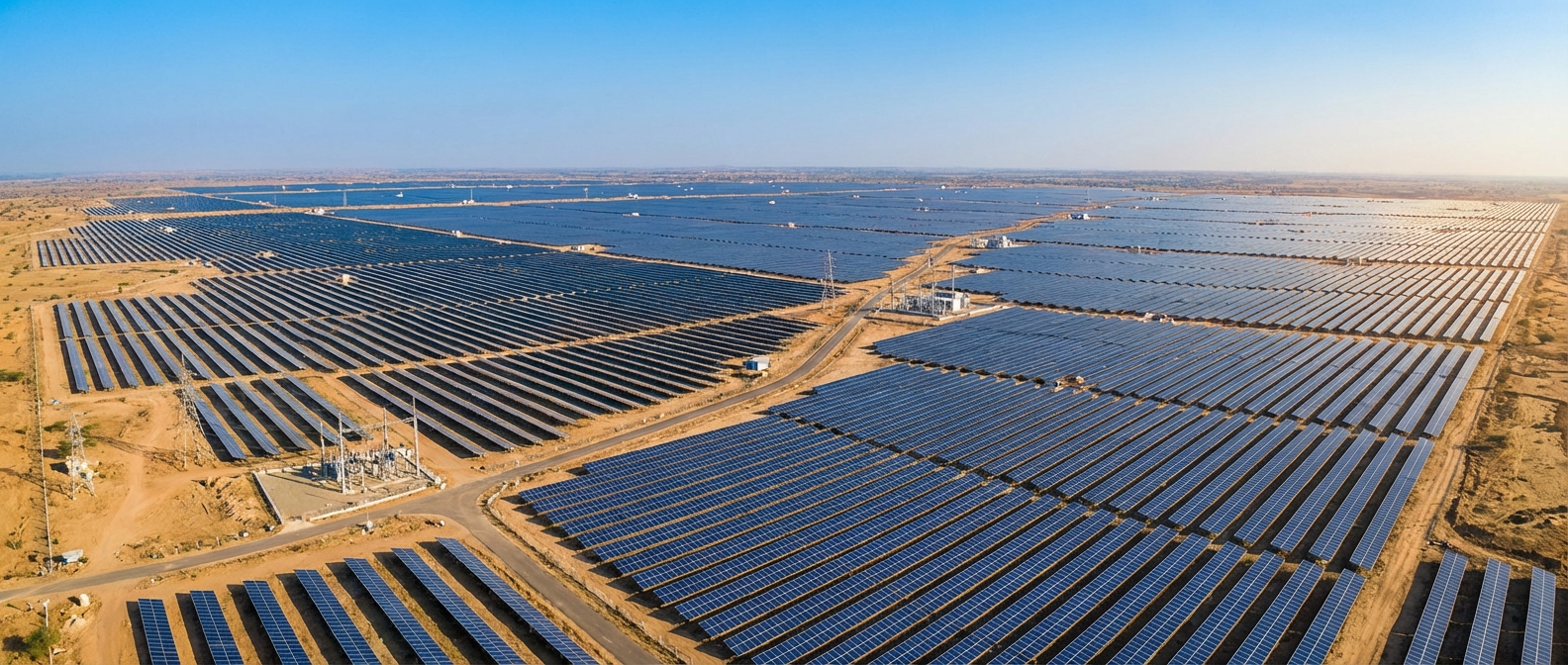
Understanding Solar Capacity Planning for MW-Scale Projects
Before diving into specific questions, it’s essential to establish what solar capacity means in the context of EPC project planning. Solar capacity refers to the maximum electrical output a photovoltaic system can produce under standard test conditions, typically measured in kilowatts (kW) or megawatts (MW). For EPCs, this number represents both a technical specification and a contractual commitment to clients.
Why does accurate capacity planning matter so much? In India’s competitive solar market, EPCs must balance multiple competing demands. Clients want maximum energy generation to achieve faster payback periods. Site constraints limit what’s physically possible. Budget realities require cost optimization. Regulatory frameworks impose capacity limits based on grid connection approvals and land use permissions.
The preliminary design phase is where these competing factors converge. During this stage, EPCs must answer fundamental questions about system sizing before committing to detailed engineering work. Getting these answers right requires understanding not just the technical aspects of solar technology, but also the practical realities of site conditions, local regulations, and client expectations.
Heaven Designs has identified 18 recurring questions that EPCs consistently face during the capacity planning phase. These questions fall into several categories: system sizing fundamentals, land requirements, technical factors, site assessment, cost optimization, regulatory compliance, and advanced planning tools. Let’s address each question with practical, actionable guidance.
System Sizing and Capacity Determination
1. How do I determine the optimal solar capacity for a given site?
Determining optimal solar capacity starts with a comprehensive assessment of three primary factors: available space, client energy requirements, and site-specific solar resource data. Begin by conducting a thorough feasibility study that evaluates solar irradiation levels, shading analysis, and terrain characteristics.
The calculation process involves several steps. First, establish the client’s energy consumption patterns and future growth projections. Second, analyze the site’s usable area after accounting for setbacks, access requirements, and unsuitable zones. Third, calculate the theoretical maximum capacity based on module efficiency and available space. Finally, apply derating factors for temperature, soiling, system losses, and inverter efficiency to arrive at realistic capacity figures.
For ground mount projects in India, a typical rule of thumb suggests 4-5 acres per MW for fixed-tilt systems, though this varies significantly based on module technology and site conditions. The optimal capacity isn’t always the maximum possible capacity—it’s the size that best aligns with client needs, grid connection limits, and project economics.
2. What factors influence solar capacity calculations most significantly?
Several critical factors directly impact solar capacity calculations. Solar irradiation is the primary driver—sites in Rajasthan or Gujarat with 5.5-6.0 kWh/m²/day will generate significantly more energy per installed MW than sites in northeastern states with 4.0-4.5 kWh/m²/day. This affects both capacity sizing and energy yield projections.
Temperature coefficients matter more than many EPCs realize. Crystalline silicon modules lose approximately 0.4-0.5% efficiency per degree Celsius above 25°C. In India’s hot climate, where module temperatures regularly exceed 60°C during summer months, this translates to 15-20% capacity derating during peak heat periods.
Shading analysis is non-negotiable for accurate capacity planning. Even partial shading from nearby structures, trees, or terrain features can disproportionately reduce system output. Modern solar design software can model shading impacts throughout the year, helping EPCs make informed decisions about array placement and capacity optimization.
Other influential factors include module degradation rates (typically 0.5-0.7% annually), soiling losses (2-7% depending on location and cleaning frequency), and system losses from wiring, connections, and inverter efficiency. Professional design partners like Heaven Designs incorporate all these factors into capacity calculations to ensure realistic performance projections.
3. How do I balance client energy needs with site constraints?
This question represents one of the most common challenges EPCs face. Clients often request solar capacity that exceeds what a site can realistically accommodate. The solution requires transparent communication and creative problem-solving.
Start by clearly documenting both the client’s energy requirements and the site’s physical limitations. Present multiple capacity scenarios with corresponding energy generation estimates, costs, and trade-offs. For example, if a client needs 5 MW but the site can only accommodate 3.5 MW with optimal spacing, show them the performance difference between cramped layouts (which reduce per-MW generation) versus properly spaced arrays.
Consider alternative solutions when site constraints limit capacity. These might include higher-efficiency modules to maximize output per square meter, bifacial panels to capture reflected light, or single-axis trackers to increase energy yield without expanding footprint. Sometimes the answer involves identifying additional land parcels or recommending rooftop installations to supplement ground mount capacity.
4. What is capacity utilization factor and why does it matter for EPCs?
The capacity utilization factor (CUF), also called capacity factor, measures the ratio of actual energy generated to the theoretical maximum if the system operated at full capacity 24/7. In India, ground mount solar projects typically achieve CUF values between 18-22%, with variation based on location, technology, and design quality.
Understanding CUF is crucial for EPCs because it directly impacts project economics and client expectations. A 10 MW project with 20% CUF will generate approximately 17,520 MWh annually (10,000 kW × 24 hours × 365 days × 0.20). This figure determines revenue projections, payback periods, and return on investment calculations that clients use to evaluate project viability.
When planning solar capacity, EPCs should provide clients with realistic CUF estimates based on site-specific conditions. Overpromising on CUF to win contracts creates long-term problems when actual performance falls short. Heaven Designs uses advanced simulation tools to model expected CUF with high accuracy, helping EPCs set appropriate client expectations from the preliminary design phase.
5. How do I calculate expected energy generation from installed capacity?
Energy generation calculations require more than simple multiplication of capacity by hours. The formula accounts for multiple derating factors: Annual Energy (kWh) = Installed Capacity (kW) × Peak Sun Hours × 365 days × Performance Ratio.
The performance ratio typically ranges from 0.75 to 0.85 for well-designed systems, accounting for all system losses. Peak sun hours vary by location—Delhi averages about 5.2 hours, Mumbai 4.8 hours, and Jodhpur 6.0 hours. For a 5 MW system in Gujarat with 5.5 peak sun hours and 0.80 performance ratio, expected annual generation would be approximately 8,030 MWh.
Professional solar design services use sophisticated software like PVsyst, Helioscope, or SAM to model hourly generation profiles throughout the year. These tools account for temperature effects, spectral variations, soiling patterns, and shading to provide month-by-month generation estimates that EPCs can confidently present to clients.
Land Requirements and Spatial Planning
6. How much land is required per MW of solar capacity?
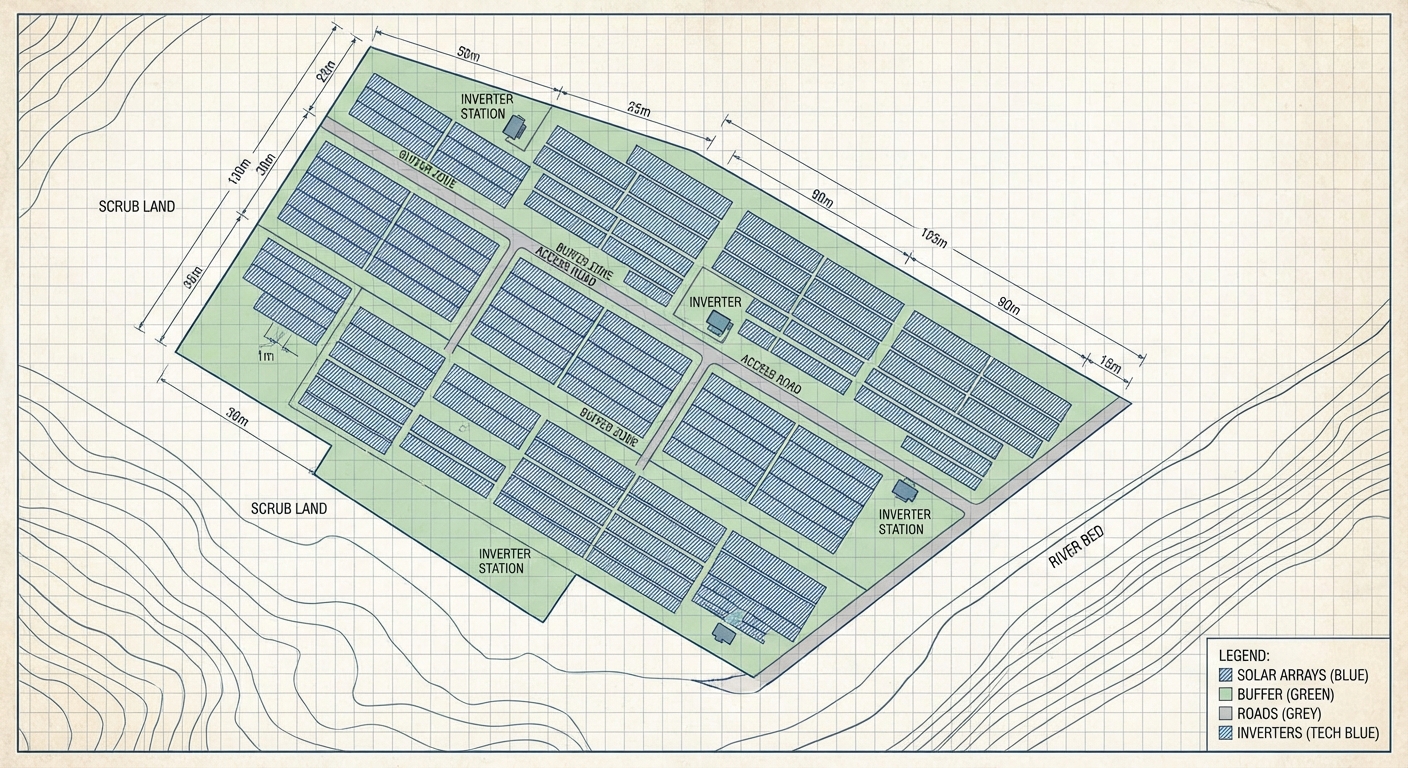
Land requirements for solar capacity vary significantly based on mounting system, module technology, and site topography. For fixed-tilt ground mount systems in India, the general range is 4-5 acres per MW (approximately 1.6-2.0 hectares per MW). However, this is a rough guideline that requires adjustment for specific project conditions.
Modern high-efficiency modules (450-550 Wp) require less land per MW than older 300-350 Wp modules. Bifacial modules can increase energy density by 5-15% without additional land. Single-axis trackers typically need 6-7 acres per MW due to wider row spacing, but they generate 15-25% more energy, often justifying the additional land requirement.
For rooftop installations, the calculation differs entirely. Rooftop solar capacity depends on usable roof area after accounting for obstructions, access pathways, and structural load limits. A typical commercial rooftop might accommodate 80-100 kW per 1,000 square meters with standard modules and mounting systems.
7. What factors affect land-to-capacity ratios?
Several factors influence how efficiently you can convert land area into installed solar capacity. Terrain slope is critical, flat land allows tighter row spacing and higher capacity density, while sloped terrain requires wider spacing to prevent row-to-row shading. Sites with slopes exceeding 5-7% may need terracing or specialized mounting, reducing effective capacity per acre.
Module tilt angle affects row spacing requirements. In India, optimal tilt angles range from 10-25° depending on latitude. Steeper tilts require wider row spacing to avoid shading, reducing land-use efficiency. Some EPCs compromise with lower tilt angles (15-18°) to maximize capacity density, accepting a small reduction in annual energy yield.
Ground coverage ratio (GCR) represents the percentage of land covered by modules. Higher GCR means more capacity per acre but increases shading losses. Most projects target GCR between 0.35-0.45 for optimal balance. Professional design services calculate site-specific optimal GCR based on latitude, terrain, and economic factors.
Infrastructure requirements also consume land. Inverter stations, transformers, access roads, perimeter fencing, and drainage systems typically reduce usable area by 10-15%. Sites with irregular shapes or multiple land parcels face additional efficiency losses. Heaven Designs’ ground mount design expertise helps EPCs optimize layouts to maximize capacity within these constraints.
8. How do I optimize land use for maximum solar capacity?
Optimizing land use for solar capacity requires balancing multiple competing objectives. Start with detailed topographic surveys to identify the most suitable areas for array placement. Use advanced design software to test multiple layout configurations, comparing capacity, energy yield, and installation costs for each option.
Consider these optimization strategies: First, orient arrays to maximize solar exposure while minimizing shading. Second, use higher-efficiency modules in space-constrained areas. Third, evaluate whether bifacial modules or trackers justify their additional costs through increased energy density. Fourth, minimize internal roads and access pathways by strategic placement of inverters and electrical infrastructure.
For irregularly shaped sites, creative layout design can recover capacity that simple grid patterns would waste. Professional design partners use parametric design tools to generate optimized layouts that conform to site boundaries while maintaining proper spacing and electrical configuration.
9. What are the differences between ground mount and rooftop capacity planning?
Ground mount and rooftop projects require fundamentally different approaches to solar capacity planning. Ground mount projects offer more flexibility in layout design, allowing EPCs to optimize array orientation, tilt angle, and spacing for maximum performance. Capacity is primarily limited by available land area and grid connection approvals.
Rooftop projects face stricter constraints. Structural load capacity often limits how much weight the roof can support, directly capping installed capacity regardless of available area. Rooftop obstructions like HVAC equipment, skylights, and parapet walls create shading and reduce usable space. Access requirements for maintenance must be incorporated into layout design.
Rooftop solar capacity planning also requires careful consideration of roof type and condition. Metal roofs typically support more capacity than RCC or asbestos roofs. Older structures may need reinforcement before solar installation, adding costs that affect optimal capacity decisions. Wind load calculations become more critical for rooftop installations, potentially requiring ballasted mounting systems that reduce capacity density.
10. How do I account for access roads, inverter stations, and buffer zones?
Infrastructure requirements significantly impact achievable solar capacity. Access roads typically consume 8-12% of total site area, depending on site size and layout. Main access roads need 4-6 meter width for construction and maintenance vehicles, while internal service roads can be 3-4 meters. Strategic road placement minimizes land consumption while ensuring adequate access to all system components.
Inverter stations and transformer pads require dedicated space with proper clearances for safety and maintenance. Central inverter configurations need larger dedicated areas but fewer total stations, while string inverters distribute throughout the array with minimal dedicated space. The choice affects both capacity density and system design.
Buffer zones around site perimeters, water bodies, and protected areas are often mandated by local regulations. These setbacks can consume 5-15% of site area depending on requirements. EPCs must verify local zoning regulations during the feasibility phase to accurately estimate usable area for capacity calculations.
Technical Factors Affecting Solar Capacity
11. How do module efficiency and technology choices impact capacity?
Module technology directly determines how much solar capacity you can install in a given space. Modern monocrystalline PERC modules achieve 20-22% efficiency, while advanced technologies like TOPCon and HJT reach 22-24%. This efficiency difference translates directly to capacity, a site that accommodates 5 MW with 20% efficient modules could fit 5.5-6 MW with 22% efficient modules in the same footprint.
The capacity premium from high-efficiency modules must be weighed against their higher cost. For land-constrained projects where maximizing capacity is critical, premium modules often justify their cost. For projects with abundant land, standard efficiency modules may offer better economics despite requiring more space.
Bifacial modules represent another technology choice affecting capacity planning. While their nameplate capacity is based on front-side generation, they capture reflected light from the rear, increasing effective output by 5-15% depending on ground albedo and mounting height. This additional generation doesn’t increase installed capacity figures but improves energy yield per MW, affecting project economics and client value propositions.
12. What role does inverter sizing play in solar capacity planning?
Inverter sizing critically affects both installed solar capacity and actual system performance. The DC-to-AC ratio (also called inverter loading ratio) represents the ratio of DC module capacity to AC inverter capacity. Modern projects typically use ratios between 1.2:1 and 1.35:1, meaning a 1 MW AC system might have 1.2-1.35 MW DC of modules.
This intentional oversizing recognizes that modules rarely operate at full nameplate capacity due to temperature, soiling, and other losses. Oversizing the DC array relative to inverter capacity maximizes inverter utilization and energy generation without proportionally increasing costs. However, excessive oversizing causes clipping losses during peak production periods.
When planning solar capacity, EPCs must clarify whether clients are requesting DC or AC capacity. Grid connection approvals typically specify AC capacity limits, while module procurement is based on DC capacity. Professional design services optimize the DC-to-AC ratio based on site-specific irradiation profiles, temperature patterns, and economic analysis to maximize project value.
13. How do I account for DC-to-AC ratio in capacity calculations?
The DC-to-AC ratio creates potential confusion in solar capacity discussions with clients. A project might be described as “5 MW” but this could mean 5 MW DC (module capacity) or 5 MW AC (inverter capacity). Clear communication requires specifying both values and explaining the relationship.
For example, a project with 6 MW DC of modules and 5 MW AC of inverters would typically be described as a “5 MW AC / 6 MW DC” system, with a DC-to-AC ratio of 1.2. The AC capacity determines grid connection requirements and maximum instantaneous output, while DC capacity affects land requirements, module procurement, and installation costs.
When presenting capacity options to clients, show both DC and AC figures along with expected energy generation. This transparency helps clients understand what they’re purchasing and sets realistic expectations for system performance. Heaven Designs includes detailed capacity specifications in all preliminary design deliverables to ensure clarity throughout the project lifecycle.
14. What are capacity degradation rates and how do I plan for them?
Module degradation gradually reduces solar capacity over the system’s 25-30 year lifespan. Tier 1 modules typically guarantee less than 2% degradation in year one and less than 0.55% annual degradation thereafter, meaning a module retains approximately 84-85% of original capacity after 25 years.
Degradation affects long-term energy generation projections and financial modeling. EPCs should incorporate degradation curves into energy yield calculations to provide accurate lifetime generation estimates. This impacts client decisions about system sizing, some clients prefer slightly oversized systems to maintain target energy generation levels as modules age.
Different module technologies exhibit different degradation patterns. Premium modules with better degradation warranties (0.45% annually or less) maintain higher capacity over time, potentially justifying their higher upfront cost through improved long-term performance. When planning solar capacity, consider the client’s time horizon and financial model to determine whether premium modules with slower degradation offer better value.
15. How do weather patterns and seasonal variations affect capacity planning?
Seasonal weather variations significantly impact how installed solar capacity translates to actual energy generation. In India, monsoon season reduces generation by 30-50% in affected regions due to cloud cover and reduced irradiation. Winter months often provide excellent generation despite shorter days due to cooler temperatures improving module efficiency.
EPCs must account for these patterns when sizing systems to meet client energy needs. A client requiring consistent monthly generation may need larger installed capacity to compensate for monsoon-season reductions. Alternatively, clients with seasonal energy demand patterns might optimize capacity for peak demand periods rather than annual average.
Regional climate differences affect capacity planning strategies. Projects in Rajasthan or Gujarat face extreme summer heat requiring careful attention to temperature derating, while projects in Kerala or West Bengal must account for extended monsoon periods and higher humidity. Professional feasibility studies incorporate multi-year weather data to model realistic generation profiles for capacity planning decisions.
Site Assessment and Feasibility Considerations
16. What site survey data is essential for accurate solar capacity planning?
Comprehensive site surveys provide the foundation for accurate solar capacity planning. Essential data includes topographic surveys showing elevation changes, slopes, and drainage patterns that affect array layout and capacity density. Geotechnical investigations reveal soil conditions affecting foundation design and installation costs, which influence optimal capacity decisions.
Solar resource assessment requires multi-year irradiation data, ideally from on-site measurements or high-quality satellite databases. Temperature data, wind patterns, and soiling rates affect performance projections and capacity utilization factors. Shading analysis identifies obstructions from nearby structures, vegetation, or terrain features that limit usable area.
Electrical infrastructure assessment determines grid connection capacity, voltage levels, and distance to interconnection points. These factors often impose hard limits on project capacity regardless of site size. Regulatory and land use information reveals zoning restrictions, setback requirements, and environmental constraints that affect usable area for capacity installation.
Heaven Designs offers comprehensive site survey services across India, providing EPCs with the detailed data needed for confident capacity planning decisions. Professional surveys reduce the risk of discovering capacity-limiting constraints late in the design process when changes are costly.
17. How do I identify and mitigate capacity-limiting factors early?
Early identification of capacity-limiting factors prevents costly redesigns and client disappointment. The most common limiters include grid connection capacity (often the hardest constraint), land use restrictions, structural limitations for rooftop projects, and environmental or cultural heritage constraints.
Conduct preliminary assessments of all potential limiting factors before committing to specific solar capacity targets with clients. Verify grid connection availability with local utilities early in the process. Review zoning regulations and obtain preliminary approvals for land use. For rooftop projects, conduct structural assessments before finalizing capacity proposals.
When capacity-limiting factors are identified, explore mitigation strategies. Grid capacity limitations might be addressed through phased project development or energy storage integration. Land constraints might be overcome through higher-efficiency modules or alternative mounting systems. Structural limitations on rooftops might be resolved through lightweight mounting systems or selective reinforcement of critical areas.
Cost Optimization and Capacity Trade-offs

18. How do I balance solar capacity maximization with project costs?
The relationship between solar capacity and project costs isn’t linear. While larger systems benefit from economies of scale in procurement and installation, they also face diminishing returns. The optimal capacity balances maximum energy generation against cost efficiency and client budget constraints.
Start by calculating the levelized cost of energy (LCOE) for different capacity scenarios. This metric accounts for total project costs, expected energy generation, and system lifetime to determine the per-unit cost of electricity. Often, a slightly smaller system with optimized design delivers better LCOE than a maximum-capacity system with compromised spacing or suboptimal component selection.
Engineering design costs also scale with project complexity. A well-planned system that fits site constraints naturally requires less engineering effort than a maximum-capacity design that pushes every boundary. Heaven Designs’ approach focuses on finding the capacity sweet spot where client needs, site capabilities, and cost efficiency converge for optimal project value.
Consider the full project lifecycle when evaluating capacity decisions. Higher upfront capacity might increase installation costs but deliver better long-term returns through increased energy generation. Conversely, a more conservative capacity approach might reduce project risk and improve financing terms. Present clients with multiple capacity scenarios showing upfront costs, energy generation, payback periods, and lifetime returns to support informed decision-making.
Regulatory and Grid Connection Factors
Grid connection capacity often represents the ultimate constraint on solar capacity planning in India. State electricity boards and distribution companies impose limits based on local grid infrastructure capacity, voltage stability requirements, and power evacuation capabilities. These limits vary significantly across states and even within regions of the same state.
For projects above certain capacity thresholds (typically 1 MW), EPCs must obtain grid connectivity approvals before proceeding with detailed design. This process can take several months and may result in approved capacity lower than requested. Smart EPCs initiate grid connection applications early in the project timeline to avoid delays and capacity surprises.
Regulatory frameworks also affect capacity planning through net metering and gross metering policies. Net metering typically caps system capacity at a percentage of sanctioned load (often 100-500% depending on state regulations). Gross metering projects face different constraints based on power purchase agreement terms and grid injection limits. Understanding these regulatory nuances is essential for accurate capacity planning.
State-specific incentives and policies create additional considerations. Some states offer better tariffs or accelerated depreciation benefits for projects within certain capacity ranges. Others impose additional requirements or restrictions above specific capacity thresholds. EPCs working across multiple states must navigate these varying regulatory landscapes when planning solar capacity for different projects.
Permit design requirements vary based on project capacity and location. Larger projects face more stringent engineering documentation requirements, environmental clearances, and approval processes. Heaven Designs’ permit design services ensure compliance with all regulatory requirements while optimizing capacity within approved limits.
Advanced Capacity Planning Tools and Best Practices
Modern solar capacity planning relies on sophisticated software tools that model system performance with high accuracy. Industry-standard tools like PVsyst, Helioscope, and PVcase allow EPCs to test multiple capacity scenarios, optimize layouts, and generate detailed energy yield projections that support confident decision-making.
These tools incorporate vast databases of module specifications, inverter performance curves, and weather data to simulate hourly system operation throughout the year. They account for temperature effects, shading, soiling, and system losses to provide realistic capacity utilization factors and energy generation estimates. The investment in professional design software pays dividends through improved accuracy and reduced project risk.
Geographic Information Systems (GIS) tools enhance capacity planning for large or complex sites. GIS analysis identifies optimal array placement, quantifies usable area, and models terrain impacts on system design. When combined with drone surveys and 3D modeling, these tools enable precise capacity planning even for challenging sites with irregular topography or multiple constraints.
Best practices for solar capacity planning include documenting all assumptions, maintaining clear communication with clients about capacity specifications (DC vs AC), and building appropriate contingencies into capacity estimates. Professional EPCs present capacity recommendations with supporting analysis showing how site conditions, technical factors, and economic considerations informed the optimal sizing decision.
Partnering with specialized design firms like Heaven Designs provides EPCs access to advanced tools, experienced engineers, and proven methodologies without the overhead of maintaining in-house capabilities. With over 628 MW of completed design work, Heaven Designs brings deep expertise in capacity planning across diverse project types, site conditions, and regulatory environments throughout India and internationally.
Key Takeaways for Solar Capacity Planning Success
Successful solar capacity planning requires balancing technical capabilities, site constraints, client needs, and economic realities. The 18 questions addressed in this FAQ represent the core challenges EPCs face during the preliminary design phase. Getting these decisions right sets the foundation for project success, while mistakes create problems that compound through detailed engineering, procurement, and construction.
Remember these critical principles: First, conduct comprehensive site assessments before committing to specific capacity targets. Second, clearly communicate capacity specifications (DC vs AC) and set realistic expectations for energy generation. Third, optimize for project value rather than maximum capacity, bigger isn’t always better. Fourth, account for all derating factors and constraints in capacity calculations. Fifth, verify grid connection capacity and regulatory requirements early in the planning process.
The complexity of solar capacity planning increases with project scale. MW-scale commercial, industrial, and ground mount projects require professional engineering expertise to navigate the technical, regulatory, and economic factors that determine optimal system sizing. EPCs that invest in thorough capacity planning during the preliminary design phase avoid costly changes later and deliver better outcomes for clients.
As India’s solar market continues its rapid growth in 2026, EPCs face increasing pressure to deliver projects faster without compromising quality. Professional design partners provide the specialized expertise and advanced tools needed for accurate, efficient capacity planning that accelerates project timelines while reducing risk.
Partner with Heaven Designs for Expert Solar Capacity Planning
Heaven Designs Private Limited specializes in comprehensive solar engineering design services that help EPCs make confident solar capacity planning decisions. Our team of 50+ skilled engineers has completed over 628 MW of design work for 752+ solar EPC clients across India and internationally, bringing deep expertise in MW-scale project sizing, feasibility studies, and detailed engineering design.
Our Solar 3D Pre-Design service provides EPCs with accurate capacity assessments during the preliminary design phase, incorporating site surveys, feasibility analysis, and optimized layout designs that maximize energy generation while respecting site constraints and budget realities. We use industry-leading design software and proven methodologies to deliver capacity planning analysis you can confidently present to clients.
Whether you’re planning a rooftop installation, ground mount project, or MW-scale solar farm, our engineering team provides the technical expertise needed to optimize solar capacity for maximum project value. We understand the unique challenges EPCs face in India’s solar market, from navigating state-specific regulations to optimizing designs for regional climate conditions.
Ready to improve your solar capacity planning accuracy and accelerate your project timelines? Get a Quick Proposal Now! to discuss your upcoming projects with our engineering team. You can also reach us directly at +91 90811 00297 or service@heavendesigns.in to learn how our design services can help you deliver better outcomes for your clients while optimizing your engineering costs and project schedules.
Don’t let capacity planning uncertainties delay your projects or compromise performance. Partner with Heaven Designs for the professional solar engineering expertise that transforms preliminary concepts into optimized, buildable designs that maximize energy generation and client satisfaction.
This blog post was written using thestacc.com