


Selecting the right solar engineering partner can make or break your EPC project’s success. As solar installations grow more complex and competitive in India and globally, EPC companies face mounting pressure to deliver accurate, cost-effective designs that maximize energy generation while meeting tight deadlines and regulatory requirements. With over 628 MW of design work completed across 752+ projects, we’ve heard every question solar EPC companies ask before committing to a design partnership.
This comprehensive FAQ addresses the 15 most critical questions solar EPC companies in India ask when evaluating solar engineering services and design partners for MW-scale projects. Whether you’re planning rooftop solar installations, ground mount systems, or commercial solar developments, understanding these key aspects of solar engineering partnerships will help you make informed decisions that impact your project timelines, costs, and ultimate success.

1. What Qualifications Should a Solar Engineering Team Have?
When evaluating a solar engineering partner, the team’s qualifications directly impact the quality and reliability of your project deliverables. A competent solar engineering team should possess a combination of formal education, practical experience, and specialized certifications.
Educational requirements typically include degrees in electrical engineering, mechanical engineering, civil engineering, or renewable energy specialization. For MW-scale projects, look for teams with postgraduate qualifications or specialized training in photovoltaic system design and renewable energy technologies.
Experience with MW-scale projects is non-negotiable. Ask potential partners about their portfolio of completed megawatt-scale installations. A qualified solar engineering team should have hands-on experience with projects similar in size and complexity to yours. Teams that have completed hundreds of megawatts of design work bring invaluable insights into optimization, problem-solving, and regulatory compliance.
Software proficiency is essential in modern solar engineering. Engineers should be expert users of industry-standard platforms like PVsyst, AutoCAD, HelioScope, SAP2000 for structural analysis, and other specialized solar design software. This technical proficiency ensures accurate simulations, energy yield predictions, and structural calculations.
Team size and specialization matter significantly. A robust solar engineering partner should have dedicated specialists for different aspects: electrical design engineers, structural engineers, civil engineers, and project coordinators. Teams with 50+ engineers can handle multiple projects simultaneously while maintaining quality and meeting deadlines.
2. What Design Deliverables Are Included in Solar Engineering Services?
Understanding exactly what you’ll receive from your solar engineering partner prevents misunderstandings and ensures you get all necessary documentation for project execution. Comprehensive solar engineering services should include a detailed package of technical documents and drawings.
3D pre-design deliverables provide the foundation for your project, including:
- Site layout and preliminary module arrangement
- Shading analysis reports with seasonal variations
- Energy yield estimates and performance predictions
- Preliminary bill of materials (BOM)
- Feasibility assessment documentation
Detailed engineering design outputs form the core of solar engineering services:
- Single-line diagrams (SLD) and electrical schematics
- AC and DC cable routing drawings
- Earthing and lightning protection layouts
- Module mounting structure designs
- Inverter and transformer placement plans
- Civil and foundation drawings
- Panel schedules and equipment specifications
Permit design documentation ensures regulatory compliance and includes stamped drawings, compliance certificates, structural calculations, and jurisdiction-specific documentation required for approvals. This is particularly critical for projects across different states in India, where regulations vary significantly.
Structural and civil engineering drawings cover foundation designs, load calculations, wind and seismic analysis reports, soil investigation interpretations, and rooftop structural assessments. These documents are essential for safe, durable installations that withstand environmental stresses over the project’s 25+ year lifespan.
3. How Do You Ensure Quality Assurance in Solar Design?
Quality assurance separates professional solar engineering services from amateur work. A robust quality control process protects your EPC company from costly errors, rework, and project delays.
Multi-stage review processes should be standard practice. Quality solar engineering partners implement at least three review stages: initial design review by senior engineers, peer review by independent team members, and final quality check before delivery. This layered approach catches errors at multiple checkpoints.
Quality control checkpoints include verification of calculations, cross-checking of electrical parameters, validation of structural load assumptions, compliance verification against local codes, and consistency checks across all drawings and documents. Each deliverable should pass through documented quality gates before reaching the client.
Compliance verification methods ensure designs meet national electrical codes, local building regulations, fire safety requirements, and utility interconnection standards. For projects in India, this includes adherence to Central Electricity Authority (CEA) regulations, state-specific solar policies, and Indian Standards (IS codes) for structural design.
Error detection and correction protocols should be clearly defined. Ask your solar engineering partner about their process for handling discovered errors, timeline for corrections, and measures to prevent similar issues in future projects. Transparent error management demonstrates professional maturity and commitment to quality.
4. What Are Typical Turnaround Times for Solar Engineering Projects?
Project timelines directly impact your ability to meet client commitments and capitalize on market opportunities. Understanding realistic turnaround times for solar engineering deliverables helps you plan effectively and set appropriate expectations.
Timeline for different project scales varies significantly:
- Residential rooftop projects (up to 10 kW): 3-5 business days for complete design
- Commercial rooftop installations (10 kW to 500 kW): 1-2 weeks for detailed engineering
- MW-scale ground mount projects (1 MW to 10 MW): 2-4 weeks for comprehensive design package
- Large utility-scale projects (10 MW+): 4-8 weeks depending on complexity
Factors affecting design duration include site complexity, availability of accurate site data, number of revision rounds, regulatory requirements, and structural challenges. Projects requiring extensive feasibility studies or dealing with difficult terrain naturally require more time.
Rush project capabilities are important for time-sensitive opportunities. Ask potential partners about their capacity to handle expedited projects and associated timelines. Professional solar engineering firms with larger teams can often accommodate rush requests without compromising quality, though this may involve additional coordination.
For a deeper understanding of how project duration impacts your budget and planning, explore our detailed guide on solar design timeline and cost considerations.
5. What Is Your Revision Policy for Design Changes?
Design revisions are inevitable in solar engineering projects. Client requirements evolve, site conditions change, or regulatory feedback necessitates modifications. A clear revision policy protects both parties and ensures smooth project execution.
Standard revision rounds included in most solar engineering contracts typically range from 2-3 rounds of minor revisions at no additional cost. These cover adjustments within the original project scope, such as module layout optimization, equipment substitutions of similar specifications, or minor electrical routing changes.
How scope changes are handled is crucial to understand upfront. Major scope changes—such as significant capacity increases, complete layout redesigns, or addition of energy storage systems—typically require scope amendments and may involve additional fees. Professional partners provide transparent pricing for scope changes and clearly document what constitutes a revision versus a scope change.
Communication protocols for revisions should be established at project initiation. This includes designated points of contact, preferred communication channels (email, project management platforms, video calls), response time expectations, and documentation requirements for revision requests. Clear communication prevents misunderstandings and speeds up the revision process.
Timeline impact of design changes varies based on the nature and extent of revisions. Minor tweaks may add 1-2 days, while substantial redesigns could extend timelines by 1-2 weeks. Understanding this helps you manage client expectations and project schedules effectively.
6. Which Solar Design Software Tools Do You Use?
The solar design software tools your engineering partner uses directly impact the accuracy, efficiency, and compatibility of project deliverables. Modern solar engineering requires sophisticated software platforms for simulation, modeling, and documentation.
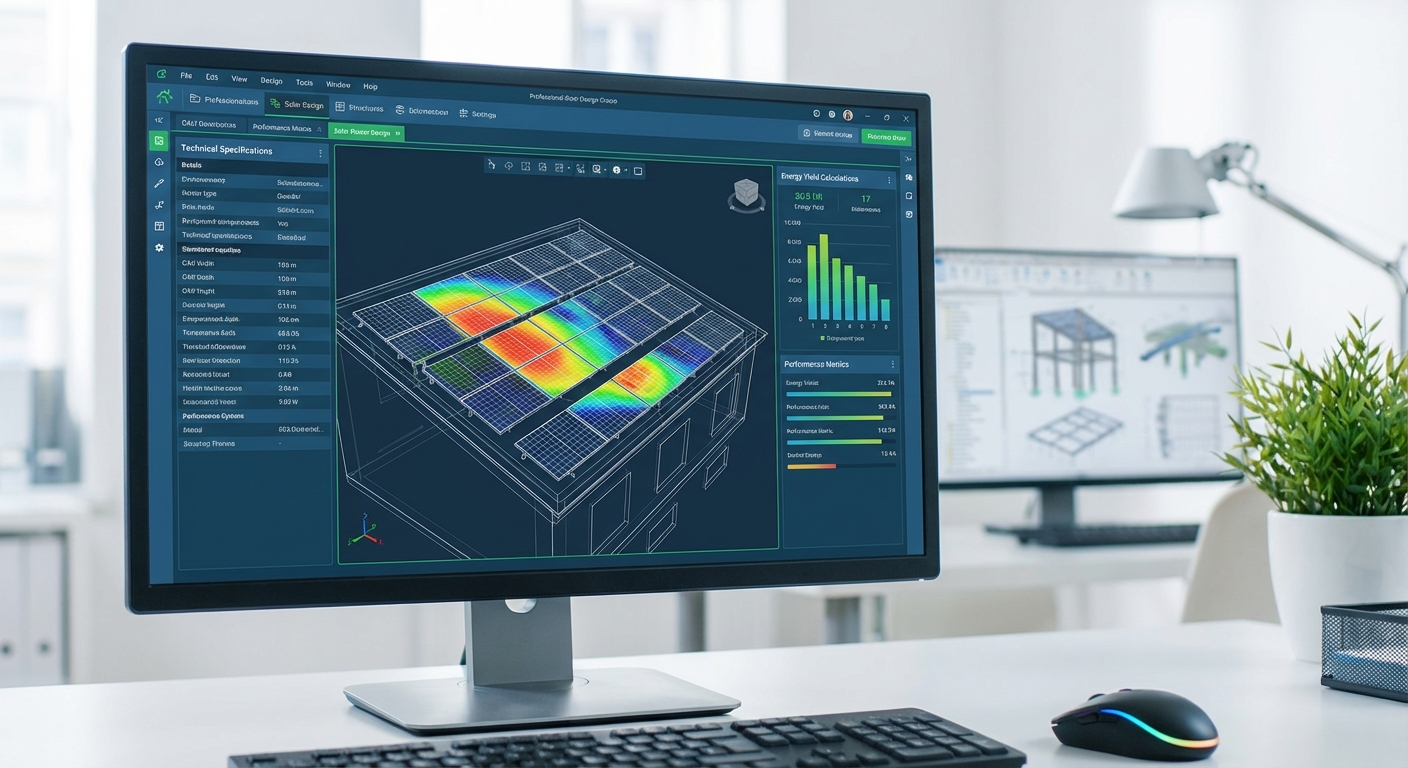
Industry-standard software platforms that professional solar engineering teams should utilize include:
- PVsyst: The gold standard for photovoltaic system simulation, energy yield prediction, and performance analysis
- HelioScope: Cloud-based platform for solar design, shading analysis, and financial modeling
- AutoCAD: Essential for creating detailed electrical and civil drawings with precision
- SketchUp: 3D modeling for site visualization and preliminary design layouts
Simulation and modeling tools enable accurate performance predictions. Software like PVsyst provides detailed loss analysis, temperature effects modeling, and long-term energy generation forecasts. These simulations help EPC companies provide reliable performance guarantees to end clients.
CAD and structural analysis software is critical for engineering integrity. Tools like SAP2000, STAAD.Pro, and ETABS enable rigorous structural calculations, wind load analysis, and seismic design verification. For civil engineering aspects, software like Civil 3D facilitates grading plans, drainage design, and earthwork calculations.
Software compatibility with client systems ensures smooth collaboration. Ask whether deliverables can be provided in multiple formats (DWG, PDF, DXF) and whether the engineering team can work with your preferred platforms. Compatibility prevents file conversion issues and facilitates seamless integration into your project workflows.
7. How Do You Handle Site Survey and Feasibility Studies?
Accurate site data forms the foundation of successful solar engineering. Comprehensive site surveys and feasibility studies identify potential challenges early and enable optimized designs that maximize project viability.
Site survey process and methodology should include physical site visits by qualified engineers, detailed measurements and documentation, photographic records of site conditions, identification of shading obstacles, assessment of electrical infrastructure, and evaluation of structural conditions for rooftop projects. Advanced partners may also utilize drone surveys for large ground mount sites, providing accurate topographical data efficiently.
Feasibility study components go beyond basic site assessment to include:
- Solar resource assessment and irradiation analysis
- Grid connectivity evaluation and utility coordination requirements
- Land suitability analysis including soil conditions and topography
- Regulatory and permitting requirements assessment
- Preliminary financial analysis and project economics
- Risk identification and mitigation strategies
Geographic coverage across India is particularly important for EPC companies working on projects in multiple states. Partners with nationwide coverage can conduct site surveys from Kashmir to Kerala, understanding regional variations in regulations, climate conditions, and construction practices. This geographic reach eliminates the need to coordinate with multiple local vendors.
For EPC companies planning projects across India, our comprehensive solar feasibility study process guide provides detailed insights into conducting thorough assessments that set projects up for success.
8. What Experience Do You Have with MW-Scale Projects?
Experience with megawatt-scale solar projects demonstrates a solar engineering partner’s capability to handle the complexity, coordination, and technical rigor that large installations demand. This question helps you assess whether a potential partner can truly deliver on your project requirements.
Portfolio of completed megawatt-scale projects should be readily available for review. Look for diversity in project types—ground mount, rooftop, carport, floating solar, and geographic locations. A partner with 628+ MW of completed design work across 752+ projects brings proven expertise and lessons learned from hundreds of installations.
Commercial, industrial, and ground mount expertise requires different skill sets. Commercial rooftop projects involve complex structural assessments and working within existing building constraints. Industrial installations often require integration with facility electrical systems and consideration of operational requirements. Ground mount projects demand expertise in civil engineering, land grading, and large-scale electrical infrastructure.
Project complexity handling capabilities become evident through specific examples. Ask about challenging projects the team has completed: difficult terrain, extreme weather conditions, complex regulatory environments, or innovative mounting solutions. How a solar engineering partner has solved past challenges indicates their problem-solving capabilities for your projects.
Client testimonials and case examples provide third-party validation of capabilities. Request references from EPC companies similar to yours who have worked with the engineering partner on comparable projects. Direct conversations with existing clients reveal insights about communication, reliability, and quality that marketing materials cannot convey.
9. How Do You Optimize Designs for Maximum Energy Generation?
Energy generation optimization directly impacts your client’s return on investment and your reputation as an EPC company. Professional solar engineering partners employ multiple strategies to maximize energy yield while maintaining cost-effectiveness.
Energy yield optimization techniques include precise tilt and azimuth angle calculations based on site latitude and local climate data, row spacing optimization to balance land use with shading losses, string configuration optimization for maximum power point tracking efficiency, and inverter sizing strategies that account for site-specific conditions and degradation over time.
Shading analysis and mitigation is critical for real-world performance. Advanced solar engineering uses hour-by-hour shading simulations throughout the year, identifying even minor shading impacts from nearby structures, trees, or terrain features. Mitigation strategies include strategic module placement, use of optimizers or microinverters in partially shaded areas, and vegetation management recommendations.
Module layout optimization considers multiple factors beyond simple area coverage. Engineers analyze electrical losses in different string configurations, evaluate portrait versus landscape orientations for specific module types, consider maintenance access requirements, and optimize for both energy production and installation efficiency. The goal is finding the sweet spot where energy generation, cost, and practical installation considerations align.
Performance ratio maximization strategies focus on reducing system losses. This includes minimizing DC cable losses through optimal routing and conductor sizing, reducing AC losses with proper transformer placement, accounting for temperature effects with appropriate ventilation design, and specifying high-efficiency components where the cost-benefit analysis justifies the investment.
10. What Is Your Approach to Cost Optimization in Solar Engineering?
Cost optimization in solar engineering isn’t about cutting corners, it’s about intelligent design decisions that reduce project costs while maintaining or improving performance and quality. This balance is what separates exceptional solar engineering partners from mediocre ones.
Balancing performance with project economics requires understanding your client’s priorities and financial constraints. Some projects prioritize maximum energy generation regardless of cost, while others need to hit specific cost targets. Professional solar engineering partners ask about these priorities upfront and design accordingly, presenting options with clear trade-offs between performance and cost.
Material selection strategies significantly impact project economics. Engineers should evaluate multiple equipment options, different module manufacturers, inverter technologies, mounting structure types, and provide comparative analysis of costs versus performance. Sometimes a slightly more expensive component reduces balance-of-system costs or improves long-term reliability, resulting in better overall project economics.
Design efficiency improvements reduce costs without sacrificing performance. This includes optimizing cable routing to minimize conductor lengths, designing efficient earthing systems that meet safety requirements without over-engineering, selecting appropriate foundation types based on soil conditions rather than defaulting to expensive solutions, and streamlining installation through thoughtful layout design that reduces labor hours.
ROI maximization for EPC clients extends beyond the immediate project. Solar engineering partners who understand the EPC business model design with installation efficiency in mind, reducing your labor costs and project duration. They also consider long-term maintenance accessibility, which impacts your service contracts and client satisfaction over the system’s lifetime.
11. How Do You Ensure Permit Compliance Across Different Regions?
Navigating the complex regulatory landscape for solar installations requires deep knowledge of local, state, and national requirements. Permit compliance is non-negotiable, rejected permits cause costly delays and rework.
Understanding of regional regulations in India is essential given the variation across states. Solar engineering partners working across India should be familiar with state-specific net metering policies, building codes, fire safety requirements, and utility interconnection standards. What’s acceptable in Gujarat may not meet requirements in Maharashtra or Tamil Nadu.
International permit requirements knowledge becomes important for EPC companies working on projects outside India. Different countries have vastly different standards, IEC standards in Europe, NEC codes in the United States, AS/NZS standards in Australia. Partners with international experience can design to these varying requirements without extensive back-and-forth.
Documentation for regulatory approval must be complete and professionally prepared. This includes stamped and signed drawings by licensed engineers, detailed structural calculations with appropriate safety factors, electrical load calculations and protection coordination studies, fire safety compliance documentation, and environmental impact assessments where required. Missing or inadequate documentation is a primary cause of permit delays.
Compliance verification processes should be built into the design workflow. Before submitting designs to you, professional solar engineering partners conduct internal compliance reviews against applicable codes and standards. This proactive approach catches compliance issues before they reach permitting authorities, saving time and preventing rejections.
12. What Structural Engineering Expertise Do You Provide?
Structural engineering is often the most critical and complex aspect of solar installations, particularly for rooftop projects and ground mount systems in challenging terrain. Inadequate structural design leads to safety issues, system failures, and liability concerns.
Structural load calculations must account for multiple factors: dead loads from modules and mounting structures, live loads from maintenance personnel, wind loads based on local wind speed data and exposure categories, snow loads in applicable regions, and seismic loads according to the site’s seismic zone. Professional structural engineers use appropriate safety factors and design to relevant Indian Standards (IS codes) or international standards as required.
Foundation design for different soil conditions requires geotechnical expertise. Soil bearing capacity varies dramatically across India, from rocky terrain in some regions to soft clay in others. Foundation designs must be tailored to actual soil conditions identified through soil investigation reports. Options include driven piles, helical piles, concrete footings, or ballasted systems for rooftops, each appropriate for specific conditions.
Wind and seismic analysis protects installations from environmental forces. Wind load calculations consider site-specific wind speeds, terrain category, module tilt angles, and array configurations. Seismic design is particularly important in earthquake-prone regions of India. Advanced structural analysis software models these forces and verifies that designs maintain adequate safety margins.
Rooftop structural assessment capabilities are essential for commercial and industrial solar projects. Engineers must evaluate existing roof structures to determine load-bearing capacity, identify any structural deficiencies, recommend reinforcement if needed, and design mounting systems that distribute loads appropriately. This often requires site visits and coordination with structural drawings of the existing building.
For projects involving ground mount installations across India’s diverse terrain and climate zones, our complete regional design guide provides valuable insights into addressing location-specific structural challenges.
13. How Do You Manage Communication and Project Updates?
Effective communication is the backbone of successful solar engineering partnerships. Clear, consistent communication prevents misunderstandings, keeps projects on track, and builds trust between EPC companies and their design partners.
Communication channels and frequency should be established at project kickoff. Most professional solar engineering partners offer multiple channels: email for formal communications and documentation, instant messaging platforms for quick questions, video calls for complex discussions, and project management platforms for tracking progress. Regular update schedules, weekly for large projects, milestone-based for smaller ones, keep everyone informed.
Project management tools used facilitate transparency and collaboration. Cloud-based platforms allow real-time access to project status, document sharing, revision tracking, and task management. Ask potential partners what tools they use and whether you’ll have access to project dashboards. This visibility helps you manage your own client relationships more effectively.
Reporting and documentation protocols ensure nothing falls through the cracks. Professional partners provide regular progress reports, document all design decisions and assumptions, maintain revision logs showing what changed and why, and deliver organized final documentation packages with clear file naming and folder structures. This documentation becomes invaluable during installation and for future reference.
Point of contact and escalation procedures clarify who to reach for different needs. You should have a dedicated project manager as your primary contact, with clear escalation paths for urgent issues or concerns. Knowing you can reach senior engineers or management when needed provides peace of mind and ensures problems get resolved quickly.
14. What PMC Services Do You Offer for Large-Scale Projects?
Project Management Consultancy (PMC) services extend beyond design to provide comprehensive oversight and support throughout project execution. For MW-scale projects, PMC services can be invaluable in ensuring quality, managing timelines, and protecting your investment.
Project management consultancy scope typically includes design review and validation, vendor evaluation and equipment selection support, construction supervision and quality monitoring, progress tracking and reporting, coordination between multiple contractors and stakeholders, and risk management throughout the project lifecycle. PMC services act as an extension of your team, providing specialized expertise and additional oversight capacity.
Monitoring and oversight capabilities ensure projects stay on track. PMC consultants conduct regular site visits, verify that installation follows approved designs, identify deviations or quality issues early, and provide photographic documentation of construction progress. This independent oversight catches problems before they become costly failures.
Quality assurance during construction is where PMC services deliver significant value. Consultants verify that materials match specifications, ensure proper installation techniques are followed, conduct testing and commissioning oversight, and document any issues requiring correction. This quality focus protects your reputation and reduces warranty claims.
Commissioning support services help bring projects online smoothly. PMC consultants assist with pre-commissioning checks, witness testing and performance verification, coordinate with utility companies for interconnection, and ensure all documentation is complete for project handover. Their experience with commissioning processes across multiple projects helps avoid common pitfalls and delays.
15. How Should EPC Companies Evaluate Solar Engineering Partners?

Selecting the right solar engineering partner is one of the most important decisions an EPC company makes. A systematic evaluation process helps you identify partners who will contribute to your success rather than create headaches.
Key evaluation criteria checklist should include:
- Technical capabilities: Team qualifications, software tools, and portfolio of completed projects
- Experience relevance: Track record with projects similar in size, type, and location to yours
- Quality processes: Documented quality assurance procedures and error rates
- Communication: Responsiveness, clarity, and project management capabilities
- Turnaround times: Realistic timelines and ability to meet deadlines consistently
- Pricing structure: Transparent pricing, clear scope definition, and value for investment
- References: Verifiable client testimonials and willingness to provide references
- Geographic coverage: Ability to support your service areas with site surveys and local knowledge
Questions to ask potential partners during evaluation include: Can you share examples of projects similar to ours? What is your typical revision policy and how do you handle scope changes? How do you ensure quality and what is your error rate? What happens if deadlines are missed? Can you provide references from EPC companies we can contact? What is your team’s availability and capacity to take on our projects? How do you stay current with changing regulations and codes?
Red flags to watch for include unrealistically low pricing that suggests corner-cutting, inability or unwillingness to provide references, vague answers about quality processes or team qualifications, poor communication during the evaluation phase, lack of experience with your project types, and overpromising on timelines without understanding project complexity. Trust your instincts, if something feels off during evaluation, it likely won’t improve during actual projects.
Trial project recommendations can reduce risk when starting a new partnership. Consider beginning with a smaller, less critical project to evaluate the partner’s capabilities, communication, and quality before committing to larger, more complex work. This trial period allows both parties to establish working relationships and identify any issues in a lower-stakes environment.
Making the Right Solar Engineering Partnership Decision
The 15 questions addressed in this comprehensive FAQ represent the most critical considerations for EPC companies evaluating solar engineering partners in 2026. From team qualifications and design deliverables to quality assurance processes and PMC services, each aspect plays a vital role in project success.
The right solar engineering partnership delivers more than just technical drawings, it provides strategic value through optimized designs, regulatory expertise, quality assurance, and reliable support throughout the project lifecycle. For EPC companies operating in India’s competitive solar market, partnering with experienced design specialists allows you to focus on your core strengths of project execution and client relationships while ensuring technical excellence.
At Heaven Designs, we’ve built our reputation on answering these questions with demonstrated expertise across 628+ MW of completed design work for 752+ solar EPC clients across 3+ countries. Our team of 50+ skilled engineers and consultants specializes in comprehensive solar engineering design services that maximize energy generation while optimizing project costs. From initial feasibility studies to detailed engineering design, structural analysis, permit documentation, and PMC services, we provide the complete solar engineering support that EPC companies need to deliver successful MW-scale projects.
Whether you’re planning rooftop solar installations across India, developing ground mount commercial projects, or executing utility-scale solar farms, the right engineering partner makes all the difference. Understanding what to look for, which questions to ask, and how to evaluate potential partners positions your EPC company for long-term success in the rapidly growing solar industry.
Ready to discuss your solar engineering requirements and explore how a strategic design partnership can enhance your project success? Get a Quick Proposal Now! or reach out to our team at service@heavendesigns.in or +91 90811 00297. Let’s work together to deliver solar projects that exceed your clients’ expectations while optimizing your project economics and timelines.
This blog post was written using thestacc.com