


India’s solar energy sector is experiencing unprecedented growth in 2026, with EPC companies India playing a pivotal role in the nation’s renewable energy transformation. As the solar market expands, EPC firms face a critical decision: should they partner with specialized solar design consultancies or work with integrated full-service contractors? This comprehensive comparison guide examines the key differences between these two models, helping you make an informed choice that aligns with your business objectives, budget constraints, and project requirements.
The choice between a specialized design partner and a full-service EPC contractor can significantly impact your project’s cost efficiency, timeline, design quality, and overall success. With India targeting ambitious renewable energy goals and the solar industry becoming increasingly competitive, understanding these partnership models is essential for EPC companies India looking to deliver exceptional value to their clients while maintaining healthy profit margins.
Understanding the Solar EPC Landscape in India
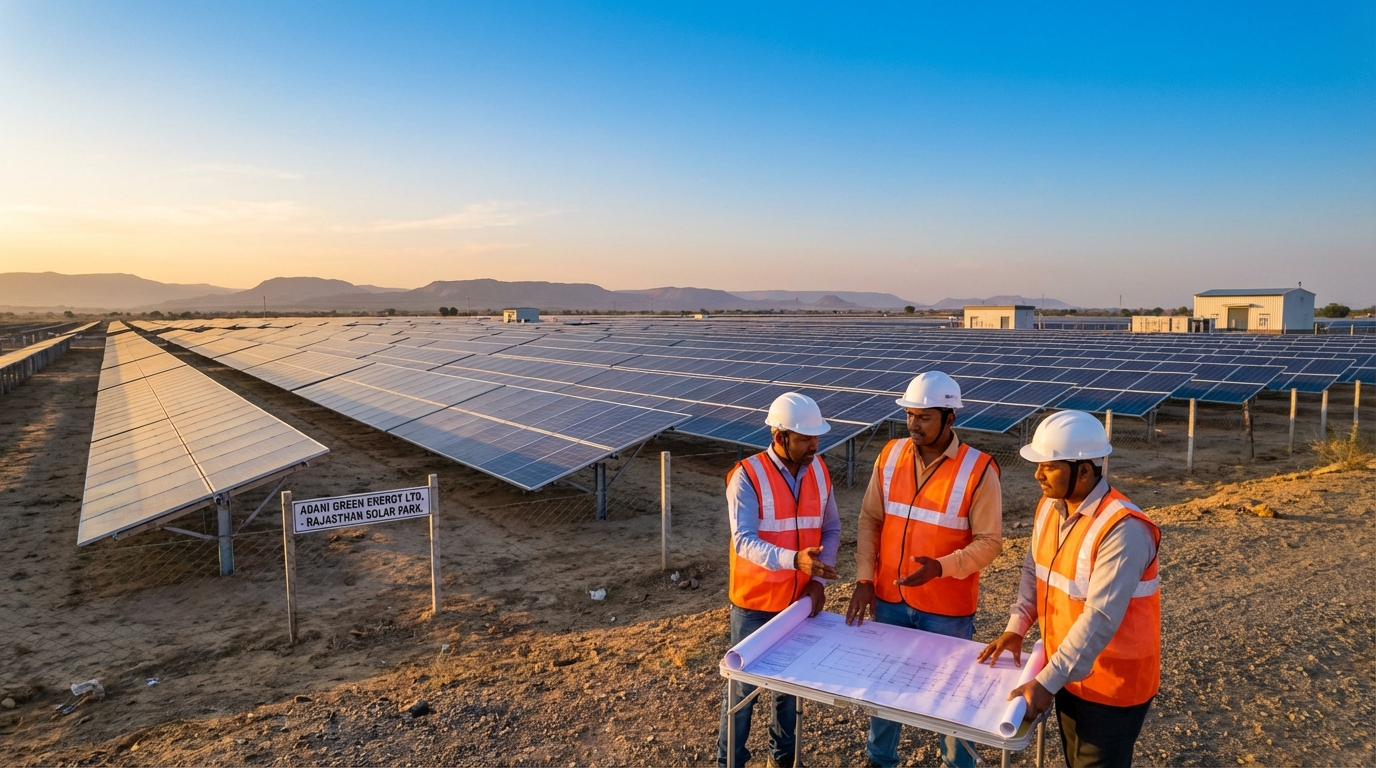
The Indian solar EPC industry has matured considerably over the past decade. In 2026, the market is characterized by intense competition, technological advancement, and increasing demand for specialized expertise. EPC companies India now operate in an environment where clients expect faster turnaround times, more accurate designs, and cost-effective solutions that maximize energy generation.
This evolving landscape has given rise to two distinct partnership models. On one side, specialized solar design consultancies focus exclusively on engineering design services, offering deep technical expertise without the overhead of installation operations. On the other, full-service EPC contractors provide end-to-end solutions, handling everything from initial design through final commissioning.
The decision between these models isn’t simply about choosing a vendor—it’s about selecting a strategic partner that complements your business model. Small and mid-sized EPC companies India often lack the in-house engineering capacity to handle complex designs for multiple concurrent projects. Meanwhile, even established firms may find that outsourcing specialized design work allows them to focus resources on their core competencies: procurement, construction, and client relationships.
Understanding the strengths and limitations of each model is the first step toward making a choice that will impact your project success, profitability, and competitive positioning in India’s dynamic solar market.
What Are Specialized Solar Design Consultancies?
Specialized solar design consultancies are firms that focus exclusively on the engineering and design aspects of solar projects. Unlike full-service contractors, these companies don’t handle procurement, construction, or installation. Instead, they dedicate their entire operation to delivering accurate, optimized solar design India solutions for EPC companies and developers.
These consultancies typically offer a comprehensive suite of design services including solar 3D pre-design for preliminary project visualization, detailed engineering design with complete drawing packages, permit design to ensure regulatory compliance, site survey India services for accurate ground-truthing, and structural engineering calculations tailored to local conditions. Many also provide PMC services India (Project Management Consultancy) for megawatt-scale installations.
The business model of specialized design firms centers on building deep technical expertise. Companies like Heaven Designs, for example, maintain teams of over 50 dedicated engineers and consultants who focus solely on solar engineering. This specialization allows them to develop proprietary processes, invest in advanced design software India tools, and accumulate extensive experience across diverse project types and geographic regions.
For EPC companies India, partnering with a specialized consultancy means accessing this concentrated expertise without the overhead of maintaining a large in-house engineering team. The relationship is typically project-based or retainer-based, offering flexibility to scale design capacity up or down based on project pipeline fluctuations.
What Are Full-Service EPC Companies India?
Full-service EPC contractors represent the traditional integrated model in the solar industry. These companies handle the complete project lifecycle: Engineering (design and planning), Procurement (sourcing equipment and materials), and Construction (installation and commissioning). Major players like Sterling and Wilson Renewable Energy and Gensol Engineering exemplify this comprehensive approach.
The integrated model offers a single point of accountability. When you engage a full-service EPC contractor, one organization is responsible for design accuracy, equipment quality, installation workmanship, and project completion. This can simplify project management and reduce coordination challenges, particularly for clients who prefer a turnkey solution.
Full-service EPC companies India typically maintain diverse teams including design engineers, procurement specialists, project managers, construction crews, and commissioning experts. They often have established relationships with equipment suppliers, access to financing options, and experience navigating the complete regulatory approval process from feasibility study India through final grid connection.
However, the integrated model also means these companies must balance resources across multiple functions. During peak demand periods, their design teams may be stretched thin as they support ongoing construction projects while also developing new proposals. This can impact turnaround times and the level of attention given to design optimization.
Cost Structure Comparison: Design Partners vs EPC Contractors
Understanding the solar design cost and overall financial implications of each partnership model is crucial for EPC companies India managing tight project margins. The cost structures differ significantly between specialized design consultancies and full-service EPC contractors.
Pricing Models for Specialized Design Consultancies
Specialized design partners typically charge on a per-watt basis, fixed project fee, or hourly rate depending on project scope and complexity. For example, detailed engineering design for a commercial rooftop project might range from ₹0.50 to ₹2.00 per watt, while PMC services India for megawatt-scale ground mount installations could be structured as a percentage of total project cost (typically 2-5%).
The advantage of this transparent pricing is predictability. You know your engineering cost upfront, allowing for accurate project budgeting. There are no hidden markups on equipment or construction services. Additionally, because these firms focus solely on design, their overhead costs are lower than integrated contractors, often translating to more competitive pricing for engineering services.
Specialized consultancies also offer flexibility in service selection. If you only need permit design and structural calculations but can handle preliminary design in-house, you pay only for what you need. This à la carte approach can significantly reduce costs for EPC companies India with some internal engineering capacity.
Cost Structure of Full-Service EPC Contractors
Full-service EPC contractors typically provide bundled pricing that includes design, equipment, and installation. While this simplifies budgeting, it can make it difficult to understand the actual solar design cost component. Design fees are often embedded in the overall project price, and contractors may use design as a loss leader to secure the more profitable procurement and construction contracts.
The integrated model can offer economies of scale for large projects where the contractor’s purchasing power and construction efficiency offset higher overhead costs. However, for EPC companies India who are themselves contractors looking for design support, working with a full-service competitor can create conflicts of interest and limit cost transparency.
It’s also worth considering opportunity costs. If a full-service contractor’s design team is backlogged, project delays can cascade into lost revenue and client dissatisfaction. The financial impact of a two-week design delay can far exceed any nominal savings from bundled pricing.
ROI Analysis and Hidden Costs
When evaluating cost structures, consider the total cost of ownership beyond initial fees. A specialized design partner with deep expertise may deliver more optimized designs that reduce equipment costs, improve energy generation, and minimize construction complications. These downstream benefits can deliver ROI that far exceeds the design fee differential.
Conversely, working with a full-service contractor might reduce coordination overhead and administrative costs associated with managing multiple vendors. For smaller projects or clients new to solar, this simplification can have real value. The key is understanding your specific situation and calculating true costs including time, risk, and opportunity factors. For more insights on how project duration impacts budget, explore our guide on solar design timeline and cost considerations.
Turnaround Time and Project Timelines
In the competitive solar market, speed matters. The ability to quickly deliver accurate designs can mean the difference between winning and losing a project bid. Design timeline considerations vary significantly between specialized consultancies and full-service contractors.
Specialized Design Consultancy Timelines
Specialized design firms typically offer faster turnaround times for engineering deliverables. Because design is their sole focus, they can dedicate resources immediately when you engage them. A typical rooftop solar India design might be completed in 3-7 business days, while complex ground mount projects with detailed structural engineering could take 2-4 weeks.
These firms often maintain capacity buffers specifically to handle rush projects and peak demand periods. During monsoon season when site survey India work slows down, or during year-end when many projects push for completion, having a design partner with available capacity becomes invaluable.
Heaven Designs, for instance, with a team of over 50 engineers, can handle multiple concurrent projects without compromising quality or timeline. This scalability is difficult for smaller in-house teams or stretched full-service contractors to match.
Full-Service EPC Contractor Timelines
Full-service EPC companies India may experience longer design timelines, particularly during busy periods when their engineering teams are supporting multiple functions. Design engineers might be pulled into site troubleshooting, procurement technical reviews, or client presentations, creating bottlenecks in the design pipeline.
However, integrated contractors can sometimes move faster from design to construction since they control the entire process. Once design is complete, procurement and mobilization can begin immediately without handoff delays. For turnkey projects where the same company handles everything, this integration can compress overall project duration.
The challenge arises when you’re an EPC company seeking design support from another EPC contractor. In this scenario, you’re essentially competing for their design team’s attention with their own internal projects, which will naturally take priority.
Impact on Project Success
Timeline reliability is often more important than raw speed. A design partner that consistently delivers on schedule allows you to make commitments to clients with confidence. Late designs can delay procurement, push construction into unfavorable weather, and damage client relationships.
When evaluating EPC companies India or design partners, ask about their average turnaround times, capacity during peak periods, and track record for meeting deadlines. Request references from clients who can speak to timeline reliability under various conditions.
Design Quality and Technical Expertise
The quality of solar engineering design directly impacts system performance, construction efficiency, and long-term reliability. Both specialized consultancies and full-service contractors can deliver high-quality work, but their approaches and areas of expertise often differ.
Depth of Expertise in Specialized Firms
Specialized design consultancies build concentrated expertise through repetition and focus. A firm that completes hundreds of designs annually across diverse project types develops deep knowledge of best practices, common pitfalls, and optimization strategies. This experience translates into more accurate designs, fewer construction issues, and better system performance.
These firms typically invest heavily in advanced design software India tools like PVsyst, Helioscope, AutoCAD, and specialized structural analysis programs. They also maintain up-to-date knowledge of evolving codes, standards, and regulatory requirements across different Indian states and international markets.
For complex challenges like structural engineering India requirements for rooftop installations on older buildings, or optimizing array layouts for irregularly shaped land parcels, specialized consultancies often have dedicated experts who focus on these specific technical domains. This depth is difficult for generalist teams to match.
Technical Capabilities of Full-Service Teams
Full-service EPC companies India bring a different type of expertise: practical construction knowledge. Their design engineers work closely with installation teams, gaining firsthand understanding of constructability, material availability, and field conditions. This can result in designs that are easier to build and less likely to encounter construction complications.
Integrated contractors also benefit from feedback loops. When a design element proves problematic during installation, that knowledge feeds back to the design team for future projects. This continuous improvement process can enhance design quality over time.
However, full-service contractors may have less specialized depth in pure engineering domains. Their solar engineer staff must balance design work with other responsibilities, potentially limiting their ability to stay current with the latest design optimization techniques or specialized analysis methods.
Quality Control and Accuracy
Both models can implement rigorous quality control, but the processes differ. Specialized consultancies often have multi-stage review processes where senior engineers check junior engineers’ work, and dedicated QC teams verify calculations, drawings, and documentation before delivery. With design as their only product, their reputation depends entirely on accuracy.
Full-service contractors may have less formalized design QC processes, relying instead on construction teams to catch errors during installation. While this can work, it’s more expensive to fix design issues in the field than on paper.
When evaluating quality, ask potential partners about their QC processes, error rates, and how they handle design revisions. Request sample drawing packages and have your team review them for completeness and clarity. For projects requiring detailed feasibility study India work, check out our complete process guide for EPC companies.
Scalability and Flexibility for Growing EPC Companies India
As your solar business grows, your design needs will fluctuate. Some months you might have ten active projects; other months just two. The ability to scale design capacity efficiently is a critical consideration when choosing between partnership models.
How Design Partners Scale With Your Business
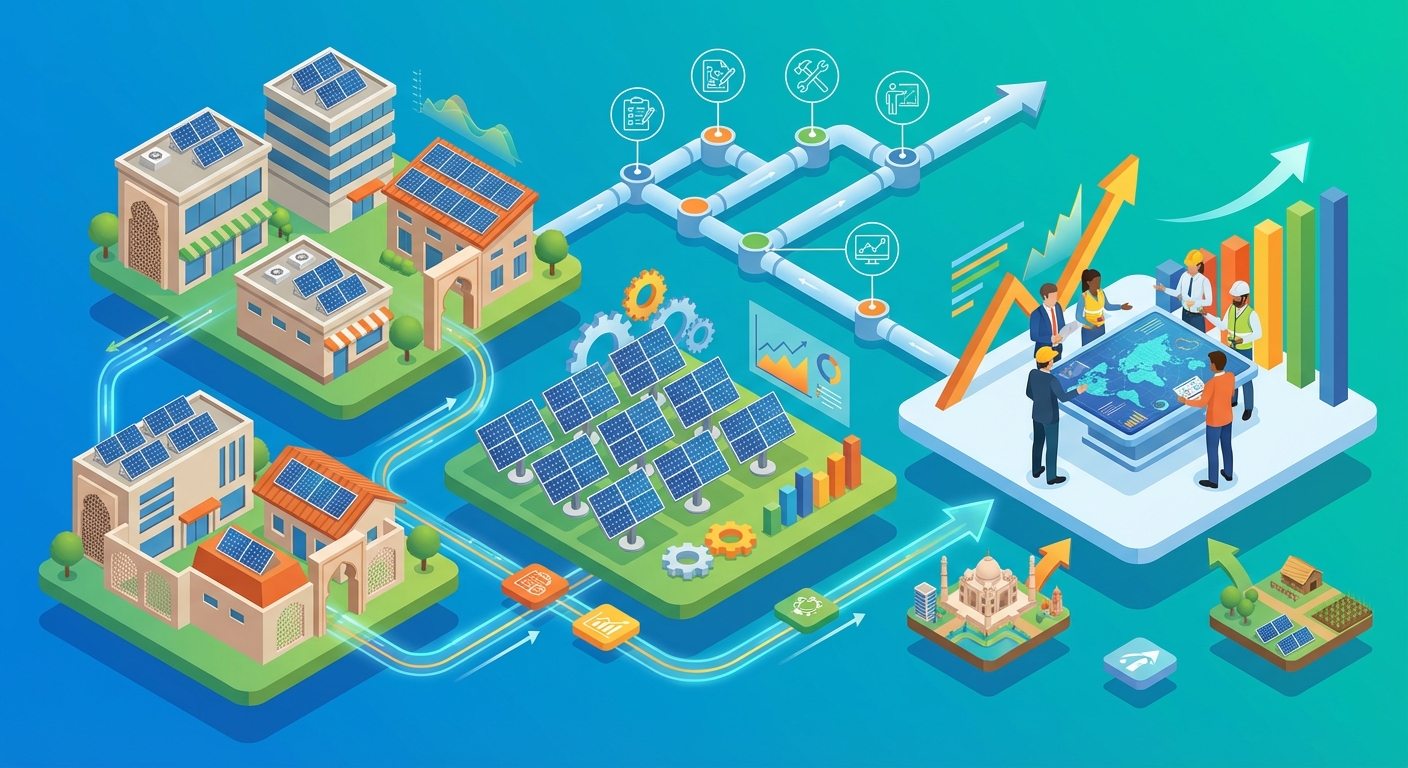
Specialized design consultancies offer inherent scalability. Because they serve multiple clients, they maintain capacity buffers and can typically accommodate your growth without requiring you to hire additional staff. When you land a large project or experience seasonal demand spikes, your design partner can allocate additional engineers to your work.
This flexibility is particularly valuable for small and mid-sized EPC companies India in growth mode. You can take on larger projects or more concurrent projects than your in-house capacity would normally allow, using your design partner as an extension of your team. As you grow, you can gradually build internal capacity while continuing to use external partners for overflow or specialized work.
Geographic scalability is another advantage. If you’re expanding from rooftop solar India projects in Maharashtra into ground mount installations in Rajasthan, a design partner with national experience can provide region-specific expertise without requiring you to hire local engineers. For regional design considerations, our complete regional design guide offers valuable insights.
Capacity Constraints of Full-Service Contractors
Full-service EPC companies India face different scalability challenges. Their design capacity is tied to their overall business model and must be balanced against procurement and construction needs. During industry boom periods, many contractors are capacity-constrained across all functions, making it difficult to take on additional design work for external clients.
If you’re relying on a full-service contractor for design support, you may find yourself competing for resources during peak seasons. Your projects might be deprioritized when the contractor’s own installation pipeline is full, creating unpredictable delays.
However, for very large projects where you need both design and construction support, a full-service contractor’s integrated capacity can be advantageous. They can scale their entire operation—design, procurement, and construction—in a coordinated manner.
Handling Multiple Project Types
Flexibility across project types is another scalability dimension. Specialized consultancies typically have experience with diverse applications: residential rooftop, commercial and industrial installations, ground mount solar farms, carport structures, and floating solar. This breadth allows you to use the same partner regardless of project type, maintaining consistency and relationship continuity.
Full-service contractors may specialize in certain project scales or types. A contractor focused on utility-scale ground mount projects might not be the best partner for small commercial rooftop designs, and vice versa. This can force you to work with multiple partners, increasing coordination complexity.
Key Decision Factors: Which Model Fits Your Business?
Choosing between a specialized design consultancy and a full-service EPC contractor depends on your specific business context, project portfolio, and strategic objectives. Neither model is universally superior—the right choice depends on your situation.
When to Choose a Specialized Design Consultancy
A specialized design partner makes sense when you want to focus your resources on sales, client relationships, procurement, and installation while outsourcing engineering to experts. This model works particularly well for EPC companies India in the following situations:
- Growing businesses that need to scale design capacity without hiring full-time engineers
- Companies with variable project pipelines where design needs fluctuate significantly month-to-month
- Firms entering new markets or project types where they lack internal expertise
- EPCs focused on installation excellence who want to partner with design specialists rather than building internal capacity
- Businesses requiring specialized services like detailed structural engineering India calculations or complex PMC services India
- Companies prioritizing cost transparency and wanting to avoid conflicts of interest with full-service competitors
The specialized consultancy model offers maximum flexibility, transparent pricing, and access to deep technical expertise without the overhead of maintaining a large engineering team. For solar EPC India companies looking to differentiate on installation quality and client service, outsourcing design to specialists allows you to focus on your core competencies.
When Full-Service EPC Makes More Sense
Full-service EPC companies India are the better choice in certain scenarios, particularly when you need turnkey solutions or lack the internal capacity to manage multiple vendors. Consider this model when:
- You’re a developer or end client rather than an EPC company, and want a single point of accountability
- You need financing support that integrated contractors can often provide through their banking relationships
- Your project is very large and benefits from the economies of scale that major EPC contractors can deliver
- You lack procurement expertise and want the contractor to handle equipment sourcing and logistics
- You’re in a remote location where a contractor with local construction presence offers significant advantages
However, if you’re an EPC company yourself, working with a full-service competitor for design services often creates more challenges than benefits. The potential for conflicts of interest, resource prioritization issues, and lack of cost transparency typically outweigh any advantages of the integrated model.
Hybrid Approaches and Strategic Partnerships
Many successful EPC companies India use a hybrid approach, maintaining small internal design teams for preliminary work and client presentations while partnering with specialized consultancies for detailed engineering, permit design, and complex structural calculations. This model offers a balance of control and scalability.
Another effective strategy is developing a preferred partner relationship with a specialized consultancy. Rather than treating each project as a one-off transaction, establish a long-term partnership with consistent processes, pricing, and communication channels. This creates efficiency and allows the design partner to truly understand your business, quality standards, and client expectations.
Questions to Ask Potential Partners
Regardless of which model you choose, ask these critical questions during your evaluation process:
- What is your typical turnaround time for projects similar to mine, and how do you handle rush requests?
- How many engineers do you have, and what is their experience level and specialization?
- Can you provide references from clients with similar project types and scales?
- What is your quality control process, and what is your typical revision rate?
- How do you handle capacity during peak demand periods?
- What design software India tools do you use, and are you current with the latest versions?
- Do you have experience with the specific regulatory requirements in my target markets?
- What is your pricing structure, and are there any additional fees I should anticipate?
- How do you communicate during projects, and who will be my primary point of contact?
- Can you support me as I scale, and do you have experience growing with clients?
Real-World Scenarios: Making the Right Choice
Understanding how different EPC companies India have navigated this decision can provide valuable insights for your own situation. Let’s examine three common scenarios.
Scenario 1: Small EPC Company Scaling Operations
A Mumbai-based EPC company with 15 employees was completing 5-8 residential and small commercial projects monthly. They had one in-house engineer who was overwhelmed, creating bottlenecks that prevented them from taking on more work. Hiring additional full-time engineers would increase fixed costs significantly.
They partnered with a specialized design consultancy, outsourcing all detailed engineering and permit design work. This allowed them to immediately scale to 15-20 projects monthly without adding headcount. Their in-house engineer focused on client-facing preliminary designs and quality review of outsourced work. Within 18 months, revenue tripled while engineering costs remained proportional to project volume.
The key success factor was choosing a design partner with fast turnaround times and experience with the specific municipal permit requirements in their service area. The transparent per-project pricing allowed them to accurately quote clients and maintain healthy margins.
Scenario 2: Established EPC Needing Specialized Expertise
A Bangalore-based EPC company with strong experience in ground mount installations wanted to enter the commercial rooftop market. However, rooftop projects require different expertise: detailed structural engineering India analysis of existing buildings, complex electrical designs for integration with facility loads, and stringent permit design requirements.
Rather than hiring specialized engineers for a market they were still testing, they partnered with a consultancy that had extensive rooftop experience. The design partner provided not just drawings but also knowledge transfer, helping the EPC’s team understand rooftop-specific considerations. After successfully completing a dozen rooftop projects with design support, the EPC hired two rooftop specialists and continued using the consultancy for overflow work and complex structural analysis.
This approach allowed them to enter a new market segment with minimal risk and investment, validating the business case before committing to permanent headcount.
Scenario 3: Developer Managing Multiple Concurrent Projects
A renewable energy developer was simultaneously developing three large ground mount projects totaling 50 MW across different Indian states. Each project had unique requirements: different soil conditions requiring custom foundation designs, varying grid interconnection standards, and distinct state-level regulatory requirements.
They engaged a specialized consultancy to handle all design and PMC services India work across all three projects. The consultancy’s team of 50+ engineers could dedicate sufficient resources to each project simultaneously, something a single full-service EPC contractor would struggle to match. The consultancy’s experience across multiple states proved invaluable in navigating different regulatory environments and technical standards.
For construction, the developer hired different regional EPC contractors for each project, selecting firms with strong local presence and competitive pricing. This approach gave them best-in-class design expertise combined with cost-effective local construction, optimizing both quality and budget.
Frequently Asked Questions
What is the typical cost difference between design partners and full-service EPC?
Specialized design consultancies typically charge ₹0.50 to ₹2.00 per watt for detailed engineering design, depending on project complexity. Full-service EPC companies India embed design costs in bundled pricing, making direct comparison difficult. However, specialized firms often deliver 15-30% lower engineering cost due to lower overhead and focused expertise. The total project cost difference depends on many factors including equipment pricing, construction efficiency, and project scale.
How long does solar design take with a specialized consultancy?
Typical design timeline ranges from 3-7 business days for residential and small commercial rooftop projects to 2-4 weeks for complex ground mount installations with detailed structural engineering. Rush services are often available for 24-48 hour turnaround with premium pricing. The timeline depends on project complexity, information availability, and the consultancy’s current workload. Established design partners with large teams can typically accommodate tight deadlines more reliably than smaller firms or full-service contractors.
Can I use a design partner for some projects and full-service EPC for others?
Absolutely. Many EPC companies India use a hybrid approach, partnering with specialized consultancies for design-intensive or time-sensitive projects while working with full-service contractors for turnkey opportunities where bundled services make sense. The key is clearly defining scope and responsibilities for each project to avoid confusion or gaps in accountability. Some firms maintain relationships with both types of partners, selecting the best fit based on each project’s specific requirements.
What credentials should I look for in EPC companies India?
Look for firms with relevant certifications (ISO 9001 for quality management, ISO 14001 for environmental management), professional engineering licenses, and membership in industry associations like the National Solar Energy Federation of India (NSEFI). Review their portfolio for projects similar to yours in scale and type. Ask about their team’s qualifications, how many licensed engineers, what software tools they use, and their experience with your target markets. Client references and case studies demonstrating successful project completion are essential. For design partners specifically, ask about their quality control processes and typical revision rates.
How do I ensure design quality when outsourcing?
Start with thorough partner vetting: review sample deliverables, check references, and start with a small pilot project before committing to larger work. Establish clear quality standards and deliverable specifications upfront. Implement a review process where your team checks designs before they go to permitting or construction. Choose partners with formal QC processes and low revision rates. Build a long-term relationship rather than project-by-project transactions, partners who understand your standards and expectations consistently deliver better quality. Finally, provide feedback on every project so your design partner can continuously improve their understanding of your requirements.
Making Your Decision: Next Steps for EPC Companies India
The choice between specialized design consultancies and full-service EPC contractors is not merely a vendor selection decision, it’s a strategic choice that impacts your operational efficiency, scalability, cost structure, and competitive positioning. For most EPC companies India focused on installation excellence and client relationships, partnering with a specialized design consultancy offers the optimal balance of expertise, flexibility, and cost-effectiveness.
Specialized design partners like Heaven Designs provide access to deep engineering expertise without the overhead of maintaining large in-house teams. With over 50 dedicated engineers, 628+ MW of completed design work, and experience across 752+ clients in multiple countries, specialized consultancies deliver the quality, speed, and scalability that growing solar EPC India businesses need to compete effectively in 2026’s dynamic market.
The key is finding a partner whose capabilities, capacity, and approach align with your business model and growth objectives. Whether you choose a specialized consultancy, a full-service contractor, or a hybrid approach, prioritize partners who demonstrate technical excellence, reliable timelines, transparent pricing, and a genuine commitment to your success.
As India’s solar industry continues its rapid expansion, the EPC companies India that thrive will be those who strategically leverage partnerships to deliver exceptional value to clients while maintaining operational efficiency and healthy margins. Your choice of design partner is a critical component of that strategy.
Ready to explore how a specialized design partnership can accelerate your solar business growth? Heaven Designs offers comprehensive solar design India services including 3D pre-design, detailed engineering, permit design, structural engineering India expertise, and PMC services India for projects of all scales. With a proven track record serving EPC companies India and international clients, we provide the technical excellence and responsive service you need to win more projects and deliver superior results. Get a Quick Proposal Now! or reach out directly at +91 90811 00297 or service@heavendesigns.in to discuss your specific design requirements and discover how we can become your trusted design partner.
This blog post was written using thestacc.com