


India’s solar energy landscape is as diverse as its geography. From the scorching deserts of Rajasthan to the monsoon-drenched coasts of Kerala, each region presents unique challenges for solar installation India projects. For EPC companies operating across multiple states, understanding these regional variations isn’t just beneficial—it’s essential for project success, cost optimization, and long-term performance.
With India targeting 500 GW of renewable energy capacity by 2030, the solar installation industry is experiencing unprecedented growth. However, this expansion brings complexity. A solar design that works perfectly in Gujarat’s high-irradiance zones may fail catastrophically in West Bengal’s flood-prone areas. Soil conditions, wind loads, regulatory frameworks, and grid connectivity issues vary dramatically from state to state, requiring specialized engineering expertise and location-specific design approaches.
This comprehensive guide explores the regional challenges of solar installation India projects across every major state, providing EPC companies with actionable insights into climate considerations, structural engineering requirements, permit processes, and design solutions that ensure successful installations from concept to commissioning.
Understanding Solar Installation Challenges Across India
India spans 3.28 million square kilometers with climatic zones ranging from tropical to alpine, creating vastly different conditions for solar installations. The country’s geographical diversity directly impacts every aspect of solar project design—from foundation depth to panel tilt angles, from corrosion protection to drainage systems.
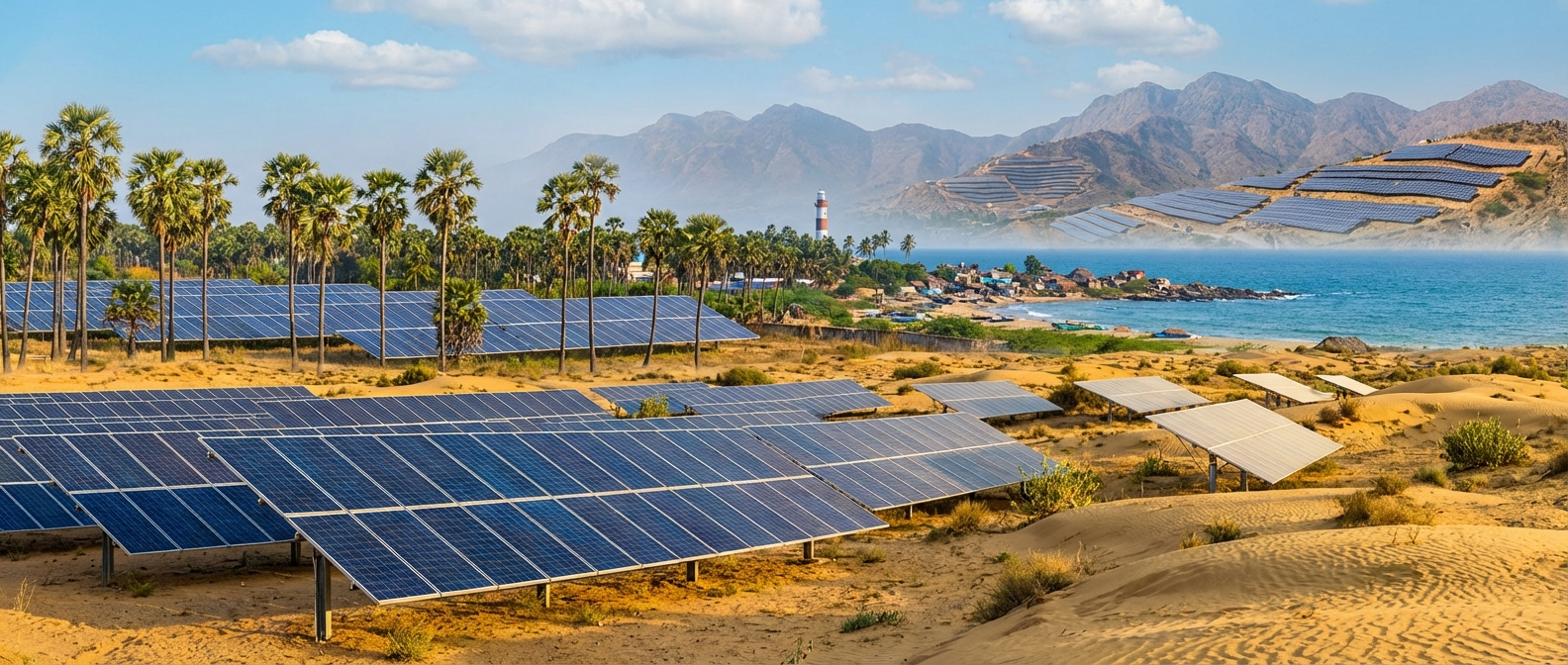
For solar EPC companies, these regional variations translate into specific technical challenges:
- Climate extremes: Temperature variations from -40°C in Ladakh to 50°C in Rajasthan affect equipment selection, thermal expansion calculations, and performance modeling
- Soil diversity: From black cotton soil in Maharashtra to laterite in Kerala, soil bearing capacity determines foundation design and project costs
- Monsoon patterns: Annual rainfall varies from under 100mm in western Rajasthan to over 11,000mm in Meghalaya, requiring different drainage and waterproofing strategies
- Seismic zones: India has four seismic zones, with Zone V (highest risk) covering northeastern states and parts of Gujarat, demanding enhanced structural engineering
- Grid infrastructure: Grid stability and connectivity quality vary significantly between developed and developing states
The role of specialized solar feasibility studies becomes critical in this context. A comprehensive site assessment identifies location-specific challenges before they become costly problems during installation or operation. Professional design services bridge the gap between theoretical solar potential and practical implementation, ensuring that every project is engineered for its specific environment.
According to the Ministry of New and Renewable Energy, India added over 13 GW of solar capacity in 2025, with projects distributed across 28 states and 8 union territories. Each installation required customized engineering solutions to address local conditions—a trend that will only intensify as solar penetration increases in previously underserved regions.
1. Northern India: Solar Installation in High-Temperature & Dust-Prone Regions
Northern India—encompassing Rajasthan, Punjab, Haryana, Uttar Pradesh, and Delhi NCR, represents some of the country’s highest solar potential zones. Rajasthan alone accounts for over 18 GW of installed solar capacity as of 2026, making it India’s solar powerhouse. However, this region presents distinct challenges that require specialized design approaches.
Extreme Temperature Variations
Northern states experience dramatic temperature swings, with summer temperatures exceeding 48°C and winter nights dropping below 5°C. These extremes create several engineering considerations:
- Thermal expansion: Module mounting structures must accommodate significant thermal expansion and contraction cycles without compromising structural integrity
- Temperature coefficient losses: High ambient temperatures reduce panel efficiency; design must optimize for real-world operating temperatures, not just STC ratings
- Equipment derating: Inverters and transformers require proper derating calculations for sustained high-temperature operation
- Cable sizing: Electrical cables need appropriate ampacity adjustments for high ambient temperatures
Dust Accumulation and Soiling Losses
The semi-arid and desert climate of northern India creates persistent dust challenges. Studies show that soiling can reduce energy generation by 15-30% in Rajasthan without proper mitigation. Solar installation India projects in this region must incorporate:
- Optimized tilt angles that balance energy generation with natural rain-based cleaning
- Anti-soiling coatings on module surfaces where economically justified
- Cleaning system design and water availability assessment
- Soiling loss modeling in energy yield calculations for accurate financial projections
Soil Conditions and Foundation Design
Northern India’s soil composition varies from sandy desert soil in western Rajasthan to alluvial plains in Punjab and Haryana. Each soil type demands different foundation approaches:
- Sandy soil: Lower bearing capacity requires larger foundation footprints or pile foundations for ground-mount systems
- Alluvial soil: Generally good bearing capacity but may have high water tables requiring drainage considerations
- Rocky terrain: Parts of Rajasthan have rock close to surface, requiring rock anchoring or blasting
Professional structural engineering India services conduct geotechnical investigations to determine soil bearing capacity, typically requiring 1.5-2.5 kg/cm² for standard fixed-tilt systems and higher for tracker systems.
Wind Load Calculations
Open desert and plains areas experience high wind speeds, particularly during summer dust storms. Wind load calculations must follow IS 875 (Part 3) standards, with basic wind speeds ranging from 39 m/s to 55 m/s depending on location. Design considerations include:
- Enhanced structural member sizing for wind uplift forces
- Foundation depth calculations accounting for overturning moments
- Module clamping force specifications to prevent wind-induced damage
- Stow position design for tracker systems during high-wind events
Regulatory Framework
Northern states have relatively mature solar policies. Rajasthan offers open access regulations and banking facilities, while Punjab and Haryana have active net metering policies for rooftop installations. However, permit design requirements vary:
- Rajasthan requires detailed structural stability certificates for projects above 1 MW
- Delhi has stringent fire safety requirements for rooftop solar installations
- Haryana mandates third-party technical audits for grid-connected systems above 100 kW
2. Western India: Coastal Corrosion & High Solar Irradiance Zones
Western India, primarily Gujarat, Maharashtra, and Goa, combines excellent solar resources with coastal challenges. Gujarat leads India in total solar capacity with over 14 GW installed, while Maharashtra is rapidly expanding its solar footprint across both coastal and interior regions.
Coastal Corrosion Challenges
Proximity to the Arabian Sea creates corrosive environments, particularly within 10-20 km of the coastline. Salt-laden air accelerates corrosion of metal components, requiring specific material selections:
- Hot-dip galvanization: Minimum 120 microns zinc coating for mounting structures, compared to 80 microns for inland areas
- Stainless steel fasteners: Grade 316 stainless steel for critical connections in high-corrosion zones
- Aluminum frames: Marine-grade anodization for module frames and junction boxes
- Cable protection: UV-resistant and corrosion-resistant cable insulation materials
For solar installation India projects in coastal Gujarat and Maharashtra, material cost premiums of 8-12% are typical but essential for 25-year project lifespans. Detailed solar design cost analysis must account for these regional material requirements.
High Solar Irradiance Optimization
Western India receives some of the country’s highest solar irradiance, with annual GHI (Global Horizontal Irradiance) exceeding 2,000 kWh/m² in parts of Gujarat. This high resource availability enables:
- Lower specific costs (₹/kW) due to higher energy generation per installed capacity
- Optimized tilt angles between 15-20 degrees for maximum annual energy capture
- Bifacial module deployment with high albedo ground surfaces for additional generation
- Single-axis tracker viability with strong economic returns
Cyclone-Prone Area Structural Engineering
Coastal Gujarat and Maharashtra fall within cyclone-prone zones, requiring enhanced structural design per IS 875 (Part 3) cyclone provisions. Key considerations include:
- Cyclone wind speed calculations (up to 55 m/s for very high damage risk zones)
- Enhanced foundation design with deeper embedment and larger concrete volumes
- Module clamping systems designed for extreme uplift forces
- Tracker systems with rapid stow capabilities and reinforced drive mechanisms
Professional solar design India services use advanced computational fluid dynamics (CFD) modeling to assess wind flow patterns across solar arrays, optimizing row spacing and structural design for cyclone resilience.
State-Specific Regulations
Gujarat has India’s most streamlined solar approval processes, with single-window clearance systems and well-defined timelines. The Gujarat Energy Development Agency (GEDA) provides clear guidelines for:
- Grid connectivity applications with 30-60 day approval timelines
- Net metering for rooftop systems up to 500 kW
- Land conversion permissions for ground-mount projects
- Environmental clearances for projects above 5 MW
Maharashtra’s MSEDCL (Maharashtra State Electricity Distribution Company Limited) has specific technical requirements for grid interconnection, including power quality standards and protection relay specifications that must be incorporated into electrical design.
3. Southern India: Monsoon Challenges & Rooftop Solar Complexities
Southern India, comprising Tamil Nadu, Karnataka, Kerala, Andhra Pradesh, and Telangana, represents a diverse solar market with strong rooftop solar adoption, progressive policies, and unique monsoon-related challenges. The region accounts for approximately 30% of India’s total solar capacity, with Tamil Nadu and Karnataka leading in installations.
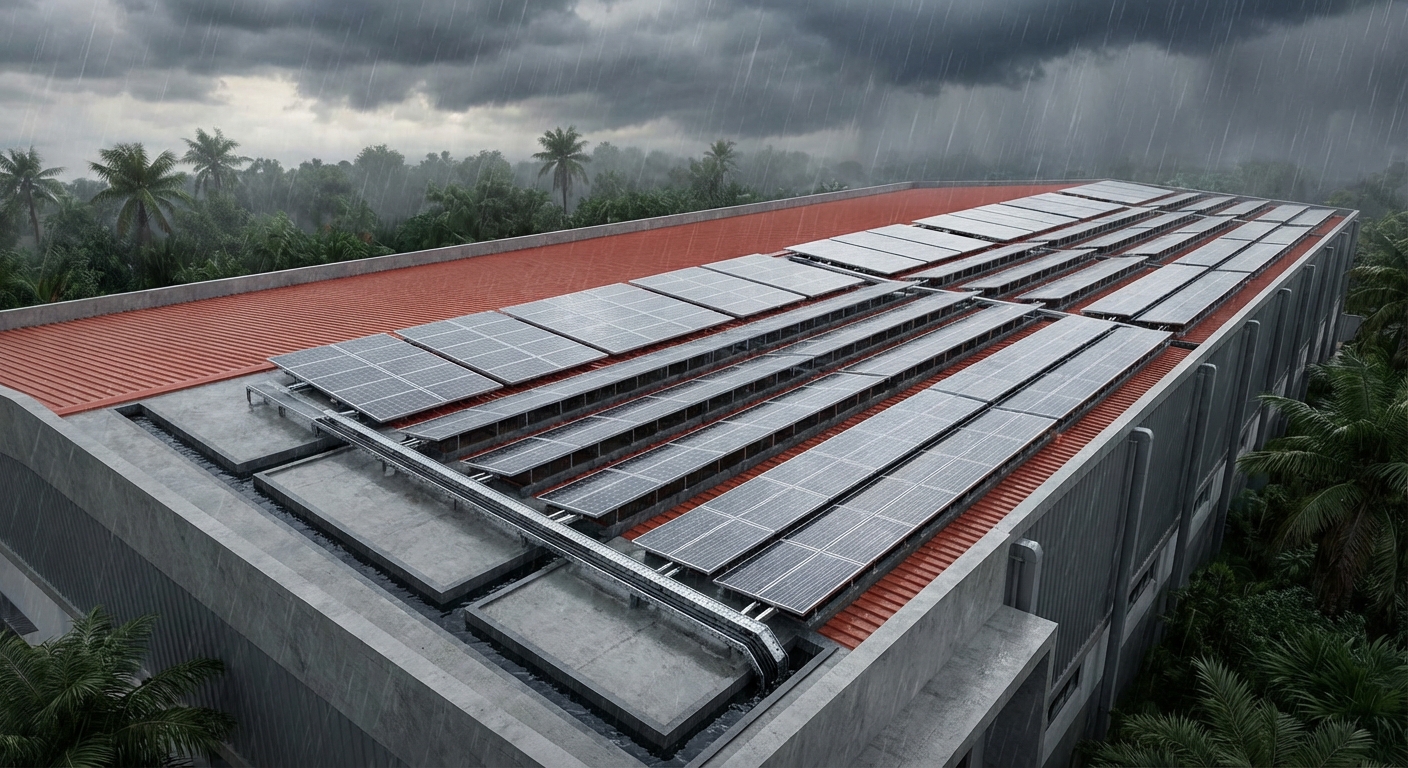
Heavy Monsoon Rainfall Considerations
Southern states receive substantial monsoon rainfall, with Kerala experiencing over 3,000mm annually and coastal Karnataka receiving 2,500-3,500mm. This creates specific design requirements:
- Drainage design: Proper water runoff channels to prevent pooling around foundations and electrical equipment
- Waterproofing: Enhanced waterproofing for rooftop penetrations, cable entry points, and junction boxes
- Elevation requirements: Inverters, transformers, and switchgear elevated above potential flood levels
- Lightning protection: Comprehensive lightning protection systems due to high thunderstorm frequency during monsoons
- Earthing systems: Robust earthing design accounting for high soil moisture during rainy seasons
For rooftop solar India installations, monsoon considerations are particularly critical. Roof penetrations for mounting structure anchors must be properly sealed to prevent water ingress that could damage building structures. Professional design services conduct detailed roof surveys to identify existing waterproofing, drainage patterns, and structural load-bearing capacity before finalizing mounting system designs.
Rooftop Solar Structural Load Calculations
Southern India has diverse building types, from modern commercial structures with RCC roofs to traditional industrial buildings with asbestos or metal sheet roofing. Each requires different structural approaches:
- RCC roofs: Load-bearing capacity assessment, typically 150-200 kg/m² for solar installations including wind uplift factors
- Metal sheet roofs: Purlin strength verification and specialized clamping systems that don’t compromise roof integrity
- Asbestos roofs: Often require complete replacement or structural reinforcement before solar installation
- Terracotta tile roofs: Common in Kerala, requiring careful mounting solutions that preserve traditional aesthetics
Structural engineering for solar installation India projects in southern states must account for both dead loads (equipment weight) and live loads (wind uplift, maintenance personnel, debris accumulation). Professional engineers conduct on-site structural assessments and provide stamped structural stability certificates required for permit approvals.
High Humidity and Temperature Impact
Southern coastal areas experience high humidity (70-90%) combined with temperatures of 30-40°C, creating challenging operating conditions:
- Accelerated corrosion of electrical connections and terminals
- Reduced inverter efficiency due to high ambient temperatures
- Potential for fungal growth on module surfaces in shaded areas
- Cable insulation degradation from combined heat and moisture exposure
Equipment selection must prioritize IP65 or higher ingress protection ratings, conformal coating on PCBs, and adequate ventilation for inverters and electrical enclosures.
Progressive Regulatory Environment
Southern states lead India in progressive solar policies:
- Tamil Nadu: Comprehensive net metering up to 1 MW, clear grid connectivity procedures, and active open access market
- Karnataka: Strong rooftop solar mandates for new buildings, simplified approval processes through BESCOM
- Andhra Pradesh & Telangana: Attractive solar policies with banking facilities and virtual net metering options
- Kerala: Net metering for residential systems with monthly settlement, though grid infrastructure challenges exist in some areas
Despite progressive policies, permit design requirements vary significantly. Tamil Nadu requires detailed electrical single-line diagrams and protection relay settings, while Karnataka mandates structural stability certificates from chartered engineers for rooftop systems above 100 kW.
4. Eastern & Northeastern India: Low Irradiance & Terrain Challenges
Eastern and northeastern India, including West Bengal, Odisha, Bihar, Jharkhand, and the seven northeastern states, represents the country’s most challenging solar markets. Lower solar irradiance, difficult terrain, frequent flooding, and limited grid infrastructure create unique obstacles for solar EPC companies.
Lower Solar Irradiance Optimization
Eastern states receive 15-25% lower annual solar irradiance compared to western and northern India, with GHI values of 1,600-1,800 kWh/m² annually. This impacts project economics and requires optimization strategies:
- Higher efficiency modules: Premium monocrystalline or bifacial modules to maximize generation from available irradiance
- Optimized tilt angles: Steeper tilt angles (20-25 degrees) to capture maximum winter sun and facilitate rain-based cleaning
- Tracker consideration: Single-axis trackers can improve generation by 18-25%, potentially justifying higher capital costs
- Accurate energy modeling: Conservative energy yield calculations using location-specific TMY (Typical Meteorological Year) data
For solar EPC India companies, accurate feasibility studies are essential in these regions to ensure realistic financial projections and avoid over-promising generation to clients.
Hilly Terrain and Slope Considerations
Northeastern states feature mountainous terrain with slopes, valleys, and limited flat land. Ground-mount solar installations in these areas require:
- Detailed topographical surveys using drone-based LiDAR or photogrammetry
- Terracing and land leveling cost assessments
- Slope stability analysis and erosion control measures
- Customized mounting structure designs for sloped installations
- Access road planning for construction and maintenance
Professional ground mount design services use 3D terrain modeling to optimize panel layout on sloped land, minimizing civil work costs while maximizing usable area.
Flood-Prone Area Foundation Design
West Bengal, Bihar, and Assam experience regular flooding during monsoons. Solar installations in these states require elevated designs:
- Elevated mounting: Module mounting height 1-2 meters above historical flood levels
- Deep foundations: Pile foundations or deep concrete footings to prevent settlement in saturated soils
- Electrical equipment elevation: Inverters, transformers, and control systems on raised platforms or in elevated control rooms
- Drainage systems: Comprehensive site drainage to channel water away from foundations
Geotechnical investigations are particularly critical in flood-prone areas to assess soil bearing capacity under saturated conditions and design appropriate foundations.
Grid Infrastructure Limitations
Eastern and northeastern states face grid infrastructure challenges:
- Limited transmission capacity in remote areas
- Voltage fluctuations and power quality issues
- Longer grid connectivity approval timelines
- Higher interconnection costs due to infrastructure upgrades
Electrical design for solar installation India projects in these regions must include comprehensive power quality analysis, appropriate protection systems, and sometimes energy storage solutions to manage grid instability.
Regulatory Landscape
Eastern states are developing their solar policies, with varying levels of maturity:
- West Bengal: Net metering available but with complex approval processes through WBSEDCL
- Odisha: Growing solar market with improving grid connectivity procedures
- Northeastern states: Special category status with additional subsidies but limited implementation experience
5. Critical Design Considerations for Solar Installation India Projects
Regardless of location, successful solar installation India projects share common design elements that must be tailored to regional conditions. Professional engineering design services address these critical considerations systematically.
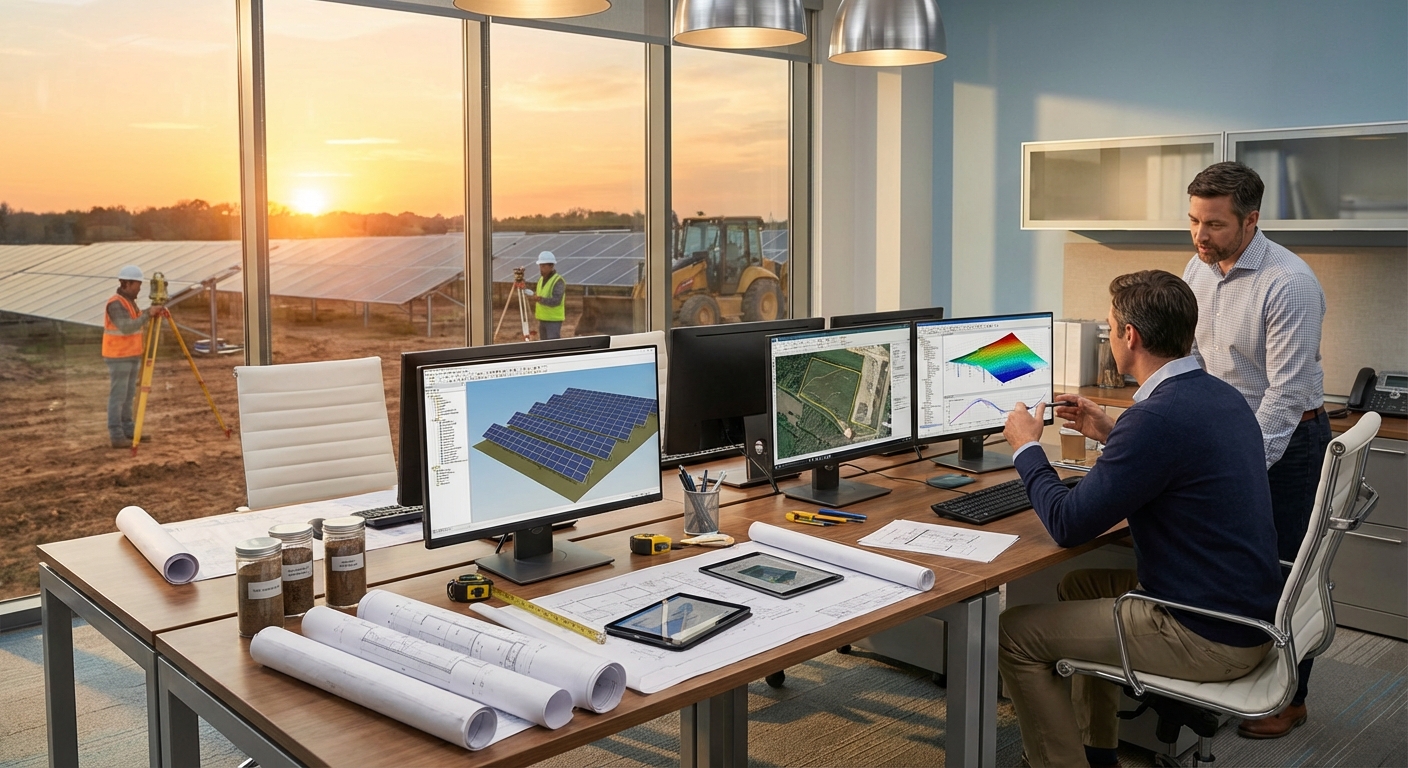
Comprehensive Site Survey and Feasibility Study
Every successful project begins with thorough site assessment. Professional site survey India services include:
- Topographical survey: Accurate site dimensions, elevations, slopes, and existing structures using total station or drone surveys
- Geotechnical investigation: Soil testing at multiple locations to determine bearing capacity, soil type, and water table depth
- Solar resource assessment: On-site irradiance measurement or satellite-based resource data validation
- Shading analysis: Identification of shading obstacles and their impact on energy generation
- Grid connectivity assessment: Nearest substation location, available capacity, and interconnection requirements
- Environmental assessment: Identification of environmental constraints, protected areas, or regulatory restrictions
A comprehensive feasibility study India synthesizes this data to provide EPC companies with accurate project viability assessments, cost estimates, and risk identification before significant capital commitment.
Soil Testing and Geotechnical Analysis
Foundation design depends entirely on accurate soil data. Professional geotechnical investigations include:
- Standard Penetration Tests (SPT) at multiple locations across the site
- Soil bearing capacity determination for different foundation types
- Soil corrosivity testing to specify appropriate foundation materials
- Water table depth measurement for drainage design
- Soil resistivity testing for earthing system design
For a typical 1 MW ground-mount project, geotechnical investigations cost ₹50,000-150,000 but prevent foundation failures that could cost millions in remediation.
Structural Engineering for Different Mounting Systems
Structural engineering India services design mounting systems appropriate for site conditions:
- Fixed-tilt ground mount: Most common for utility-scale projects, optimized for regional wind and seismic loads
- Single-axis trackers: Require enhanced structural design for moving components and higher wind loads
- Rooftop ballasted systems: Non-penetrating designs for roofs where penetrations aren’t feasible
- Rooftop anchored systems: Penetrating designs with proper waterproofing for maximum wind resistance
- Elevated structures: For flood-prone areas or agricultural land where ground clearance is required
Structural calculations follow IS 875 (wind and dead loads), IS 1893 (seismic loads), and IS 2911 (foundation design) standards, with appropriate safety factors for 25-year design life.
Electrical Design and Grid Integration Planning
Electrical engineering encompasses multiple subsystems:
- DC system design: String sizing, cable routing, combiner box placement, and DC surge protection
- Inverter selection and placement: Centralized vs. string inverters based on project scale and shading conditions
- AC system design: Transformer sizing, MV cable design, switchgear specifications
- Protection system design: Relay coordination, earthing system, lightning protection
- SCADA and monitoring: Communication architecture and data acquisition systems
Grid integration design must comply with CEA (Central Electricity Authority) regulations and state-specific technical requirements for power quality, harmonics, and protection.
Permit Design and Regulatory Compliance
Professional permit design services prepare comprehensive documentation packages:
- Detailed engineering drawings (site layout, electrical single-line diagrams, structural drawings)
- Technical specifications and equipment datasheets
- Structural stability certificates from chartered engineers
- Electrical safety compliance documentation
- Fire safety plans for rooftop installations
- Environmental impact assessments where required
Accurate permit documentation accelerates approval timelines and prevents costly redesigns during construction.
State-Specific Regulatory & Permit Requirements
India’s federal structure means solar regulations vary significantly across states. Understanding these variations is essential for multi-state EPC operations.
Net Metering Regulations
Net metering policies differ in critical aspects:
- Capacity limits: Range from 10 kW (some states for residential) to 1 MW (Tamil Nadu, Gujarat)
- Settlement periods: Monthly (Kerala), quarterly (some states), or annual (most common)
- Compensation rates: Some states offer retail rate compensation, others provide lower feed-in tariffs
- Banking provisions: Ability to carry forward excess generation credits varies by state
Grid Connectivity Approval Processes
Timeline and complexity vary dramatically:
- Fast-track states: Gujarat, Karnataka, and Tamil Nadu offer 30-60 day approvals with clear procedures
- Moderate states: Maharashtra, Rajasthan, and Andhra Pradesh typically require 60-90 days
- Challenging states: Some eastern and northeastern states may require 120+ days due to limited experience
Environmental Clearances
Environmental clearance requirements depend on project scale and location:
- Projects above 5 MW in ecologically sensitive areas require Environmental Impact Assessments
- Forest land conversion requires multiple clearances and can add 6-12 months to timelines
- Coastal Regulation Zone (CRZ) areas have additional restrictions within 500m of high tide lines
Documentation Requirements by Project Scale
Documentation complexity scales with project size:
- Residential (1-10 kW): Simplified single-page applications in most states, basic electrical drawings
- Commercial (10-100 kW): Detailed electrical drawings, structural certificates, fire safety plans
- Industrial (100 kW – 1 MW): Comprehensive engineering documentation, third-party technical audits in some states
- Utility-scale (>1 MW): Full detailed project reports, environmental assessments, land use clearances
How Specialized Design Services Overcome Regional Solar Installation Challenges
The complexity of regional variations in solar installation India projects makes specialized design services not just valuable but essential for EPC success. Professional solar design companies bring multi-state experience, technical expertise, and systematic approaches that transform regional challenges into optimized solutions.
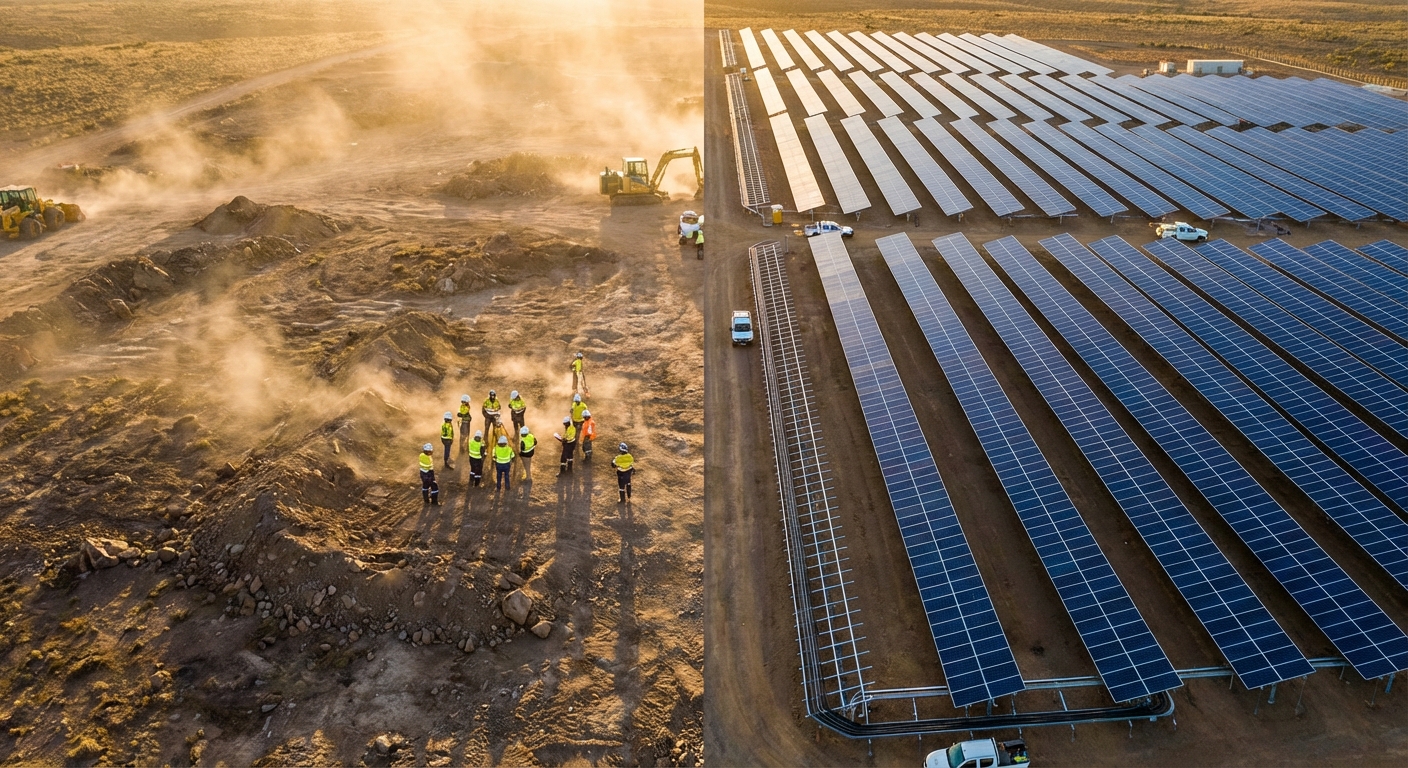
Role of Detailed Engineering Design in Project Success
Comprehensive engineering design services provide multiple layers of value:
- Risk mitigation: Identifying and addressing location-specific challenges before construction begins
- Cost optimization: Right-sizing components and structures for actual site conditions rather than over-engineering
- Performance assurance: Accurate energy modeling using location-specific data ensures realistic financial projections
- Regulatory compliance: Complete documentation packages that meet state-specific requirements
- Construction efficiency: Detailed drawings and specifications that minimize field questions and rework
For EPC companies operating across multiple states, partnering with experienced solar design India specialists provides consistency, quality, and scalability that in-house teams struggle to match.
Site-Specific 3D Modeling and Energy Yield Optimization
Modern design software India tools enable sophisticated analysis:
- 3D site modeling incorporating actual terrain, shading obstacles, and row-to-row shading
- Hour-by-hour energy simulation using location-specific weather data
- Optimization algorithms that balance energy generation, land use, and capital costs
- Sensitivity analysis for different module technologies, tilt angles, and row spacing
- Financial modeling integrated with technical design for IRR and NPV optimization
Professional design services use tools like PVsyst, Helioscope, and AutoCAD to create accurate, optimized designs that maximize project returns while ensuring technical feasibility.
Structural Engineering Tailored to Local Conditions
Regional structural engineering expertise addresses location-specific challenges:
- Wind load calculations using local basic wind speed data and terrain categories
- Seismic design appropriate for site-specific seismic zones
- Foundation design optimized for actual soil bearing capacity from geotechnical reports
- Material specifications accounting for corrosion risk in coastal or industrial areas
- Structural drawings stamped by chartered engineers for permit approvals
A team of experienced solar engineers with multi-state project portfolios brings invaluable pattern recognition, knowing which foundation types work in black cotton soil, which corrosion protection is adequate for coastal Gujarat, or how to design for cyclone zones.
PMC Services for Megawatt-Scale Projects
For large-scale projects, PMC services India (Project Management Consultancy) provide end-to-end oversight:
- Design review and optimization recommendations
- Vendor evaluation and equipment specification verification
- Construction supervision and quality assurance
- Testing and commissioning support
- Performance monitoring and O&M optimization
PMC services are particularly valuable for EPC companies entering new geographic markets where they lack local experience with regulatory processes, contractor capabilities, or regional construction practices.
Cost Optimization Through Accurate Regional Design
Professional design services reduce overall project costs through:
- Right-sizing: Avoiding over-engineering while maintaining safety margins appropriate for site conditions
- Material optimization: Specifying materials adequate for local conditions without unnecessary premiums
- Construction efficiency: Detailed drawings that reduce field errors, rework, and material waste
- Permit acceleration: Complete, accurate documentation that prevents approval delays
- Performance accuracy: Realistic energy projections that prevent financial model failures
While solar design cost typically represents 1-3% of total project capital expenditure, professional design services often reduce overall project costs by 5-10% through optimization and error prevention, a strong positive ROI.
Timeline Efficiency with Experienced Design Partners
The design timeline for solar projects varies by scale and complexity:
- Residential rooftop (1-10 kW): 3-5 days for complete design and permit documentation
- Commercial rooftop (10-100 kW): 1-2 weeks including structural assessment and detailed drawings
- Industrial/ground mount (100 kW – 1 MW): 2-4 weeks including site survey and engineering
- Utility-scale (>1 MW): 4-8 weeks for comprehensive detailed engineering design
Experienced design partners with established workflows, template libraries, and multi-engineer teams can compress these timelines while maintaining quality, critical for EPC companies with aggressive project schedules.
Choosing the Right Design Partner for Solar Installation India Projects
The success of solar installation India projects across diverse regional conditions depends heavily on selecting the right design and engineering partner. For EPC companies, this decision impacts project quality, timelines, costs, and ultimately, client satisfaction and repeat business.
Key Criteria for Selecting a Solar Design Company
When evaluating potential design partners, consider these critical factors:
- Multi-state experience: Track record of completed projects across different Indian states and climatic zones
- Technical capabilities: In-house expertise in civil, structural, and electrical engineering specific to solar
- Design capacity: Team size and bandwidth to handle multiple concurrent projects without quality compromise
- Software proficiency: Use of industry-standard design tools and simulation software
- Regulatory knowledge: Understanding of state-specific permit requirements and approval processes
- Quality certifications: ISO certifications or other quality management systems
- Communication and responsiveness: Clear communication channels and responsive project management
Importance of Multi-State Project Experience
A design partner with extensive multi-state experience brings invaluable advantages:
- Pattern recognition for regional challenges and proven solutions
- Established relationships with state regulatory authorities
- Template libraries for state-specific permit documentation
- Knowledge of local contractor capabilities and construction practices
- Understanding of regional material availability and pricing
For example, a design company that has completed projects in both coastal Gujarat and flood-prone Bihar understands the vastly different foundation requirements, material specifications, and regulatory processes, knowledge that prevents costly mistakes.
In-House Engineering Team Capabilities
The depth and breadth of a design partner’s engineering team directly impacts deliverable quality:
- Civil engineers: For site grading, drainage design, and access road planning
- Structural engineers: For foundation design, mounting structure calculations, and rooftop load assessments
- Electrical engineers: For DC/AC system design, protection systems, and grid integration
- CAD specialists: For detailed construction drawings and as-built documentation
- Energy modelers: For accurate performance simulation and financial modeling
A team of 50+ dedicated solar engineers provides the capacity to handle multiple projects simultaneously while maintaining specialized expertise in each engineering discipline.
Track Record with EPC Companies Across India
Evaluate potential design partners based on their EPC client portfolio:
- Number of EPC clients served and repeat business rate
- Total megawatts of design work completed
- Geographic distribution of completed projects
- Project types (ground mount, rooftop, carport, floating, etc.)
- Client testimonials and case studies
A design company with 750+ completed projects for EPC clients demonstrates proven ability to deliver consistent quality at scale, critical for EPC companies with growing project pipelines.
Taking the Next Step
For solar EPC companies navigating the complexities of regional solar installation India challenges, partnering with specialized design services transforms obstacles into competitive advantages. Professional engineering design ensures that every project, whether in Rajasthan’s deserts, Kerala’s monsoon zones, or West Bengal’s flood plains, is optimized for its specific environment.
Heaven Designs Private Limited brings over 628 MW of design experience across India’s diverse regions, with a team of 50+ engineers specializing in location-specific solar solutions. From comprehensive site surveys and feasibility studies to detailed engineering design and PMC services, we help EPC companies deliver successful solar installation India projects that perform as promised for 25+ years.
Whether you’re planning a rooftop installation in Mumbai, a ground-mount project in Rajasthan, or a multi-state solar portfolio, our regional expertise and systematic design approach ensure technical excellence, regulatory compliance, and optimized project economics. Get a Quick Proposal Now! to discuss your project requirements, or reach out to our team at +91 90811 00297 or service@heavendesigns.in for a detailed consultation on how specialized design services can overcome your region-specific solar installation challenges and accelerate your project success.
This blog post was written using thestacc.com