


For solar EPC companies operating across India, understanding realistic design turnaround times is critical to project success. Whether you’re planning a residential rooftop installation in Mumbai or a 50 MW ground mount project in Rajasthan, the design turnaround India timeline directly impacts your project schedule, client satisfaction, and profitability. In 2026, as India continues its aggressive push toward 500 GW of renewable energy capacity, EPCs need accurate information about design delivery timelines to stay competitive and deliver projects on schedule.
This comprehensive guide breaks down realistic solar design delivery timelines across different project types, explores state-wise variations throughout India, and provides actionable strategies for choosing design partners based on delivery speed without compromising quality. With insights drawn from over 628 MW of completed design work across 752+ projects, this guide helps you plan project schedules that account for the actual design phase duration across different regions of India.
Understanding Solar Design Turnaround India: What EPCs Need to Know
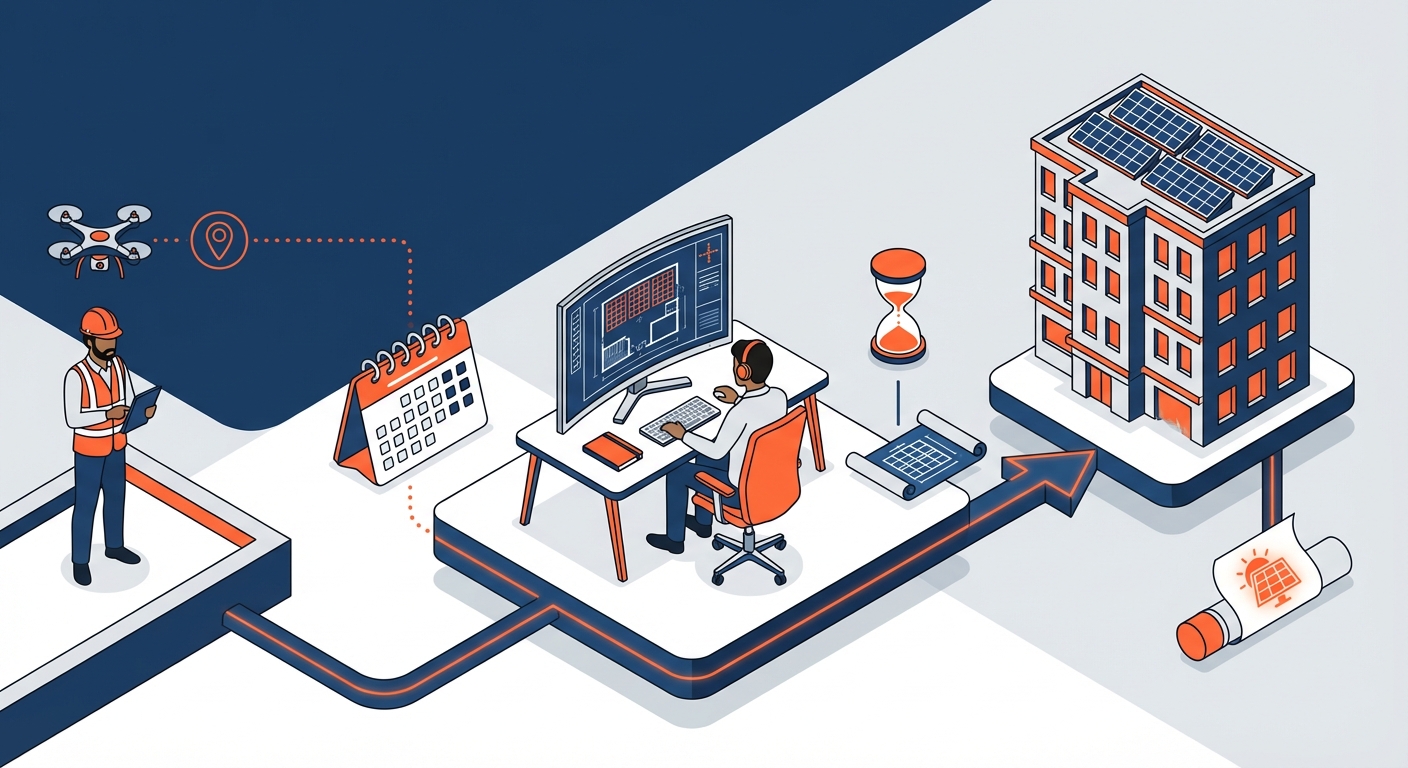
Design turnaround time refers to the complete duration from initial project information submission to final design deliverable handover. For solar projects in India, this encompasses site survey coordination, preliminary design development, detailed engineering documentation, structural calculations, permit-ready drawings, and final quality review. Understanding this timeline is fundamental to accurate project planning.
The importance of realistic design turnaround India expectations cannot be overstated. When EPCs underestimate design phase duration, the consequences ripple through the entire project: delayed procurement, missed installation weather windows, extended client commitments, and reduced profitability. Conversely, building appropriate buffer time into schedules based on actual turnaround data enables smooth project execution.
In 2026, the Indian solar design landscape has matured significantly. Professional design companies now employ advanced solar design software India tools, maintain larger engineering teams, and have established processes that deliver consistent turnaround times. However, significant variations still exist based on project complexity, location, and seasonal factors unique to the Indian market.
The impact on overall project delivery is substantial. Design phase delays account for approximately 15-25% of total project schedule overruns in the Indian solar EPC sector. For a typical 10 MW commercial project with a 90-day execution timeline, even a 7-day design delay can push back procurement, affect labor scheduling, and potentially miss optimal installation weather windows. This makes accurate design turnaround India planning a competitive advantage for forward-thinking EPCs.
Standard Design Turnaround India Timelines by Project Type
Solar project design timelines vary dramatically based on project scale, complexity, and deliverable requirements. Understanding these standard timelines helps EPCs set realistic expectations with clients and plan project schedules effectively. The following benchmarks represent typical turnaround times for quality design work in India during 2026, based on industry standards and actual project data.
Residential Rooftop Solar Design Turnaround
For residential rooftop solar installations ranging from 1 kW to 10 kW, the typical design turnaround India timeline is 2-5 business days for standard projects. This rapid turnaround is achievable because residential projects generally involve straightforward layouts, standardized mounting systems, and well-established permit design requirements across most Indian states.
The residential design process includes site survey data collection (often completed within 24 hours in urban areas), preliminary layout development, structural load calculations for residential roof types common in India (RCC, tile, metal sheet), electrical single-line diagrams, and permit-ready drawings compliant with local electricity board requirements. For states like Gujarat, Maharashtra, and Karnataka with streamlined residential solar policies, permit design documentation follows established templates that accelerate delivery.
However, certain factors can extend residential design timelines to 7-10 days. Complex roof geometries, shading from nearby structures, structural concerns with older buildings, or special permit requirements in certain municipalities may require additional engineering analysis. EPCs should communicate site complexity upfront to receive accurate timeline estimates from their design partners.
Commercial and Industrial Solar Design Timeline
Commercial and industrial rooftop solar projects in the 10 kW to 500 kW range typically require 7-14 business days for complete design turnaround India delivery. These projects involve greater complexity than residential installations, including detailed structural engineering for commercial building types, higher electrical system voltages, and more comprehensive permit documentation.
The commercial design process encompasses comprehensive site survey including structural assessment, detailed 3D modeling of complex roof layouts, structural engineering calculations for various commercial roof types (pre-engineered buildings, RCC structures, industrial sheds), civil engineering for walkways and cable routing, electrical design including inverter placement and AC/DC cable schedules, and complete permit design packages meeting commercial project requirements.
Projects at the upper end of this range (300-500 kW) or those involving ground-mounted components alongside rooftop arrays may extend toward the 14-day timeline. Industrial facilities with operational constraints, multiple roof levels, or specialized structural requirements also require additional engineering time. The investment in thorough commercial design pays dividends through optimized system performance and smooth permit approval processes.
MW-Scale Ground Mount Design Turnaround
For MW-scale ground mount solar projects ranging from 1 MW to 50 MW, comprehensive detailed engineering design requires 15-30 business days depending on project scale and complexity. These utility-scale projects demand extensive engineering documentation, civil and structural engineering expertise, and coordination across multiple design disciplines.
The MW-scale design process includes topographic survey integration, geotechnical analysis for foundation design, detailed electrical design with multiple inverter blocks, civil engineering for site grading and drainage, structural engineering for mounting systems and tracker foundations (if applicable), ground mount India specific considerations for different terrain types, and comprehensive project management consultancy documentation. Projects in the 20-50 MW range typically require the full 30-day timeline to deliver complete design packages.
Many EPCs also engage design partners for PMC services India during the execution phase, which extends the relationship beyond initial design delivery. The detailed engineering design phase establishes the foundation for successful project execution, making adequate timeline allocation essential for quality outcomes.
State-Wise Design Turnaround India Variations and Regional Factors
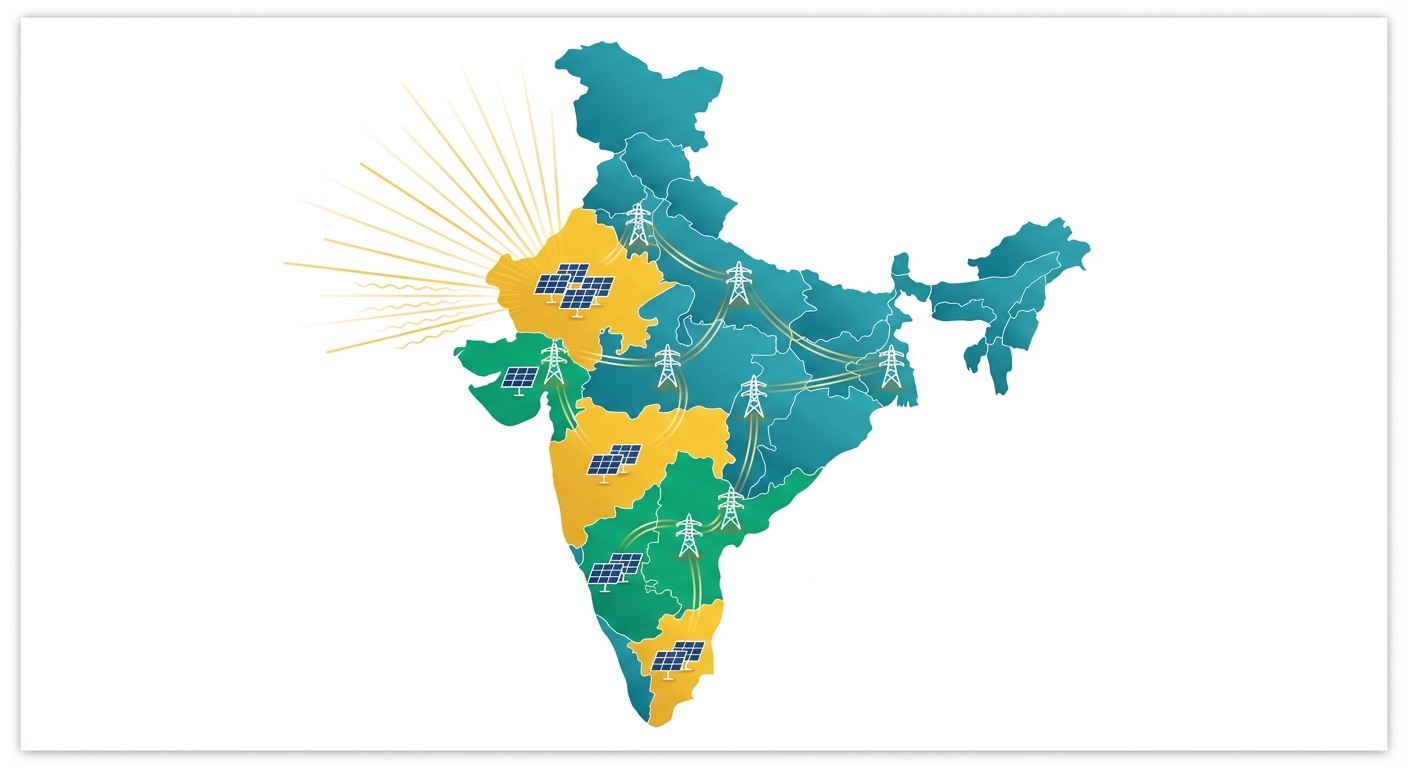
India’s vast geographic and regulatory diversity creates significant variations in solar design turnaround times across different states. Understanding these regional factors helps EPCs plan projects more accurately and choose design partners with appropriate local expertise.
Gujarat, Rajasthan, and Maharashtra consistently demonstrate the fastest design turnaround India timelines. These states benefit from mature solar markets, streamlined permit processes, well-established electricity board requirements, and abundant local engineering talent. Design partners familiar with these states can often deliver at the lower end of standard timeline ranges. Gujarat’s progressive solar policies and Rajasthan’s extensive utility-scale project experience have created standardized design approaches that accelerate delivery.
Tamil Nadu, Karnataka, and Andhra Pradesh represent moderate timeline states with well-developed solar sectors but slightly more complex regulatory environments. Design turnaround in these states typically falls in the middle of standard ranges. Karnataka’s BESCOM requirements for Bangalore projects, Tamil Nadu’s TANGEDCO specifications, and Andhra Pradesh’s evolving solar policies each introduce unique documentation requirements that experienced design partners navigate efficiently.
North and East India states including Uttar Pradesh, Bihar, West Bengal, and northeastern states may experience extended design timelines due to less mature solar markets, varying permit requirements, and site accessibility challenges. EPCs planning projects in these regions should add 20-30% buffer time to standard design turnaround India estimates and ensure their design partner has specific experience in these markets.
State-specific permit requirements significantly impact design timelines. Some states require extensive documentation for net metering approvals, while others have streamlined single-window clearance systems. Design partners with multi-state experience across India can navigate these variations efficiently, while those focused on single-state markets may struggle with unfamiliar requirements.
Regional site survey challenges also affect turnaround times. Urban areas in major metros typically offer easy site access and quick survey completion, while rural or remote locations may require additional travel time, local coordination, and multiple site visits. Monsoon-affected regions, mountainous terrain, and areas with limited transportation infrastructure all extend the site survey phase, which directly impacts overall design delivery timelines.
Key Factors Affecting Design Turnaround India in 2026
Multiple interconnected factors influence solar design delivery timelines across India. Understanding these variables helps EPCs identify potential delays early and work proactively with design partners to maintain project schedules.
Site Complexity and Accessibility Challenges
Site characteristics fundamentally impact design turnaround India timelines. Urban rooftop projects in accessible locations with straightforward layouts enable rapid design completion, while complex sites require extended engineering analysis. Factors that increase design time include irregular roof shapes, significant shading from surrounding structures, multiple roof levels requiring interconnection, existing rooftop equipment requiring layout optimization, and structural concerns with older buildings.
Ground mount projects face different complexity factors. Sloped terrain requires extensive civil engineering for grading and drainage design, rocky soil conditions affect foundation design approaches, sites with high water tables need specialized foundation solutions, and locations with environmental sensitivities require careful layout planning. Remote site locations across India’s diverse geography can add 3-7 days to design timelines simply due to site survey logistics and travel requirements.
The accessibility factor is particularly relevant for projects in rural India, where site survey teams may need to coordinate with local authorities, navigate limited transportation infrastructure, and account for seasonal road conditions. Design partners with pan-India site survey capabilities and local networks can mitigate these challenges more effectively than those with limited geographic reach.
Regulatory and Permit Requirements
Permit design requirements vary significantly across Indian states and even between different electricity distribution companies within the same state. Understanding these regulatory nuances is critical for accurate design turnaround India planning. States with standardized net metering policies and clear technical specifications enable faster permit design preparation, while those with evolving or complex requirements extend design timelines.
Municipal building permit requirements add another layer of complexity, particularly for commercial and industrial projects. Some municipalities require extensive structural engineering documentation, fire safety plans, and building code compliance certificates, while others have minimal requirements. Design partners experienced in specific jurisdictions can navigate these requirements efficiently, while those unfamiliar with local regulations may require multiple revision cycles that extend delivery timelines.
The documentation standards across India continue to evolve as the solar sector matures. In 2026, most states have adopted clearer technical standards, but variations persist in drawing formats, calculation methodologies, and approval processes. EPCs benefit from working with design partners who maintain current knowledge of regulatory requirements across multiple Indian states and can adapt deliverables to meet specific jurisdiction needs.
Seasonal Variations in Design Turnaround India
India’s distinct seasonal patterns create predictable variations in solar design delivery timelines throughout the year. Understanding these seasonal factors enables better project planning and realistic schedule development.
The monsoon season (June through September) significantly impacts design turnaround India timelines, particularly for projects requiring site surveys. Heavy rainfall across most of India makes site access challenging, delays topographic surveys for ground mount projects, and complicates structural assessments for rooftop installations. EPCs planning projects during monsoon months should expect site survey delays of 5-10 days beyond normal timelines and consider conducting surveys before monsoon onset when possible.
The summer peak season (March through May) represents the busiest period for solar project development in India. High demand for design services during these months can extend turnaround times as design companies manage increased project volumes. EPCs initiating projects during peak season should engage design partners early and expect timelines at the upper end of standard ranges. Design companies with larger engineering teams and robust project management systems maintain more consistent delivery during peak periods.
The post-monsoon optimal period (October through February) offers the most favorable conditions for solar design work in India. Clear weather enables efficient site surveys, moderate temperatures facilitate field work, and balanced project demand allows design companies to deliver at the lower end of timeline ranges. EPCs with flexibility in project scheduling should consider initiating design work during this optimal window.
Festival seasons across Indian states also impact design timelines. Major festivals like Diwali, Durga Puja, Pongal, and regional celebrations can affect design partner availability and extend delivery by 3-5 days. Proactive communication with design partners about project timelines relative to festival schedules helps avoid unexpected delays.
Planning project schedules around these seasonal factors is a hallmark of experienced EPCs. Building appropriate buffers for monsoon delays, engaging design partners early during peak season, and leveraging optimal periods for complex projects all contribute to smoother project execution and on-time delivery.
How to Accelerate Design Turnaround India for Your Solar Projects

While standard design timelines provide useful benchmarks, EPCs can take proactive steps to accelerate design turnaround India for their projects without compromising quality. These strategies focus on improving information flow, leveraging preliminary analysis, and establishing efficient collaboration with design partners.
Providing complete site information upfront is the single most effective way to accelerate design delivery. When EPCs submit projects with comprehensive site details, clear project requirements, accurate site dimensions, quality photographs from multiple angles, existing electrical infrastructure information, and client-specific preferences, design partners can begin work immediately without waiting for clarifications. Incomplete information inevitably extends timelines as design teams pause work to request additional details.
Investing in a preliminary feasibility study India analysis before formal design engagement can significantly accelerate subsequent detailed design work. Pre-design feasibility studies identify potential challenges early, validate site suitability, establish realistic system sizing expectations, and provide preliminary layouts that inform detailed design. This upfront investment typically reduces detailed design turnaround by 20-30% while improving overall design quality.
Establishing clear communication protocols with design partners prevents delays caused by miscommunication or slow response times. Designating a single point of contact on both sides, establishing expected response times for queries, scheduling regular progress check-ins for complex projects, and using collaborative platforms for document sharing all contribute to smoother workflows and faster delivery.
For MW-scale projects, parallel processing of design phases can compress overall timelines. Rather than completing each design discipline sequentially, experienced design partners can work on electrical, civil, and structural engineering concurrently once preliminary layouts are established. This approach requires sophisticated project management but can reduce MW-scale design turnaround India timelines by 15-25%.
Choosing experienced design partners with local expertise across India is fundamental to consistent turnaround times. Design companies with established site survey networks, familiarity with state-specific permit requirements, and proven track records in your target markets deliver more predictable timelines than those learning on your projects. The investment in partnering with experienced firms pays dividends through reliable delivery and fewer revision cycles.
Leveraging advanced design software India capabilities also accelerates delivery. Modern solar design platforms enable rapid layout optimization, automated electrical calculations, integrated structural analysis, and streamlined drawing production. Design partners who invest in cutting-edge technology can deliver faster turnaround times while maintaining accuracy and quality.
Choosing the Right Design Partner Based on Turnaround Time
Selecting a design partner involves balancing multiple factors, with turnaround time being a critical consideration alongside quality, cost, and service scope. The right partner delivers consistent, predictable timelines without compromising engineering accuracy or permit compliance.
Evaluating design partner capacity and team size provides insight into their ability to handle your project volume and deliver consistent turnaround times. Design companies with larger engineering teams (50+ engineers, for example) can manage multiple concurrent projects, accommodate urgent requests, and maintain delivery schedules during peak seasons. Smaller firms may offer personalized service but struggle with capacity constraints during busy periods.
A proven track record of on-time delivery in India is the most reliable indicator of future performance. Request references from existing clients, ask about typical turnaround times for projects similar to yours, inquire about their on-time delivery percentage, and understand how they handle timeline commitments. Design partners who have completed hundreds of projects across India (such as those with 752+ completed projects) demonstrate the systems and experience necessary for reliable delivery.
Technology infrastructure and design software capabilities directly impact turnaround times. Ask potential design partners about their software platforms, whether they use automated design tools, how they manage project workflows, and what quality control processes they employ. Advanced technology enables faster delivery while maintaining accuracy.
Geographic coverage and site survey capabilities across India are essential for consistent turnaround times. Design partners with established site survey networks in your target states can complete surveys quickly and accurately, while those requiring third-party survey coordination may experience delays. For EPCs operating across multiple Indian states, partners with pan-India capabilities offer significant advantages.
The critical balance between speed and quality should guide your selection. Red flags include unrealistic timeline promises that seem too good to be true. A design partner promising 2-day turnaround for a 10 MW ground mount project is either cutting corners on engineering analysis or setting expectations they cannot meet. Realistic timelines based on project complexity demonstrate professionalism and reliability.
Essential questions to ask potential design partners include: What is your typical turnaround time for projects of this type and scale? How many similar projects have you completed in this state? What is your on-time delivery percentage? How do you handle urgent projects or timeline changes? What information do you need from us to meet the proposed timeline? How do you communicate progress during the design phase? These questions reveal whether a partner can deliver on their commitments.
Design Turnaround India Best Practices for EPC Companies
Successful EPCs implement systematic approaches to design phase management that ensure consistent project delivery. These best practices reflect lessons learned from thousands of solar projects across India and help EPCs optimize their design partnerships.
Building buffer time into project schedules is fundamental to managing design phase uncertainty. Rather than using minimum turnaround times in project schedules, experienced EPCs add 20-30% buffer to account for potential delays, revision cycles, and unforeseen complications. This buffer prevents design delays from cascading into procurement and installation phases.
Establishing long-term design partnerships rather than project-by-project vendor selection yields significant benefits. Long-term partners develop deep understanding of your quality standards, learn your preferred design approaches, streamline communication processes, and often provide priority service during peak periods. The relationship investment pays dividends through more predictable design turnaround India timelines and fewer quality issues.
Creating standardized information templates for project submissions accelerates design initiation. Develop checklists of required site information, standardized formats for site photographs, templates for client requirement documentation, and clear specifications for deliverable expectations. These templates ensure complete information submission and eliminate back-and-forth clarification delays.
Setting realistic client expectations about design phase duration prevents dissatisfaction and maintains trust. When EPCs promise clients unrealistic project timelines that don’t account for proper design duration, the result is rushed work, quality compromises, or broken commitments. Educating clients about realistic design turnaround India timelines and the value of thorough engineering establishes appropriate expectations.
Monitoring design phase milestones enables proactive management rather than reactive problem-solving. For complex projects, establish interim milestones such as preliminary layout approval, structural calculations completion, and permit drawing review. Regular milestone tracking identifies potential delays early when corrective action is still possible.
Continuous improvement through feedback loops with design partners optimizes future project delivery. After project completion, conduct brief reviews discussing what went well, what caused delays, and how processes could improve. Design partners who embrace this feedback become more effective collaborators over time, delivering better turnaround times and higher quality work.
Real-World Design Turnaround India Benchmarks in 2026
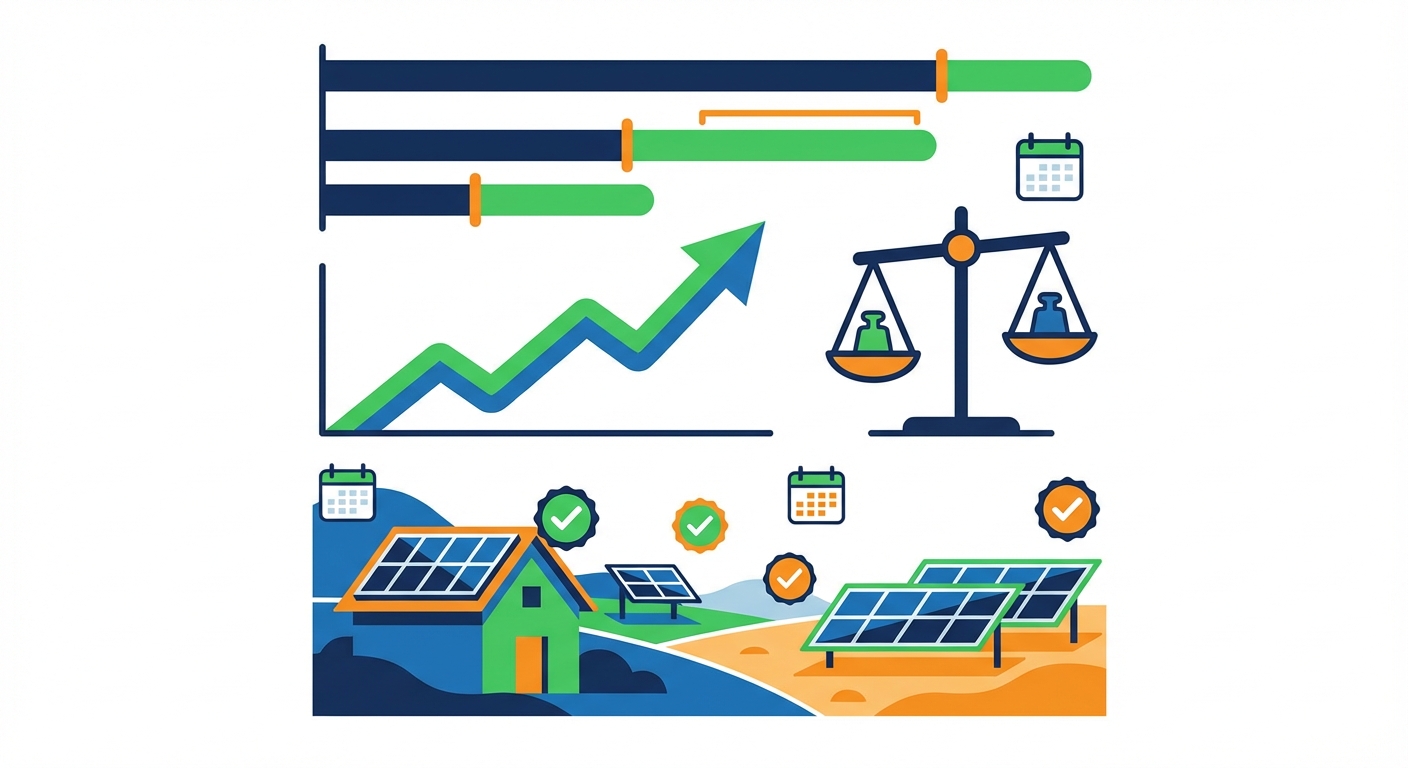
Understanding industry-wide benchmarks for design turnaround India helps EPCs evaluate their own design partnerships and set appropriate expectations. These benchmarks reflect actual project data from the Indian solar sector in 2026 and provide realistic planning parameters.
Industry average turnaround times by project type have stabilized as the Indian solar design sector has matured. Residential projects (1-10 kW) average 3-4 business days, commercial projects (10-500 kW) average 10-12 business days, MW-scale ground mount projects (1-10 MW) average 20-25 business days, and large utility-scale projects (10-50 MW) average 25-35 business days. These averages account for standard complexity projects in established solar markets like Gujarat, Maharashtra, and Rajasthan.
Many design partners now offer fast-track versus standard delivery options to accommodate varying EPC needs. Fast-track services typically deliver 30-40% faster than standard timelines but may command premium pricing of 15-25% above standard rates. Standard delivery provides the best balance of timeline, quality, and cost for most projects. EPCs should reserve fast-track services for genuinely urgent situations rather than using expedited delivery as standard practice.
The quality versus speed trade-off is real and must be carefully managed. Design work rushed beyond reasonable timelines inevitably suffers from reduced quality control, increased error rates, and higher revision cycles. The most successful EPCs prioritize quality and realistic timelines over artificially compressed schedules that create downstream problems during permitting and installation.
Cost implications of expedited design services vary by provider and project type. Some design partners offer flexible pricing based on timeline requirements, while others maintain fixed pricing with standard delivery commitments. Understanding these cost structures helps EPCs make informed decisions about when expedited delivery justifies additional investment.
Insights from 628+ MW of completed projects across 752+ solar installations reveal that realistic timeline planning correlates strongly with overall project success. Projects with adequate design phase duration experience fewer permit rejections, reduced field modifications during installation, lower overall project costs, and higher client satisfaction. The pressure to compress design timelines often proves counterproductive when measured against total project outcomes.
The most successful EPCs in India’s competitive solar market recognize that design turnaround India is not simply about speed but about predictable, reliable delivery of quality engineering work. They choose design partners based on consistent performance rather than aggressive timeline promises, build appropriate buffers into project schedules, and invest in long-term partnerships that deliver value across multiple projects.
Planning Your Next Solar Project with Realistic Design Timelines
As India’s solar sector continues its rapid growth toward ambitious renewable energy targets, professional design services become increasingly critical to project success. Understanding realistic design turnaround India timelines, accounting for state-wise variations, and choosing experienced design partners positions your EPC company for consistent project delivery and satisfied clients.
The design phase establishes the foundation for every solar project. Rushing this critical phase to meet artificial timeline pressures creates problems that echo through permitting, procurement, and installation. Conversely, partnering with experienced design firms who deliver predictable turnaround times enables smooth project execution and optimal outcomes.
Whether you’re planning residential rooftop installations across urban India, commercial projects for industrial clients, or MW-scale ground mount developments, accurate design timeline planning is essential. The strategies outlined in this guide provide a framework for realistic schedule development, effective design partner selection, and proactive timeline management.
For EPCs seeking reliable design turnaround India delivery backed by proven experience across 628+ MW of completed projects, Heaven Designs offers comprehensive solar engineering design services with predictable timelines and consistent quality. Our team of 50+ skilled engineers delivers accurate, cost-effective solar project designs across residential, commercial, and MW-scale projects throughout India and internationally.
Ready to plan your next solar project with a design partner who understands realistic turnaround times and delivers on commitments? Get a Quick Proposal Now! to discuss your project requirements and receive accurate timeline estimates based on your specific needs. You can also reach our team directly at +91 90811 00297 or service@heavendesigns.in to start the conversation about how professional design services with predictable design turnaround India timelines can accelerate your solar project success in 2026.
This blog post was written using thestacc.com