


An EPC project manager in Pune once described design revisions as “the part of the project everyone knows is coming but nobody plans for.” His team had locked in a procurement schedule for a 2 MW commercial rooftop project, only to receive a revised structural report three weeks later that required a complete mounting layout change. The result: a six-week delay, a renegotiated module delivery window, and a client relationship under serious strain. The design itself wasn’t wrong — the process around it was.
Design revisions India solar projects are not exceptions. They are a built-in feature of the engineering process. What separates high-performing EPC companies from struggling ones is not whether they encounter revisions — it’s how well they anticipate, manage, and absorb them. This guide covers everything solar EPCs need to know: what triggers revisions, how to classify them, what timelines to expect, how to control costs, and how to build communication systems that keep projects moving forward.
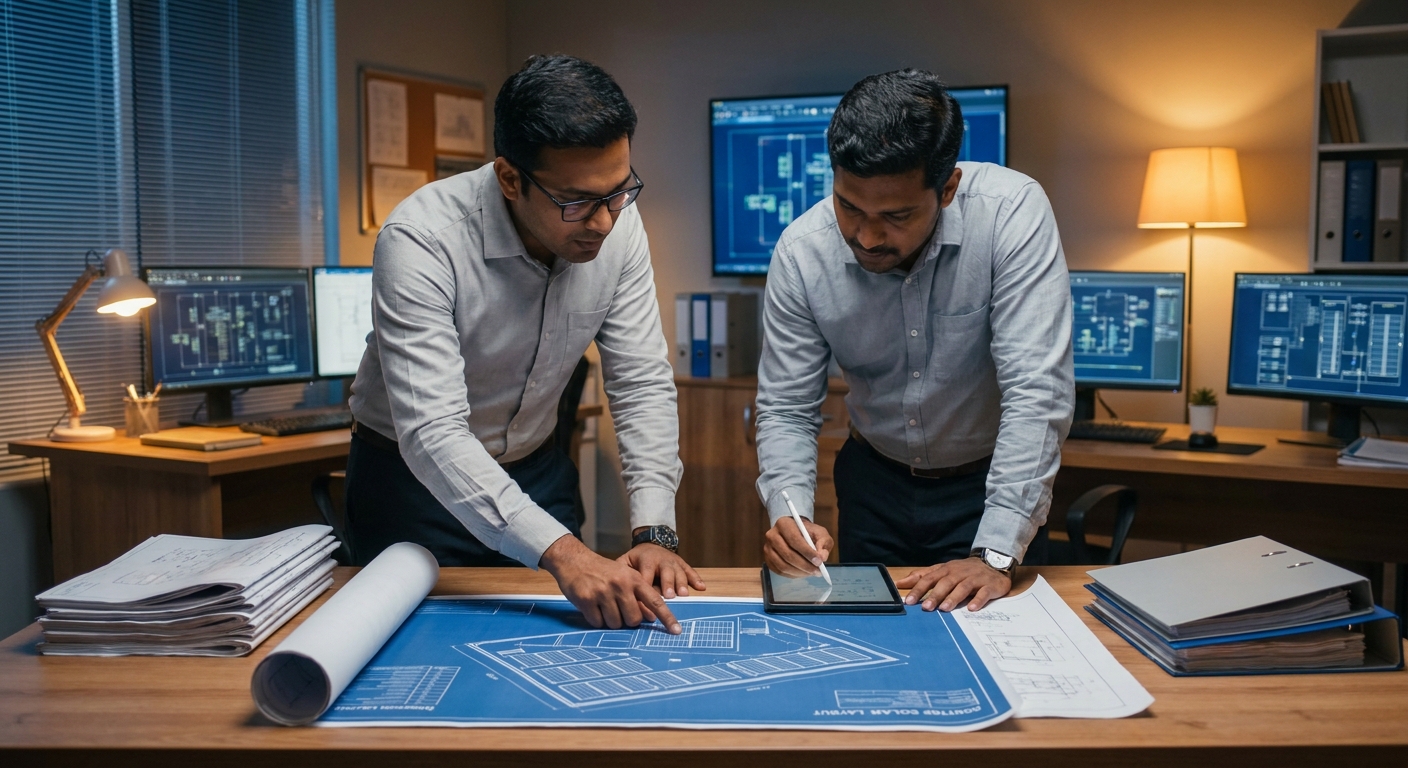
Why Design Revisions Catch Solar EPCs Off Guard
Solar design is an iterative process by nature. A project moves from preliminary assumptions to detailed engineering, and at each stage, new information surfaces. Site surveys reveal conditions that differ from satellite data. Clients change module preferences after procurement discussions. DISCOMs update interconnection requirements mid-project. Each of these events can trigger a design revision — and none of them are unusual.
The problem is not the revisions themselves. The problem is that many EPC companies treat the initial design delivery as a finished product rather than a working document. When a revision request arrives, it feels like a disruption rather than a normal part of the workflow. This mindset leads to rushed responses, poor documentation, and downstream errors that compound into costly rework.
Understanding the iterative nature of solar design India projects is the first step toward managing revisions effectively. A well-structured design process includes planned review checkpoints, defined revision rounds, and clear escalation paths. EPCs that build these structures into their project plans absorb revisions without losing momentum. Those that don’t often find themselves reacting to each change as a crisis.
The cost of a revision caught at the design stage is a fraction of the cost of the same error caught during installation. Proactive revision management is one of the highest-ROI investments an EPC company can make.
For a deeper look at how design timelines and costs interact across project phases, see our guide on Solar Design Timeline & Cost: How Project Duration Impacts Budget.
What Triggers Design Revisions India: The 7 Most Common Causes
Knowing what causes design revisions India projects face helps EPCs anticipate them before they arrive. Here are the seven most frequent triggers observed across residential, commercial, and MW-scale solar projects in India.
1. Site Survey Discrepancies
Preliminary designs are often based on satellite imagery, client-supplied measurements, or desktop assessments. When a physical site survey India reveals different roof dimensions, shading obstructions, structural limitations, or soil conditions, the design must be updated to reflect reality. This is the single most common revision trigger across all project types.
2. Client Scope Changes
Clients frequently adjust system capacity, preferred equipment brands, or installation areas after the initial design brief is submitted. A client who initially requested a 500 kW system may expand to 750 kW after reviewing energy consumption data. These changes require layout revisions, updated single-line diagrams, and revised BOM documentation.
3. Regulatory and Permit Requirement Changes
India’s solar regulatory landscape varies significantly by state and is subject to periodic updates. DISCOM interconnection requirements, net metering rules, and structural load standards can change between the design kickoff and permit submission. EPCs working across multiple states must track these changes and ensure their permit design documentation stays current.
4. Structural or Civil Engineering Findings
Post-survey structural assessments sometimes reveal that a roof or ground surface cannot support the originally planned mounting system. This is especially common in older industrial buildings and sites with variable soil bearing capacity. Structural engineering India findings at this stage can require a full mounting system redesign.
5. Equipment Substitutions
Module availability, pricing shifts, or client preferences can lead to equipment changes after the initial design is complete. Switching from one module brand to another with different dimensions or power ratings requires layout recalculation, updated string sizing, and revised electrical drawings.
6. Grid Interconnection and DISCOM Updates
DISCOM requirements for protection relays, metering configurations, and single-line diagram formats differ across states and utilities. When a DISCOM requests changes to the interconnection design during the approval process, the engineering documentation must be revised accordingly.
7. Errors or Omissions in the Original Design Brief
Incomplete or inaccurate information in the initial design brief, missing load data, incorrect roof dimensions, or unspecified equipment preferences, leads to designs that don’t match project requirements. These revisions are preventable with a thorough upfront briefing process.
Types of Design Revisions India EPCs Encounter
Not all design revisions India projects require are equal in scope or effort. Understanding how revisions are classified helps EPCs communicate more clearly with their design partner and set accurate expectations for turnaround time and cost.
Minor Revisions
Minor revisions involve changes to drawing annotations, title block updates, label corrections, or formatting adjustments required by a DISCOM or client. These typically do not affect the engineering calculations and can usually be completed within one to two business days. Most design agreements include a defined number of minor revision rounds at no additional cost.
Moderate Revisions
Moderate revisions involve layout changes, string reconfiguration, inverter re-sizing, or BOM updates that require engineering recalculation but do not fundamentally alter the project scope. These revisions typically take three to five business days and may or may not be included in the original scope depending on the agreement structure.
Major Revisions
Major revisions involve a significant change to the project scope, system capacity, site conditions, or structural approach. A full redesign triggered by a structural report, a capacity increase of more than 20%, or a complete equipment substitution falls into this category. Major revisions are typically treated as a new scope item and priced accordingly.
Establishing clear definitions for each revision tier in your design agreement before work begins prevents disputes and keeps the project moving. Ask your solar engineer or design partner to define these tiers explicitly in the project contract.
Design Revision Timelines: What to Expect at Each Project Scale
One of the most common questions EPC project managers ask is: “How long will this revision take?” The honest answer depends on the revision type, the project scale, and the design partner’s current workload. Here are realistic benchmarks for design revisions India projects at different scales.
Residential Rooftop (1 kW to 100 kW)
Minor revisions on residential projects typically turn around in one to two business days. Moderate revisions requiring layout changes or equipment substitutions take two to four business days. Because residential designs are less complex, even major revisions rarely exceed five to seven business days when the revised brief is submitted promptly and completely.
Commercial and Industrial (100 kW to 1 MW)
At this scale, minor revisions take two to three business days. Moderate revisions involving string reconfiguration or BOM updates take four to six business days. Major revisions, such as a full layout redesign following a structural report, can take seven to fourteen business days depending on the complexity of the structural and electrical changes required.
MW-Scale Ground Mount Projects
MW-scale solar design India projects involve significantly more documentation, including civil drawings, structural calculations, detailed electrical schematics, and protection coordination studies. Minor revisions take three to five business days. Moderate revisions take one to two weeks. Major revisions at this scale can extend to three to four weeks, particularly when structural engineering recalculations are involved.
Building Revision Windows Into Your Schedule
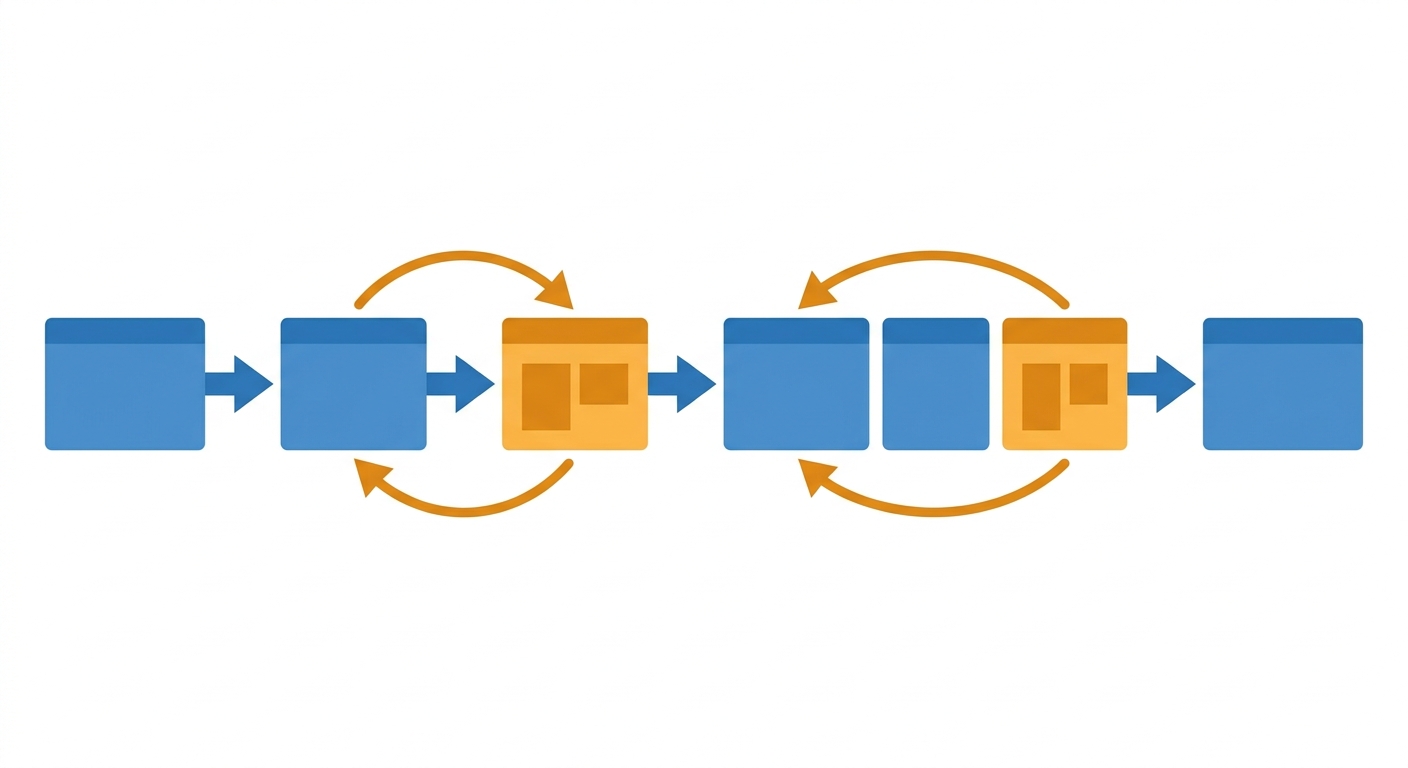
The most effective approach is to build explicit revision windows into your project schedule rather than treating them as unplanned events. A well-structured project plan for a 1 MW commercial project might allocate one week for the first design review and revision cycle, and three to five days for a second review cycle before final approval. This approach keeps procurement and construction timelines intact even when revisions are needed.
For a comprehensive look at how design timeline planning affects overall project budgets, our article on Solar Design Timeline & Cost: How Project Duration Impacts Budget provides detailed phase-by-phase guidance.
Cost Implications of Design Revisions India: How to Budget Accurately
The engineering cost impact of design revisions is one of the most misunderstood aspects of solar project budgeting. Many EPCs underestimate revision costs because they focus only on the direct fee charged by the design partner. The true cost includes internal project management time, procurement delays, and in some cases, rework on already-completed installation work.
How Revision Costs Are Structured
Most solar design agreements include a defined number of revision rounds within the base scope. Revisions beyond this threshold are typically billed at an hourly rate or as a fixed fee per revision round. The specific structure varies by design partner and project type. Understanding this structure before signing the design agreement is essential for accurate budgeting.
The Cost of Late-Stage Revisions
A revision requested during the schematic design phase costs significantly less than the same change requested after detailed engineering is complete. When a layout change is requested after single-line diagrams, protection coordination studies, and structural drawings have all been finalized, every document in the package must be updated. The solar design cost of a late-stage revision can be three to five times higher than the same change made earlier in the process.
Scope Creep and Its Impact on Engineering Costs
Scope creep, the gradual accumulation of small changes that collectively represent a significant shift from the original brief, is one of the most common causes of budget overruns in solar design projects. Each individual change may seem minor, but when five or six small changes arrive across multiple revision rounds, the cumulative engineering effort can exceed the original scope by 30% to 50%.
The most effective way to control scope creep is to freeze the project scope formally before detailed design begins. Any changes after the scope freeze should be documented as change orders and priced accordingly. This protects both the EPC and the design partner and creates a clear audit trail for project accounting.
Strategies to Minimize Revision-Related Cost Overruns
- Complete a thorough site survey India before submitting the design brief
- Confirm equipment selections with procurement before design kickoff
- Obtain client sign-off on system capacity and layout before detailed design begins
- Consolidate revision requests into batches rather than submitting changes one at a time
- Use milestone-based review checkpoints to catch issues before they compound
Version Control Best Practices for Solar Design Projects
Version control is one of the most overlooked aspects of design revisions India project management. When multiple stakeholders, EPCs, clients, DISCOMs, structural engineers, and installation teams, are working from different versions of the same drawing set, errors are inevitable. A disciplined version control system prevents the “wrong drawing on site” problem that causes costly installation rework.
Drawing Revision Numbering Systems
The most widely used convention in Indian solar projects uses a letter-based revision system: Rev A, Rev B, Rev C for preliminary revisions, and Rev 0, Rev 1, Rev 2 for issued-for-construction drawings. Each revision should include a revision date, a brief description of what changed, and the name of the engineer who made the change. This information is typically recorded in the title block of each drawing.
Cloud-Based Document Management
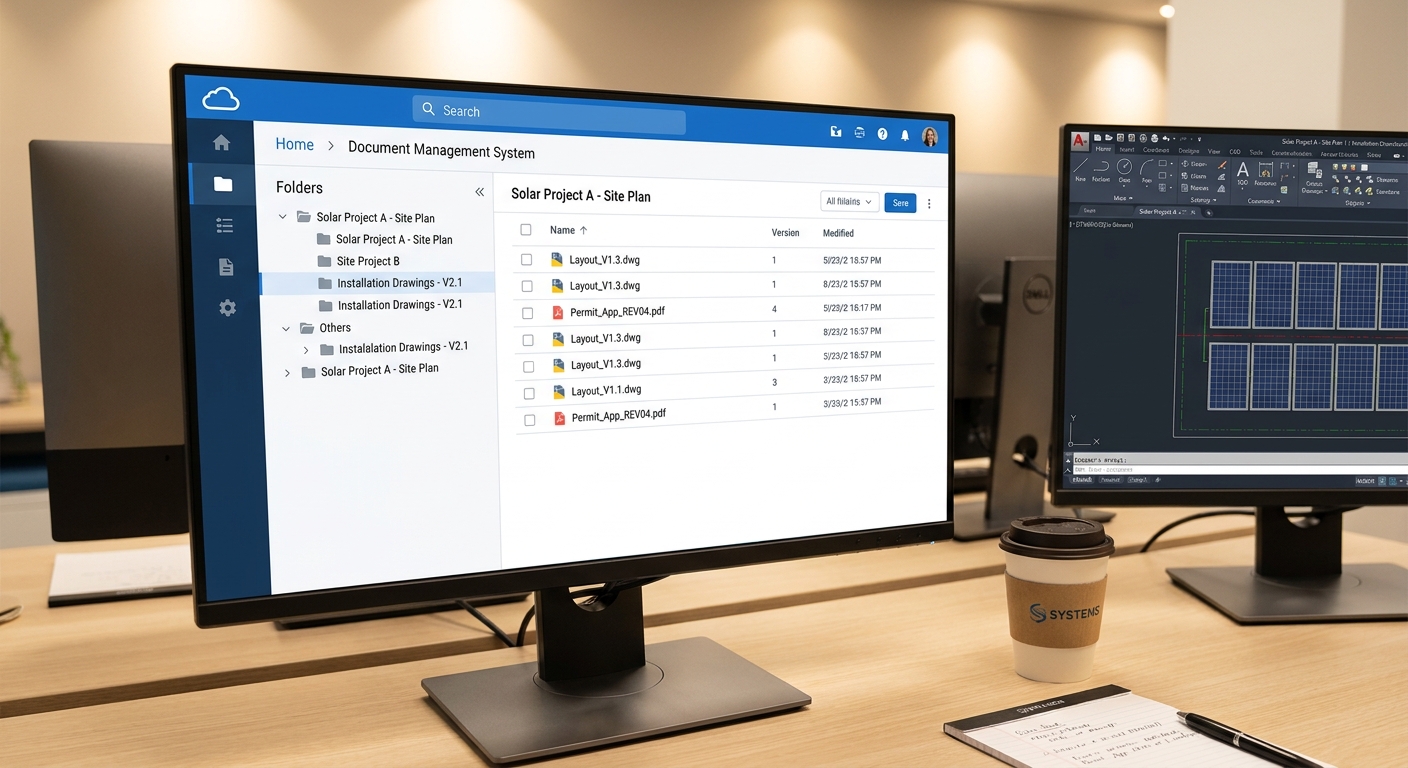
Storing design files on a shared cloud platform, rather than exchanging them via email, ensures that all stakeholders always have access to the current version. Platforms like Google Drive, SharePoint, or project-specific document management systems allow EPCs to set permissions, track access, and maintain a complete revision history. This is particularly important for MW-scale projects where the drawing package may include 50 or more individual documents.
Approval Workflows and Sign-Off Protocols
Every revision should go through a defined approval workflow before it is issued for construction. This typically involves a technical review by the EPC’s engineering lead, a client sign-off for scope-related changes, and a final check by the design partner before the revised drawing is issued. Skipping steps in this workflow to save time is one of the most common causes of construction errors in solar projects.
Superseding Old Versions
When a new revision is issued, the previous version should be clearly marked as superseded and removed from active circulation. This sounds obvious, but in practice, many EPC teams continue to reference old drawings because they are more familiar with them or because the new version hasn’t been distributed to all team members. A formal distribution list for each drawing revision prevents this problem.
Communication Protocols Between EPCs and Design Partners
The quality of communication between an EPC and its design partner has a direct impact on revision efficiency. Vague revision requests lead to misinterpretations, additional back-and-forth, and extended turnaround times. Clear, structured communication protocols reduce revision cycles and keep projects on schedule.

Single Point of Contact
Designate a single point of contact on both the EPC side and the design partner side for all revision communications. When multiple team members submit revision requests independently, the design partner receives conflicting instructions and the EPC loses visibility into what changes are in progress. A single point of contact on each side creates accountability and prevents duplication.
How to Write a Clear Revision Request
A well-written revision request includes the following elements:
- Drawing reference: The specific drawing number and current revision being changed
- Change description: A precise description of what needs to change and why
- Supporting information: Any new data, measurements, or equipment specifications that inform the change
- Priority level: Whether the revision is blocking other work or can be addressed in the next revision cycle
- Required delivery date: A realistic deadline based on the project schedule
Batching Revision Requests
One of the most effective ways to reduce revision turnaround time is to batch multiple small changes into a single revision request rather than submitting them one at a time. Each individual revision request requires the design partner to open the file, make the change, update the title block, and reissue the drawing. Batching five changes into one request takes roughly the same time as processing one change individually, saving significant time across the project lifecycle.
Managing Feedback Loops
Revision feedback loops, where a revised drawing is returned with additional comments, which trigger another revision, which generates more comments, are one of the most common causes of project delays. The best way to break this cycle is to conduct a thorough review of each revision before submitting feedback, rather than reviewing drawings incrementally and sending comments as they arise. A structured review meeting with all stakeholders present is more efficient than asynchronous email exchanges.
Escalation Paths
Define escalation paths before the project begins. If a revision is delayed beyond the agreed turnaround time, who does the EPC contact? If a revision request is disputed, for example, if the design partner believes the change is outside the original scope, how is that resolved? Having these paths defined in advance prevents disputes from stalling the project.
Heaven Designs assigns a dedicated project coordinator to each EPC client, ensuring that revision requests are tracked, prioritized, and communicated clearly across the engineering team. This structure eliminates the ambiguity that causes delays in less organized design partnerships. To discuss how this works for your specific project, reach out directly at service@heavendesigns.in or call +91 90811 00297.
How to Minimize Costly Rework: A Proactive EPC Strategy
The most effective way to manage design revisions India projects generate is to prevent unnecessary revisions before they occur. This requires a proactive approach that front-loads information gathering, formalizes scope decisions, and builds structured review checkpoints into the project plan.
Front-Loading Information: The Value of a Thorough Design Brief
The quality of the design brief directly determines the quality of the first design submission. A brief that includes accurate site measurements, confirmed equipment selections, clear capacity requirements, and specific DISCOM requirements gives the design team everything they need to produce a design that requires minimal revision. Investing two to three additional days in brief preparation can save two to three weeks of revision cycles later.
Conducting a Proper Site Survey Before Design Kickoff
Commissioning a professional site survey India before submitting the design brief is one of the highest-impact steps an EPC can take to reduce revisions. A thorough survey captures accurate roof dimensions, shading analysis, structural condition, electrical panel locations, and grid connection points. This data eliminates the most common source of design revisions: discrepancies between assumed and actual site conditions.
For EPCs working on ground-mount projects, our Ground Mount India: Complete Regional Design Guide 2026 covers the specific site assessment requirements for different regions and soil types across India.
Freezing Scope Before Detailed Design Begins
Scope freeze is a formal agreement between the EPC and the client that the project parameters, system capacity, equipment selections, installation area, and grid connection approach, are fixed before detailed engineering begins. Any changes after the scope freeze are treated as change orders. This practice protects the project schedule and gives the design team a stable foundation to work from.
Milestone-Based Review Checkpoints
Rather than reviewing the complete design package at the end of the process, structure the review around milestones: preliminary layout approval, single-line diagram approval, structural design approval, and final drawing package approval. Catching issues at each milestone prevents them from compounding into major revisions at the end of the design phase.
Choosing a Design Partner With Strong Revision Management
Not all design partners manage revisions with the same level of discipline. When evaluating a solar EPC India design partner, ask specifically about their revision management process: How do they track revision requests? What is their standard turnaround time for each revision tier? How do they handle scope disputes? A design partner with clear, documented revision processes is significantly less likely to cause project delays than one that manages revisions informally.
For EPCs planning projects that require a feasibility study India before design begins, our guide on Solar Feasibility Study in India: Complete Process Guide for EPC Companies in 2026 explains how early-stage assessment reduces downstream design revisions.
Frequently Asked Questions About Design Revisions India
How many revision rounds are standard for a solar project?
Most design agreements for residential and small commercial projects include two to three revision rounds within the base scope. MW-scale projects typically include three to four revision rounds. The number of rounds included in the base scope should be specified in the design agreement before work begins. Revisions beyond the included rounds are billed as additional scope.
Who is responsible for revision costs when errors originate from the design partner?
When a revision is required because of an error or omission by the design partner, such as an incorrect calculation or a drawing that doesn’t match the agreed specifications, the revision should be completed at no additional cost to the EPC. This should be explicitly stated in the design agreement. Reputable design partners stand behind their work and correct errors without charging additional fees.
Can revisions be done in parallel with procurement?
Minor revisions that don’t affect equipment specifications can typically proceed in parallel with procurement without risk. However, moderate or major revisions that change system capacity, module type, or inverter sizing should be resolved before procurement orders are placed. Procuring equipment based on a design that is subsequently revised can result in incompatible equipment and significant additional cost.
What happens to permits when a design revision changes system specifications?
If a design revision changes system capacity, equipment specifications, or installation area after a permit application has been submitted, the permit application may need to be updated or resubmitted. The impact depends on the specific DISCOM and state regulatory requirements. EPCs should consult with their solar engineer and design partner before making changes to a design that is already in the permit review process.
How does Heaven Designs handle revision requests for EPC clients?
Heaven Designs uses a structured revision management system that includes a dedicated project coordinator for each client, a defined revision classification framework, and documented turnaround time commitments for each revision tier. Revision requests are tracked through a centralized system, and clients receive status updates at each stage of the revision process. This approach has supported over 752 solar EPC clients across India and international markets, delivering consistent revision management across residential, commercial, and MW-scale projects.
Managing Design Revisions India: The Path Forward for EPCs
Design revisions are not a sign that something has gone wrong. They are a natural part of the solar engineering process, and the EPCs that manage them best are the ones that plan for them deliberately. By understanding what triggers design revisions India projects face, classifying revisions accurately, building revision windows into project schedules, and establishing clear communication protocols with your design partner, you can absorb revisions without losing project momentum or margin.
The difference between a revision that costs two days and one that costs two weeks almost always comes down to preparation: a thorough site survey, a complete design brief, a formal scope freeze, and a design partner with disciplined revision management processes. These are not complex requirements, they are standard practices that any well-run EPC operation can implement.
Heaven Designs has supported over 628 MW of solar design work for EPC clients across India and global markets, with a team of 50+ engineers experienced in managing the full spectrum of design revisions India projects require. Whether you’re managing a 10 kW rooftop installation or a 50 MW ground-mount project, our structured revision management process keeps your designs accurate, your schedules intact, and your clients satisfied. Get a Quick Proposal Now! and let’s discuss how we can build a revision-ready design process for your next project.
This blog post was written using thestacc.com