


For solar EPC companies operating in India and across global markets, navigating the complex landscape of solar permits remains one of the most challenging aspects of project execution. A single permit rejection can delay projects by weeks or months, inflate costs, and strain client relationships. In 2026, as India continues its ambitious renewable energy expansion and solar installations scale up nationwide, understanding the intricacies of solar permit design has become more critical than ever.
Whether you’re managing rooftop solar installations for residential clients or coordinating megawatt-scale commercial projects, the permit approval process demands precision, compliance expertise, and thorough documentation. This comprehensive FAQ guide addresses the 20 most common questions solar EPC companies ask about solar permits, approval processes, and best practices for ensuring smooth regulatory compliance across different jurisdictions.
At Heaven Designs, with over 628 MW of design work completed for 752+ solar EPC clients across multiple countries, we’ve encountered virtually every permit challenge imaginable. This guide distills that experience into actionable insights that will help you avoid costly delays and rework.
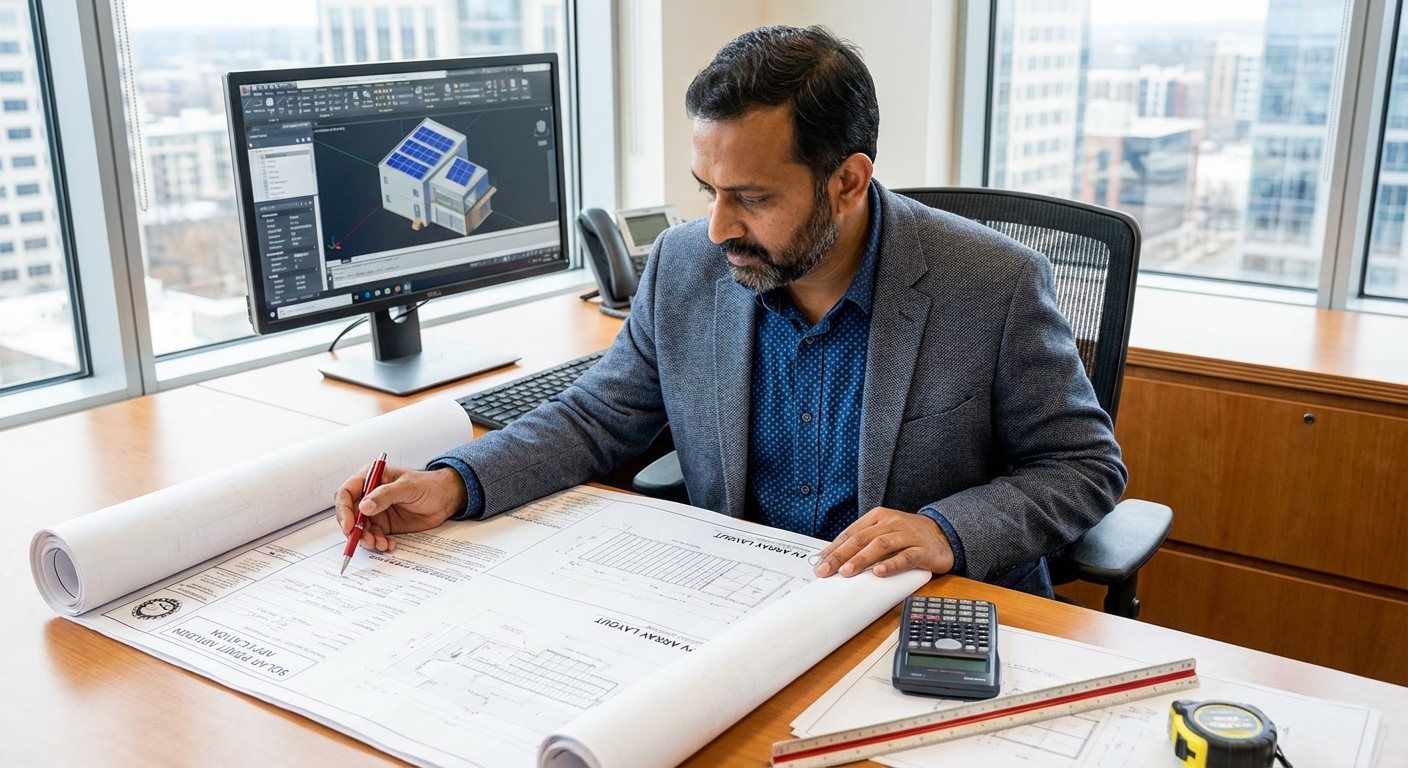
Understanding Solar Permits: The Foundation of Successful EPC Projects
Solar permits serve as the official authorization from local authorities confirming that your solar installation meets all safety, structural, electrical, and zoning requirements. In India, the permitting landscape involves coordination with multiple authorities including municipal corporations, state electricity boards, fire departments, and sometimes environmental agencies for larger projects.
The complexity of solar permits varies significantly based on project scale, location, and system type. A 5 kW residential rooftop installation in Gujarat will have vastly different requirements compared to a 10 MW ground-mount commercial project in Maharashtra. Understanding these variations and preparing comprehensive documentation upfront is the key to avoiding the frustration of permit rejections and project delays.
For EPC companies, permit design represents a critical intersection of engineering expertise, regulatory knowledge, and documentation precision. Getting it right the first time requires either significant in-house expertise or partnership with specialized solar design consultancies that understand the nuances of permit requirements across different jurisdictions.
1. What Documents Are Required for Solar Permits in India?
The documentation requirements for solar permits in India typically include a comprehensive package of technical drawings, engineering calculations, and compliance certificates. While specific requirements vary by state and municipality, most authorities require the following core documents:
- Site survey report with detailed measurements, photographs, and site conditions assessment
- Structural engineering calculations demonstrating roof load capacity and mounting system design
- Electrical single-line diagram showing system configuration, component specifications, and grid connection details
- Three-line diagram for three-phase systems with detailed wiring specifications
- Layout drawings showing panel placement, setbacks, and access pathways
- Equipment specifications including solar panels, inverters, mounting structures, and protection devices
- Shading analysis and energy yield projections
- Fire safety plan with rapid shutdown provisions and firefighter access zones
- Net metering application (for grid-tied systems) with utility coordination documents
- Structural engineer certification or PE stamp where required
For commercial and industrial projects, additional documents may include environmental impact assessments, land use permits, and detailed project reports. The key to successful permit applications is completeness and accuracy. Missing even a single required document can result in rejection and restart the entire approval timeline.
Many EPC companies find that working with experienced design partners who maintain updated knowledge of regional documentation requirements significantly reduces rejection rates and accelerates approval timelines.
2. How Long Does the Solar Permit Approval Process Typically Take?
The timeline for solar permits approval in India varies considerably based on project scale, location, and the efficiency of local authorities. Based on current data from 2026, typical timelines include:
Residential rooftop solar (up to 10 kW): 2-4 weeks in most urban areas with streamlined processes. States like Gujarat and Karnataka have implemented single-window clearance systems that can reduce this to 7-10 days for straightforward applications.
Commercial rooftop solar (10 kW to 1 MW): 4-8 weeks depending on the complexity of structural requirements and the number of authorities involved. Projects requiring fire department approval or special structural assessments may take longer.
Megawatt-scale ground-mount projects (1 MW+): 8-16 weeks or more, as these projects typically require environmental clearances, land use permits, and coordination with multiple state and central government agencies.
Several factors can significantly impact these timelines. Complete and accurate documentation submitted the first time can cut approval times in half. Conversely, incomplete applications, design errors, or non-compliance with local codes can extend the process by months as you cycle through rejection and resubmission.
Understanding the specific requirements and processing times of your target jurisdiction is essential for accurate project scheduling. Building buffer time into your project timelines for permit approval is a best practice that protects against unexpected delays.
3. What Are the Most Common Reasons for Solar Permit Rejections?
After reviewing hundreds of permit applications across different Indian states, we’ve identified the most frequent causes of solar permits rejection that EPC companies encounter:
Incomplete structural calculations: This is the leading cause of rejections. Authorities require detailed load calculations demonstrating that the roof or foundation can safely support the solar installation, including wind and seismic loads. Generic calculations or missing engineer certifications result in immediate rejection.
Non-compliant electrical designs: Single-line diagrams that don’t meet IS (Indian Standards) specifications, incorrect string sizing, inadequate protection devices, or improper grounding designs are common electrical issues that trigger rejections.
Insufficient setback clearances: Fire safety codes require specific setbacks from roof edges, ridges, and penetrations. Designs that maximize panel coverage without accounting for required access pathways and setbacks face rejection.
Missing or inadequate site survey data: Permit reviewers need to verify that the design matches actual site conditions. Applications without comprehensive site surveys, accurate measurements, or current site photographs are often rejected for insufficient documentation.
Incorrect or outdated code references: Using outdated versions of building codes, electrical standards, or fire safety requirements demonstrates lack of current knowledge and results in rejection.
Inconsistent documentation: When different documents in the permit package contain conflicting information (for example, different system sizes in the electrical diagram versus the layout drawing), authorities reject the entire application.
The best strategy for avoiding these rejections is thorough quality review before submission. Many successful EPC companies implement internal checklists or work with specialized permit design consultancies that have deep expertise in regional requirements and common pitfalls.
4. Do Solar Permit Requirements Vary by State in India?
Yes, solar permits requirements vary significantly across Indian states, despite central government guidelines providing a general framework. This variation creates substantial complexity for EPC companies operating in multiple states.
Gujarat has implemented one of the most streamlined solar permitting processes in India, with single-window clearance systems and clear documentation requirements. The state’s proactive renewable energy policies have resulted in faster approval timelines and well-defined technical standards.
Maharashtra requires additional scrutiny for structural aspects, particularly in Mumbai and Pune where building regulations are more stringent. Fire safety requirements are also more comprehensive in this state.
Karnataka has strong net metering policies but requires detailed utility coordination documentation. The state’s BESCOM (Bangalore Electricity Supply Company) has specific technical requirements that differ from other distribution companies.
Rajasthan focuses heavily on land use permits for ground-mount systems and has specific requirements for desert and arid region installations, including environmental impact considerations.
Tamil Nadu has detailed technical specifications for grid-tied systems and requires comprehensive electrical protection documentation.
Beyond state-level variations, individual municipal corporations often add their own requirements. For example, municipal corporations in metro cities may have additional building code requirements compared to smaller towns in the same state.
For EPC companies managing projects across multiple states, maintaining updated knowledge of these regional variations is challenging but essential. This is one area where partnering with a specialized solar design consultancy with multi-state experience provides significant value, as they maintain current knowledge of requirements across different jurisdictions.
5. What Structural Engineering Certifications Are Needed for Solar Permits?
Structural engineering certification is one of the most critical components of solar permits applications, yet it’s also one of the most frequently inadequate elements that leads to rejections. Understanding what authorities require helps ensure your applications meet standards the first time.
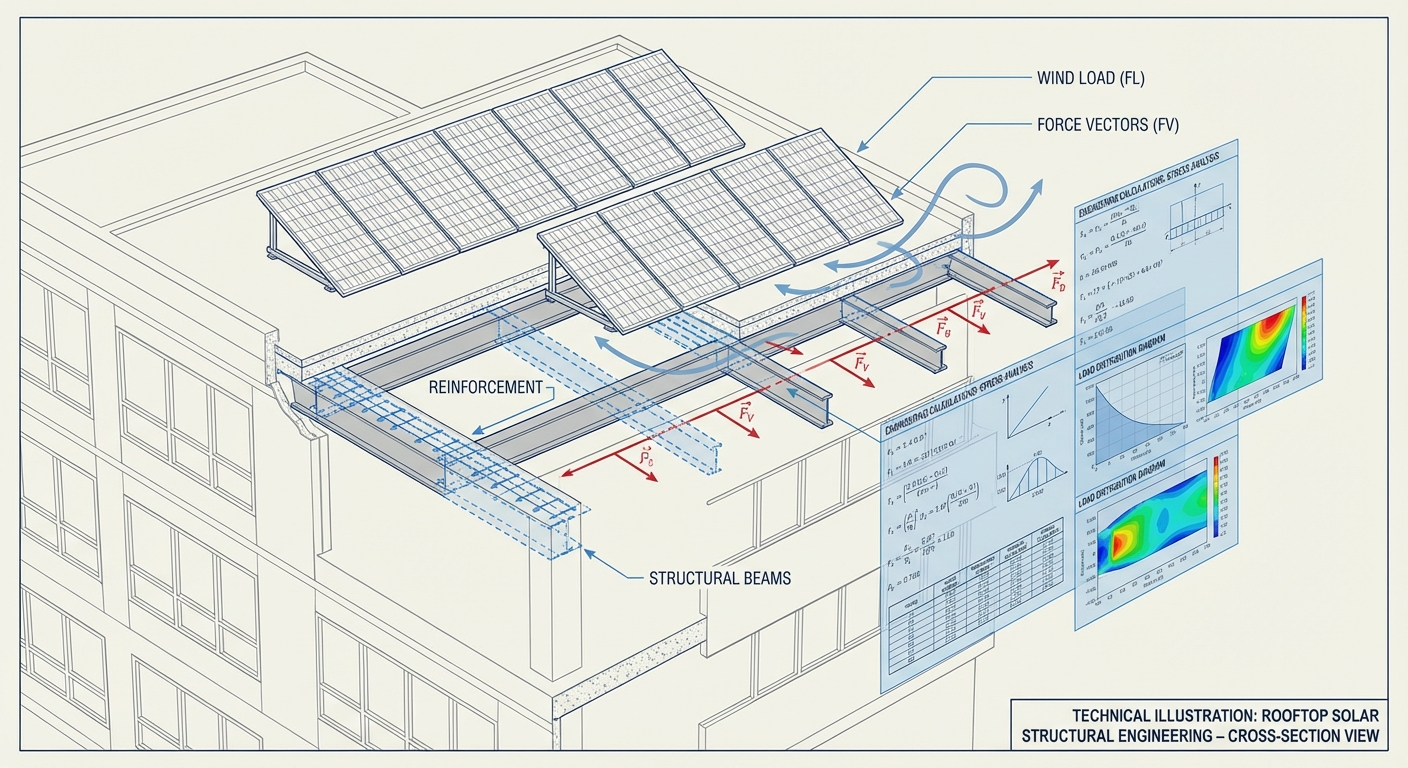
Structural calculations package: At minimum, permit applications require detailed structural calculations demonstrating that the existing structure can safely support the additional dead load of the solar installation plus live loads from wind, seismic activity, and maintenance personnel. These calculations must reference appropriate IS codes including IS 875 (Code of Practice for Design Loads) and IS 1893 (Criteria for Earthquake Resistant Design).
Professional engineer certification: While India doesn’t have a PE (Professional Engineer) licensing system identical to the United States, many authorities require certification from a chartered structural engineer or a statement from a qualified structural engineer with appropriate credentials. The engineer must certify that the structure is adequate for the proposed solar installation.
Wind load analysis: Given India’s diverse climate zones, wind load calculations are essential. Coastal areas, high-altitude regions, and cyclone-prone zones have specific wind load requirements that must be addressed in structural designs. The analysis must consider both uplift forces and lateral loads on the mounting system.
Seismic considerations: India has multiple seismic zones, and structural designs must account for earthquake loads appropriate to the project location. Zone IV and V areas require more rigorous seismic design than Zone II or III regions.
Foundation design for ground-mount systems: Ground-mount solar installations require detailed foundation engineering, including soil bearing capacity analysis, foundation sizing calculations, and sometimes soil testing reports. The foundation design must demonstrate stability under all load conditions.
Roof condition assessment: For rooftop installations, many authorities now require an assessment of existing roof condition, particularly for older buildings. This assessment verifies that the roof structure is in adequate condition to support the solar installation for its expected 25-year lifespan.
Heaven Designs provides comprehensive structural engineering India services specifically tailored for solar projects, with experienced structural engineers who understand both the technical requirements and the documentation standards that permit authorities expect. Our structural calculations packages have achieved high first-time approval rates across multiple states.
6. How Do I Ensure My Solar Design Meets Local Building Codes?
Ensuring compliance with local building codes is fundamental to successful solar permits approval. The challenge for EPC companies is that building codes operate at multiple levels, creating a complex compliance landscape.
National Building Code (NBC): The NBC of India provides the foundational standards for building construction, including structural safety, fire safety, and electrical installations. Solar installations must comply with relevant NBC provisions, particularly those related to roof loads, fire safety, and electrical systems.
Indian Standards (IS codes): Specific IS codes govern different aspects of solar installations. Key standards include IS 875 for design loads, IS 1893 for seismic design, IS 732 for electrical wiring, and various IS codes for solar-specific components and installations. Your permit design must reference and comply with current versions of applicable IS codes.
State building codes: Some states have adopted modified versions of the NBC or have additional state-level building regulations. Understanding which version of building codes applies in your project location is essential.
Municipal regulations: Local municipal corporations often have additional requirements beyond state and national codes. These may include specific setback requirements, height restrictions, aesthetic guidelines, or additional fire safety provisions.
Fire safety codes: Fire safety requirements for solar installations have become more stringent in recent years. Designs must include adequate access pathways for firefighters, rapid shutdown provisions, and appropriate setbacks from roof edges and penetrations.
The most effective approach to ensuring code compliance is working with design professionals who maintain current knowledge of applicable codes and have experience with permit approvals in your target jurisdiction. Code requirements evolve over time, and what was acceptable two years ago may not meet current standards in 2026.
Regular training and code updates for your engineering team, or partnership with specialized consultancies that track code changes, helps ensure your designs consistently meet current requirements.
7. What Role Does Site Survey Play in Solar Permit Approval?
A comprehensive site survey is the foundation of any successful solar permits application. Permit reviewers use site survey data to verify that your design is appropriate for actual site conditions and that you’ve accurately represented the project in your application.
Accurate measurements: Site surveys provide precise measurements of roof dimensions, orientations, obstructions, and available installation area. These measurements must match the dimensions shown in your permit drawings. Discrepancies between site survey data and design drawings are a red flag for permit reviewers.
Structural assessment: Site surveys document existing structural conditions, including roof type, roofing material, structural support system, and any visible signs of structural issues. This information is essential for structural engineering calculations and helps identify potential installation challenges before permit submission.
Shading analysis: Comprehensive site surveys include shading analysis identifying all potential shade sources including nearby buildings, trees, chimneys, and other obstructions. This data supports energy yield projections and helps optimize panel placement for maximum generation.
Electrical infrastructure assessment: Site surveys document existing electrical infrastructure, including service panel capacity, available space for solar equipment, and the location of utility connection points. This information is essential for electrical design and net metering applications.
Photographic documentation: High-quality photographs from multiple angles provide visual verification of site conditions. Many permit authorities require specific photographs showing roof conditions, surrounding structures, and site access.
Access and safety considerations: Site surveys identify access routes for installation, potential safety hazards, and any site-specific challenges that might affect installation or ongoing maintenance.
For EPC companies operating across India, conducting thorough site surveys for every project is resource-intensive but essential. Heaven Designs offers comprehensive site survey India services with experienced teams that can conduct detailed surveys across the country, providing the accurate data foundation your permit applications require.
8. Can I Modify a Solar Design After Permit Approval?
This is one of the most common questions EPC companies ask about solar permits, and the answer depends on the nature and extent of the modifications. Understanding when changes require re-permitting helps you manage client expectations and project timelines.
Minor modifications that typically don’t require re-permitting: Small adjustments like minor changes in panel placement within the approved area, substitution of equivalent equipment (same specifications and ratings), or minor routing changes for conduit typically don’t require formal permit amendments in most jurisdictions.
Major modifications requiring re-permitting: Significant changes almost always require permit amendments or new permits. These include changes in system size (kW capacity), modifications to structural mounting systems, changes in inverter location or type that affect electrical design, expansion of the installation area beyond originally approved boundaries, or any changes affecting structural loads or electrical ratings.
Amendment process: When modifications require re-permitting, most authorities have an amendment process that’s faster than the original permit application. You typically submit revised drawings highlighting the changes, along with updated calculations or specifications as needed. Amendment approval timelines range from a few days to several weeks depending on the complexity of changes and local authority procedures.
Cost implications: Permit amendments usually involve additional fees, though these are typically lower than original permit fees. More significantly, the time required for amendment approval can delay project completion and increase overall project costs through extended labor and overhead.
Best practices: The most effective approach is getting the design right before permit submission. Thorough site surveys, careful planning, and quality review before submission minimize the need for post-approval changes. When changes are necessary, communicate with the permitting authority early to understand their requirements and expedite the amendment process.
Working with experienced design partners who have high first-time approval rates reduces the likelihood of needing design modifications after permit approval, protecting your project timelines and budgets.
9. What Software Do Authorities Accept for Solar Permit Design?
Permit authorities in India generally don’t mandate specific software for solar permits design, but they do have requirements for the format, content, and professional standards of submitted drawings and calculations. Understanding what authorities expect helps ensure your designs meet acceptance criteria.
CAD software for technical drawings: Most authorities expect professional-quality technical drawings created in industry-standard CAD software. AutoCAD is widely recognized and accepted. Drawings must include proper title blocks, scale indicators, legends, and professional formatting. Hand-drawn sketches or low-quality diagrams are generally not acceptable for permit applications.
Solar design software: For system design and energy calculations, software like PVsyst, Helioscope, Aurora Solar, or similar professional tools are commonly used. While authorities don’t typically specify which software you must use, they expect calculations and simulations to be based on recognized methodologies and industry-standard tools.
Structural analysis software: Structural calculations may be performed using various engineering software packages. What matters is that the calculations follow appropriate IS codes and are certified by a qualified structural engineer.
Export formats: Most authorities accept PDF format for permit submissions, though some may require native CAD files (DWG or DXF format) in addition to PDFs. Check specific requirements for your jurisdiction.
Documentation standards: Regardless of software used, permit drawings must meet professional engineering documentation standards including clear labeling, appropriate scale, complete dimensions, comprehensive notes, and proper referencing of applicable codes and standards.
At Heaven Designs, we utilize industry-leading design software India tools and maintain professional CAD standards that meet permit authority expectations across different jurisdictions. Our design team stays current with software capabilities and documentation best practices to ensure permit-ready deliverables.
10. How Do Net Metering Regulations Affect Solar Permit Requirements?
Net metering regulations significantly impact solar permits requirements, particularly for grid-tied solar systems. Understanding the intersection of net metering policies and permit requirements is essential for EPC companies operating in India.
Net metering application process: In most states, net metering approval is a separate process from building permits, but the two are interconnected. You typically need to submit a net metering application to the local distribution company (DISCOM) either before or concurrent with your building permit application. Some authorities won’t issue final building permits until net metering approval is confirmed.
Technical requirements for grid-tied systems: Net metering regulations impose specific technical requirements that must be reflected in your permit design. These include anti-islanding protection, appropriate disconnect switches accessible to utility personnel, bidirectional metering provisions, and compliance with grid interconnection standards.
System size limitations: Many states have net metering capacity limits based on sanctioned load or connected load. Your permit design must demonstrate compliance with these limitations. Oversizing beyond net metering limits may require different approvals or result in different compensation mechanisms.
Utility coordination documentation: Permit applications for grid-tied systems typically require documentation of utility coordination, including net metering application acknowledgment, interconnection agreement, or utility approval letters. The timing of obtaining these documents varies by state and utility.
State-specific net metering policies in 2026: Net metering policies continue to evolve across Indian states. Some states have moved to gross metering or time-of-day tariffs, which affect system design and permit requirements. Gujarat, Karnataka, and Maharashtra have well-established net metering frameworks, while other states are still developing their policies.
Metering infrastructure requirements: Your electrical design must include provisions for bidirectional meters or gross meters as required by local net metering policies. The meter location, protection, and accessibility must meet both utility and building code requirements.
Successfully navigating net metering requirements requires understanding both the technical specifications and the procedural coordination between building permits and utility approvals. This coordination is particularly important for project timeline planning, as delays in either approval process can hold up the entire project.
11. What Are the Permit Requirements for Rooftop vs Ground-Mount Solar?
The solar permits requirements differ substantially between rooftop and ground-mount installations, reflecting the different engineering challenges and regulatory considerations for each system type.
Rooftop solar permit requirements: Rooftop installations focus heavily on structural adequacy of the existing building. Key requirements include detailed roof load calculations, verification of roof condition and remaining lifespan, waterproofing and roof penetration details, and compliance with building height restrictions. Rooftop systems typically have a more straightforward permitting process since they’re utilizing existing structures and don’t require land use approvals.
Ground-mount solar permit requirements: Ground-mount systems involve additional complexity. Beyond electrical and structural requirements, ground-mount projects require land use permits or zoning approvals, foundation engineering with soil testing reports, environmental clearances for larger projects, drainage and grading plans, and sometimes agricultural land conversion approvals if installing on farmland.
Scale considerations: Small residential rooftop systems (under 10 kW) generally have the simplest permit requirements. Commercial rooftop systems (10 kW to 1 MW) add complexity with fire safety requirements and structural scrutiny. Megawatt-scale ground-mount projects face the most comprehensive permitting requirements, often involving multiple state and central government agencies.
Environmental clearances: Ground-mount projects above certain size thresholds may require environmental impact assessments and clearances from state or central environmental authorities. These requirements don’t typically apply to rooftop installations.
Timeline differences: Rooftop solar permits typically process faster than ground-mount permits due to fewer authorities involved and less complex approval requirements. Ground-mount projects should budget significantly more time for the complete permitting process.
For EPC companies handling both rooftop and ground-mount projects, understanding these differences and preparing appropriate documentation for each project type is essential for efficient permit approvals. The expertise required for successful ground-mount permitting is substantially greater than for rooftop systems.
12. How Much Does Solar Permit Design Cost for EPC Projects?
Understanding the cost structure of professional solar permits design helps EPC companies make informed decisions about in-house capabilities versus outsourcing. The investment in quality permit design typically pays for itself through faster approvals and fewer rejections.
Typical cost ranges: Professional permit design services in India generally range from ₹5,000 to ₹15,000 for residential rooftop systems (up to 10 kW), ₹15,000 to ₹50,000 for commercial rooftop systems (10 kW to 100 kW), and ₹50,000 to several lakhs for megawatt-scale projects depending on complexity. These costs typically include complete permit-ready documentation packages.
Factors affecting design costs: Several factors influence solar design cost including project size and complexity, structural engineering requirements (complex roof structures or challenging site conditions increase costs), number of jurisdictions involved for multi-site projects, timeline urgency (expedited design services command premium pricing), and level of detail required by local authorities.
Cost versus quality considerations: While it’s tempting to minimize design costs, inadequate permit design often proves far more expensive through project delays, permit rejections requiring redesign, installation complications from poor planning, and potential safety issues or code violations. Quality permit design is an investment in project success, not merely an expense.
ROI of professional permit design services: Professional permit design typically delivers strong ROI through higher first-time approval rates (reducing resubmission costs and delays), faster project completion (improving cash flow and client satisfaction), reduced installation complications (lowering field labor costs), and minimized risk of code violations or safety issues.
For EPC companies evaluating whether to develop in-house permit design capabilities or partner with specialized consultancies, the decision often comes down to project volume and geographic scope. Companies handling high volumes in limited geographic areas may benefit from in-house expertise, while those with lower volumes or multi-state operations often find outsourcing more cost-effective.
Heaven Designs offers competitive engineering cost structures for permit design services, with transparent pricing and a track record of high first-time approval rates that minimize total project costs. Our experience across 752+ EPC clients has refined our processes to deliver maximum value.
13. What Electrical Specifications Must Be Included in Solar Permits?
Electrical specifications are a critical component of solar permits applications, and inadequate electrical documentation is a common cause of permit rejections. Understanding what authorities require helps ensure your electrical designs meet standards.
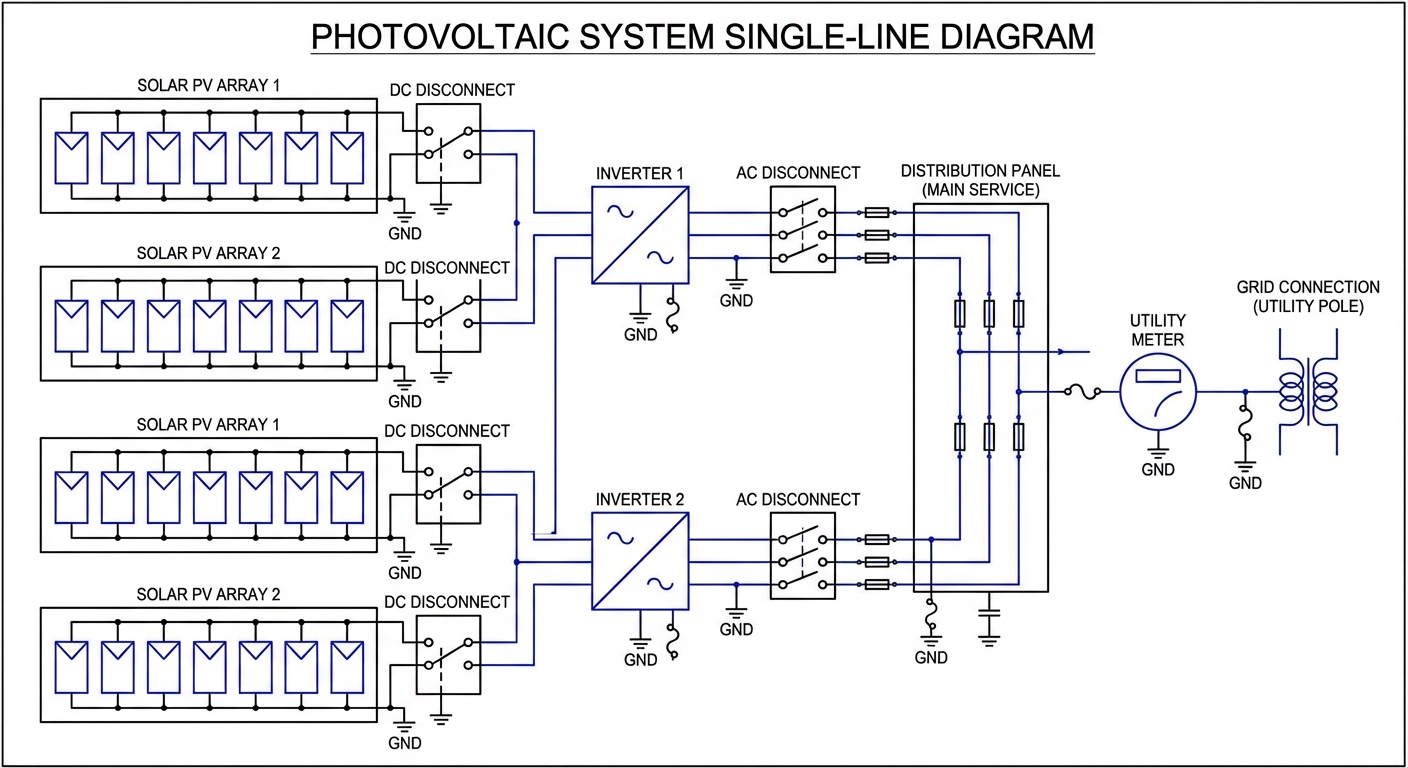
Single-line diagram (SLD): The electrical single-line diagram is the centerpiece of your electrical documentation. It must show the complete electrical configuration from solar panels through inverters, disconnect switches, protection devices, metering, and grid connection. The SLD must include all component ratings, wire sizes, conduit specifications, and protection device ratings. It should clearly indicate voltage levels at each stage and show grounding and bonding provisions.
Three-line diagram: For three-phase systems, a detailed three-line diagram showing phase relationships, wire colors, and complete wiring specifications is typically required. This diagram provides more detail than the SLD and guides actual installation.
String sizing calculations: Your permit package must include calculations demonstrating proper string sizing, including number of panels per string, string voltage calculations (Voc, Vmp) under various temperature conditions, verification that string voltages remain within inverter input ranges, and confirmation of proper wire sizing for string currents.
Inverter specifications: Complete inverter specifications must be provided, including manufacturer data sheets, efficiency curves, input voltage and current ranges, output voltage and frequency specifications, and certifications demonstrating compliance with Indian standards. The inverter location and mounting details should be clearly indicated.
Protection and grounding requirements: Electrical designs must show comprehensive protection including DC and AC disconnect switches, overcurrent protection devices (fuses or circuit breakers) with proper ratings, surge protection devices, ground fault protection, and anti-islanding protection for grid-tied systems. Grounding and bonding details must comply with IS 732 and other applicable electrical codes.
Compliance with IS standards: All electrical specifications must reference and comply with relevant Indian Standards including IS 732 (Code of Practice for Electrical Wiring Installations), IS 3043 (Code of Practice for Earthing), and solar-specific standards. Your documentation should explicitly reference applicable standards.
Wire and conduit specifications: Complete specifications for all wiring including wire types, sizes (cross-sectional area in sq mm), insulation ratings, and conduit types and sizes must be provided. Wire sizing must account for voltage drop, temperature derating, and current-carrying capacity.
Metering provisions: For grid-tied systems, your electrical design must show metering provisions including meter type (bidirectional or gross), meter location and mounting, meter protection, and utility access provisions.
Electrical design for solar permits requires both technical expertise and familiarity with documentation standards that permit authorities expect. At Heaven Designs, our electrical engineering team has extensive experience creating permit-ready electrical documentation that meets requirements across different Indian states and international markets.
14. How Do I Handle Solar Permits for Multi-MW Commercial Projects?
Megawatt-scale commercial solar projects involve substantially more complex solar permits requirements than smaller installations. Successfully navigating this complexity requires specialized expertise and careful project management.
Multiple authority coordination: Large-scale projects typically require approvals from numerous authorities including state electricity boards or DISCOMs, state pollution control boards, district administration or collector offices, fire departments, and sometimes central government agencies for projects above certain size thresholds. Coordinating these multiple approval processes requires careful planning and often parallel processing of different permits.
Environmental impact assessments: Projects above certain capacity thresholds (typically 5 MW or more, though this varies by state) may require environmental clearances. This involves environmental impact assessment studies, public hearings in some cases, and approval from state or central environmental authorities. The environmental clearance process can add several months to project timelines.
Detailed project reports: Megawatt-scale projects typically require comprehensive detailed project reports (DPRs) that go well beyond standard permit documentation. DPRs include detailed technical specifications, financial projections, implementation timelines, and comprehensive engineering analysis.
Land use and zoning approvals: Large ground-mount projects require land use approvals, particularly if converting agricultural land to solar use. This may involve approvals from revenue departments, agricultural departments, and local planning authorities.
Grid interconnection studies: Large-scale projects often require grid impact studies or interconnection studies demonstrating that the project won’t adversely affect grid stability. These studies may need to be conducted by approved agencies and can involve significant technical analysis.
PMC services for permit coordination: Given the complexity of megawatt-scale permitting, many developers engage project management consultancy (PMC) services to coordinate the entire approval process. PMC providers manage interactions with multiple authorities, track approval timelines, and ensure all documentation requirements are met.
Heaven Designs provides comprehensive PMC services India for megawatt-scale solar projects, including complete permit coordination and authority liaison. Our experience with large-scale projects across multiple states enables us to navigate complex approval processes efficiently, minimizing delays and ensuring comprehensive compliance. For EPC companies managing multi-MW projects, our MW scale design and consultancy services provide the specialized expertise these projects demand.
15. What Fire Safety Requirements Apply to Solar Permit Designs?
Fire safety requirements have become increasingly important in solar permits applications, particularly following several high-profile solar installation fires globally. Understanding and incorporating fire safety provisions is now essential for permit approval.
Fire access pathways and setbacks: Most jurisdictions now require specific setbacks from roof edges, ridges, hips, and valleys to provide firefighter access pathways. Common requirements include 1-meter setbacks from roof edges, 1.5-meter pathways to ridge lines, and clear access paths at least 1 meter wide throughout the array. These requirements reduce the available installation area but are mandatory for permit approval.
Rapid shutdown requirements: Many authorities now require rapid shutdown systems that can quickly de-energize the solar array in emergency situations. This typically involves module-level shutdown devices or rapid shutdown equipment at the array level that reduces DC voltage to safe levels within seconds of activation.
Firefighter safety zones: Designs must include designated areas where firefighters can safely operate, including access to roof hatches, ventilation points, and building access points. These safety zones must remain clear of solar equipment.
Labeling and identification: Fire safety requirements include comprehensive labeling of all solar equipment, clear identification of DC circuits and disconnect locations, and placards indicating the presence of solar equipment and shutdown procedures. These labels must be visible and durable.
Compliance with fire department regulations: Many projects require fire department review and approval as part of the permit process. Fire departments may have specific requirements beyond building code minimums, particularly for commercial and industrial installations.
Fire-rated equipment and installations: In some cases, particularly for commercial buildings, fire-rated conduit, fire-stopping at roof penetrations, and fire-rated equipment enclosures may be required.
Incorporating fire safety requirements into your initial design is far more efficient than retrofitting after permit rejection. Working with design professionals who understand current fire safety requirements and maintain relationships with local fire departments can streamline this aspect of permit approval.
16. Can I Use a Standard Solar Design Template for Permits Across Projects?
Many EPC companies ask whether they can develop standard solar permits design templates to streamline their processes. While templates can provide a starting framework, relying too heavily on standardized designs creates significant risks.
Limitations of template-based designs: Every solar installation site has unique characteristics including different roof structures and load capacities, varying shading conditions and orientations, different electrical service configurations, unique local code requirements, and site-specific access and safety considerations. A template that works perfectly for one site may be completely inappropriate for another.
Site-specific customization requirements: Permit authorities expect designs that accurately reflect actual site conditions. Key elements that must be customized for each project include structural calculations based on actual roof or foundation conditions, electrical designs matching existing service capacity and configuration, layout optimized for the specific site’s dimensions and obstructions, and shading analysis reflecting actual site surroundings.
When templates work: Templates can be useful for standardizing documentation format, checklists, and general drawing layouts. They’re most effective for companies installing similar systems in the same jurisdiction repeatedly, such as a residential installer doing many similar rooftop systems in one city. Even then, the technical content must be customized for each specific site.
When templates don’t work: Templates are inappropriate for projects across different jurisdictions with varying requirements, commercial or industrial projects with unique characteristics, sites with challenging structural or electrical conditions, and any project where site conditions differ significantly from the template assumptions.
Risks of non-customized permit applications: Submitting template-based designs without proper customization leads to high rejection rates, potential safety issues from designs that don’t match actual conditions, liability exposure if installations fail due to inadequate engineering, and damage to your reputation with permit authorities who recognize generic, non-site-specific designs.
The most effective approach is using templates for process standardization and documentation format while ensuring all technical content is properly engineered for each specific project. This balances efficiency with the customization that permit approval and safe installations require.
17. What Happens If My Solar Permit Application Is Rejected?
Permit rejection is frustrating but common, particularly for EPC companies new to a jurisdiction or those without specialized solar permits expertise. Understanding how to respond effectively minimizes the impact on your project timeline.
Understanding rejection notices: When your permit is rejected, authorities typically provide a rejection notice or correction letter detailing the specific deficiencies. Read this notice carefully and ensure you understand every item. If any points are unclear, contact the permit office for clarification before proceeding with corrections. Misunderstanding the rejection reasons and submitting inadequate corrections wastes additional time.
Resubmission process and timelines: Most jurisdictions allow resubmission after addressing the identified deficiencies. The resubmission process is typically faster than the original review, often taking 1-2 weeks rather than the full original timeline. However, if your resubmission still has deficiencies, you may face additional review cycles, each adding weeks to your timeline.
Working with authorities to address concerns: Many permit offices are willing to discuss rejection reasons and provide guidance on what they need to see for approval. Proactive communication with permit reviewers can clarify requirements and increase the likelihood of approval on resubmission. Some jurisdictions offer pre-submittal meetings or informal reviews that can prevent rejections.
When to seek professional design assistance: If you’ve faced multiple rejections, if the rejection reasons involve complex structural or electrical issues beyond your team’s expertise, if you’re unfamiliar with the specific jurisdiction’s requirements, or if project timelines are critical and you can’t afford additional delays, it’s time to engage professional design assistance.
Learning from rejections: Each rejection provides valuable learning about what specific authorities require. Documenting rejection reasons and successful resolutions builds institutional knowledge that improves future applications. However, this learning process comes at the cost of project delays and client frustration.
Many EPC companies find that investing in professional permit design services upfront, particularly when entering new markets or handling complex projects, is more cost-effective than learning through trial and error with permit rejections. The cost of design services is typically far less than the cost of project delays and repeated resubmissions.
18. How Do I Coordinate Solar Permits with Multiple Authorities?
Coordinating solar permits across multiple authorities is one of the most challenging aspects of solar project execution in India. Effective coordination requires understanding each authority’s role and managing parallel approval processes.
Municipal building departments: Municipal corporations or local building departments handle building permits, verifying structural safety, building code compliance, and fire safety. This is typically your primary permit authority. Building department approval is usually required before other authorities will process their approvals.
Electricity distribution companies (DISCOMs): For grid-tied systems, the local DISCOM handles net metering approvals, grid interconnection permissions, and metering arrangements. DISCOM approval processes run parallel to or sequential with building permits, depending on the state. Some states require DISCOM approval before building permit issuance, while others allow parallel processing.
Fire departments: Fire department approval is required for most commercial and industrial projects and increasingly for larger residential projects. Fire departments review fire safety provisions, access pathways, and emergency response considerations. Fire department approval may be required before final building permit issuance.
Other agencies: Depending on project type and location, additional authorities may include state pollution control boards for environmental clearances, revenue departments for land use approvals, airport authorities for projects near airports, and heritage departments for installations on or near heritage structures.
Streamlining multi-authority approvals: Effective coordination strategies include understanding the approval sequence (which approvals must come first), preparing comprehensive documentation that satisfies all authorities simultaneously, submitting to multiple authorities in parallel where possible, maintaining regular communication with all authorities to track progress, and designating a single point of contact to manage all authority interactions.
Single-window clearance systems: Some states have implemented single-window clearance systems that coordinate multiple authorities through one interface. Where available, these systems significantly simplify the coordination challenge. Gujarat and Karnataka have relatively well-developed single-window systems for solar permits.
For large or complex projects, many EPC companies engage PMC services or specialized consultancies to manage multi-authority coordination. This expertise-based approach often proves more efficient than managing coordination in-house, particularly for companies operating across multiple states with different authority structures.
19. What Quality Checks Should Be Done Before Submitting Solar Permits?
Implementing thorough quality checks before submitting solar permits applications is the most effective strategy for achieving high first-time approval rates. A systematic review process catches errors and omissions before they result in rejections.
Internal review checklist: Develop a comprehensive checklist covering all permit requirements for your jurisdiction. Key checklist items should include completeness of all required documents, accuracy of all calculations and technical specifications, consistency across all documents (same system size, specifications, etc.), proper referencing of applicable codes and standards, quality and clarity of all drawings, inclusion of all required certifications and stamps, and proper formatting and professional presentation.
Common errors to catch before submission: Frequent errors that quality checks should identify include inconsistent system sizes across different documents, missing or incomplete structural calculations, electrical diagrams that don’t match layout drawings, incorrect or outdated code references, missing equipment specifications or data sheets, inadequate setbacks or clearances, missing signatures or certifications, and poor-quality drawings or illegible text.
Technical review: Have a qualified engineer who wasn’t involved in the original design review the technical content. Fresh eyes often catch errors that the original designer missed. Technical review should verify calculation accuracy, code compliance, design appropriateness for site conditions, and completeness of specifications.
Third-party review benefits: For critical or complex projects, consider engaging third-party review services. Independent reviewers bring expertise and objectivity, often identifying issues that internal teams miss. While third-party review adds cost, it’s typically far less expensive than permit rejections and project delays.
Quality assurance best practices: Establish standard operating procedures for permit design and review, maintain updated checklists reflecting current requirements, provide regular training for design staff on code updates and common issues, track rejection reasons and update processes to prevent recurrence, and consider peer review processes where team members review each other’s work.
At Heaven Designs, every permit design package goes through multiple quality review stages before delivery to clients. This systematic quality assurance process has resulted in high first-time approval rates across diverse jurisdictions, saving our EPC clients time and money while protecting project timelines.
20. Should EPCs Outsource Solar Permit Design or Keep It In-House?
This strategic question affects many solar EPC companies as they scale their operations. The decision between in-house solar permits design capabilities and outsourcing to specialized partners depends on multiple factors specific to each company’s situation.
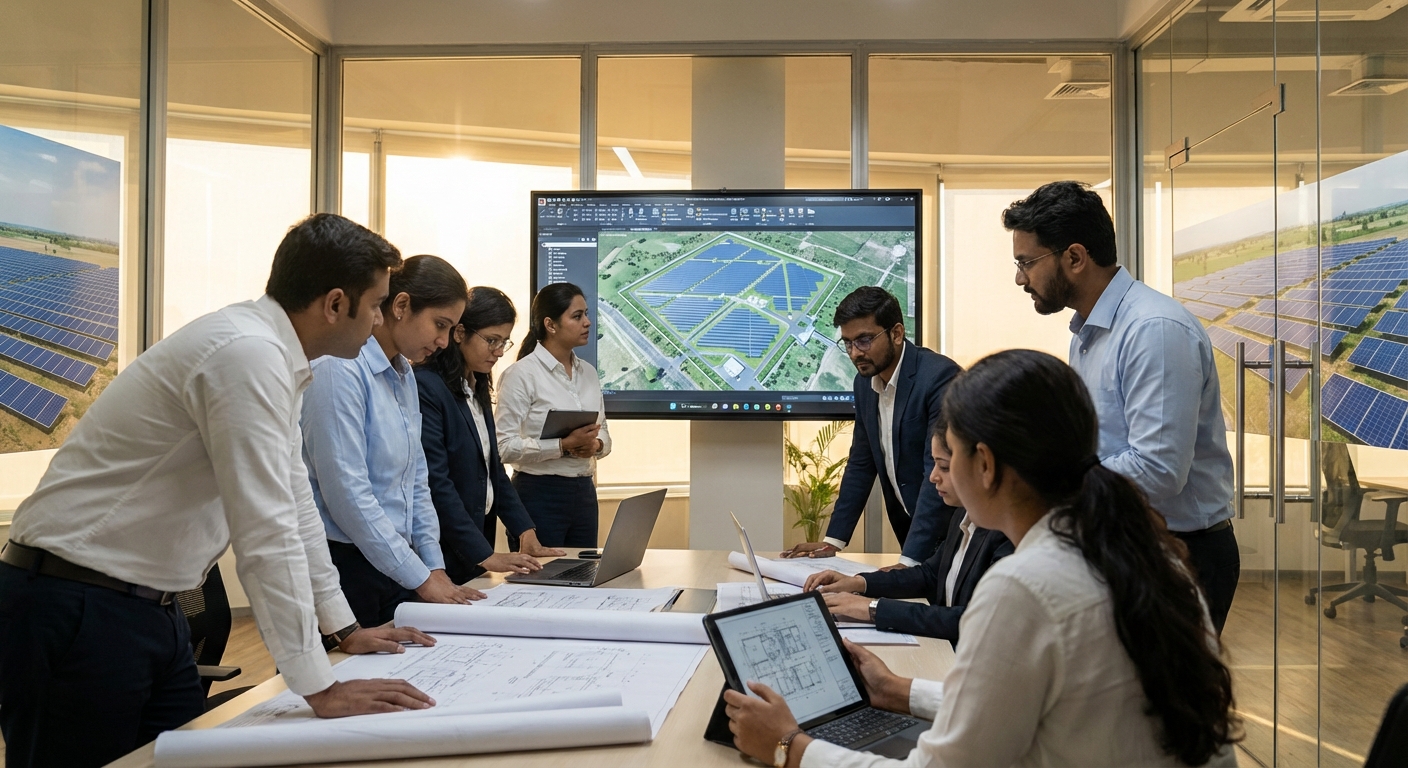
Pros of in-house permit design: Developing in-house capabilities provides direct control over design timelines and priorities, immediate communication between installation and design teams, retention of design knowledge within the company, and potentially lower per-project costs at high volumes. For EPC companies with high project volumes in limited geographic areas, in-house design can be efficient.
Cons of in-house permit design: In-house design requires significant investment in skilled engineering staff, ongoing training to maintain current code knowledge, investment in professional design software and tools, and capacity management challenges during volume fluctuations. For companies operating across multiple states, maintaining expertise in all relevant jurisdictions is particularly challenging.
Pros of outsourcing permit design: Partnering with specialized design consultancies provides access to deep expertise without hiring overhead, scalability to handle volume fluctuations, multi-jurisdiction expertise for companies operating across regions, and typically higher first-time approval rates from specialized experience. Outsourcing converts fixed costs to variable costs, improving financial flexibility.
Cons of outsourcing permit design: Outsourcing requires coordination with external partners, potential communication delays, and per-project costs that may exceed in-house costs at very high volumes. Some EPC companies prefer keeping design in-house for competitive differentiation or client relationship reasons.
Cost-benefit analysis: The financial comparison depends on project volume, geographic scope, and project complexity. Companies handling fewer than 50-100 projects annually or operating across multiple states often find outsourcing more cost-effective. Companies with higher volumes in concentrated geographic areas may benefit from in-house capabilities. The analysis should consider not just direct costs but also the cost of permit rejections, project delays, and quality issues.
Hybrid approaches: Many successful EPC companies adopt hybrid models, maintaining basic in-house design capabilities for straightforward projects while outsourcing complex projects, new jurisdictions, or overflow during peak periods. This approach balances control with access to specialized expertise.
When specialized expertise is essential: Certain situations strongly favor outsourcing including megawatt-scale commercial projects requiring specialized engineering, projects in unfamiliar jurisdictions, structurally complex installations, projects with tight timelines where permit approval is critical, and situations where your team has faced repeated permit rejections.
How design partners like Heaven Designs support EPCs: Specialized design consultancies serve as extensions of your engineering team, providing expertise, capacity, and multi-jurisdiction knowledge without the overhead of full-time staff. With over 50 engineers and consultants, Heaven Designs has the depth of expertise to handle projects ranging from small residential installations to megawatt-scale commercial developments across India and international markets.
Our comprehensive service portfolio includes solar permit design, structural engineering, electrical design, site surveys, and PMC services, providing EPC companies with a complete design partner. Our track record of 628+ MW designed for 752+ clients demonstrates our ability to deliver consistent quality across diverse project types and jurisdictions.
For EPC companies evaluating their design strategy, the key is honest assessment of your current capabilities, project pipeline, and growth plans. The right approach aligns with your business model and positions you for efficient scaling as your solar business grows.
Best Practices for Smooth Solar Permit Approvals in 2026
Drawing together insights from all 20 questions, several best practices emerge for EPC companies seeking to optimize their solar permits approval processes and minimize project delays.
Invest in comprehensive site surveys: Accurate site data is the foundation of successful permit applications. Thorough site surveys prevent the most common cause of permit issues: designs that don’t match actual site conditions. Don’t cut corners on site survey quality to save time or money upfront, as inadequate surveys inevitably cost more through permit rejections and installation complications.
Understand jurisdiction-specific requirements: Take time to research and understand the specific requirements of each jurisdiction where you operate. Requirements vary significantly across Indian states and even between municipalities within states. What works in Gujarat may not satisfy authorities in Maharashtra or Karnataka.
Prioritize quality over speed in design: While fast turnaround is important, rushing permit design to meet aggressive timelines often backfires through rejections and delays. Allocate adequate time for thorough design and quality review. The time invested in getting it right the first time is far less than the time lost to rejection and resubmission cycles.
Implement systematic quality review: Establish formal quality review processes with checklists and peer review. Catching errors before submission is exponentially more efficient than discovering them through permit rejection. Make quality review a non-negotiable step in your permit preparation process.
Maintain current code knowledge: Building codes, electrical standards, and fire safety requirements evolve continuously. Invest in ongoing training for your design team or partner with consultancies that maintain current expertise. Using outdated code references or missing new requirements signals lack of professionalism to permit reviewers.
Build relationships with permit authorities: Where possible, develop positive working relationships with permit office staff. Understanding their preferences, attending pre-submittal meetings when offered, and demonstrating professionalism in all interactions can smooth the approval process. Permit reviewers are more likely to provide helpful guidance to applicants they know and respect.
Document and learn from every project: Track permit approval timelines, rejection reasons, and successful strategies for each jurisdiction. Build institutional knowledge that improves with each project. This learning process is valuable whether you maintain in-house design capabilities or work with external partners.
Know when to seek expert assistance: Recognize the limits of your in-house capabilities and engage specialized expertise when needed. The cost of professional design services is typically far less than the cost of project delays, permit rejections, and potential safety or compliance issues from inadequate design.
Plan adequate timeline buffers: Build realistic permit approval timelines into your project schedules with appropriate buffers for unexpected delays. Under-promising and over-delivering on timelines builds client confidence, while aggressive timelines that you can’t meet damage client relationships.
Consider strategic partnerships: For many EPC companies, partnering with specialized design consultancies provides the optimal balance of expertise, scalability, and cost-effectiveness. Strategic design partners become extensions of your team, providing consistent quality and freeing your resources to focus on sales, installation, and client relationships.
As India’s solar market continues its rapid growth in 2026 and beyond, the EPC companies that master the permit approval process will have significant competitive advantages. Faster project execution, higher client satisfaction, and lower project costs from efficient permitting translate directly to business success.
At Heaven Designs, we’ve built our business around supporting solar EPC companies with the specialized design and engineering expertise that successful projects demand. Our comprehensive services span the entire design spectrum from initial feasibility studies through detailed permit design, structural engineering, and project management consultancy. With experience across 752+ clients and 628+ MW of completed design work, we understand the challenges EPC companies face and have refined our processes to deliver consistent, permit-ready designs that keep your projects moving forward.
Whether you’re a residential installer handling dozens of rooftop projects annually, a commercial solar developer managing megawatt-scale installations, or an EPC company operating across multiple states and international markets, professional solar permits design expertise is essential for efficient project execution. The questions addressed in this guide represent just the beginning of the permit design knowledge required for consistent success.
If you’re facing permit challenges, entering new markets, or simply want to optimize your design processes for better project outcomes, we invite you to explore how Heaven Designs can support your solar business. Our team of over 50 skilled engineers and consultants stands ready to become your trusted design partner, delivering the accurate, cost-effective, and permit-ready designs that your projects deserve.
Ready to streamline your solar permit approvals and accelerate your project timelines? Contact Heaven Designs today to discuss how our specialized solar permit design services can support your EPC business. Get a Quick Proposal Now! or reach out directly at +91 90811 00297 or service@heavendesigns.in. Let’s work together to ensure your solar projects achieve smooth permit approvals and successful execution in 2026 and beyond.
This blog post was written using thestacc.com