


Picture this: a 2 MW ground-mount project in Gujarat clears procurement, passes electrical review, and then stalls for six weeks because the structural drawings don’t match the actual soil conditions on site. The mounting supplier’s generic calculations assumed medium-density soil. The actual site had expansive black cotton soil. The result? Redesigned foundations, delayed commissioning, and a margin that evaporated. This kind of setback is entirely preventable — and it starts with asking the right structural design questions before a single pile is driven.
This FAQ compiles the 18 most critical structural design questions that solar EPC companies ask when planning rooftop and ground-mount projects across India. Whether you’re sizing foundations for a 500 kW commercial rooftop in Maharashtra or engineering a 10 MW ground-mount system in Rajasthan, these expert answers will help you avoid costly structural errors and move projects forward with confidence.
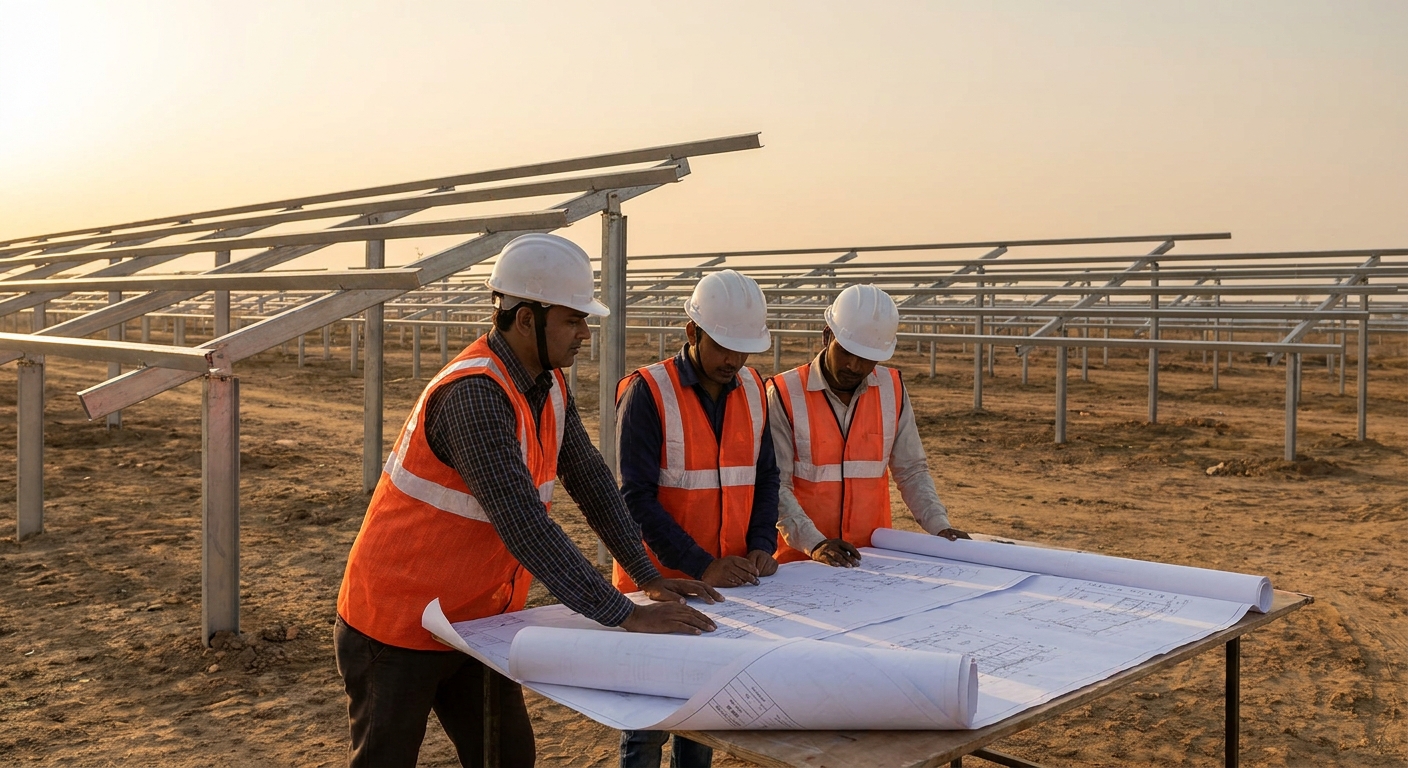
Why Structural Design Makes or Breaks Solar Projects
Structural failures are among the most expensive problems an EPC company can face. Unlike electrical errors that can often be corrected during commissioning, structural mistakes — undersized foundations, incorrect wind load assumptions, or wrong mounting system selection — can require complete dismantling and rebuilding of installed systems. The financial and reputational damage is severe.
Beyond failure risk, structural design directly affects three other critical project outcomes. First, it determines whether your project clears permitting and approval from local authorities and discoms. Second, it influences your project’s insurability and the terms your client can secure for asset financing. Third, it governs long-term performance: a structurally sound mounting system maintains optimal panel tilt and orientation for 25+ years, while a poorly designed one introduces micro-vibrations, corrosion points, and alignment drift that quietly erode energy yield.
For solar EPC companies operating in India, the structural challenge is compounded by the country’s extraordinary geographic diversity. Wind zones, seismic zones, soil types, and rainfall patterns vary dramatically from state to state. A structural design that works perfectly in the Thar Desert will be dangerously inadequate on the Odisha coast. This is why site-specific structural design, not generic templates, is non-negotiable for professional EPC work.
Foundation & Soil Questions
Q1: What soil tests are required before foundation design?
At minimum, a structural design for any ground-mount solar project requires a soil investigation report (SIR) that includes a Standard Penetration Test (SPT), soil classification per IS 1498, and determination of the safe bearing capacity (SBC) of the soil. For projects above 1 MW, a geotechnical investigation with borehole data at multiple points across the site is strongly recommended. The number of boreholes depends on site area and soil variability, typically one borehole per 0.5 to 1 hectare for uniform sites, and more for sites with visible soil variation.
Additional tests that may be required depending on site conditions include: soil corrosivity testing (critical for determining pile coating requirements), shrink-swell index testing for expansive soils like black cotton soil, and groundwater level assessment to evaluate hydrostatic pressure on foundations. Skipping these tests to save time or cost is one of the most common, and most expensive, mistakes EPCs make in the early project phase.
Q2: How does soil bearing capacity affect foundation type selection?
Safe bearing capacity (SBC) is the single most important soil parameter for foundation design. As a general guide: soils with SBC above 150 kN/m² can typically support spread footing or raft foundations; soils with SBC between 75, 150 kN/m² may require larger footings or ground improvement; soils below 75 kN/m² almost always require pile foundations that transfer loads to deeper, competent strata. Black cotton soil, common across Maharashtra, Madhya Pradesh, and parts of Karnataka, is particularly problematic because its SBC changes significantly with moisture content, requiring special foundation treatment.
Q3: What foundation types are used for ground-mount solar in India?
The four most common foundation types for ground-mount solar structural design in India are:
- Driven steel pipe piles: The most common choice for large-scale projects. Fast to install, cost-effective, and suitable for a wide range of soil conditions. Pile diameter and embedment depth are calculated based on SPT N-values and lateral load requirements.
- Helical piles (screw piles): Increasingly popular for rocky or difficult terrain where driven piles are impractical. Offer excellent pull-out resistance, which is critical in high-wind zones.
- Concrete spread footings: Used where soil conditions are good and the project timeline allows for concrete curing. Common for smaller ground-mount systems and for anchor points in ballasted rooftop systems.
- Ground screws: A faster alternative to concrete footings for medium-density soils. Gaining traction in India for projects where minimizing civil work is a priority.
The right choice depends on soil type, wind zone, project scale, and local material availability. A qualified solar structural engineer should make this determination based on site-specific data, not mounting supplier defaults.
Q4: How deep should pile foundations go for solar structures?
Pile embedment depth is calculated to resist both vertical (compressive and tensile) loads and lateral (wind-induced) loads. For typical ground-mount solar structures in India, driven steel pipe piles are embedded between 1.5 m and 3.5 m depending on soil conditions, pile diameter, and design wind speed. In loose or expansive soils, embedment depths can exceed 4 m. The structural engineer calculates the required embedment using IS 2911 (pile foundation code) and the site’s SPT N-values. Never accept a mounting supplier’s “standard” pile depth without verifying it against your actual soil investigation report.
Q5: Can we skip soil testing for small rooftop projects?
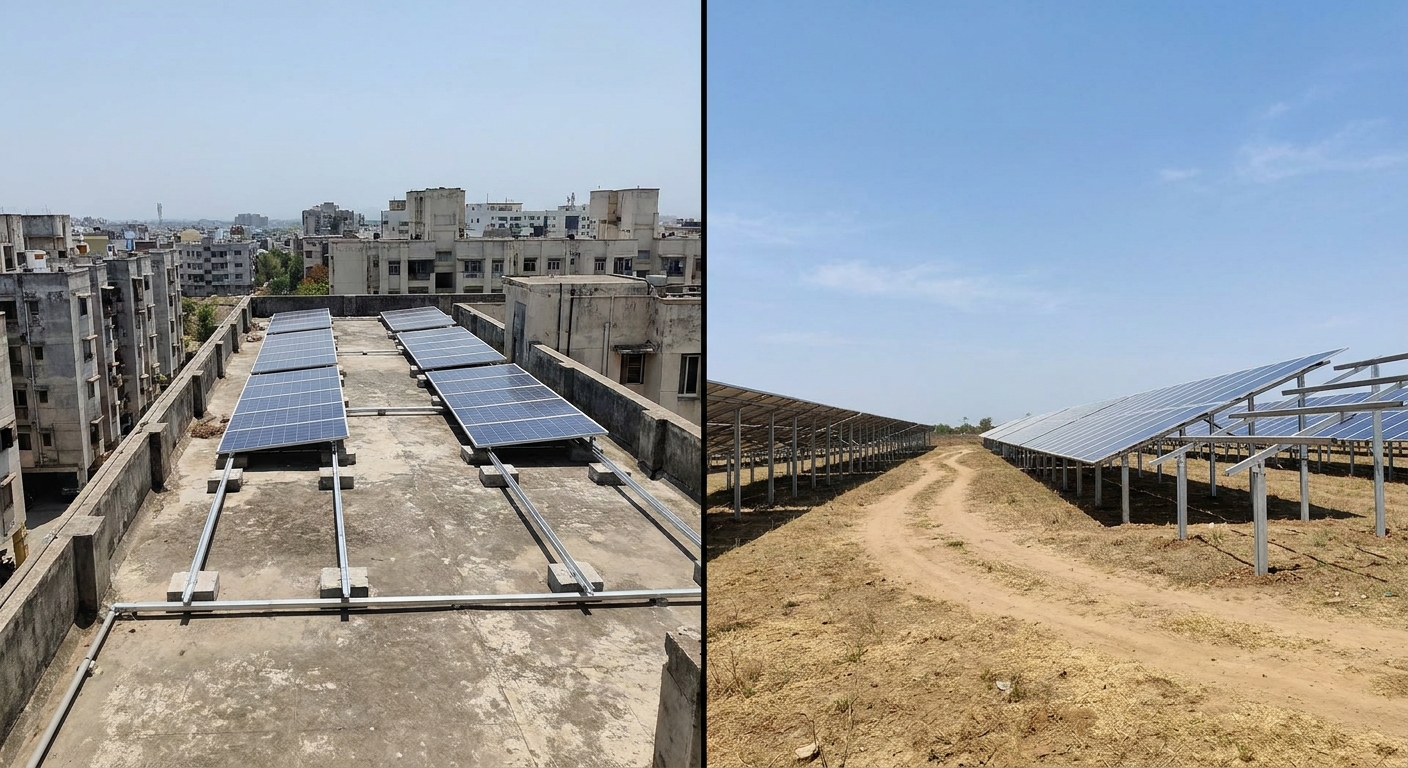
For rooftop solar projects, the structural concern shifts from foundation design to roof load capacity assessment. Soil testing is generally not required for rooftop installations, but a structural assessment of the existing roof is mandatory. This assessment must confirm that the roof can carry the additional dead load of the solar system (panels, mounting rails, inverters, and cables) plus the wind uplift loads generated by the array. For RCC roofs, this typically involves reviewing the original structural drawings and calculating residual load capacity. For older buildings without original drawings, a structural engineer must conduct a physical inspection and load assessment. Skipping this step is a serious liability risk for EPCs.
Wind Load & Structural Load Questions
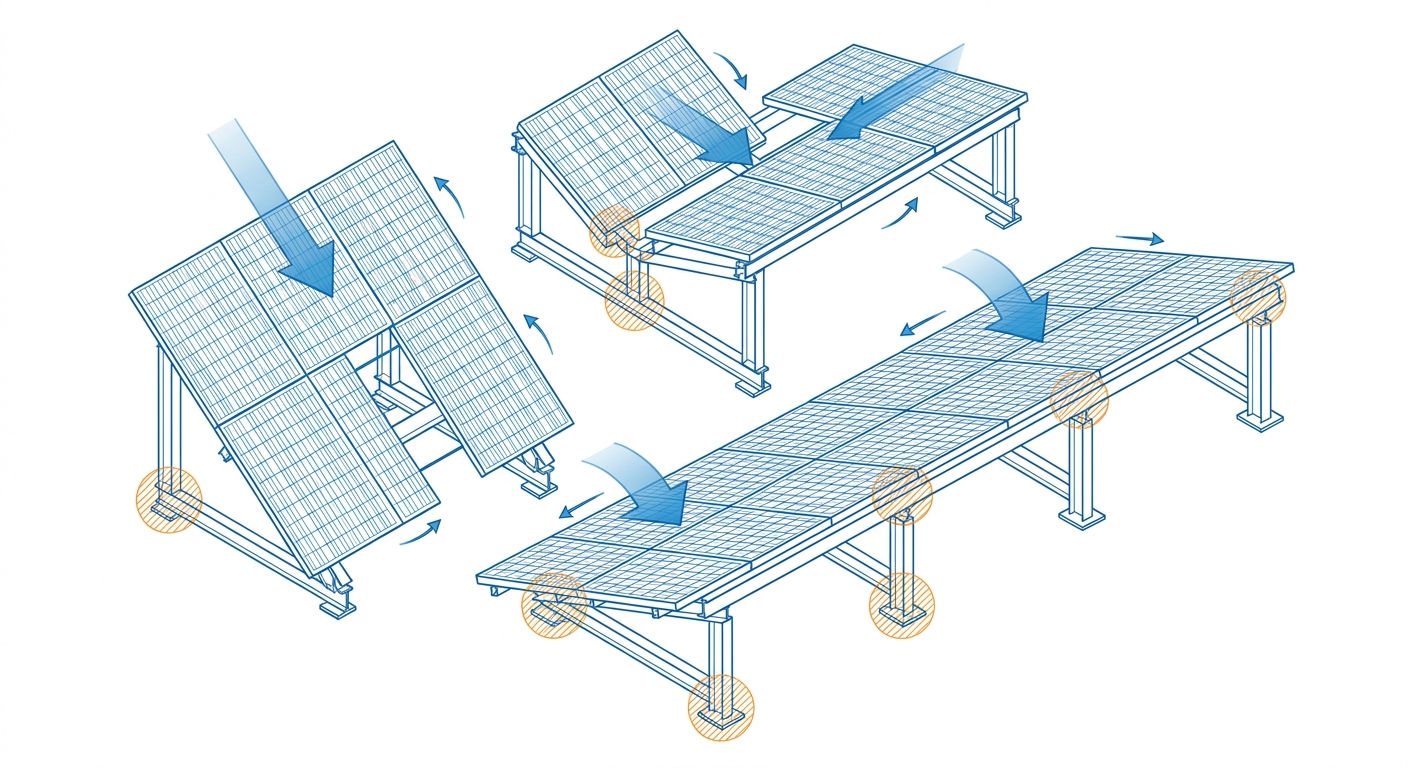
Q6: How are wind loads calculated for solar panel arrays?
Wind load calculation for solar structural design in India follows IS 875 Part 3 (Wind Loads on Buildings and Structures). The process involves determining the design wind speed for the project location (Vb), applying terrain category and topography factors to get the design wind pressure (Pd), and then calculating the net wind force on the panel array based on panel dimensions, tilt angle, and array configuration. For solar panels, both downward pressure (panels acting as a sail pushing down) and uplift force (wind getting under panels and lifting them) must be calculated. Uplift is often the governing load case for low-tilt ground-mount systems.
Q7: Which IS codes govern wind load calculations in India?
The primary codes governing structural design for solar projects in India are:
- IS 875 Part 1: Dead loads (self-weight of structure and panels)
- IS 875 Part 2: Imposed loads (maintenance personnel, snow loads in Himalayan regions)
- IS 875 Part 3: Wind loads, the most critical code for solar structural design
- IS 1893: Seismic loads, applicable in earthquake-prone zones (Zones III, IV, and V)
- IS 800: General construction in steel, governs the design of steel mounting structures
- IS 2911: Pile foundations, governs pile design for ground-mount systems
Compliance with these codes is not optional. Structural drawings submitted for project approval must reference the applicable IS codes and demonstrate code-compliant design. Authorities and lenders increasingly scrutinize structural documentation, particularly for projects seeking debt financing.
Q8: Does panel tilt angle affect wind load calculations?
Yes, significantly. Panel tilt angle is one of the key variables in wind load calculation. Higher tilt angles increase the projected area exposed to wind, which increases the drag force on the structure. However, higher tilt also changes the angle at which wind strikes the panel, affecting the pressure coefficients used in IS 875 Part 3 calculations. For ground-mount systems in India, tilt angles typically range from 10° to 25° depending on latitude and energy optimization goals. Each tilt angle produces a different structural load profile, which is why the structural design must be recalculated whenever the tilt angle changes, even by a few degrees. EPCs should never assume that a structural design for one tilt angle is valid for another.
Q9: How do cyclone-prone zones in India change structural requirements?
India’s eastern coastline, particularly Odisha, Andhra Pradesh, West Bengal, and Tamil Nadu, falls within high wind speed zones (Vb = 50, 55 m/s per IS 875 Part 3). Projects in these zones face significantly higher wind loads than projects in central or western India. The structural implications are substantial: heavier pile sections, deeper embedment, stronger rail-to-pile connections, and more robust panel clamps. For projects in Very High Wind Speed Zones (Vb ≥ 50 m/s), structural engineers often recommend additional wind tunnel testing or computational fluid dynamics (CFD) analysis to validate the design, especially for large arrays where edge and corner panels experience amplified wind pressures. The India Meteorological Department (IMD) publishes wind zone maps that should be referenced for every project location.
Q10: What is the difference between dead load, live load, and wind load in solar structures?
Understanding load types is fundamental to structural design for solar projects:
- Dead load (DL): The permanent, static weight of all structural components, panels, mounting rails, piles, clamps, cables, and inverters. Dead load is constant and predictable.
- Live load (LL): Temporary loads that vary over time. For solar structures, this includes the weight of maintenance personnel walking on or near the array, and in some regions, snow accumulation loads.
- Wind load (WL): Dynamic loads generated by wind acting on the panel array and structure. Wind loads are the most complex to calculate and typically govern the structural design for solar mounting systems.
- Seismic load (EL): Earthquake-induced forces, relevant for projects in seismic zones III, IV, and V per IS 1893.
The structural engineer combines these loads using the load combinations specified in IS 875 and IS 1893 to determine the worst-case design scenario for each structural component.
Mounting System Selection Questions
Q11: How do I choose between fixed-tilt and tracker mounting systems structurally?
From a structural design perspective, single-axis trackers are significantly more complex than fixed-tilt systems. Trackers introduce dynamic loads as panels rotate throughout the day, require more sophisticated foundation design to handle moment loads, and need careful stow-position analysis to ensure the structure can survive extreme wind events when panels are laid flat. Fixed-tilt systems are structurally simpler, more predictable, and easier to permit. For EPCs evaluating trackers, the structural engineering cost and complexity should be factored into the total project budget. Trackers also require more precise soil conditions, soft or uneven terrain can cause alignment problems that affect both structural integrity and energy yield.
Q12: What structural checks are needed for rooftop ballasted systems?
Ballasted rooftop systems, where the mounting structure is held in place by concrete blocks rather than roof penetrations, require a specific set of structural checks. The structural design must verify: (1) the total ballast weight required to resist wind uplift, (2) whether the existing roof structure can carry that ballast weight plus the panel and rail weight, (3) the distribution of ballast loads to avoid point loading on weak roof sections, and (4) the sliding resistance of the system under horizontal wind loads. Ballasted systems are popular because they avoid roof penetrations, but they are only viable on roofs with sufficient load capacity. A structural assessment of the existing roof is mandatory before specifying a ballasted system.
Q13: How does roof type affect mounting design?
Roof type is one of the first parameters a structural engineer considers for rooftop solar structural design. The three most common roof types in India each have distinct structural implications:
- RCC (flat concrete) roofs: Generally the most structurally capable. Can support ballasted or penetrating systems. Structural assessment focuses on verifying residual load capacity of the existing slab.
- Metal deck / trapezoidal sheet roofs: Common in industrial and warehouse buildings. Mounting systems use clamps that attach to the metal ribs without penetrating the roof membrane. Structural design must account for the relatively low load capacity of thin metal decking and the need to transfer loads to the underlying purlins and rafters.
- Asbestos cement (AC) sheet roofs: Fragile and often aging. Solar mounting on AC sheet roofs requires extreme care. The structural design must route all loads to the underlying steel structure, completely bypassing the AC sheets. Many structural engineers recommend replacing AC sheets before solar installation.
Q14: What are the structural differences between aluminum and galvanized steel mounting structures?
Both aluminum and galvanized steel (GI) are widely used for solar mounting structures in India, and each has distinct structural characteristics. Aluminum is lighter (about one-third the density of steel), naturally corrosion-resistant, and easier to handle on rooftops. However, aluminum has lower strength than steel, meaning larger section sizes are needed for equivalent load capacity. Galvanized steel is stronger, more cost-effective for large ground-mount systems, and better suited to high-load applications. The hot-dip galvanizing process provides corrosion protection, but the zinc coating must meet IS 4759 specifications for solar applications. For coastal and high-humidity sites, additional protective coatings may be required regardless of material choice.
Q15: How do I verify a mounting system supplier’s structural claims?
Mounting system suppliers often provide generic structural certificates that may not be valid for your specific project conditions. To verify structural claims, EPCs should request: (1) the original structural calculation report prepared by a licensed structural engineer, (2) confirmation that the calculations use the wind speed and soil conditions specific to your project location, (3) third-party test reports for connection components (clamps, bolts, splice joints), and (4) a statement of the design’s applicable IS code references. If a supplier cannot provide site-specific calculations, their generic certificate should not be accepted as the basis for project approval. An independent structural design review by your own engineering partner is the safest approach.
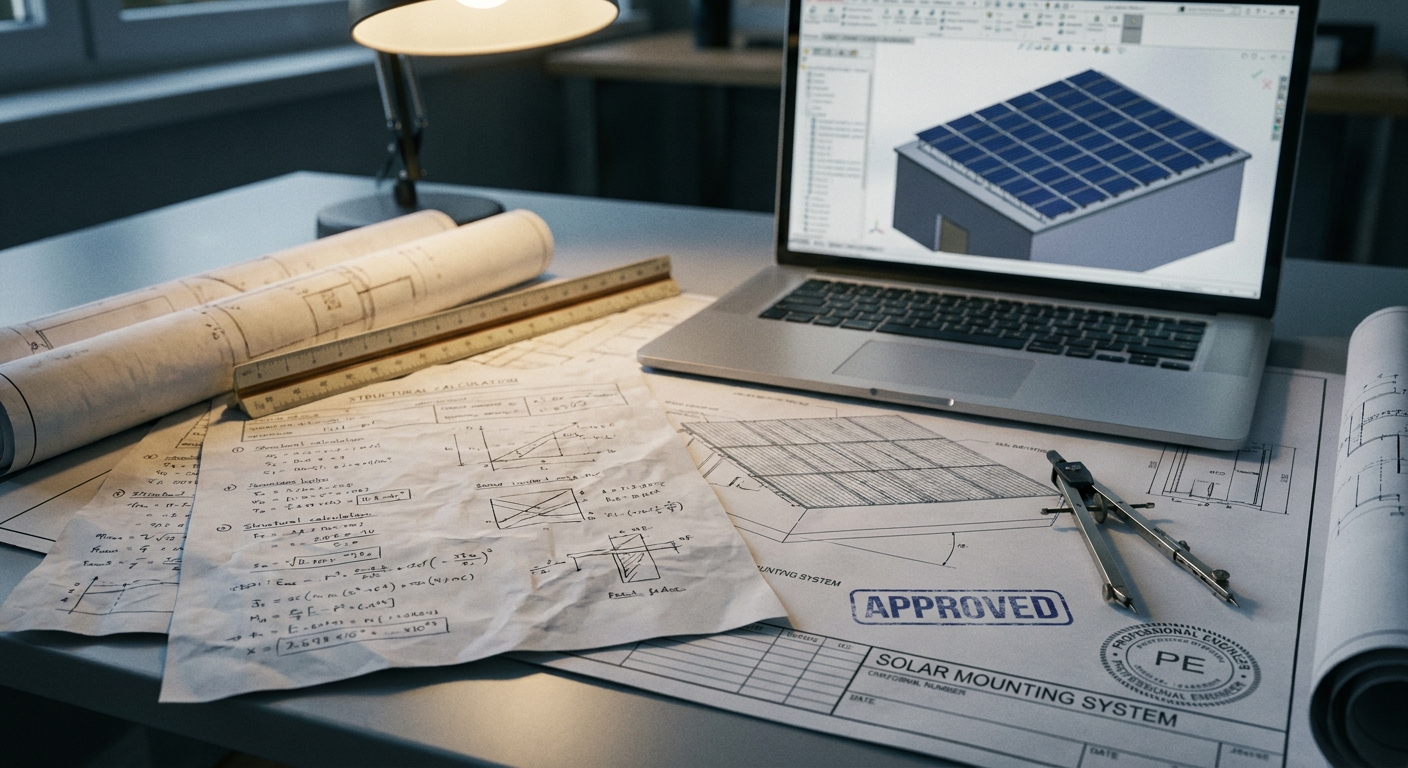
Structural Engineering Documentation Questions
Q16: What structural documents does an EPC need for project approval?
The structural documentation package for a solar project typically includes the following deliverables, all of which are part of a complete structural design package:
- Structural design basis report (DBR): Documents the design assumptions, applicable codes, load calculations, and material specifications.
- Foundation design drawings: Pile layout plan, pile section details, pile cap details (if applicable), and embedment depth specifications.
- Mounting structure drawings: Rail layout, module mounting details, inter-row spacing, and connection details for all structural joints.
- Structural calculation report: Complete load calculations for dead load, live load, wind load, and seismic load, with load combination analysis and member design checks.
- Bill of materials (BOM) for structural components: Specifying section sizes, grades, and quantities for all structural steel or aluminum members.
- Structural stability certificate: Signed and stamped by a licensed structural engineer, certifying that the design meets applicable IS codes.
For projects seeking debt financing or insurance, lenders and insurers may require additional documentation including third-party structural review reports. See our detailed guide on how project duration impacts budget to understand how structural documentation timelines affect overall project schedules.
Q17: What is a structural stability certificate and when is it required?
A structural stability certificate (SSC) is a formal document signed and stamped by a licensed structural engineer certifying that a building or structure has been designed and/or inspected to be structurally safe for its intended use. For solar projects, an SSC is typically required in two scenarios: (1) for rooftop solar installations, where the certificate confirms that the existing building can safely carry the additional solar system loads, and (2) for ground-mount solar projects, where the certificate confirms that the mounting structure and foundations are designed to applicable IS codes. Many state electricity regulatory commissions (SERCs) and discoms in India now require an SSC as part of the net metering or grid connection application. The certificate must be issued by a structural engineer registered with the relevant state engineering council.
Q18: How long does structural design and documentation take for a typical MW-scale project?
Structural design timelines depend on project scale, site complexity, and the completeness of input data. As a general guide for structural design in India:
- Rooftop projects (up to 500 kW): 5, 10 working days for a complete structural package, assuming the soil investigation report and existing building drawings are available.
- Ground-mount projects (1, 5 MW): 10, 20 working days for complete structural design and documentation, including foundation design, mounting structure drawings, and calculation reports.
- Large ground-mount projects (5, 50 MW): 3, 8 weeks depending on site complexity, number of structure types, and revision cycles.
These timelines assume that the soil investigation report, topographic survey, and wind zone data are available at the start of the structural design phase. Delays in providing these inputs are the most common cause of structural design schedule overruns. For a deeper look at how design phase timelines affect overall project budgets, read our guide on solar design timeline and cost.
Structural Design Best Practices for Indian EPCs
Beyond answering individual questions, experienced solar EPCs develop systematic practices that make structural design a competitive advantage rather than a bottleneck. Here are the practices that separate high-performing EPC companies from those that repeatedly encounter structural problems.
Use Site-Specific Designs, Not Generic Templates
The single most important best practice in solar structural design is to insist on site-specific engineering for every project. Generic mounting system certificates from suppliers are designed for average conditions. Your project site is not average, it has a specific wind zone, specific soil type, specific seismic zone, and specific roof or terrain characteristics. A structural design that doesn’t account for these specifics is not a structural design; it’s a liability. This is especially true for projects in India’s diverse geographic landscape, where conditions can vary dramatically even within a single state. Our complete regional design guide for ground-mount projects in India covers how regional conditions affect structural requirements across different states.
Coordinate Civil, Structural, and Electrical Teams Early
Structural design does not happen in isolation. The structural engineer needs inputs from the electrical design team (inverter locations, cable routing, earthing system) and the civil team (access roads, drainage, fencing) to produce a complete and coordinated design. When these teams work in silos, the result is structural drawings that conflict with electrical layouts, requiring expensive revisions. EPCs that establish a coordinated design workflow, with a single point of responsibility for design integration, consistently deliver projects faster and with fewer change orders.
Build Structural Review Into Your Quality Control Process
Before submitting structural drawings for project approval, EPCs should conduct an internal review that checks: (1) that the wind speed used in calculations matches the IS 875 Part 3 wind zone for the project location, (2) that the soil bearing capacity used in foundation design matches the actual SIR data, (3) that all structural members have been checked for both strength and serviceability (deflection limits), and (4) that the structural stability certificate is signed by a licensed engineer. This review takes a few hours but can prevent weeks of delays caused by authority rejections. For a comprehensive quality control framework, see our guide on solar feasibility study processes for EPC companies in India.
Factor Structural Costs Into Your Bids Accurately
Structural engineering is often underpriced in EPC bids, particularly for projects in challenging terrain or high-wind zones. The cost of a proper structural design, including soil investigation, structural calculations, drawings, and the stability certificate, should be explicitly line-itemed in your project budget. Trying to absorb structural engineering costs into a general “design” line item leads to scope creep and margin erosion. Experienced EPCs treat structural engineering as a distinct cost center with its own budget allocation.
How Heaven Designs Handles Solar Structural Design
Heaven Designs Private Limited, based in Surat, Gujarat, provides dedicated solar civil and structural engineering services to EPC companies across India and internationally. With a team of 50+ engineers and consultants and over 628 MW of completed design work for 752+ solar EPC clients, Heaven Designs brings deep, project-tested expertise to every structural design engagement.
The structural engineering team at Heaven Designs handles the full scope of solar structural design deliverables: soil investigation coordination, foundation design (pile, footing, and ground screw systems), mounting structure design for both rooftop and ground-mount applications, complete structural calculation reports per applicable IS codes, and structural stability certificates. The team is experienced with all major roof types, RCC, metal deck, trapezoidal, and AC sheet, and with ground-mount systems ranging from small commercial installations to 50+ MW utility-scale projects.
For EPCs working on projects in cyclone-prone coastal states, seismically active zones, or sites with challenging soil conditions, Heaven Designs provides specialized structural analysis including high-wind zone design, expansive soil foundation treatment, and seismic load assessment per IS 1893. Every structural design is site-specific, code-compliant, and delivered with the documentation package needed for project approval and financing.
“Structural design is not a checkbox, it’s the engineering foundation that every other project decision rests on. Getting it right from the start is always cheaper than fixing it after installation.”
Heaven Designs’ structural engineering services are available as a standalone service or as part of a comprehensive MW-scale detailed engineering design package that covers electrical, civil, structural, and documentation deliverables in a single, coordinated workflow. This integrated approach eliminates the coordination gaps that cause structural revisions and schedule delays.
If your EPC company is planning a rooftop or ground-mount solar project and needs a reliable structural design partner with proven experience across India’s diverse project environments, Heaven Designs is ready to support your next project. Reach out directly at service@heavendesigns.in or call +91 90811 00297 to discuss your project’s structural requirements with an experienced solar structural engineer.
Getting your structural design right is the foundation of every successful solar project, literally and figuratively. From soil testing and foundation selection to wind load calculations, mounting system verification, and structural documentation, each step in the structural engineering process protects your project, your client, and your business. Don’t leave structural decisions to generic supplier certificates or assumptions. Partner with a specialized solar structural engineering team that understands India’s diverse site conditions, applicable IS codes, and the documentation requirements of discoms, lenders, and regulators. Get a Quick Proposal Now and let Heaven Designs’ structural engineering team review your project requirements, so your next installation is built on a foundation that lasts.
This blog post was written using thestacc.com