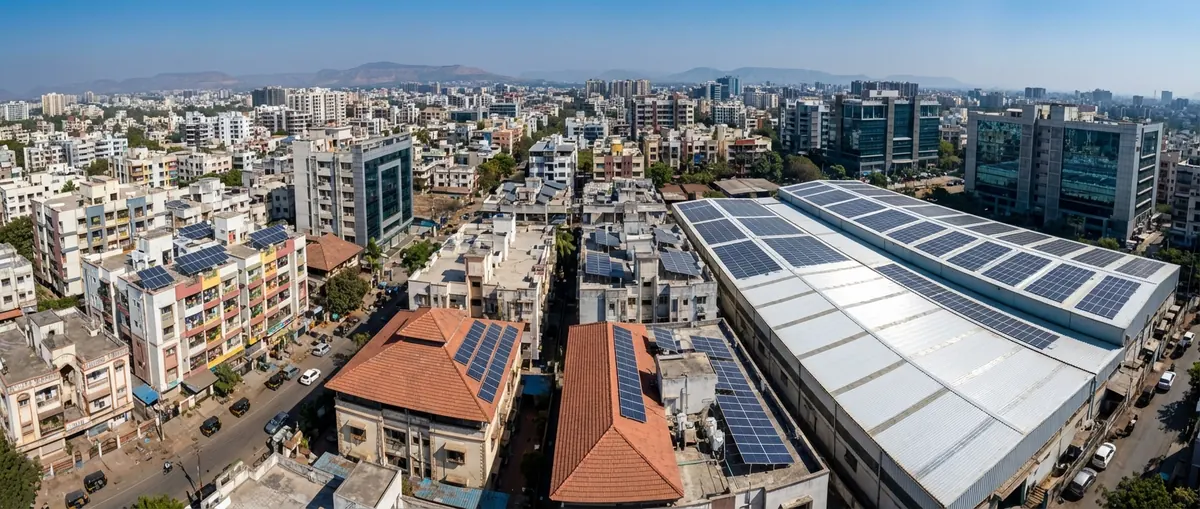
Punjab is a single-DISCOM state with one of India’s most aggressive rooftop solar targets — 1,000 MW of distributed solar by 2026 under PSPCL’s own capacity expansion plan. PSPCL, covering all 23 Punjab districts, processes a high volume of PM Surya Ghar applications alongside C&I rooftop submissions. Yet first-pass rejection rates at PSPCL sub-division offices remain above 30 percent — driven primarily by EPCs who miss Punjab’s specific agricultural pump net metering drawing requirements and the PSPCL AC disconnect specification that differs from most other Indian DISCOMs.
This guide gives solar EPCs in Punjab a complete playbook: every drawing format under the Punjab Net Metering Drawing Framework, the PSPCL portal workflow, all five approval stages, and the rejection patterns that account for the most avoidable delays.
Direct answer. PSPCL solar net metering is governed by PSERC (Punjab State Electricity Regulatory Commission) Net Metering Regulations 2015 (amended 2022), covering all 23 Punjab districts under PSPCL’s single-DISCOM structure. Applications require five drawing types — PSPCL-format SLD, General Arrangement, Earthing Diagram, Net Meter Schematic, and Structural Certificate — submitted via the PSPCL consumer portal. Processing takes 30–55 days for ≤10 kW and 50–85 days for 10 kW to 1 MW. ALMM modules and MNRE-approved inverters are mandatory from 2023.
PSPCL’s Jurisdiction — Punjab’s Single-DISCOM Structure
Punjab Power Corporation Limited (PSPCL) is the sole licensed distribution utility across all 23 districts of Punjab: Amritsar, Gurdaspur, Pathankot, Kapurthala, Jalandhar, Hoshiarpur, Nawanshahr, Ludhiana, Fatehgarh Sahib, Rupnagar, SAS Nagar (Mohali), Patiala, Barnala, Sangrur, Mansa, Bathinda, Muktsar, Faridkot, Ferozepur, Fazilka, Tarn Taran, Moga, and Firozpur.
The single-DISCOM structure means every Punjab net metering application uses one drawing format standard, one portal, and one regulatory framework — the same operational advantage as Kerala’s KSEB. The regulatory authority is PSERC — Punjab State Electricity Regulatory Commission.
For a state-by-state comparison, see DISCOM net metering process across India. For neighbouring state guides, see JVVNL Solar Net Metering Guide (Rajasthan) and Delhi Solar Net Metering Guide.
Punjab's agricultural pump net metering opportunity. Punjab has the highest density of agricultural pump connections in India — over 1.4 million metered and unmetered AP connections. PSERC's net metering regulations allow metered agricultural pump consumers to install up to 5 kW of rooftop solar under net metering. This creates a massive potential pipeline for EPCs who can navigate PSPCL's agricultural consumer-specific drawing requirements.
Eligibility — Consumer Categories Under PSERC 2022 Regulations
| Consumer Category | Tariff Code | Max System Size | Export Rate |
|---|---|---|---|
| Domestic LT (single phase) | DS | Up to 10 kW | PSERC determined rate |
| Domestic LT (three phase) | DS | Up to 75 kW | PSERC determined rate |
| Non-domestic / Commercial | NDS / Small Power | Up to 150 kW | PSERC determined rate |
| Industrial LT | Medium Supply / Large Supply | Up to 500 kW | PSERC determined rate |
| HT Commercial / Industrial | HT-1 / HT-2 | Up to 1 MW | PSERC determined rate |
| Agricultural pump (metered) | AP (metered) | Up to 5 kW | PSERC determined rate |
| Government / Municipal | TS | Up to 1 MW | PSERC determined rate |
Note. PSERC's export rate is set at an avoided cost basis, revised annually. For FY2024–25, this was approximately ₹3.80–₹4.10/kWh — competitive among North Indian DISCOMs. Punjab's summer peak tariff for commercial and industrial consumers (₹7.50–₹9.50/kWh) produces payback periods below six years for most rooftop projects given Punjab's solid solar resource (5.0–5.5 peak sun hours in most districts).
The Punjab Net Metering Drawing Framework — 5 Mandatory Formats
Single Line Diagram — PSPCL Format
The [SLD](/glossary/sld/) must use PSPCL's symbol standard. Required elements: PV array → DC protection → inverter → AC main switch with PSPCL-specified AC disconnect (see note below) → bidirectional net meter → PSPCL grid, with consumer account number in title block, cable sizes, fault protection ratings, inverter make/model, and anti-islanding callout. PSPCL requires a visible lockable AC disconnect on the meter board side — a load break switch with a provision for PSPCL's lineman to lock the disconnect in open position during maintenance. This is a safety requirement specific to PSPCL that differs from most other DISCOMs' isolation requirements.
General Arrangement / Site Layout
To-scale layout of module array, cable trays, inverter position, earthing pits, and distance from PSPCL meter board. North arrow and scale bar mandatory. For agricultural pump installations — flat-ground solar pumping shelters in rural Punjab — the layout must also show the pump motor position relative to the array and the separation distance from the metered pump connection, confirming that the solar system serves the same premises as the metered pump.
Earthing and Lightning Protection Diagram
Standalone schematic showing GI strip earthing from module frames and inverter body to electrode, lightning rod position with coverage radius, electrode specification (soil type, depth, target resistance ≤5 Ω). Punjab's alluvial soil in the Indus plain generally allows standard pipe earthing to achieve ≤5 Ω resistance. However, the Shivalik Hills foothills (Rupnagar, Hoshiarpur, Pathankot districts) have rocky sub-surface soil that may require deeper electrodes or chemical compound earthing — specify the soil type for these districts.
Net Meter Connection Schematic
Shows the bidirectional net energy meter position, the lockable AC disconnect position (on the PSPCL side of the meter board), the export path from inverter AC output, and the isolation arrangement. The lockable AC disconnect must appear in this schematic — PSPCL's metering team uses this drawing to confirm the disconnect is physically accessible for their lineman without entering the consumer's premises.
Structural Load Certificate
Signed and stamped structural engineer certificate under IS 875. Required for all PSPCL applications. Punjab falls primarily in IS 875 Part 3 Basic Wind Speed zone 47 m/s (most districts) — higher than interior India. The structural certificate must reference this zone. Punjab's agricultural regions also have a significant number of tube-well shed (tin/sheet) roof installations that require specific wind uplift calculations for sheet roofing fixings.
Watch out. PSPCL's lockable AC disconnect requirement — a load break switch with a PSPCL padlock provision — is the leading source of rejection from non-Punjab EPCs. The device itself adds approximately ₹1,500–₹3,000 to the installation cost and must appear on both the SLD and the net meter schematic. Without it, PSPCL's safety team will not clear the commissioning regardless of whether the drawings pass Stage 3 review.
Full Document Checklist
Category A — Consumer and Property Documents
- PSPCL electricity bill (account number, tariff category, sanctioned load)
- Property ownership proof (Punjab land records — fard/jamabandi from Patwari, or registered deed)
- Aadhaar card / PAN card of consumer
Category B — Technical Drawings (5 Formats per Punjab Net Metering Drawing Framework)
- SLD — PSPCL format with lockable AC disconnect callout and anti-islanding note (Drawing 1)
- General Arrangement (for AP installations: include pump motor position relative to array) (Drawing 2)
- Earthing and Lightning Protection Diagram with soil type and IS 875 zone (Drawing 3)
- Net Meter Connection Schematic with lockable AC disconnect position (Drawing 4)
- Structural Load Certificate with IS 875 zone 47 m/s and sheet roof wind uplift note if applicable (Drawing 5)
- Load calculation sheet — signed by licensed contractor
Category C — Equipment Compliance
- Module datasheets with ALMM compliance certificate
- Inverter on current MNRE-approved list
- Anti-islanding test certificate
- Lockable AC disconnect specification sheet
Category D — Contractor and Inspection
- Electrical contractor licence — Punjab state scope, currently valid; preferably PSPCL-registered
- CEIG or Punjab Electrical Inspector report for systems above 25 kW
- Installation completion certificate signed by licensed contractor
Category E — Portal and Payment
- Application registered on PSPCL consumer portal (pspcl.in/consumer portal)
- Scanned documents uploaded; portal reference number noted
- Physical file at PSPCL sub-division with portal reference
- Application fee and net meter cost deposit
Stage-by-Stage PSPCL Approval Process
30–50
Days — ≤10 kW clean submission
Heaven Designs field data, Q1 2026
50–80
Days — 10–100 kW
Heaven Designs field data, Q1 2026
65–85
Days — 100 kW to 1 MW
Heaven Designs field data, Q1 2026
~66%
First-pass approval — PSPCL divisions
Mercom India, 2024 rooftop tracker
Stage 1 — Portal Submission and Physical File Acceptance
Complete PSPCL consumer portal application, upload scanned documents, obtain reference number. Submit physical file at the sub-division AE office. AE performs a format check; lockable AC disconnect notation on SLD and net meter schematic is checked at intake.
Stage 2 — Technical Feasibility (AE/XEN Assessment)
AE or Executive Engineer (XEN) assesses feeder hosting capacity. Punjab’s rural feeder network is extensive but lightly loaded outside agricultural pump pump hours — feeder saturation is generally not a constraint except in dense urban Ludhiana, Amritsar, and Jalandhar commercial zones.
Timeline: 8–15 working days.
Stage 3 — Drawing Review
PSPCL’s technical team reviews all five drawings. Lockable AC disconnect notation, soil type in earthing schematic, IS 875 zone 47 m/s in structural certificate, and (for AP applications) pump motor position in GA are the PSPCL-specific checkpoints.
Timeline: 8–15 working days.
Field tip. PSPCL's rural sub-division offices in Ludhiana rural, Barnala, Mansa, and Muktsar districts process high volumes of agricultural pump net metering applications under the PM Surya Ghar scheme. These offices have dedicated solar application queues that move faster than the general commercial queue. If your project is a residential or small agricultural application in these districts, file under the PM Surya Ghar solar channel on the PSPCL portal — it routes to a faster queue.
Stage 4 — Net Meter Installation
PSPCL procures and installs the bidirectional net energy meter. Meter availability is generally good in urban divisions; rural districts may experience 15–25 day lead times.
Timeline: 10–25 working days.
Stage 5 — Commissioning and Safety Inspection
EPC commissions with PSPCL lineman/AE present. PSPCL’s safety team verifies the lockable AC disconnect is physically installed and that PSPCL can lock it independently. Punjab CEI inspection required above 25 kW. PSPCL issues a Solar Net Metering Connection Certificate for records and insurance.
Net Metering Billing in Punjab
PSERC uses monthly net billing with year-end cash settlement at the avoided cost rate.
| Billing Scenario | PSPCL Treatment |
|---|---|
| Monthly net import | Billed at applicable PSPCL tariff |
| Monthly net export | Banked as credit |
| Year-end surplus | Cash settlement at PSERC avoided cost rate |
| Agricultural pump net metering | Surplus adjusts against AP tariff charges |
PROS — PSPCL NET METERING
- Single DISCOM state — one drawing format, one portal, no jurisdiction confusion
- 1 MW ceiling for HT consumers
- Agricultural pump net metering — large untapped pipeline in rural Punjab
- Solid solar resource (5.0–5.5 peak sun hours/day)
- Competitive PSERC avoided cost export rate (~₹3.80–₹4.10/kWh)
CONS — PSPCL NET METERING
- Lockable AC disconnect requirement is unique to PSPCL — adds cost and drawing complexity
- IS 875 wind zone 47 m/s is relatively high for North India — structural overhead
- Agricultural pump drawings require pump motor position on GA — extra site data needed
- Physical file still required alongside portal submission
- Shivalik Hills foothills districts have rocky soil earthing challenges
Verdict. PSPCL net metering is operationally manageable — single DISCOM, competitive tariffs, strong agricultural pump pipeline. The one template update every EPC needs before entering Punjab is the lockable AC disconnect: build it into your SLD and net meter schematic permanently. After that, PSPCL’s process is comparable to other North Indian DISCOMs in speed and complexity. Punjab’s agricultural pump net metering opportunity is particularly under-exploited — EPCs who develop a standardised AP-consumer package for metered pump connections can access a large rural pipeline with relatively short application processing times.
Punjab Solar Market Context
Punjab has been expanding its renewable energy base under the Punjab New & Renewable Sources of Energy Act. According to Mercom India’s Punjab solar tracker, Punjab had approximately 2,400 MW of total installed solar by Q1 2025, with rooftop growing rapidly on the back of PM Surya Ghar registrations and Ludhiana, Amritsar, and Jalandhar’s large commercial and industrial base.
MNRE PM Surya Ghar data shows Punjab as one of the top states by total registrations, with a high proportion of rural residential registrations relative to southern states — reflecting Punjab’s prosperous agricultural community and high rural electricity consumption (largely from subsidised agricultural pump connections, which creates an unusual consumer segment for solar: farming families who have high electricity tariff exposure on their commercial and residential connections, even if their pump connections are subsidised).
IEA Solar PV 2024 notes North India’s growing rooftop solar market — Punjab, Haryana, and Uttar Pradesh together represent a substantial urban and peri-urban rooftop pipeline that was historically less developed than South India but is accelerating rapidly.
IRENA Renewable Energy Statistics 2023 places North India’s distributed solar market at an early stage of a long acceleration curve, supported by falling module prices, rising DISCOM tariffs, and improving state-level DISCOM portal infrastructure.
The 10 Most Common PSPCL Rejection Reasons
| # | Rejection Reason | Fix |
|---|---|---|
| 1 | Lockable AC disconnect missing from SLD | Add lockable load break switch with PSPCL padlock provision on the PSPCL-side of the SLD |
| 2 | Lockable AC disconnect missing from net meter schematic | The disconnect must appear in Drawing 4 — both SLD and net meter schematic must show it |
| 3 | IS 875 wind zone not specified in structural certificate | Punjab is predominantly zone 47 m/s — specify this in the certificate; do not use a generic “IS 875 compliant” statement |
| 4 | Pump motor position not shown on GA for agricultural pump applications | For AP consumer net metering, add pump motor position and separation distance from the solar array on the GA drawing |
| 5 | ALMM compliance certificate missing | Mandatory for all post-January 2023 applications |
| 6 | Consumer account number absent from SLD title block | Use the PSPCL account number (12 digits), not the meter serial number |
| 7 | Earthing scheme missing for Shivalik foothills districts (Rupnagar, Hoshiarpur) | For rocky sub-surface districts, specify deep bore or chemical compound earthing; do not use standard pipe earth design without soil type confirmation |
| 8 | Contractor licence not Punjab state scope | Punjab PSPCL installations require a Punjab state-registered electrical contractor |
| 9 | Portal and physical file inconsistent | Cross-check system capacity, module, and inverter between portal and physical file |
| 10 | Physical file missing despite portal submission | PSPCL portal submission alone is not sufficient; physical file with portal reference must be delivered to sub-division |
How Heaven Designs Helps Punjab EPCs
PSPCL’s lockable AC disconnect requirement and IS 875 zone 47 m/s specification are the two template updates that deliver immediate first-pass approval improvement for EPCs entering Punjab. Heaven Designs’ Punjab drawing templates have both pre-built as permanent standard elements.
- Solar Rooftop Detailed Engineering Design — Full PSPCL-format drawing package: SLD with lockable AC disconnect, GA with AP pump position option, earthing schematic with Punjab soil type notation, net meter schematic with lockable disconnect position, structural certificate with IS 875 zone 47 m/s. Delivered 3–5 business days.
- Electrical CEIG Drawings — Punjab Electrical Inspector-ready drawings for systems above 25 kW.
- Solar 3D Pre-Design — 48-hour 3D layout for Punjab commercial and agricultural rooftop projects.
- Solar Rooftop Design Company India — Engineering bench for EPCs managing simultaneous projects across PSPCL, HVPNL (Haryana), and North India DISCOMs.
- Download sample deliverables — Sample pack includes a PSPCL-format SLD with lockable AC disconnect from a completed Ludhiana commercial rooftop project.
For foundational context: DISCOM, net metering in India, SLD.
FAQ
What is PSPCL’s maximum net metering system size?
1 MW for HT consumers under PSERC 2022 amended regulations. For LT domestic consumers, the limit is the sanctioned load (typically 10 kW single-phase, 75 kW three-phase). Agricultural pump consumers are limited to 5 kW. All systems are subject to feeder hosting capacity — generally not a constraint in Punjab’s rural areas but applicable in urban commercial zones.
What is the lockable AC disconnect and why does PSPCL require it?
The lockable AC disconnect is a load break switch installed on the PSPCL side of the meter board that PSPCL’s lineman can lock in the open position during grid maintenance or inspection, isolating the consumer’s solar system from the grid without entering the consumer’s premises. PSPCL’s safety protocol requires that utility personnel be able to de-energise a consumer’s solar system from the street side — a safety requirement specific to Punjab’s PSPCL that is not standard in most other Indian DISCOMs’ net metering frameworks.
Can metered agricultural pump consumers apply for net metering in Punjab?
Yes. PSERC’s net metering regulations allow metered agricultural pump (AP) consumers to install up to 5 kW of rooftop or ground-mounted solar under net metering. The application process is the same five-drawing framework as other consumer categories, with the additional requirement that the GA drawing shows the pump motor position relative to the solar array. Unmetered AP consumers (on flat-rate agricultural tariff) are not eligible for net metering — they would need to convert to a metered connection first.
How does Punjab’s solar irradiance compare to Rajasthan and Gujarat?
Punjab’s average GHI is approximately 5.0–5.5 peak sun hours per day across most districts — lower than Rajasthan (5.5–6.5) and comparable to Gujarat (4.8–5.8). Punjab’s winter haze and fog (November to February) can reduce winter-quarter generation by 15–25% relative to the annual average. For accurate financial modelling, use district-specific Meteonorm or Solargis data rather than a national average; winter generation dip is significant in Punjab and should be reflected in client projections.
What land records documentation is accepted by PSPCL for property proof?
Punjab’s primary land record is the jamabandi (fard) obtained from the Patwari or via Punjab’s online land records portal. Registered sale deeds, lease agreements registered with the Sub-Registrar’s office, and property tax receipts are also accepted. Urban properties may use municipal assessment certificates. Agricultural land installations should submit the fard of the landholding on which the solar system is installed — PSPCL requires the fard to confirm the consumer’s ownership of the installation premises for AP consumer net metering applications.
Is there a Punjab state solar subsidy separate from PM Surya Ghar?
As of FY2024–25, Punjab’s state-level rooftop solar subsidy was primarily channelled through PM Surya Ghar rather than a standalone state scheme. PSPCL’s portal integrates with the PM Surya Ghar national portal for eligible residential consumers. The Punjab Renewable Energy Development Agency (PREDA) administers state-level renewable energy programmes but was not running a separate residential solar subsidy as of the current PSERC regulatory framework. Confirm with PREDA for any updated state-level incentives at the time of application.