
This explainer is for rooftop EPCs and installers tracking the PM Surya Ghar 2.0 policy. MNRE is drafting PM Surya Ghar 2.0, and the change that should worry every rooftop EPC is not the headline subsidy number. It is the shift from upfront capacity-based payouts to generation-based incentives, verified through a digital lifecycle record MNRE is calling the Digital Solar Passport.
Reports from Times of India and Financial Express indicate the government is building a program that pays for kilowatt-hours actually exported and consumed, not just kilowatts of nameplate capacity installed.
Quick answer. PM Surya Ghar 2.0 is a proposed second phase of India’s rooftop solar subsidy scheme, reported in mid-2026 as under MNRE deliberation. Reported changes: subsidy linked to metered generation instead of installed kW, an incentive for home battery storage, and shared rooftop solar for apartments. No formal MNRE draft notification was published at the time of writing.
For an Indian EPC that has spent the last two years learning DISCOM net-metering paperwork under the original scheme, 2.0 changes the unit economics of every quotation, the documentation burden per site, and the technical scope an installer must own.
This piece breaks down the engineering mechanics behind each proposed pillar, benchmarks the design against comparable programs abroad, and sets out what a rooftop EPC should change in its design and commissioning workflow before the rules land.
What Is the PM Surya Ghar 2.0 Policy? Generation-Based Incentives
Generation-based incentives pay a subsidy tranche proportional to metered energy output over a defined period, rather than releasing the full subsidy against installed DC capacity at commissioning. Under the original PM Surya Ghar Muft Bijli Yojana, a household received a fixed capital subsidy (up to ₹78,000 for a 3 kW residential system) disbursed once net metering was approved.
The proposed 2.0 design reportedly retains a base capital subsidy but adds a performance-linked component paid out over 12 to 24 months based on verified generation data pulled from the smart meter or DISCOM billing system.
This is a meaningful engineering shift. A design that clears net-metering approval but underperforms due to poor tilt selection, shading loss, or an undersized string configuration now directly reduces the homeowner’s total subsidy realization, not just their bill savings.
EPCs that historically over-promised generation to close a sale inherit a new liability: a client whose subsidy check is smaller than expected because the system underperforms against the PVsyst estimate quoted at proposal stage.
Definition. A generation-based incentive (GBI) disburses subsidy or tariff support proportional to metered kilowatt-hours delivered, as distinct from a capital subsidy that pays a fixed amount against installed capacity regardless of downstream yield.
| Design lever | Effect under capacity-based subsidy (2015-2026) | Effect under generation-based subsidy (proposed 2.0) |
|---|---|---|
| Tilt and azimuth optimization | Cosmetic, subsidy unaffected by minor yield loss | Directly affects the performance-linked subsidy tranche |
| Shading analysis rigor | Reduces bill savings only | Reduces both bill savings and subsidy payout |
| Inverter oversizing/undersizing | Warranty and efficiency concern | Now a subsidy-realization concern, tracked over 12-24 months |
| String design and mismatch loss | Buyer absorbs the loss silently | Loss becomes visible in the Digital Solar Passport’s monitored output |
| As-built vs. design deviation | Rarely audited post-installation | Subject to lifecycle monitoring comparison against the design-stage PVsyst yield |
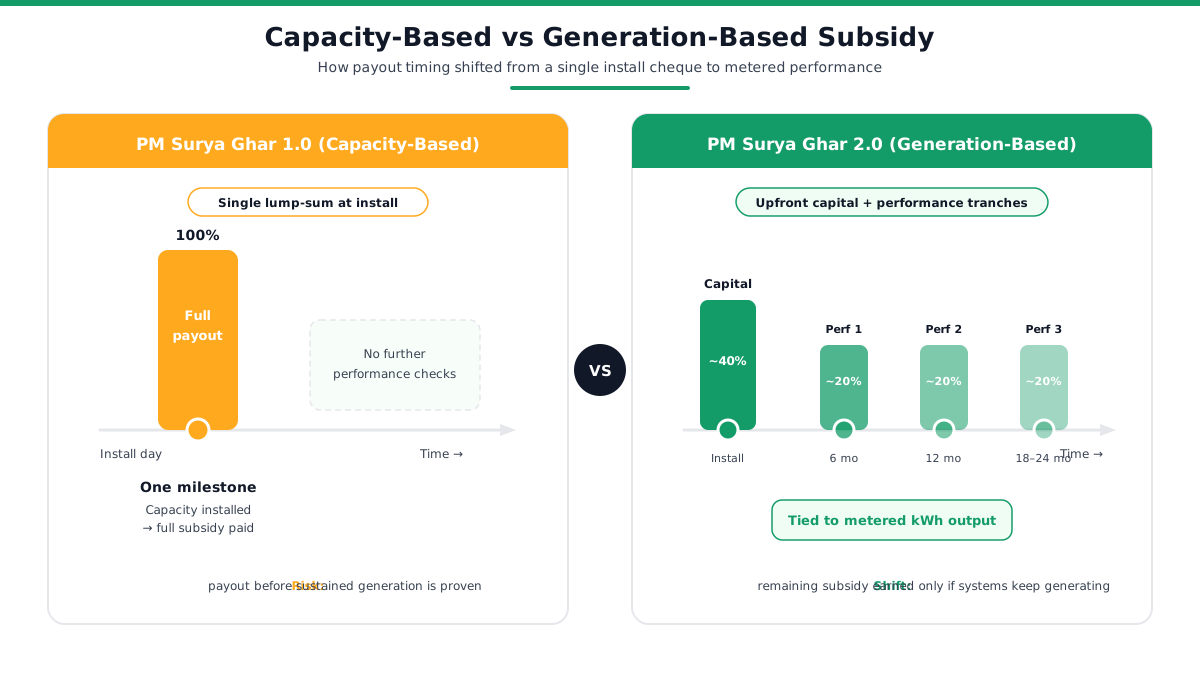
The practical takeaway: EPCs need bankable pre-design yield modeling at the proposal stage, not a rule-of-thumb kWh/kWp estimate, because that number becomes the benchmark a homeowner’s actual generation gets measured against for up to two years.
Battery Energy Storage Systems: The New Design Variable
PM Surya Ghar 2.0 reportedly introduces a dedicated subsidy component for residential and small commercial BESS paired with rooftop solar, aimed at improving self-consumption and reducing DISCOM exposure to reverse power flow during high-solar, low-demand daytime hours. This is India’s rooftop program catching up to a problem grid operators have flagged since 2022: net-metered rooftop solar at scale creates duck-curve stress on low-voltage distribution feeders.
Adding a battery to a rooftop system is not a plug-and-play accessory. It requires re-sizing the inverter (hybrid inverter selection versus AC-coupled retrofit), recalculating the DC/AC ratio, verifying the battery’s round-trip efficiency against the site’s load profile, and running a fresh BESS sizing exercise against actual consumption data rather than nameplate solar capacity.
Field tip. Size the battery against the home's evening load window first, then check solar oversizing second. A battery sized off solar capacity alone routinely ends up 20-30% larger than the load actually requires.
40-60%
Typical self-consumption lift with a right-sized BESS
Indicative; depends on the household load profile
2
Meter classes required: generation meter + bi-directional net meter
CEA Connectivity Regulations, 2019, as amended
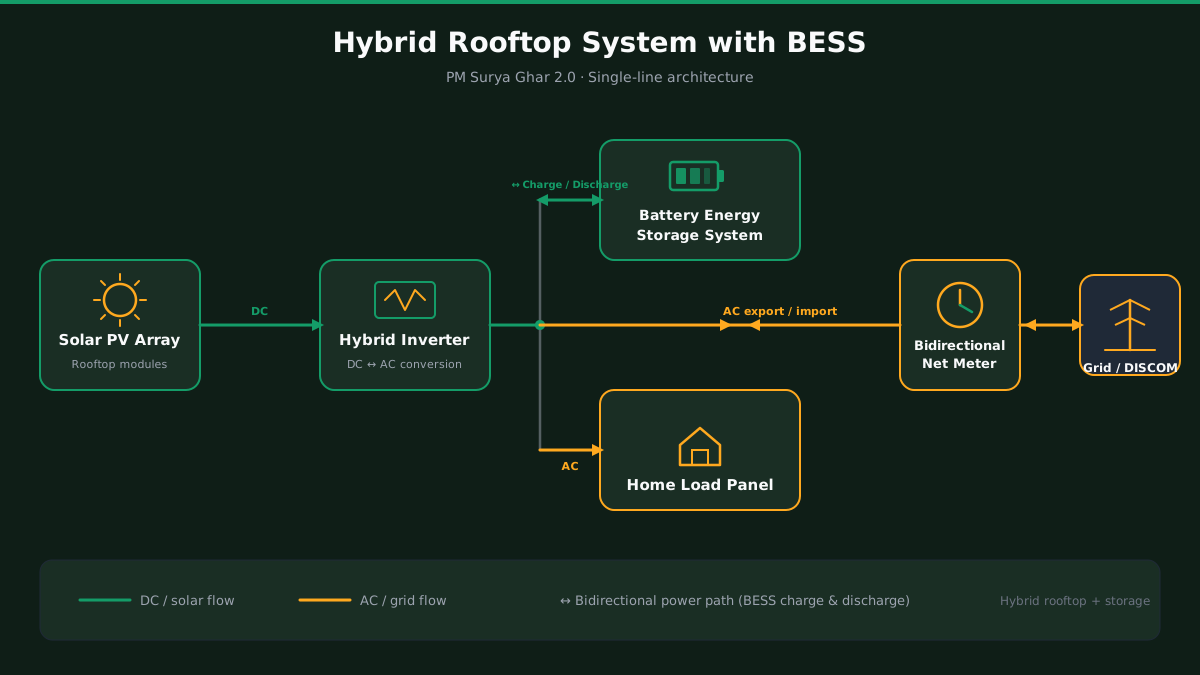
For EPCs, this means the BESS sizing methodology used for C&I hybrid projects now scales down into the residential rooftop segment, and design teams that only know PV string sizing will need to add battery dispatch modeling to their skill set.
Grid Flexibility and Net Metering Implications
The single hardest engineering problem PM Surya Ghar 2.0 has to solve is grid flexibility at the low-voltage distribution level. As rooftop solar grows, DISCOMs in high-penetration feeders (parts of Gujarat, Rajasthan, and Delhi) report voltage rise and reverse power flow during midday.
A generation-based incentive without a corresponding change to net-metering rules risks paying rooftop owners for exports the grid cannot safely absorb.
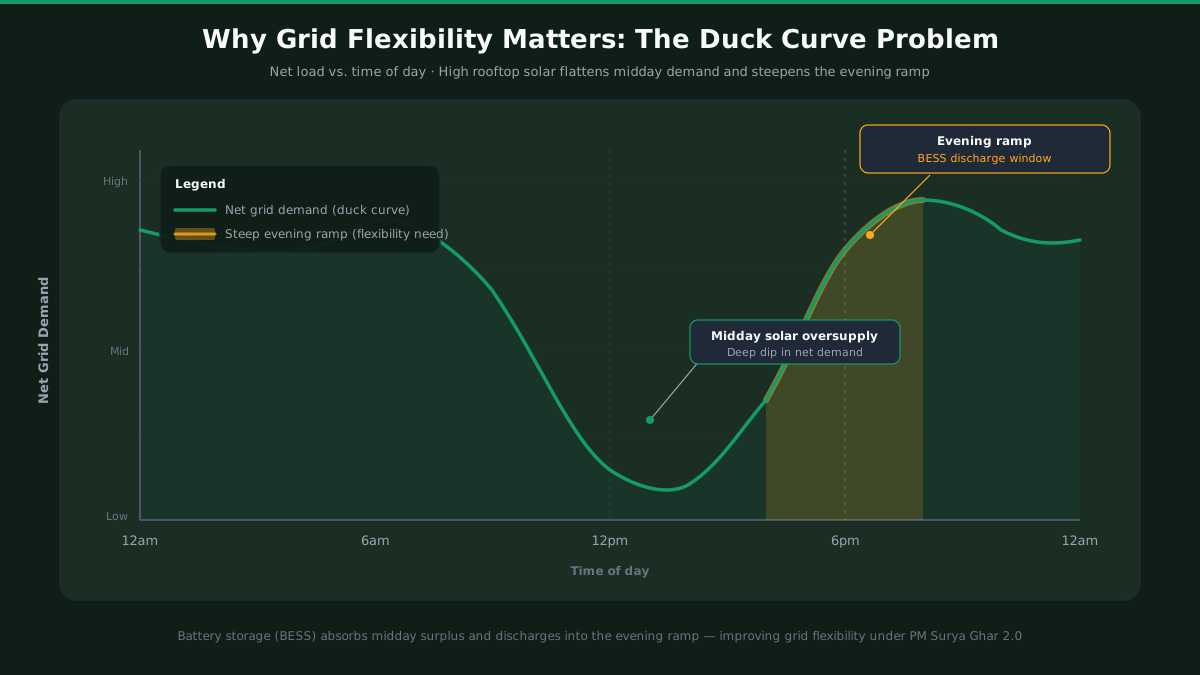
Financial Express reporting suggests 2.0 is expected to pair the BESS incentive with revised net-metering or “net billing” structures that value self-consumed solar differently from exported solar, an approach some states already use (see net metering vs net billing and the 2026 DISCOM net-metering changes). DISCOM net-metering rules already vary significantly by state, and a national program layering new BESS and generation-tracking requirements on top of that patchwork adds real design complexity for EPCs operating across state lines.
Verdict. EPCs quoting rooftop projects in feeders with known reverse-flow constraints should model net-billing exposure now, before 2.0 rules are finalized, because a system optimized purely for export under current gross/net metering rules may need a battery retrofit within 18-24 months to stay economical under revised tariffs.
AI Quality Assurance: What It Actually Checks
The AI quality assurance layer referenced in early reporting is best understood as an automated verification step inserted between installation completion and subsidy release. Rather than relying solely on a DISCOM field inspector’s manual sign-off, MNRE’s national portal is expected to cross-check installation photographs, generation data trends, and equipment serial numbers against ALMM-listed manufacturers using computer-vision and anomaly-detection models.
Photo verification
Geo-tagged installation images are checked against expected module count, mounting type, and roof orientation captured at proposal stage.
Serial number and ALMM cross-check
Module and inverter serials are matched against the ALMM registry to flag non-compliant equipment before subsidy release.
Generation anomaly detection
The first 90 days of metered output are compared against the site's PVsyst-modeled yield curve; systems trending more than roughly 15-20% below model get flagged for inspection before the performance subsidy tranche releases.
This is the mechanism that makes the earlier point about bankable pre-design modeling non-negotiable: an EPC’s PVsyst or Helioscope yield estimate is no longer a sales document. It becomes the reference curve an algorithm checks the installed system against.
The Digital Solar Passport and Lifecycle Monitoring
The Digital Solar Passport is the record-keeping backbone that makes generation-based incentives and AI quality assurance possible. Conceptually, it functions as a per-installation digital twin: a persistent record tied to a unique system ID that captures design parameters, equipment serials, commissioning data, DISCOM approval status, and ongoing generation telemetry across the system’s operational life.
The Passport-to-Payout Loop
This is the operational framework EPCs should internalize, because it replaces the old “install, get inspected, get paid once” sequence with a continuous data loop.
- Design registration. The EPC uploads the PVsyst/design-stage yield model, single-line diagram, and BOQ to the national portal, generating the passport’s baseline record.
- Commissioning capture. Geo-tagged photos, equipment serials, and net-meter installation data are logged against the passport ID at handover.
- AI QA checkpoint. The system cross-checks commissioning data against ALMM listings and the design baseline before releasing the capital subsidy tranche.
- Generation telemetry. Smart meter or inverter data feeds the passport monthly, building the performance record used for the generation-linked subsidy tranche.
- Lifecycle audit. At year 1, year 3, and warranty-expiry milestones, actual generation is reconciled against the baseline model, flagging systems for O&M intervention or subsidy clawback review.
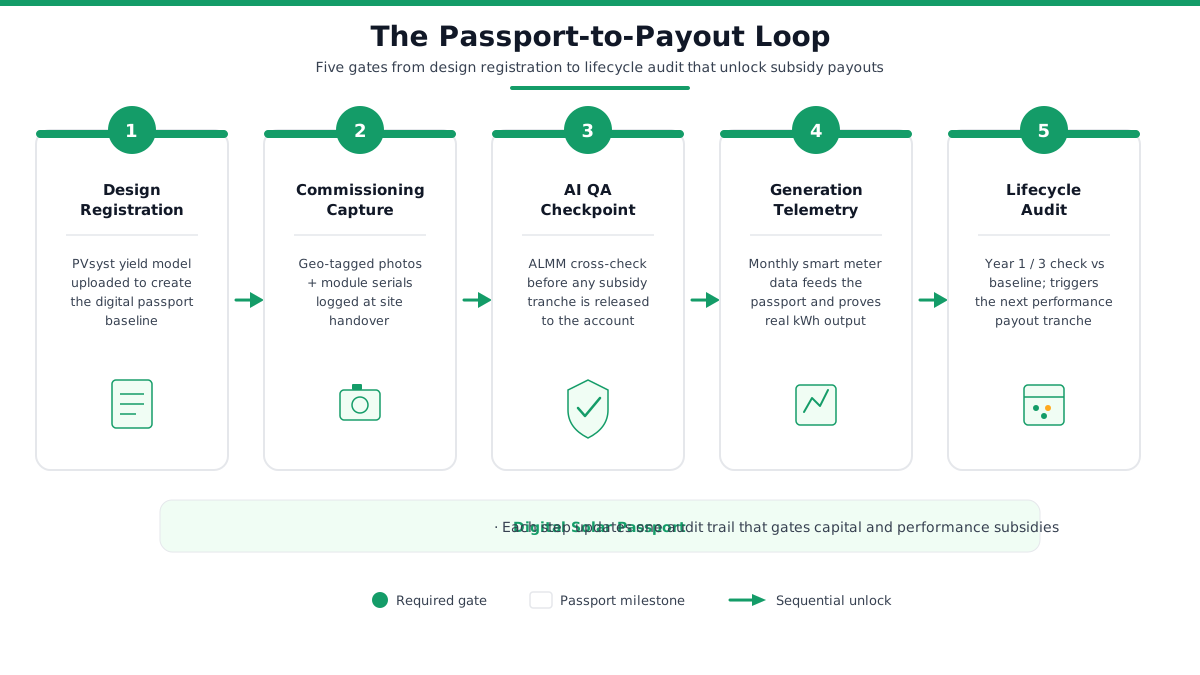
Lifecycle monitoring at this scale is new for India’s residential segment. It is standard practice in utility-scale IPP portfolios, where P50/P90 yield tracking against actual performance already drives lender covenants, but bringing that discipline down to a 3 kW rooftop system changes what “commissioning documentation” means for a residential EPC.
Shared Rooftop Solar and Data Transparency
Shared rooftop solar addresses a structural gap in the original scheme: apartment buildings, gated communities, and multi-tenant commercial buildings where no single occupant owns enough contiguous roof area or electricity load to justify an individual net-metered system.
Under a shared model, a housing society or building owner installs a common rooftop system, and generation credits are apportioned across multiple electricity connections through virtual net metering or group net metering, mechanisms that several state rooftop regulations already allow (see our community solar design basics).
PROS FOR EPCS
- Larger single contract value per building versus per-unit sales
- One site survey and one structural assessment serves multiple beneficiaries
- Opens societies and RWAs as a new sales channel beyond individual homeowners
CONS FOR EPCS
- Credit apportionment logic varies by DISCOM, adding a new compliance layer
- Structural loading and shared-asset ownership agreements require legal documentation EPCs do not typically draft
- Billing disputes among beneficiaries can delay final payment collection
Data transparency underpins the whole shared model: without a passport-style record showing exactly how much energy each connection is credited, disputes among co-owners are inevitable. This is also why grid modernisation, meaning DISCOM investment in smart meters and advanced metering infrastructure, is a prerequisite rather than a parallel initiative. A generation-based, shared-credit subsidy program cannot function on analog meters read manually once a quarter.
Impacts on EPC Companies: What Changes in Scope of Work
| Workflow stage | Under PM Surya Ghar 1.0 | Under proposed 2.0 |
|---|---|---|
| Proposal / yield estimate | Rule-of-thumb kWh/kWp, rarely audited | Bankable PVsyst model becomes the subsidy performance benchmark |
| Equipment selection | ALMM compliance checked at commissioning | ALMM checked by AI QA against serials, cross-referenced continuously |
| System design | PV-only string design | Hybrid inverter and BESS sizing added to standard scope |
| Documentation | One-time net-metering application packet | Continuous passport updates across the system lifecycle |
| Post-commissioning | Warranty support only, largely reactive | Generation monitoring becomes revenue-linked, pushing EPCs toward O&M contracts |
| Target buildings | Single-owner homes and small C&I | Adds housing societies and multi-tenant buildings via shared rooftop solar |
The net effect is that rooftop EPC work shifts from a one-time installation sale toward something closer to a managed service, with recurring data obligations and a direct financial link between design accuracy and client payout.
EPCs that treat this as compliance overhead will lose margin to those that treat it as a service they can price and sell, for example bundling three years of generation monitoring and passport upkeep into the original quotation.
Note. None of the mechanics above are finalized. MNRE has not published a draft notification for PM Surya Ghar 2.0 as of this writing; the details here are drawn from government sources cited in current reporting and should be treated as directional, not contractual.
International Comparisons: How Other Grids Solved This
India is not the first grid operator to face the performance-verification and duck-curve problem that PM Surya Ghar 2.0 is attempting to solve. Three comparable programs are instructive.
| Country / program | Mechanism | Relevant lesson for India |
|---|---|---|
| Australia, Small-scale Renewable Energy Scheme (SRES) plus state battery rebates | Upfront capacity-based certificates (STCs), separate state-level battery rebates tied to VPP participation | Splitting the solar subsidy from the battery subsidy, as 2.0 appears to do, lets each incentive be tuned independently as battery costs fall faster than panel costs |
| California, NEM 3.0 (Net Billing Tariff) | Export compensation cut sharply versus NEM 2.0, explicitly to push self-consumption and battery attachment | Direct precedent for pairing reduced export value with a battery incentive; battery attachment rates on new California residential solar rose sharply after NEM 3.0 took effect |
| Germany, EEG feed-in tariff with smart meter rollout | Generation-metered feed-in payments have existed since the early 2000s, tied to certified meter infrastructure | Confirms that generation-based payment at national residential scale is operationally proven, but only once smart-metering infrastructure is in place first, a sequencing risk for India’s DISCOM rollout timeline |
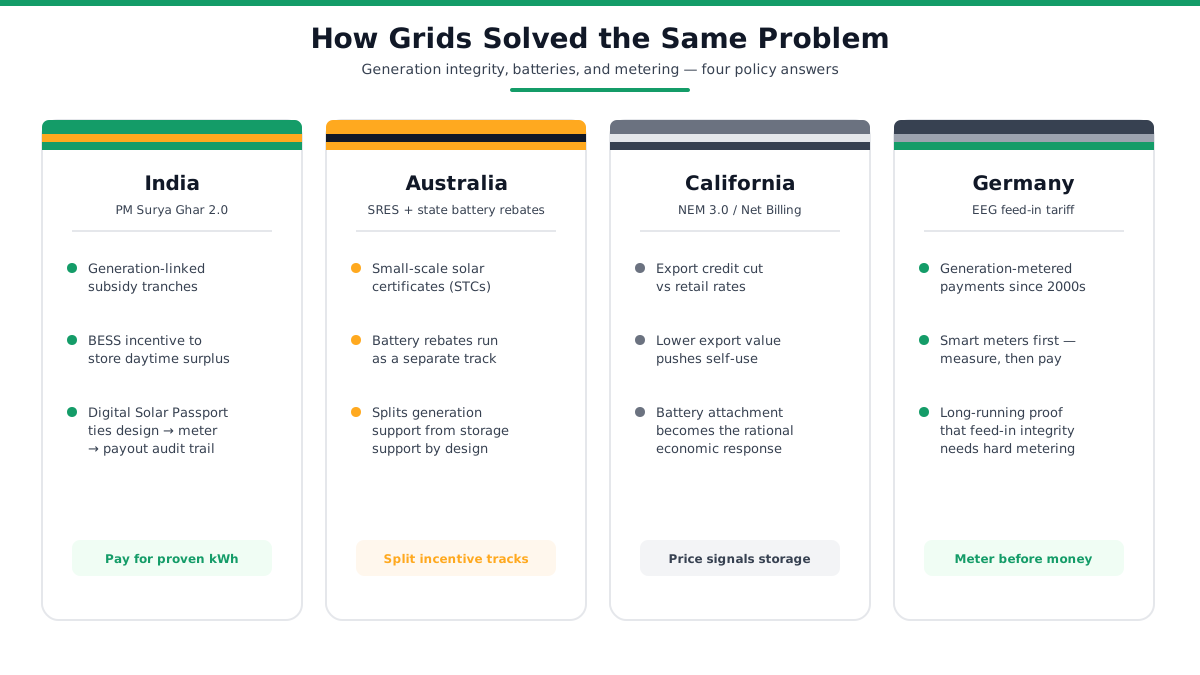
The common thread is sequencing: every program that moved to generation-based or export-limited compensation did so only after smart-metering infrastructure reached sufficient coverage. If India’s DISCOMs have not completed advanced metering infrastructure rollout in a given feeder before 2.0 rules apply there, EPCs should expect regional rollout delays rather than a single national go-live date.
Future Opportunities and How Heaven Designs Helps
PM Surya Ghar 2.0 rewards EPCs that can produce accurate, defensible yield models and structured design documentation at the proposal stage, because that documentation now determines a client’s subsidy realization, not just their electricity bill. It also expands the addressable market into hybrid PV-plus-BESS systems and shared rooftop projects for housing societies, both of which require design skills beyond a standard PV string layout.
Heaven Designs builds exactly the documentation stack this shift demands: bankable pre-design yield modeling, structural and electrical BOQs, and DISCOM-format single-line diagrams prepared with automated verification in mind, not just a manual inspector’s checklist.
- Solar Rooftop Detailed Engineering Design: full IFC-grade GA, SLD, structural, and BOQ, so the as-built record matches the design.
- Solar 3D Pre-Design: bankable PVsyst yield and shading model: the number that would anchor your client’s subsidy tranche.
- BESS-ready hybrid system design: inverter and battery sizing methodology adapted from C&I hybrid projects down to residential and small commercial scale.
- Electrical CEIG Drawings: approval-ready electrical documentation for the compliance layer 2.0 is expected to tighten.
Want to see what a bankable design packet looks like?
Download a redacted sample PVsyst report and rooftop design pack, the same documentation standard PM Surya Ghar 2.0's verification layer is expected to check against.
Get the sample pack →If your EPC is already fielding client questions about battery add-ons or housing-society rooftop projects, talk to our engineering team about scoping a hybrid design before 2.0 rules take effect.
Technical Glossary
- ALMM (Approved List of Models and Manufacturers): MNRE’s registry of certified solar module and cell manufacturers; equipment must be ALMM-listed to qualify for most government-linked solar subsidies.
- BESS (Battery Energy Storage System): a battery-inverter assembly paired with solar PV to store excess generation for later use.
- Digital Solar Passport: a proposed persistent digital record tied to a rooftop installation, capturing design, commissioning, and generation data across its operational life.
- DISCOM: Distribution Company, the state-licensed utility responsible for electricity distribution and net-metering approval; see the DISCOM glossary entry.
- Generation-Based Incentive (GBI): a subsidy or tariff support mechanism that pays based on metered energy output rather than installed capacity.
- Net Billing / Net Metering: mechanisms for crediting a prosumer’s exported solar generation against grid consumption; see the net metering glossary entry.
- Shared / Group Rooftop Solar: a rooftop system serving multiple electricity connections in one building, with generation credits apportioned via virtual net metering.
- Duck Curve: the daily grid load-shape distortion caused by high midday solar output followed by a steep evening demand ramp, a core driver of the BESS and grid-flexibility provisions in 2.0.
Policy Timeline
| Date | Milestone |
|---|---|
| February 2024 | PM Surya Ghar Muft Bijli Yojana launched with a target of 1 crore rooftop solar households and capacity-based subsidy structure |
| 2024-2026 | National portal rollout, DISCOM empanelment of vendors, and state-by-state net-metering rule variation surface as major friction points for EPCs |
| June 2026 | ALMM List-II (solar cells) takes effect, tightening equipment compliance requirements for subsidy-linked installations |
| Mid-2026 | Government reportedly begins internal deliberations on PM Surya Ghar 2.0, per Times of India and Financial Express reporting, exploring generation-linked subsidies, BESS incentives, and shared rooftop solar |
| Pending | Formal MNRE draft notification and public consultation on PM Surya Ghar 2.0 provisions |
| Pending | Phased DISCOM-level rollout, contingent on smart-metering and advanced metering infrastructure coverage per feeder |
FAQ
What is PM Surya Ghar 2.0?
PM Surya Ghar 2.0 is a proposed revision of India’s rooftop solar subsidy program that links subsidy disbursement to metered generation performance rather than installed capacity alone. Reporting indicates it is expected to add incentives for battery energy storage, introduce shared rooftop solar for multi-tenant buildings, and use a Digital Solar Passport with AI-based quality verification to track each installation across its operating life.
How does a generation-based incentive differ from the current capital subsidy?
The current PM Surya Ghar scheme pays a fixed capital subsidy once net metering is approved, regardless of how much energy the system later generates. A generation-based incentive instead releases part of the subsidy over time, calculated against metered kilowatt-hours produced, which means system design quality and installation accuracy directly affect how much subsidy a household ultimately receives.
Will PM Surya Ghar 2.0 require a battery for every rooftop system?
Nothing in current reporting suggests a battery mandate. The proposed structure adds a dedicated, optional incentive for BESS paired with rooftop solar, aimed at improving self-consumption and reducing reverse power flow on distribution feeders, not a requirement that every installation include storage.
What is the Digital Solar Passport?
The Digital Solar Passport is a proposed persistent digital record assigned to each rooftop installation, capturing design parameters, equipment serial numbers, commissioning documentation, and ongoing generation data. It functions as the data backbone that lets MNRE verify AI quality assurance checks and calculate generation-based subsidy tranches over time.
How will PM Surya Ghar 2.0 affect net metering rules?
Details are not finalized, but reporting suggests 2.0 will pair BESS incentives with revised net-metering or net-billing structures that value self-consumed solar differently from exported solar, similar to approaches already piloted by individual DISCOMs and comparable to California’s NEM 3.0 transition.
What does PM Surya Ghar 2.0 mean for EPC companies?
EPCs should expect an expanded scope of work covering hybrid PV-plus-BESS design, more rigorous pre-design yield modeling since it becomes the subsidy performance benchmark, continuous documentation obligations through the Digital Solar Passport, and a new addressable market in shared rooftop solar for housing societies and multi-tenant buildings.
When will PM Surya Ghar 2.0 be implemented?
As of this writing, MNRE has not published a formal draft notification. Current reporting describes 2.0 as being in internal government deliberation, with rollout likely to be phased and dependent on DISCOM-level smart-metering infrastructure readiness rather than a single national launch date.
Is shared rooftop solar the same as community solar in the United States?
Conceptually yes. Both mechanisms let multiple electricity connections share the output of one solar installation through virtual or group net metering, without each participant needing individual roof access or a dedicated system.
Suggested References
- Times of India, “Govt mulls PM Surya Ghar 2.0 with battery storage, shared rooftop solar”
- Financial Express, “PM Surya Ghar 2.0 to link subsidies to generation, battery storage”
- Ministry of New and Renewable Energy (MNRE), official portal
- NREL, U.S. Residential Solar-Plus-Storage Cost Benchmark
- Mercom India, rooftop solar policy tracking
- IRENA, distributed solar and storage integration reports
Suggested Research Papers
- Bridge to India, Rooftop Solar Market in India (annual market report series), benchmark for capacity growth and subsidy uptake trends against which 2.0’s targets can be measured.
- NREL, Grid Modernization and Distributed Energy Resource Integration technical reports, methodology for evaluating duck-curve mitigation strategies applicable to India’s DISCOM feeders.
- IEA-PVPS Task 14, High Penetration of PV Systems in Electricity Grids, reference framework for net-billing and self-consumption incentive design.
- CEA, Grid Connectivity Regulations for Renewable Generating Stations, 2019 (as amended), the regulatory baseline any 2.0 net-metering revision will need to reconcile with.