Solar Permit Design in Massachusetts
Permit plan sets built for Massachusetts authorities and utilities, not a national template with the state name changed. Turnaround agreed at scoping.
MASSACHUSETTS PERMIT DESIGN
What makes Massachusetts different
Massachusetts is one of a small number of states that amends the National Electrical Code rather than simply adopting a cycle, and the state building code adds its own provisions on top of the model code. That alone makes a nationally templated set unreliable here. Then there is snow: ground snow loads commonly in the 40 to 50 psf range make the structural case the governing one on most residential projects rather than a formality, and racking chosen from a national span table frequently will not carry it.
DESIGN DRIVERS
4 things that govern a Massachusetts plan set
These are the reasons a set drawn to a generic national template comes back from a Massachusetts plan examiner.
Massachusetts amends the National Electrical Code itself, so designing to an unamended NEC cycle produces comments even when the design is otherwise sound.
Ground snow load in the 40 to 50 psf range is the governing structural case on most projects, not a secondary check.
Roughly 41 Municipal Light Plants sit outside SMART and outside state net metering rules, each with its own compensation and interconnection terms.
Cape Cod and the islands combine elevated wind with salt exposure, a different design condition from the mainland even a short distance away.
CODE BASIS
The code framework in Massachusetts
Massachusetts is one of the few states that amends the National Electrical Code itself rather than simply adopting a cycle. The Massachusetts Electrical Code carries state-specific amendments, and the state building code adds its own provisions on top of the model code. Designing to an unamended NEC is a reliable way to collect comments here.
We confirm the currently adopted cycle for your specific Massachusetts authority at scoping, because adoption is staggered and changes.
What applies on top of the NEC here
- Massachusetts Electrical Code, which amends the NEC with state-specific provisions
- Massachusetts State Building Code with its own amendments to the model code
- SMART programme documentation, with declining incentive blocks and adders
- Municipal Light Plant territories sit outside state programme structures entirely
AUTHORITIES
Massachusetts authorities we submit to
Each authority has its own submittal route and its own recurring plan check comments. Knowing which one you are filing with changes the drawings.
| Authority | Covers | What to know |
|---|---|---|
| Boston Inspectional Services Department | City of Boston | Dense flat-roof stock, frequent historic district overlays, and fire department access requirements that often decide the array before electrical design begins. |
| Worcester Inspectional Services | Worcester | Higher ground snow load than the coast, and hill terrain that changes the exposure category on adjacent sites. |
| Cambridge Inspectional Services Department | Cambridge | Constrained urban roofs with a high proportion of triple-decker and mixed-use stock, where structural condition drives feasibility. |
| Springfield Building Department | Springfield | Western Massachusetts loading with a different snow regime from the coastal east. |
| Town building departments | 351 cities and towns | Massachusetts is a town-government state, so most residential review happens at town level with wide variation in staffing and turnaround. |
INTERCONNECTION
Massachusetts utilities and export rules
Export compensation decides how the system should be sized and whether storage belongs in the design. It also decides what the interconnection drawings must show.
| Utility | Territory | Export and compensation |
|---|---|---|
| Eversource | Boston, the eastern half and parts of central Massachusetts | Net metering plus SMART participation, with interconnection capacity constraints in some areas |
| National Grid | Worcester, the northeast and southeast regions | Net metering plus SMART, with cluster study delays affecting larger projects historically |
| Unitil | Fitchburg and a small northern territory | Net metering and SMART, smallest of the investor-owned utilities |
| Municipal Light Plants | Roughly 41 municipal utilities including Braintree, Concord and Wellesley | Outside SMART and outside state net metering rules. Each sets its own compensation and interconnection terms |
STRUCTURAL
Loading conditions in Massachusetts
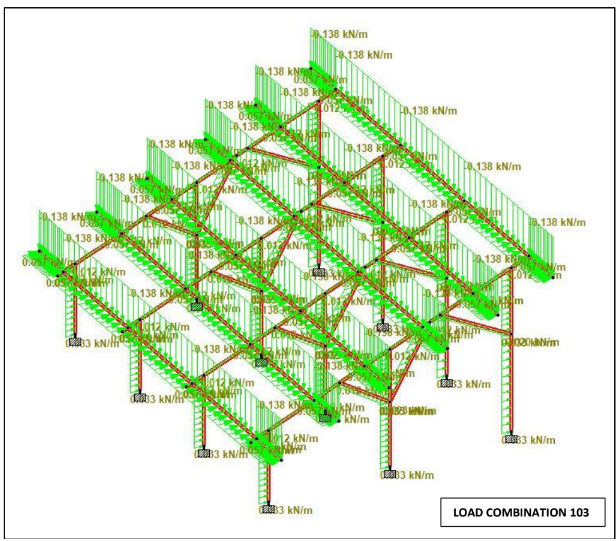
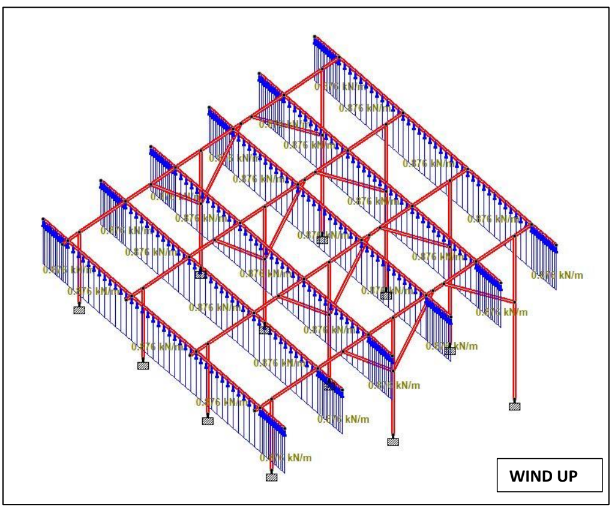
Verified in STAAD Pro where the structure is non standard, rather than read off a racking manufacturer table.
Wind
Elevated on Cape Cod, Martha Vineyard and Nantucket, moderate inland
Snow
A primary design driver. Ground snow loads commonly in the 40 to 50 psf range, higher in the Worcester hills and Berkshires
Seismic
Low to moderate, higher than most of the northeast
Also governing
Coastal salt exposure on the Cape and islands, and a large stock of older timber framing where existing condition governs what is achievable
DELIVERABLES
What is in a Massachusetts permit plan set
Cover sheet and site plan
Parcel, setbacks and equipment locations to the format the Massachusetts authority expects.
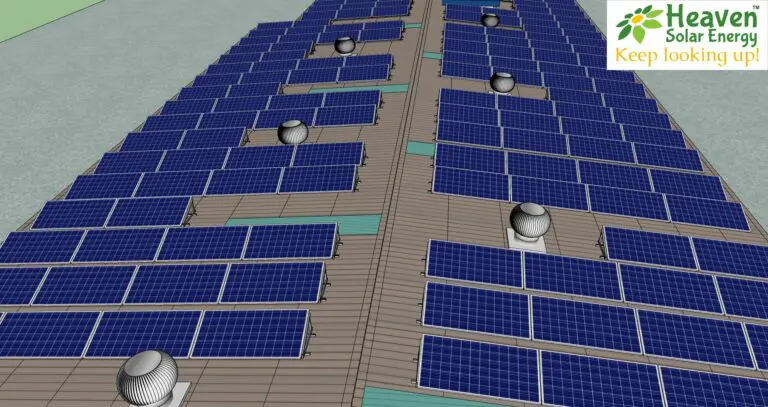
Roof plan and module layout
Layout resolved against fire setbacks and access pathways before module count is fixed.
Attachment detail
Racking, flashing and penetration detail matched to the actual roof assembly.
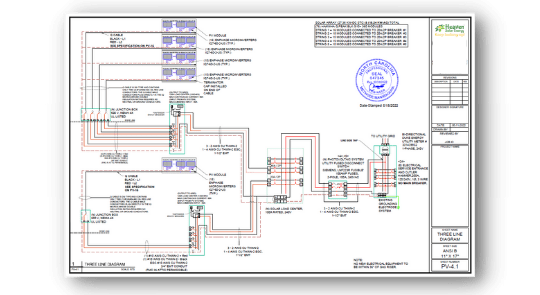
Single line and three line diagrams
Conductor sizing, overcurrent protection, grounding and rapid shutdown per NEC 690.
String layout and bill of material
String sizing checked against inverter operating windows, with a complete BOM.
Equipment specs and calculations
Voltage drop, corrected ampacity and equipment data sheets.
Signage and labelling plan
Placards and labelling to the adopted cycle and any local amendment.
Structural notes and calculations
Wind, snow and seismic notes appropriate to Massachusetts loading.
Engineering sign-off in Massachusetts
A Massachusetts licensed professional engineer is required to seal engineering documents. Because ground snow load is frequently the governing structural case rather than a routine check, structural calculations here carry more weight than in low-snow states, and racking selected from a national manufacturer table often will not satisfy a Massachusetts snow case without verification.
SAMPLE DELIVERABLES
What the drawings look like
Pages from real sets. Judge the output before you send a project.
MARKET CONTEXT
The Massachusetts solar market
Massachusetts has sustained one of the most consistent policy environments in the country, and the SMART programme has kept both residential and commercial volume steady through incentive declines that flattened other markets. The state has an unusually large commercial and community solar segment for its size. Two structural features shape the work: ground snow load as the dominant design case, and the presence of roughly 41 Municipal Light Plants whose territories sit outside state programme rules entirely, which regularly catches installers expanding across town lines.
GET STARTED
Get a Massachusetts Permit Design Quote
Send the address, roof photos, equipment list and the serving utility. We reply with scope, engineering sign-off requirements for that Massachusetts authority, price and a delivery date.
- We reply within 1 business day
- Plan check comments handled with you
- No obligation, no retainer to start
“Heaven Designs has been an exceptional partner for our EPC projects. Their turnaround time and design accuracy are unmatched. We have completed multiple projects with zero design rework. Highly recommended for any solar EPC company looking for reliable design support.”
Prefer to talk first?
PROCESS
From project to permit ready in Massachusetts
Send the project
Site address, roof photos or survey, equipment list, and which Massachusetts utility serves the address.
We confirm scope
Deliverables, stamping scope for that jurisdiction, price and delivery date.
We design and check
Drawn, then checked by a second engineer against a jurisdiction specific checklist.
You submit
Permit ready files in your format. Plan check comments handled with you.
FAQ
Massachusetts Solar Permit Design FAQs
What is the SMART programme and how does it affect design?
What is a Municipal Light Plant and why does it matter?
How high are Massachusetts snow loads and what do they change?
Does the Massachusetts Electrical Code differ from the NEC?
Are Cape Cod and the islands different from the mainland?
How long does a Massachusetts solar permit plan set take?
Which code cycle do you design Massachusetts sets to?
What happens if a Massachusetts authority rejects the plan set?
Which Massachusetts utilities do you prepare interconnection drawings for?
What governs structural design on a Massachusetts project?
What applies in Massachusetts on top of the base electrical code?
Which authorities do you file Massachusetts permits with?
Do you work with Massachusetts installers on ongoing volume?
Ready for constructible design packages?
Solar engineering for EPCs. MEP design and BIM for AEC teams. Reply within 1 business day.