Solar Design Services in Hawaii
One engineering partner across the whole project lifecycle in Hawaii. Proposal drawings to win the job, permit sets to get it approved, detailed engineering to get it built.
Client and engineer figures are portfolio wide across 15 countries. Installed capacity is Hawaii specific.
HAWAII DESIGN SERVICES
Engineering capacity for the Hawaii market
Hawaii is a storage market rather than a solar market at this point, because programme structures and grid saturation both push that way. Design work starts with hosting capacity and storage sizing rather than array layout. Corrosion specification matters more here than anywhere else in the country, and island shipping logistics affect equipment lead times in ways mainland planning does not account for.
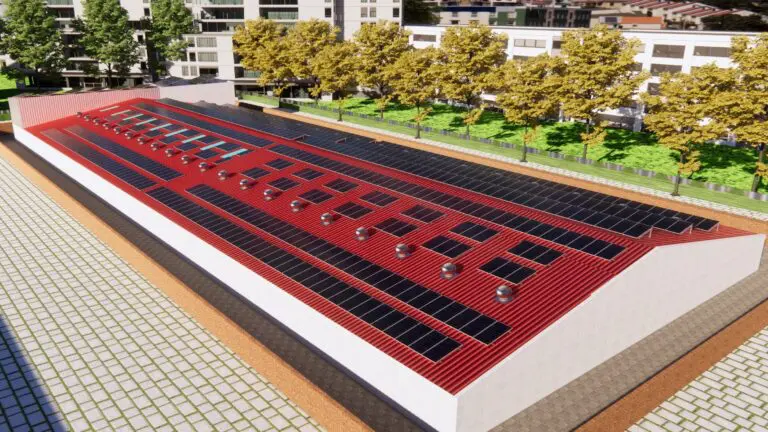
MARKET CONTEXT
The Hawaii solar market
Hawaii has the highest electricity rates and the highest rooftop solar penetration in the country, which produces an unusual situation: the economics are excellent and the grid is the constraint. Conventional net metering ended years ago and current programmes generally require or strongly favour storage, while circuit-level hosting capacity determines whether a system can interconnect at all. Nearly every project is now solar plus storage, and interconnection feasibility assessment comes before design rather than after.
Hawaii has the highest rooftop solar penetration in the country, so circuit-level hosting capacity determines interconnection feasibility rather than being a formality.
Conventional net metering ended years ago and current programmes generally require or strongly favour storage, so nearly every project is solar plus storage.
Severe salt corrosion across the islands makes material and fastener specification a durability decision rather than a default.
Hawaii Island carries volcanic hazard and lava zone considerations affecting siting and insurability, which exist nowhere else in the country.
THE FULL STACK
Services by project stage
Start anywhere. Most Hawaii clients begin with one service and expand once turnaround and quality are proven.
Sales stage
Permitting stage
Engineering stage
Rooftop detailed engineering
Construction level drawings for commercial and industrial rooftop.
Ground mount design
Layout with terrain analysis and row spacing optimisation.
Civil and structural
Foundation design, load calculations and mounting structure verification.
STAAD Pro reports
Structural analysis and calculation reports for submittal.
INTERCONNECTION
Hawaii utilities we design for
Export compensation decides how a system should be sized and whether storage belongs in the design, which makes it an engineering input rather than a sales detail.
| Utility | Territory | Export and compensation |
|---|---|---|
| Hawaiian Electric | Oahu | Post net metering programmes generally requiring or strongly favouring storage, with circuit-level hosting capacity limits |
| Hawaii Electric Light | Hawaii Island | Similar programme structure, with volcanic and lava zone siting considerations in parts of the island |
| Maui Electric | Maui, Molokai and Lanai | Similar programme structure across three island grids with individual constraints |
| Kauai Island Utility Cooperative | Kauai | Co-operative with very high renewable penetration and its own programme terms |
ENGINEERING CONDITIONS
What governs design in Hawaii
These conditions decide the structural approach, the racking selection and often the layout itself. We verify them per site rather than applying a regional default.
Wind
Hurricane design wind speeds apply across the islands, with severe local acceleration through valleys and saddles
Snow
None, except at the summits of Mauna Kea and Mauna Loa where no development occurs
Seismic
Genuinely significant on Hawaii Island because of volcanic seismicity, and moderate elsewhere
Also governing
Severe salt corrosion is the dominant durability factor, volcanic hazard and lava zones affect siting on Hawaii Island, and island shipping logistics affect equipment availability and lead time
Compliance scope in Hawaii
- County-level code adoption and enforcement across four county authorities
- Post net metering programmes that generally require or strongly favour energy storage
- Circuit-level hosting capacity constraints affecting interconnection feasibility
- Hurricane wind design and severe salt corrosion provisions
Hawaii authorities we file with
Each has its own submittal route and recurring review comments. Full detail on the Hawaii permit design page.
SAMPLE DELIVERABLES
Output from across the stack
Pages from real projects, one per discipline.
Pre-design 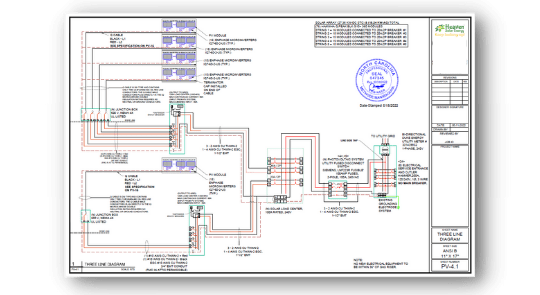 Permitting
 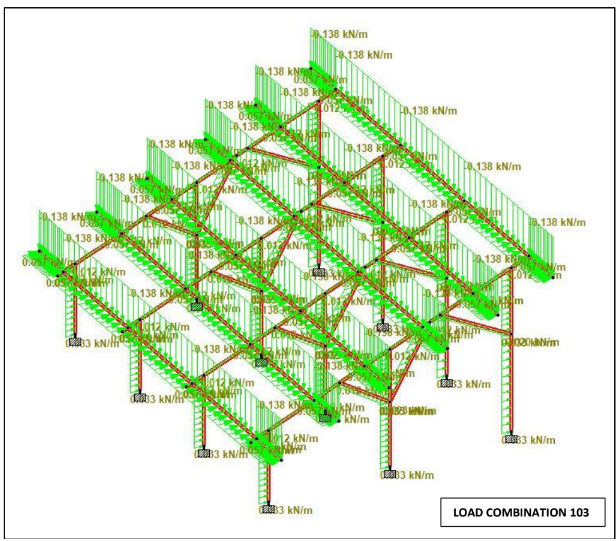 Engineering
 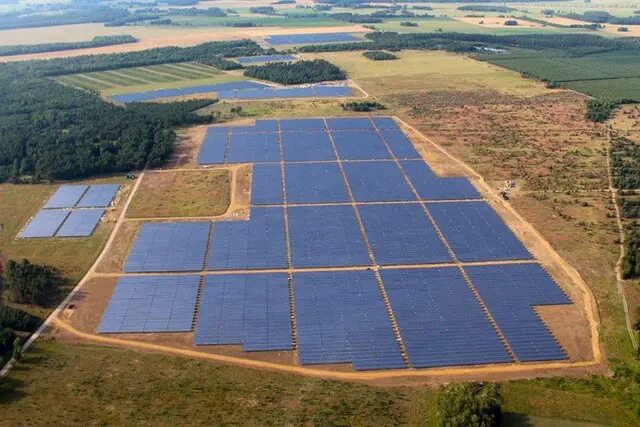 Ground mount
 SOFTWARE
What we design in
Licensed, current and staffed. You do not carry the software cost or the training overhead.
PVsyst
Yield simulation and bankable production reports with full loss breakdown.
HelioScope
Rapid layout and production modelling with string level detail.
CAD
All drafting output, plan sets and construction drawings.
STAAD Pro
Structural analysis and load verification against Hawaii wind, snow and seismic cases.
Aurora Solar
Proposal design and shade analysis, including inside your own account.
SketchUp
3D modelling for pre-design and client-facing visualisation.
ENGAGEMENT MODELS
Four ways to work with us
Per project
Send one job, pay for one job. No retainer, no minimum, no onboarding fee.
Testing our output, or occasional demand.
Named designer
One designer owns your account and learns your title block and the Hawaii authorities you file with most.
Regular weekly volume.
Dedicated team
Agreed daily capacity with a delivery SLA, functioning as your outsourced design department.
High volume operations.
Overflow support
On call capacity alongside your existing in-house designer, absorbing peak months.
Teams that lose deals when busy.
Working with an India based partner on Hawaii projects
We are based in Surat, Gujarat, and our Hawaii clients are not. Our engineers work hours that overlap US time zones, so work sent at the end of your day is on your desk the next morning.
On code, the same engineers who produce CEIG approval drawings for an Indian utility also produce NEC compliant sets for US installers. Working across code frameworks daily is why Hawaii specifics do not get lost in handoff. Work is covered by NDA and intellectual property transfers to you.
GET STARTED
Get a Hawaii Design Services Quote
Tell us what stage you are at and what you need. No retainer, no minimum volume, and you can start with a single Hawaii project.
- We reply within 1 business day
- Plan check comments handled with you
- No obligation, no retainer to start
“Heaven Designs has been an exceptional partner for our EPC projects. Their turnaround time and design accuracy are unmatched. We have completed multiple projects with zero design rework. Highly recommended for any solar EPC company looking for reliable design support.”
Prefer to talk first?
FAQ
Hawaii Solar Design Services FAQs
What solar design services do you provide in Hawaii?
Do you understand Hawaii code and utility requirements?
Which Hawaii utilities do you prepare interconnection drawings for?
What is driving solar demand in Hawaii right now?
Can you handle commercial and MW-scale work in Hawaii?
How do you quality check drawings before delivery?
Who owns the drawings and the intellectual property?
Can we start with a single Hawaii project?
What structural conditions do you design for in Hawaii?
What compliance requirements apply in Hawaii?
Which Hawaii authorities do you work with?
Why does Hawaii require storage on most projects?
What is hosting capacity and why does it matter so much here?
Ready for constructible design packages?
Solar engineering for EPCs. MEP design and BIM for AEC teams. Reply within 1 business day.