Solar Design Services in the USA
One engineering partner across the whole project lifecycle. Proposal drawings to win the job, permit sets to get it approved, and detailed engineering to get it built.
Figures are portfolio wide across 15 countries, not US only.
US DESIGN SERVICES
Engineering capacity without the headcount
Design demand does not arrive evenly. A quiet month leaves an in-house designer underused, and a busy month leaves the whole pipeline waiting on one person. That mismatch is what stalls growing installers.
We are 50+ engineers working across US and Indian code environments daily. You send work when you have it and pay per project, and the capacity is there when the month turns busy.
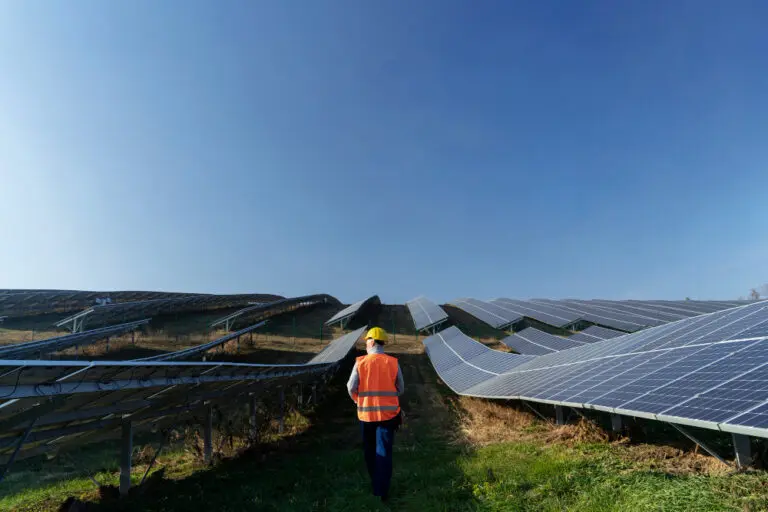
THE FULL STACK
Services by project stage
Start anywhere. Most installers begin with one service and expand once turnaround and quality are proven.
Sales stage
Permitting stage
Engineering stage
Rooftop Detailed Engineering
Full construction level drawings for commercial and industrial rooftop.
Learn moreGround Mount Design
Utility scale layout with terrain analysis and row spacing optimisation.
Learn moreCivil and Structural Engineering
Foundation design, load calculations, and mounting structure verification.
Learn moreSTAAD Pro Reports
Structural analysis and calculation reports for submittal and review.
Learn moreSAMPLE DELIVERABLES
Output from across the stack
Pages from real projects, one per discipline. Judge the standard before you send us anything.
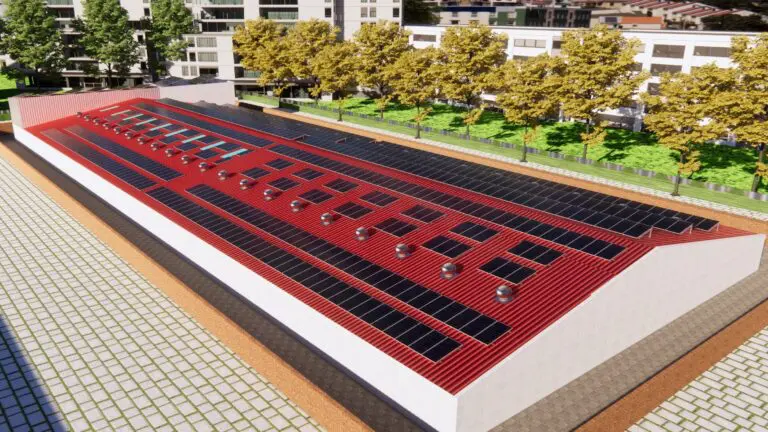 Pre-design
 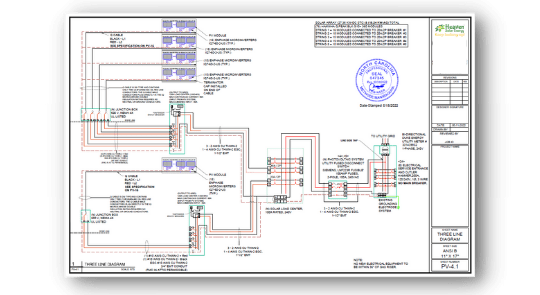 Permitting
 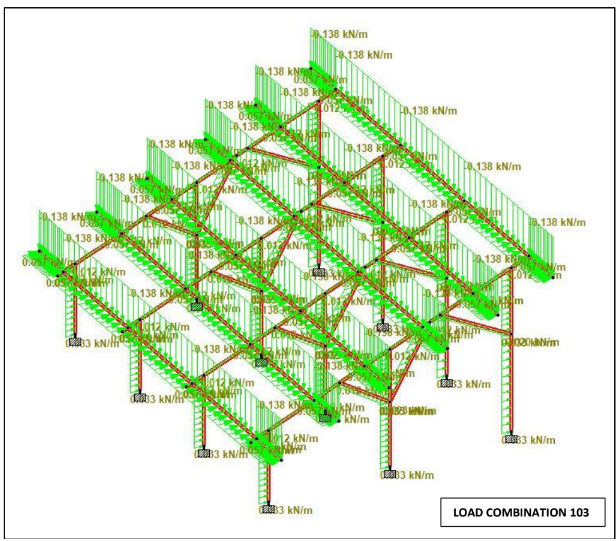 Engineering
 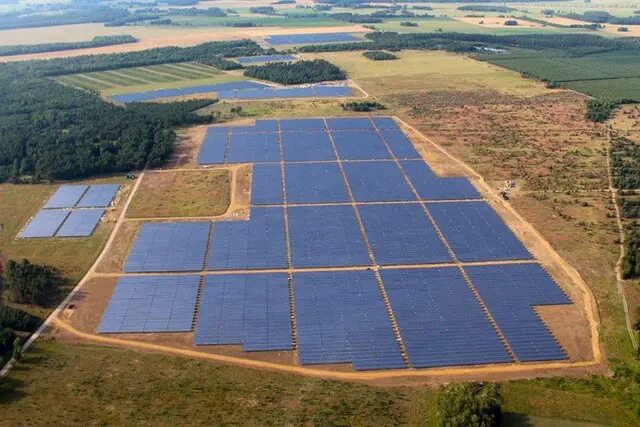 Ground mount
 SOFTWARE
What we design in
Licensed, current, and staffed. You do not carry the software cost or the training overhead.
PVsyst
Yield simulation and bankable production reports with full loss breakdown.
HelioScope
Rapid layout and production modelling with string level detail.
CAD
All drafting output, plan sets, and construction drawings.
STAAD Pro
Structural analysis, load combinations, and foundation verification.
Aurora Solar
Proposal design and shade analysis, including inside your own account.
SketchUp
3D modelling for pre-design and client-facing visualisation.
Weighing up buying these yourself? See our Aurora pricing breakdown and PVsyst cost analysis.
QUALITY CONTROL
How we keep errors out of your submittals
The honest question behind every outsourcing decision is whether the quality holds. This is the process, stated plainly enough that you can hold us to it.

Input verification
Roof framing, obstructions, and equipment confirmed before design starts. Assumed inputs are the root of most rework.
Design to adopted code
Built against the code cycle the jurisdiction has actually adopted, not the newest published cycle.
Independent second review
A different engineer checks the set against a jurisdiction specific checklist. Nobody signs off their own work.
Structural verification
Loads verified in STAAD Pro rather than read off a racking manufacturer table, wherever the structure is non standard.
Delivery and support
Files in your format. If the reviewing authority comes back with comments, the correction is included.
ENGAGEMENT MODELS
Four ways to work with us
No retainer, no minimum volume, no onboarding fee. Start with one project and scale when it makes sense.
Per project
Send one job, pay for one job. No retainer, no minimum volume, no onboarding fee. This is how almost every client starts.
Testing our output, or genuinely occasional demand.
Named designer
Once volume is steady, one designer owns your account. They learn your title block, conduit preferences, and the AHJs you submit to most often.
Growing installers with regular weekly volume.
Dedicated team
An agreed daily capacity with a delivery SLA, functioning as your outsourced design department rather than a vendor.
High volume operations where design throughput caps growth.
Overflow support
On call capacity that works alongside your existing in-house designer, absorbing peak months without a permanent hire.
Installers who already have a designer but lose deals when busy.
WHO WE WORK WITH
Built for US solar businesses
Residential installers
High volume, speed critical. Proposal drawings to win the deal, permit sets to get it built, and a named designer once volume is steady.
Proposal design, permit design
Commercial EPCs
Structural calculations, interconnection coordination, and construction level drawings for C&I rooftop and carport projects.
Detailed engineering, structural, permit design
Developers and IPPs
Ground mount layout, terrain and yield analysis, and technical documentation for financing and due diligence.
Ground mount design, reports, PMC
Roofing and electrical contractors
Adding solar to an existing trade business without hiring a design team or buying a software stack.
Proposal design, permit design
MARKETS AND CODES
One team, six code environments
The same engineers who produce CEIG approval drawings for an Indian DISCOM also produce NEC compliant permit sets for US installers. Working across code frameworks daily is why code specifics do not get lost in handoff.
| Market | Code framework | Primary focus |
|---|---|---|
| United States | NEC 690, 705, 706, ASCE 7, IBC and IRC, plus state amendments | Permit design, proposal design, commercial engineering |
| Canada | Canadian Electrical Code, cold climate and snow loading | Permit design, structural verification |
| India | IS 875, IS 1893, CEIG approval, DISCOM net metering | CEIG drawings, industrial rooftop, MW scale |
| Gulf and Middle East | High ambient derating, sand soiling, local utility standards | MW scale rooftop and ground mount, PMC |
| Europe | Eurocode structural, national grid connection codes | C&I rooftop and ground mount |
| Australia and Africa | AS/NZS standards, regional utility requirements | Commercial rooftop, captive solar |
Delivered for more than 300 EPCs across 15 countries. See the full locations index.
Working with an India based design partner
It is a fair question and worth answering directly. We are based in Surat, Gujarat, and most of our clients are not.
Our engineers work hours that overlap US time zones, so work sent at the end of your day is on your desk the next morning. That time difference is an advantage rather than a cost once the workflow is set up.
On code: our team works in US and Indian code environments daily. The same engineers who produce CEIG approval drawings for an Indian DISCOM also produce NEC compliant permit sets for US installers. Work is covered by NDA and IP transfers to you.
GET STARTED
Get a US Design Services Quote
Tell us what stage you are at and what you need. No retainer, no minimum volume, and you can start with a single project.
- We reply within 1 business day
- Plan check comments handled with you
- No obligation, no retainer to start
“Heaven Designs has been an exceptional partner for our EPC projects. Their turnaround time and design accuracy are unmatched. We have completed multiple projects with zero design rework. Highly recommended for any solar EPC company looking for reliable design support.”
Prefer to talk first?
By state
Alabama
Alaska
Arizona
Arkansas
California
Colorado
Connecticut
Delaware
District of Columbia
Florida
Georgia
Hawaii
Idaho
Illinois
Indiana
Iowa
Kansas
Kentucky
Louisiana
Maine
Maryland
Massachusetts
Michigan
Minnesota
Mississippi
Missouri
Montana
Nebraska
Nevada
New Hampshire
New Jersey
New Mexico
New York
North Carolina
North Dakota
Ohio
Oklahoma
Oregon
Pennsylvania
Puerto Rico
Rhode Island
South Carolina
South Dakota
Tennessee
Texas
Utah
Vermont
Virginia
Washington
West Virginia
Wisconsin
Wyoming
We cover all 50 states, the District of Columbia, and Puerto Rico. See the full locations index or send us your project.
FAQ
US Solar Design Services FAQs
What solar design services do you provide in the US?
Do you work with residential or commercial projects?
How does outsourcing solar design compare to hiring in-house?
Which software do you design in?
Do you handle code compliance across different states?
What are your turnaround times?
Do you offer revisions?
You are based in India. How do quality and IP work?
Can we start with a single project?
Do you serve Canada as well as the US?
How do you quality check drawings before delivery?
What engagement models do you offer?
Who owns the drawings and the intellectual property?
Can you work as our engineering department for tenders?
What size projects do you handle?
How quickly can you start?
Ready for constructible design packages?
Solar engineering for EPCs. MEP design and BIM for AEC teams. Reply within 1 business day.